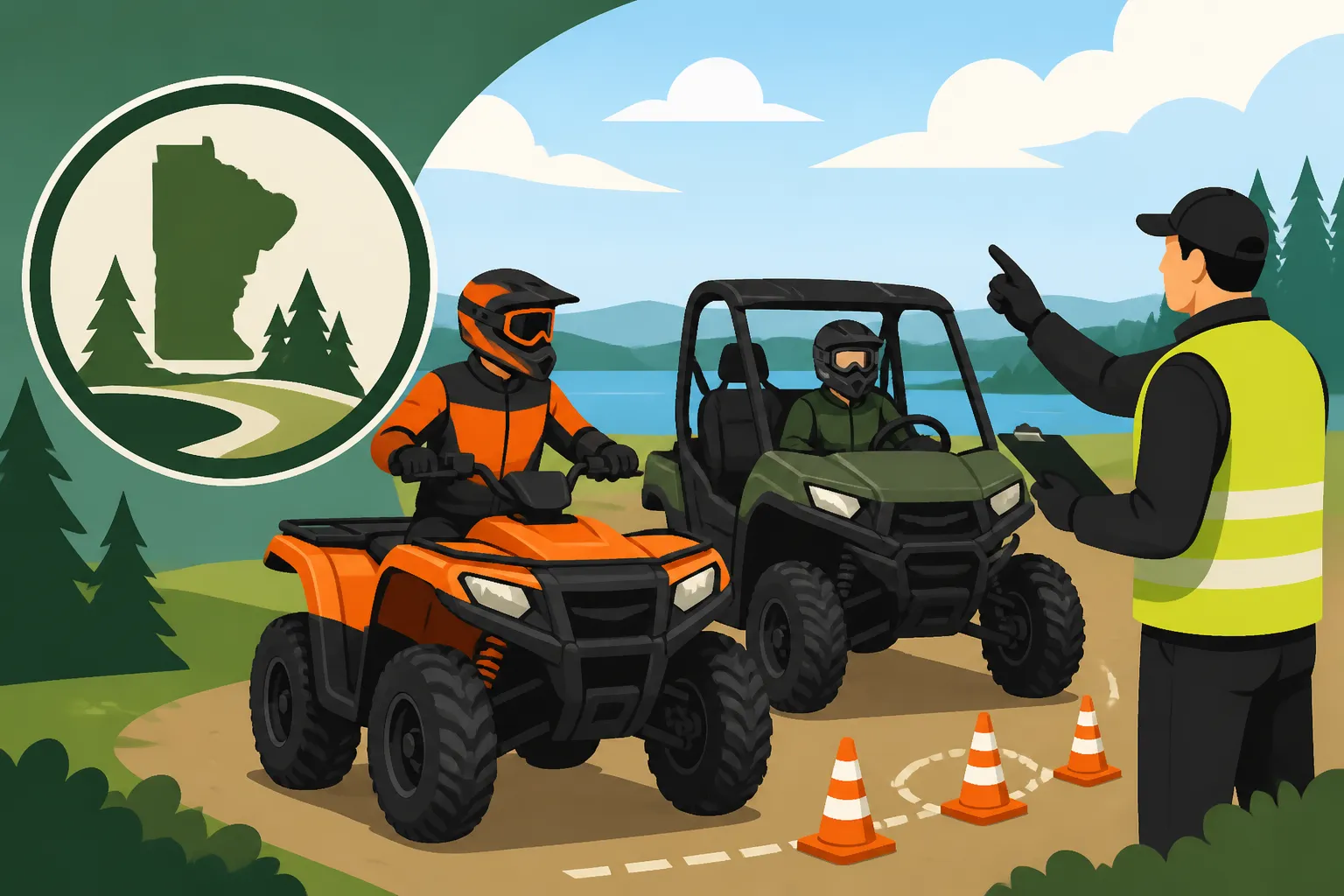
Voluntary ATV and UTV Training for Riders
Voluntary ATV and UTV training can help Manitoba riders build safer habits before heading onto trails, private land or unfamiliar terrain. But with different machines, experience levels and course formats, it can be hard to know what training covers or whether it is worth arranging. Here’s how to assess your needs, choose instruction and make clear that training does not replace the rules.
Is ATV and UTV training required in Manitoba?
A safety course is not generally a legal prerequisite for riding an ATV or UTV in Manitoba. Training is voluntary, including for young riders. That does not mean there are no legal requirements: riders still need to follow the rules that apply to their age, machine, location and situation. The distinction is useful—training can improve knowledge and judgement, but completing a course does not authorize riding where it is prohibited or override a legal requirement.
For a straightforward explanation of the course requirement, see No Law Requires an ATV Safety Course. Manitoba Training Is Voluntary for Everyone and Manitoba Safety Services Training Options are also useful starting points when you want to look into available instruction.
Voluntary training can be valuable even for people who have ridden for years. Familiarity with a machine is not always the same as knowing how to respond to changing ground, a passenger’s movement, a sudden obstacle or an unfamiliar control layout. Experienced riders may also have picked up habits that are comfortable but not ideal for safety. A course gives riders a structured chance to review fundamentals and ask questions.
Training is especially worth considering if you are:
- New to riding or returning after a long break.
- Moving from a quad to a side-by-side, or learning to operate a different kind of machine.
- A parent or caregiver helping a young person start riding.
- Planning group rides where less-experienced riders may need support.
- Using an ATV or UTV for work, property tasks or outdoor recreation.
- Uncertain about a skill such as turning, braking or managing a slope.
The aim is not to turn every rider into an expert after one course. It is to build a better starting point: understand the controls, practise basic decisions and recognize when conditions are beyond your ability or the machine’s limits.
What voluntary training can help riders practise
Course content varies by provider, instructor, format and the needs of the group. Before enrolling, ask what the instruction includes, how much time is practical, whether students use their own machine, and what experience or equipment is expected. Do not assume that a course advertised as ATV training covers UTV operation in equal detail. Ask specifically about the vehicle you plan to ride.
Controls and pre-ride checks
A useful session should give a rider time to become familiar with the machine’s controls and handling. That includes knowing how to stop, steer and operate the controls without hunting for them under pressure. A pre-ride check is also a practical habit to build. Riders can learn to look for obvious damage, loose parts, leaks, tire problems and anything else that could affect a safe ride.
A checklist is helpful, but it does not replace the machine’s owner information or servicing requirements. A new machine, a borrowed machine and a familiar machine may all have different features. Read the manufacturer’s instructions and ask the instructor how course exercises relate to the vehicle being used.
Balance, speed and changing terrain
Riding technique should match both the machine and the ground. A beginner needs to understand that a quad and a side-by-side do not handle identically. Surface conditions also matter: firm ground, loose gravel, ruts, mud and slopes can change traction and control. Practice in a controlled setting can help riders notice how speed and steering affect stability without learning those lessons for the first time in a difficult situation.
A rider should not treat a successful practice exercise as permission to attempt every obstacle. Training can help people make more informed decisions, including deciding to turn back, choose another route or get off and assess a situation. Avoiding a risky line is often better than trying to prove a machine can make it through.
Passengers, communication and group riding
Passenger safety deserves specific attention. A UTV’s seating arrangement and restraints are not interchangeable with a quad’s. A passenger should ride only if the machine is designed and equipped for passengers, and riders need to understand how passenger position and movement can affect control. For the relevant legal requirements, see Manitoba Rules for a Child Passenger and Manitoba Passenger Limits by Design.
Group riding adds another layer: riders need a plan for keeping track of one another, communicating stops and responding to a breakdown or separation. A class may not cover every group-riding situation, so ask whether it includes communication and trip planning. Make sure newer riders know they can ask to slow down or stop without pressure to keep up.
A course can also be a useful place to discuss helmet use, protective clothing and visibility. Manitoba’s requirements and exceptions are not the same as a course provider’s safety recommendations. Check the applicable rules in Manitoba ATV Helmet Law, and treat optional protective gear as a separate decision based on conditions, fit and the ride planned.
Rules are part of riding safely
Practical control is only one part of responsible riding. Knowing where a machine may operate, when a crossing is permitted and what documentation to carry matters too. Riders should review Manitoba ORV Road Rules Explained, including the rules for crossings in Manitoba Rules for Crossing a Highway. Registration is another separate issue; training does not replace it. See Carrying Your Registration Card on Every Ride for a reminder about carrying the required document.
This is one reason a course should not be treated as a complete legal briefing. Ask the provider whether local rules are covered, then verify requirements that apply to your own route and machine. Municipal rules, land access permissions and site restrictions can affect where riding is allowed. A training certificate, where one is offered, does not itself grant access to private property, trails or other restricted areas.
Choosing a course that fits your rider and machine
The best option is not necessarily the longest course or the one with the most impressive-sounding description. Look for training that matches the rider’s age and experience, the type of machine and the kind of riding planned. If instruction is for a family or work group, ask whether the provider can accommodate different skill levels without putting beginners under pressure.
| What to compare | Questions to ask | Why it matters |
|---|---|---|
| Machine type | Does the instruction cover an ATV, UTV or both? | Controls, seating and handling differ between machine types. |
| Practical practice | How much supervised operating practice is included? | Riders need a chance to apply concepts, not only hear them. |
| Rider level | Is it suitable for a first-time rider or an experienced operator? | Course difficulty should match the participant. |
| Age suitability | Are there age limits, parent requirements or separate youth sessions? | The provider’s policies may differ by course. |
| Equipment | What machine, helmet or protective gear must participants bring? | Knowing in advance avoids an unsuitable or incomplete setup. |
| Course outcome | Is a certificate or other completion record provided? | Useful for records, but it should not be confused with legal permission to ride. |
| Location and conditions | Where is practice held, and what happens if conditions are unsuitable? | The setting affects what participants can safely practise. |
If you are arranging youth instruction, ask whether the instructor has an appropriate session for the rider’s age and maturity. A course designed for adults may not use the same explanations or practice progression that work well for children. For related legal context, review Manitoba ATV Age Requirements and Manitoba Youth Training Options. A young rider also needs supervision and riding opportunities appropriate to the applicable rules and their actual ability; a course alone does not make an inexperienced rider ready for every situation.
For an adult who already rides, ask whether the course is introductory or includes an opportunity to refresh skills. If you have a particular concern—such as operating on uneven ground or managing a UTV with passengers—raise it before signing up. A provider can explain whether the course addresses it or recommend a different type of instruction. Do not assume every class includes advanced skills or tailored coaching.
Cost, schedules, registration processes and available course formats can change. Contact the provider directly for current details, including what is included and whether you need to supply your own machine or equipment. If an employer, club or community group is organizing a session, confirm who is responsible for participant requirements and what documentation, if any, will be issued. Avoid choosing based only on a claimed certificate; first establish what the rider will actually practise and learn.
Preparing for training and using it afterward
A little preparation helps riders get more from instruction. Before the course, identify the machine type and model you expect to use and review its operating information. Tell the provider about relevant experience, physical limitations or questions ahead of time. If the course involves a machine supplied by the participant, confirm that it is suitable for the session and in safe operating condition.
Wear clothing and footwear appropriate to the planned activities, and follow the provider’s equipment instructions. If you need to bring a helmet or other protective gear, confirm that it is acceptable and fits correctly. Do not rely on an assumption that the provider supplies equipment. If training is outdoors, prepare for changing weather and ask what happens if the conditions make practical exercises unsafe.
During practice, focus on understanding the reason behind an exercise rather than trying to finish first. Ask the instructor to clarify anything that feels unfamiliar. If an exercise feels beyond your current ability, say so. A sound training environment should allow a participant to stop, ask questions and progress at a sensible pace. No rider needs to attempt an activity simply to keep up with another person.
Afterward, put the learning into practice gradually. Start with familiar, manageable terrain and ride with someone who understands your experience level. Avoid combining new equipment, challenging terrain and a long remote trip on the same day. A UTV owner moving to a different model, for example, should take time to understand its controls and handling before carrying passengers on an unfamiliar route.
Training also needs refreshing when circumstances change. A new machine, new rider, new passenger arrangement or different type of terrain may call for another review. Even without another formal course, riders can revisit the owner’s information, practise basic controls in an appropriate setting and discuss route plans before setting out. Keep the group’s pace aligned with its least-experienced rider rather than assuming everyone can manage the same conditions.
Finally, treat training as one part of a broader safety plan. Check access permission and local restrictions, plan a route suited to the group, carry required documents and choose protective equipment thoughtfully. If the ride involves a road crossing or another regulated setting, review the applicable rules before leaving. Voluntary instruction can improve judgement and confidence, but the rider remains responsible for following Manitoba’s rules and deciding whether a particular ride is safe.
Disclaimer
This article is for general informational purposes only and does not constitute professional advice. Laws, prices and regulations vary by location and change over time. Consult a qualified professional for guidance on your specific situation.