Manitoba ATV Helmet Law
It can be incredibly confusing trying to figure out all the rules and regulations when you just want to enjoy a ride on your ATV or UTV in Manitoba. One of the most critical, and often misunderstood, aspects is the helmet law. This guide will cut through the noise, explaining exactly when and where you need to wear a helmet, who might be exempt, and what kind of head protection meets the legal requirements, so you can ride with confidence and stay safe.
The Foundation: Manitoba's General Helmet Requirement
Let's start with the basic truth: generally speaking, if you're operating or riding as a passenger on an off-road vehicle (ORV) in Manitoba, you need to wear a helmet. This isn't just a suggestion; it's a legal requirement under The Off-Road Vehicles Act. The intention behind this rule is simple and incredibly important: to protect riders from serious head injuries in the event of an accident. We all know how quickly things can change out on the trail, whether it's an unexpected bump, a slippery patch, or another rider's mistake. A helmet is your first line of defense.
This applies across the board, whether you're cruising through the Belair Forest, exploring club trails near Woodridge, or even just riding a short distance on a permissible shoulder to get to your favourite fishing spot. There's no "casual ride" exemption when it comes to head protection. Even if you're just moving your machine from your garage to your trailer, or taking it for a quick test spin after some maintenance, the law dictates a helmet. It's a non-negotiable part of safe operation, much like ensuring your machine has proper lighting [Manitoba Lighting Requirements on a Machine] or a functioning spark arrester [Manitoba Spark Arrester Requirements].
It's easy to think, "Oh, I'm just going a short distance," or "I know this area like the back of my hand," but that's precisely when complacency can set in. The statistics on head injuries from ORV accidents are sobering, and a helmet significantly reduces the risk of severe trauma. So, before you even think about firing up that engine, make sure everyone who's going to be on the machine has a properly fitting, approved helmet. It's not just about avoiding a ticket; it's about coming home safe to your family.
Helmet Rules for All Riders, Including Passengers
The law makes no distinction between the operator and a passenger when it comes to helmet use. If you're on an ORV, you need a helmet. This is especially crucial when you have children riding with you. Parents sometimes struggle with knowing all the rules for young riders, but on the helmet front, it's very clear: [Manitoba Rules for a Child Passenger] means they need a helmet just as much as an adult operator.
Imagine taking your grandchild for a gentle ride on a scenic trail in the Duck Mountain Provincial Park. Even at low speeds, a sudden stop or an unexpected dip could cause a minor upset. Without a helmet, even a small fall could lead to a serious head injury. With a properly secured helmet, that same incident might just be a story you tell later. It's about setting a good example, too. If you're wearing your helmet, your kids and grandkids will learn to wear theirs without question. This is where investing in good quality, properly sized helmets for everyone in your riding crew, perhaps from a reputable brand, really pays off.
This universal requirement helps eliminate confusion. There's no need to wonder if your buddy riding shotgun in your side-by-side needs one, or if your teenager on the back of your quad is exempt. If they're on the machine, they need a helmet. This simple rule simplifies compliance and, more importantly, enhances safety for every single person enjoying the ride.
Age and Experience Don't Change the Basic Rule
Some riders mistakenly believe that once they reach a certain age, or if they've been riding for decades, the helmet rule no longer applies. This simply isn't true in Manitoba. Whether you're a seasoned veteran exploring new backcountry routes or a brand-new rider just learning the ropes, the helmet law applies equally. Age and experience might make you a more cautious or skilled rider, but they don't make you immune to accidents or the laws of physics.
Even if you're a responsible adult with years of riding under your belt, perhaps on a well-maintained utility quad, an unforeseen obstacle or a sudden change in terrain can still catch you off guard. A branch whipping out, a rock you didn't see, or even just losing your balance while stopped can lead to an impact. That's why the law doesn't differentiate: everyone from [Manitoba Riders Under 14 Need Supervision] to the oldest, most experienced rider must wear a helmet.
This isn't to say that riding experience isn't valuable; it absolutely is. But thinking you're "too good" to wear a helmet is a dangerous mindset. Many accidents involve experienced riders who were caught off guard. So, embrace the helmet as a fundamental piece of your safety gear, just like you wouldn't ride without proper footwear or gloves. It's an essential part of responsible ORV operation in Manitoba, regardless of your personal riding history.
Exemptions to the Helmet Law: When You Don't Need One
While the general rule is clear – wear a helmet – Manitoba's Off-Road Vehicles Act does provide a few specific, narrowly defined exemptions. These aren't loopholes for recreational riders; they are typically tied to very specific activities or locations where the nature of the work or travel makes a helmet impractical or less critical. It's crucial to understand these exemptions precisely, as misinterpreting them can lead to fines and, more importantly, risk your safety.
Many riders get these exemptions wrong, assuming they apply more broadly than they actually do [Manitoba Rules Riders Get Wrong]. Always err on the side of caution. If you're unsure, put the helmet on. It's better to be overly safe than to face a penalty or, worse, an injury.
Agricultural, Trapping, and Commercial Fishing Operations
One of the most common exemptions for helmet use in Manitoba is for individuals engaged in specific commercial activities. If you're operating an ORV while actively performing work related to farming, commercial fishing, or licensed trapping, you might be exempt.
For instance, a farmer using a quad to check fences on a vast property, haul feed to livestock, or move equipment from one field to another might not be required to wear a helmet. This is because the nature of farm work often requires frequent mounting and dismounting, and sometimes the ability to quickly hear or communicate with others on the farm is prioritized. However, this exemption is strictly for the active performance of these duties. If that farmer then takes the same quad for a recreational ride on a nearby club trail after their chores are done, the helmet requirement immediately kicks back in. This distinction is vital.
Similarly, a licensed trapper traveling their registered trapline district [Licensed Trappers Skip Registration in Their Trapline District] to check snares or move traps, or a commercial fisher using an ORV to access remote fishing spots or haul gear, may also be exempt. The key here is that the machine is being used as a tool for their livelihood, in specific, designated operational areas. It's not a blanket pass for anyone who owns a farm or a fishing boat. This exemption is tied directly to the purpose of the ride at that exact moment.
Machines Equipped with Roll-Over Protective Structures and Seatbelts
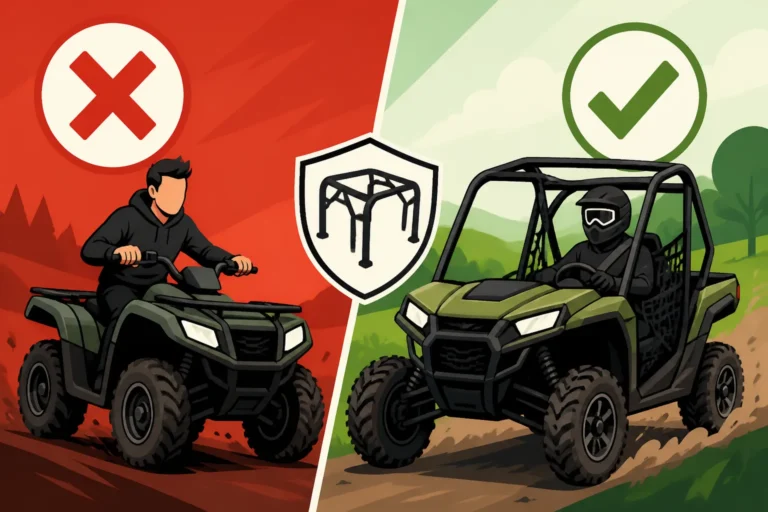
This exemption applies primarily to side-by-side (UTV) vehicles, but it's important to read the fine print carefully. If your ORV is equipped with a factory-installed Roll-Over Protective Structure (ROPS) and seatbelts that are being worn by all occupants, then a helmet might not be required. This is often the case for many modern UTVs, which are designed with safety features resembling those found in cars.
Think of it this way: the ROPS acts as a safety cage, providing a degree of protection in a rollover event, while the seatbelt keeps you securely inside that protective zone. This combination is deemed by the law to offer an equivalent level of head protection to a helmet in certain circumstances. This is a significant consideration for those who enjoy the versatility of UTVs for work or recreational group rides. Many UTVs, especially those built for utility or family touring, feature these safety structures.
However, don't assume every UTV automatically qualifies. Aftermarket roll cages or modifications that aren't factory-installed might not meet the legal definition. Always ensure that the ROPS is original equipment and that everyone in the vehicle is buckled up. If a passenger isn't wearing their seatbelt, then the helmet exemption for the entire vehicle might be void. This is also where you might see some accessories from brands like SuperATV that enhance the safety and utility of your UTV, but always verify that any additions comply with local regulations, especially concerning structural components.
| Exemption Condition | Applies To | Key Requirement / Context |
|---|---|---|
| Agricultural Work | Farmers, ranchers | Actively engaged in farming operations |
| Commercial Fishing | Licensed commercial fishers | Actively engaged in commercial fishing duties |
| Licensed Trapping | Licensed trappers | Actively engaged in trapping on their registered trapline |
| ROPS & Seatbelts | Side-by-sides (UTVs) | Factory-installed Roll-Over Protective Structure AND all occupants belted |
| North of 53rd Parallel (Specific Work) | Hydro employees, essential service providers | Specific work duties, May 1 to October 31 |
| Remote Community (Local Travel) | Residents within a designated remote community | Local travel within the community, not on provincial highways |
Specific Geographic Areas and Utility Work
There are also exemptions tied to specific geographical locations or specialized work in those areas. For instance, employees of Manitoba Hydro or other essential service providers working north of the 53rd parallel (a common geographic boundary in Manitoba) may have helmet exemptions for certain duties, but often only during a specific time frame, typically May 1 to October 31. This acknowledges the unique conditions and practicalities of working in Manitoba's northern regions during the warmer months.
Additionally, residents within a designated "remote community" might have exemptions for local travel within that community. A remote community, for the purpose of the ORV Act, is generally one that doesn't have year-round access by all-weather roads [What Counts as a Remote Community for Registration]. The idea here is to allow residents to use ORVs as essential transportation within their community without the strict helmet rule, recognizing that for many, these machines are a primary mode of getting around for daily tasks. However, this exemption doesn't extend to riding outside the community or on provincial roadways that might pass through it. You still need to be mindful of [Manitoba ORV Road Rules Explained] even within these areas.
It's vital to remember that these exemptions are highly specific. They are not meant for general recreational riding, even if you happen to be visiting or living in one of these areas. If you're a recreational rider, your best bet is always to wear a helmet, regardless of your location. The legal and safety benefits far outweigh the inconvenience.
What Constitutes an Approved Helmet?
It's not enough to just put any helmet on your head. The Off-Road Vehicles Act in Manitoba specifies that the helmet must meet certain safety standards to be considered "approved." This is critical because an unapproved helmet, even if it feels protective, might not offer the necessary impact resistance or structural integrity in a crash. You wouldn't trust a cheap, uncertified bike helmet on a high-speed ORV, would you? The same principle applies here.
The aim of these standards is to ensure the helmet can withstand specific types of impacts, distribute force effectively, and remain securely on your head. It's about proven, tested protection, not just looking the part. Many riders don't realize that their old, hand-me-down helmet might not cut it anymore, either due to age or original certification [Keeping an Older Helmet the Rules Still Accept]. Always check the labels and ensure your helmet is up to current acceptable standards.
Recognized Safety Standards
In Manitoba, an approved ORV helmet typically must meet one of several internationally recognized safety standards. The most common ones you'll see are:
- Snell: This is a very rigorous standard, primarily focused on motorcycle helmets, but widely accepted for ORV use due to its high testing benchmarks. A Snell-certified helmet has undergone extensive impact testing to ensure maximum protection.
- DOT FMVSS 218: This is the Federal Motor Vehicle Safety Standard 218, a standard set by the U.S. Department of Transportation (DOT). You'll see a "DOT" sticker on the back of many helmets, indicating it meets these minimum requirements for head protection.
- ECE 22.05/22.06: This is a European standard (Economic Commission for Europe) that is also widely accepted globally and is known for its comprehensive testing.
You'll usually find a sticker or label inside the helmet, often on the back or under the padding, indicating which standard it meets. If your helmet doesn't have one of these certifications clearly displayed, it likely does not meet the legal requirements in Manitoba. It's not about brand names or fancy designs; it's about that specific certification mark [Manitoba Helmet Standards Accepted].
When you're shopping for a new helmet, whether it's for yourself or for a young rider, always prioritize these certifications. A reputable dealer or online retailer will clearly list the safety standards for their helmets. Don't be swayed by price alone; your head's protection is worth the investment. Think of it as purchasing insurance for your brain – it's something you hope you never need, but you're profoundly grateful for it if you do.
Proper Fit and Maintenance
Even an approved helmet won't do its job effectively if it doesn't fit properly or if it's damaged. A helmet should fit snugly, without being uncomfortably tight, and it should not move around on your head when you shake it. The chin strap should be securely fastened so that the helmet can't be easily pulled off. Many riders make the mistake of wearing a helmet that's too loose, which can cause it to shift during an impact, rendering it less effective.
Here's a quick checklist for helmet fit:
- Snugness: It should feel firm all around your head, with no pressure points.
- Movement: When you shake your head side to side and up and down, the helmet should not move independently of your head. Your scalp should move with the helmet.
- Vision: It shouldn't obscure your peripheral vision.
- Strap: The chin strap should be tight enough that you can't roll the helmet off your head.
Beyond fit, maintenance is crucial. Helmets have a lifespan, and their protective qualities can degrade over time due to UV exposure, sweat, and general wear and tear. If your helmet has been in a crash, even if it looks fine on the outside, its internal structure may be compromised, and it should be replaced immediately. Helmets should also be stored in a cool, dry place away from direct sunlight and harsh chemicals. If you see cracks in the shell, frayed straps, or significant degradation of the padding, it's time for a new one.
Regularly inspecting your helmet, along with other critical safety gear like your gloves, boots, and eye protection (especially if your helmet doesn't have a built-in visor), is just good practice before every ride. You can find quality gear from various sources, including online retailers like SuperATV, that specialize in ORV accessories. Ensuring your helmet is in top condition is as important as its initial certification.
Penalties and Enforcement for Non-Compliance
Ignoring Manitoba's helmet law isn't just risky for your health; it also carries legal consequences. Law enforcement, including RCMP, local police, and Conservation Officers, have the authority to pull over ORV riders and issue citations for non-compliance. These penalties are designed to deter unsafe riding practices and enforce the importance of head protection.
It's tempting to think you won't get caught, especially if you're riding in more remote areas. However, officers are often patrolling trails, roadways where ORVs are permitted to cross, and even remote access points [Manitoba Equipment Checks by Officers]. They are well aware of the regulations and are there to ensure everyone's safety. Getting pulled over for a helmet violation can quickly turn a fun day of riding into a costly and frustrating experience.
Fines and Immediate Consequences
If you're caught operating or riding an ORV without an approved helmet, and you don't meet one of the specific exemptions, you can expect a fine. These fines are not trivial and can quickly add up, especially if there are multiple unhelmeted riders on a single machine. While I can't give specific dollar amounts, be aware that violations of the Off-Road Vehicles Act can carry general penalties, which can be quite substantial [The $2,000 General Penalty Under the ORV Act].
Beyond the monetary fine, there could be other immediate consequences. An officer might issue an order to stop riding until the violation is corrected, meaning your day on the trails could be cut short. In some cases, depending on the severity and context, an officer might even have the discretion to impound your machine, though this is usually for more serious infractions. It’s always best to be prepared and compliant, ensuring your [Carrying Your Registration Card on Every Ride] and all other required documents are in order, and most importantly, that you're wearing your helmet.
Remember, the goal of enforcement isn't just to punish; it's to promote safety. The fines serve as a strong incentive to encourage riders to protect themselves and those riding with them. It's a clear message from the province that head protection is not optional for most ORV activities.
Impact on Insurance and Liability
This is a critical, often overlooked aspect of helmet law compliance. In the unfortunate event of an accident, if you were not wearing an approved helmet and were required to by law, it could significantly impact your insurance claim and your liability. Even if you have comprehensive coverage, including accident benefits purchased separately [Accident Benefits Bought Separately], an insurance provider might reduce or deny benefits if your injury was directly related to not wearing a helmet.
Think about it: insurance companies assess risk. If you're not following a fundamental safety law designed to prevent injury, they may argue that you contributed to the severity of your own injuries. This could leave you on the hook for substantial medical costs, lost wages, and other expenses that would otherwise have been covered. This is why understanding [Manitoba Insurance Included With Registration] and what basic coverage doesn't cover, like personal injury in many cases [Why Basic Manitoba ORV Coverage Skips Injuries], is so important.
Furthermore, if you are involved in an accident where another party is injured, and it is determined that your non-compliance with the helmet law contributed to the incident or its severity, your liability could increase dramatically. This could lead to lawsuits and further financial strain. It's a stark reminder that the helmet law isn't just about protecting yourself, but also about protecting your financial well-being and legal standing in case of an unforeseen incident. Prioritizing safety through compliance is the best way to avoid these potential headaches.
Final Thoughts on Helmet Safety in Manitoba
Navigating the rules for ATV and UTV riding in Manitoba can feel like a lot to take in, but understanding the helmet law is one of the most fundamental aspects of responsible and safe operation. While there are specific, limited exemptions for certain work-related activities or in very particular geographical contexts, the overarching rule is clear: if you're on an off-road vehicle in Manitoba, you almost certainly need to be wearing an approved helmet.
This isn't just about avoiding a ticket, although the fines can be significant. It's about protecting yourself and your loved ones from severe injury. A proper helmet, meeting recognized safety standards like DOT, Snell, or ECE, is your best defense against head trauma in an accident. And remember, even the best helmet is only effective if it fits correctly and is in good condition. Regularly inspect your gear, replace it when necessary, and always ensure your chin strap is securely fastened.
For many of us, ORV riding is a cherished pastime, a way to connect with the incredible natural beauty of Manitoba, whether it's on a well-maintained club trail, through the rugged bush, or simply enjoying time outdoors with family and friends. By embracing the helmet law, you're not only complying with provincial regulations but also making a conscious choice to prioritize safety, ensuring that your riding adventures remain positive memories for years to come. So, before you head out, gear up, buckle up (if applicable), and always put that helmet on!
Disclaimer
This article is for general informational purposes only and does not constitute professional advice. Laws, prices and regulations vary by location and change over time. Consult a qualified professional for guidance on your specific situation.