Manitoba Shoulder Riding for Farming Only
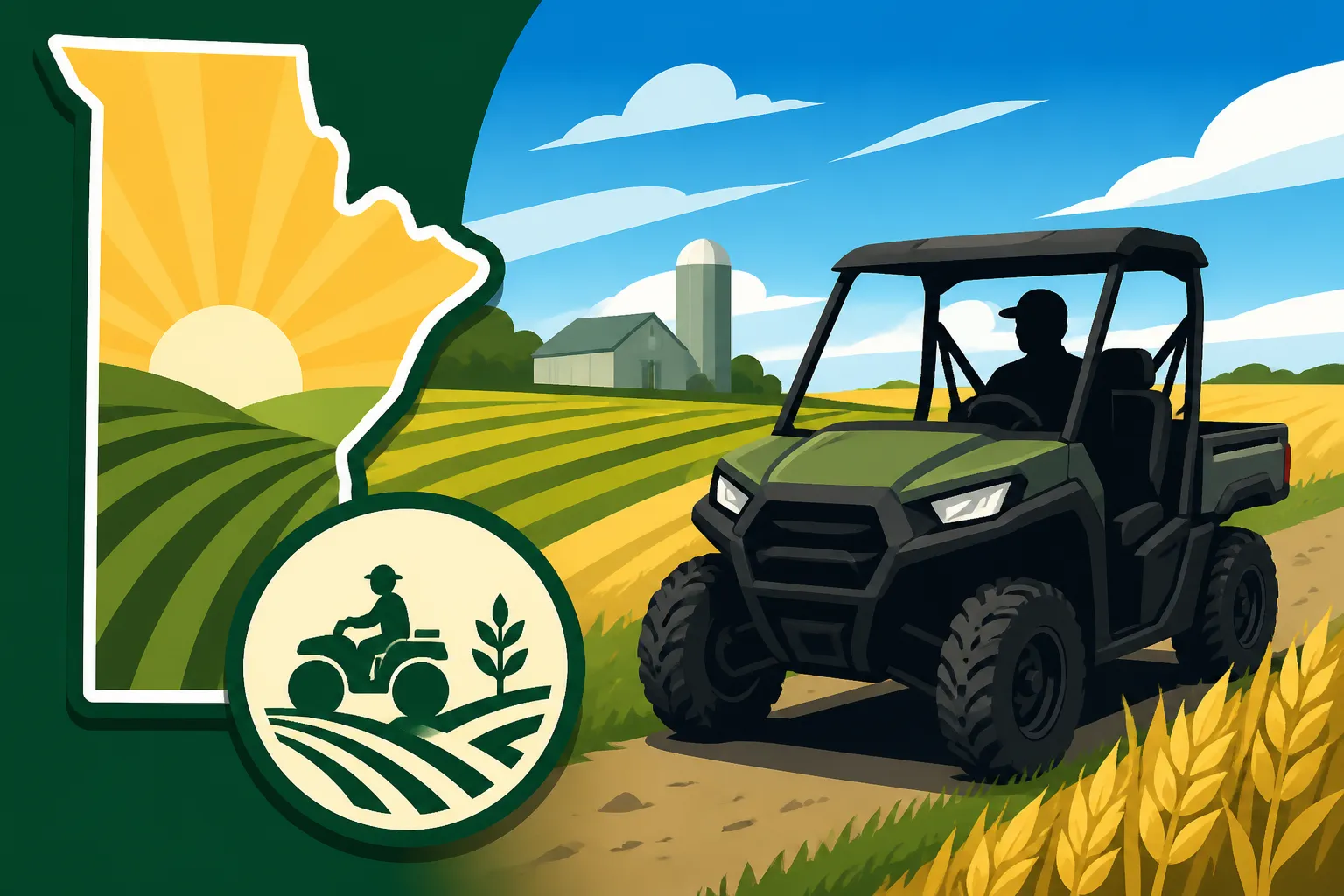
It's a common sight across Manitoba, especially in our rural communities: a farmer on their ATV or UTV, heading from one field to another, or perhaps just to check on a fence line. Naturally, many riders wonder if they can use the shoulder of the road to get where they need to go, thinking it's safer than the ditch or more direct than avoiding roads altogether. However, Manitoba's rules around shoulder riding for off-road vehicles (ORVs) are incredibly specific, often leading to confusion and, unfortunately, tickets for those who don't know the nuances. This guide will meticulously break down the strict regulations, clarifying when – and only when – an ATV or UTV can legally use a road shoulder, focusing squarely on the agricultural exemption and dispelling common myths.
The Strict Reality of Manitoba's Shoulder Riding Rules
Let's get straight to it: for most ATV and UTV riders in Manitoba, riding on the shoulder of a public road is generally off-limits. It’s a hard truth for many who see an open stretch of pavement beside the roadway and think it might be a convenient path. However, the provincial legislation is quite clear, and the exceptions are few and far between, designed to serve very particular purposes. This isn't a case of "if the ditch is clear, the shoulder must be too." The rules for ditches and shoulders are distinct, reflecting different safety considerations and intended uses within the road allowance.
Why "Shoulder Riding" Isn't a General Privilege
The core reason shoulder riding isn't a general privilege for ORVs boils down to safety and the intended purpose of the road infrastructure. Shoulders are typically designed to provide a safe buffer for vehicles that are momentarily stopped, disabled, or in emergency situations. They are also used by pedestrians and cyclists in many areas. Introducing off-road vehicles, which can operate at different speeds, have different visibility profiles, and may not handle like road-going vehicles, creates a significant safety hazard for everyone involved. The province prioritizes the smooth and safe flow of conventional traffic on roadways and reserves shoulders for specific, limited uses.
When you're out riding, it's easy to look at a wide, paved shoulder and think, "What's the harm here?" But the law doesn't differentiate based on how safe a particular shoulder feels to you. It's about the overarching rules that apply across the board. Many riders assume that because they can legally traverse a ditch in many areas, the adjacent shoulder would offer a similar, if not safer, option. This is a critical misconception. While [Manitoba Ditch Riding Rules] allow for ORV travel under certain conditions, these conditions do not automatically extend to the shoulder. The shoulder is, in the eyes of the law, much more closely tied to the "roadway" itself, which [Manitoba Roadways Are Closed to Every Off-Road Machine] for general ORV use. The strictness around shoulders is a direct reflection of the province's commitment to highway safety, aiming to keep non-roadworthy vehicles out of areas where they could pose a risk to high-speed traffic.
The Definition of a "Roadway" and "Shoulder" in Manitoba
To truly understand why shoulder riding is so restricted, we need to know what the province considers a "roadway" and a "shoulder." In Manitoba, the Highway Traffic Act and the Off-Road Vehicles Act define these terms quite specifically, and it's these definitions that dictate where an ORV can and cannot go.
A "roadway" is essentially the part of the highway that is improved, designed, or ordinarily used for vehicular traffic. Think of it as the main driving lanes. This is why you cannot generally drive your ATV or UTV directly on the main thoroughfare. The shoulder, on the other hand, is the portion of the highway that is immediately adjacent to the roadway and is used for stopping, parking, or for emergency use. It's often paved or graveled but is not intended for continuous travel by moving vehicles, especially not ORVs.
Understanding this distinction is crucial. When you're on your quad or side-by-side, even if you're just beside the paved driving lanes on a smooth, clear section, you're still on the "shoulder" of the highway. This means you are subject to rules that are much stricter than those governing ditches or off-road trails. The legislation views the shoulder as part of the broader "highway," and therefore, operating an ORV on it falls under a different set of regulations than merely operating on private land or designated trails. This legal framework impacts every type of ORV, from a compact sport quad to a larger utility UTV, like those you might customize with accessories from SuperATV. Without a clear understanding of these definitions, riders can unknowingly find themselves in violation of the law, simply by misinterpreting where the "roadway" ends and where legal ORV operation might begin.
The Agricultural Shoulder Exception: What It Means
Now, let's dive into the one primary exception that allows for shoulder riding: agricultural use. This isn't a loophole for casual riders; it's a specific provision carved out for those engaged in farming, recognizing the unique needs of agricultural operations that often span land parcels separated by public roads. This exception is designed to allow farmers to move their machinery, including ATVs and UTVs, in a safe and efficient manner when directly related to their work. It's a pragmatic approach to support the agricultural sector, but it comes with stringent conditions.
Who Qualifies as a "Farmer" Under the Rules?
It's not enough to simply live in a rural area or own a property with a few chickens to qualify for this exemption. The "agricultural shoulder exception" is specifically for individuals engaged in bona fide farming operations. This generally means someone who derives a significant portion of their livelihood from cultivating land, raising livestock, or producing agricultural commodities. We're talking about crop farmers, ranchers, dairy producers, and similar commercial agricultural enterprises.
The key here isn't just who you are, but why you're riding. An individual who happens to own a small acreage and uses their quad to ride around their yard doesn't automatically qualify to use the road shoulder. The use of the ORV must be in the direct course of conducting agricultural activities. For instance, a farmer moving between two fields on opposite sides of a road, or heading to check on a remote pasture where their cattle are grazing, would likely qualify. However, that same farmer taking their UTV into the nearest town for groceries, even if they're still wearing their farm clothes, would not. The exemption is tied to the purpose of the travel, not merely the occupation of the operator. It's about necessity for their livelihood, not convenience for personal errands. The intent behind the ride is what matters most to law enforcement.
What Kind of Agricultural Activity Is Permitted?
The agricultural activities that permit shoulder riding are those directly related to the operation and management of a farm. This includes a range of tasks where an ORV provides a practical, efficient, and often essential means of transport.
Common examples include:
- Moving between fields: If a farmer owns fields on both sides of a provincial road, they might use their ATV or UTV to transport small tools, check irrigation systems, or simply move between work sites.
- Accessing remote equipment: Hauling a small piece of equipment or a repair kit to a tractor or combine that's broken down in a distant part of a field accessible only via a shoulder.
- Checking livestock or fences: Farmers with livestock grazing in pastures adjacent to or across a road may use an ORV to monitor their animals or inspect fencing.
- Transporting agricultural products: Moving small quantities of produce, feed, or supplies between farm buildings or fields, provided it’s directly part of the farm operation.
What definitely isn't covered by this exemption is equally important to understand. You cannot use the shoulder for:
- Recreational riding: Taking your UTV out for a leisure cruise, even if you live on a farm.
- Commuting to town: Driving to the nearest community for supplies, banking, or social visits.
- Transporting non-agricultural items: Hauling personal gear or items unrelated to farm work.
- Harvesting wood for personal use: While potentially rural, this isn't typically considered "farming" under the Act.
The emphasis is always on the direct, essential connection to commercial agricultural production. If you can't clearly articulate how your shoulder use is part of your farming operation, you likely don't qualify for the exemption. This is also why having visible farm-related equipment or a specific UTV setup, perhaps with cargo boxes or specialized attachments from SuperATV, can sometimes help convey the purpose of your travel if questioned by authorities.
Conditions and Requirements for Agricultural Shoulder Use
Even when a farmer qualifies for the agricultural exception, they can't just hop on their ORV and zip down the shoulder without adhering to specific rules. This exception comes with important conditions designed to ensure safety for both the ORV operator and other road users. These requirements often relate to how the machine is equipped and how the operator conducts themselves, ensuring that even under the exemption, visibility and adherence to basic road safety principles are maintained.
Equipment and Machine Requirements
One of the most critical aspects of legally using a road shoulder for agricultural purposes involves how your ATV or UTV is equipped. These aren't just suggestions; they are legal requirements intended to make your machine as visible as possible to conventional road traffic, which is often moving at much higher speeds.
The primary requirement is the display of a slow-moving vehicle (SMV) sign. This is that distinctive orange-red triangle with a fluorescent red border that you often see on the back of tractors or combines. It's not just a suggestion; it's mandatory. This sign alerts drivers approaching from behind that your vehicle is operating at a speed significantly lower than the posted limit. For an ORV, this sign needs to be clearly visible on the rear of the machine, affixed securely so it doesn't sway or become obscured. [Manitoba Slow-Moving Vehicle Signs] are non-negotiable for this type of operation.
Beyond the SMV sign, adequate lighting is paramount, especially if you're operating near dawn, dusk, or in conditions of reduced visibility. Your ATV or UTV must have:
- Headlights: Capable of illuminating the path ahead.
- Taillights: Clearly visible from the rear.
- Reflectors: Additional reflective material can further enhance visibility.
While not explicitly required for all agricultural shoulder use, an orange flag mounted on a whip pole can also significantly improve your visibility, especially for smaller ATVs that might be harder to spot in tall crops or behind other vehicles. Think about how a UTV, particularly if it's hauling something, can be less visible than a car. Enhancing your machine's visibility with appropriate lights and markings, especially if you've added large cargo boxes or specialized farm implements, is not just about compliance but about your personal safety. Many manufacturers and aftermarket providers like SuperATV offer robust lighting kits and mounts for these essential safety features, making it easier for farmers to equip their machines properly.
Operator Licensing and Age Restrictions
Even if you're a seasoned farmer and an experienced ORV operator, the rules regarding who can drive on the shoulder for agricultural purposes are still strict. It’s not a free-for-all; the province ensures that operators meet certain baseline competencies for operating alongside public roadways.
Firstly, the operator must hold a valid driver's license. This is a non-negotiable requirement. While you don't necessarily need a specific ORV endorsement, your regular Class 5 (or equivalent) driver's license is required. [Do You Need a Licence for an ATV in Manitoba?] for general ORV operation usually isn't necessary, but for any roadway-adjacent travel, it absolutely is. This ensures that the operator has passed basic road rules knowledge and driving tests. An operator with a learner's permit, for example, would not be permitted to use the shoulder for agricultural purposes, as they are not yet fully licensed.
Age restrictions also apply. While the [Manitoba Age Tiers for Young Riders] allow younger riders to operate ORVs in certain contexts, these relaxed rules do not extend to operating on a road shoulder for agricultural purposes. The operator must be of an age that allows them to hold a full, unrestricted driver's license. For a young farmer, even if they are legally allowed to drive an ORV on their own land, operating on a road shoulder requires the maturity and legal standing of a fully licensed driver. This is another layer of protection, acknowledging the inherent risks of sharing road space with faster-moving vehicles.
It's also important to remember that all other general ORV operating rules still apply, such as wearing an approved helmet unless specifically exempted (e.g., if your UTV has approved roll-over protection, as discussed in [Manitoba Helmet Law and Its Exemptions]). The agricultural exemption is about where you can ride, not a blanket waiver of all safety regulations.
Operational Guidelines and Safety Considerations
Operating an ORV on a public road shoulder, even with the agricultural exemption, is serious business. It requires a heightened sense of awareness and adherence to specific operational guidelines to ensure the safety of everyone on or near the road. The goal is to minimize potential hazards and prevent accidents between slow-moving ORVs and faster-moving conventional vehicles.
Speed Limits and Safe Operation on Shoulders
One of the most critical operational guidelines for agricultural shoulder use is the speed limit. You cannot simply match the speed limit of the adjacent roadway. Instead, there is a specific, lower speed limit for ORVs operating under this exemption. In Manitoba, the maximum speed for an ORV travelling on a road shoulder under the agricultural exemption is 40 km/h. [Manitoba's 40 km/h Shoulder Limit] is set to minimize the speed differential between your ORV and other traffic, giving drivers more time to react.
Safe operation extends beyond just the speed limit. You must maintain complete control of your machine at all times. This means:
- Constant vigilance: Keep an eye on traffic behind and ahead, as well as any pedestrians or obstacles on the shoulder.
- Predictable movements: Avoid sudden swerving or abrupt stops. Signal your intentions if possible (though most ATVs/UTVs lack turn signals, hand signals should be used if safe and clear).
- Load management: If you're hauling tools, feed, or other farm supplies, ensure your load is properly secured and does not exceed your machine's weight limits or obstruct your view. An improperly loaded UTV, even one equipped with heavy-duty components from SuperATV, can become unstable, especially at speed or during turns.
- Weather conditions: Adjust your speed and caution based on weather. Rain, snow, ice, or even heavy dust can significantly reduce traction and visibility.
Remember, even though you have a legal right to be on the shoulder for agricultural purposes, you are still the more vulnerable party in any interaction with conventional road traffic. Defensive driving is paramount.
Interacting with Other Traffic and Road Users
Navigating a road shoulder means you are sharing space, directly or indirectly, with other road users. How you interact with them can significantly impact safety.
- Yielding to faster traffic: While on the shoulder, you should always be prepared to yield to any conventional traffic that might be entering or exiting the roadway, or even briefly using the shoulder for an emergency.
- Maintaining distance: Keep a safe distance from the edge of the paved roadway and from any other vehicles or pedestrians on the shoulder.
- Visibility for others: Position your machine on the shoulder in a way that maximizes your visibility. If a driver approaching from behind cannot clearly see your SMV sign or lights, you are increasing the risk of an incident.
- Crossing the roadway: If your agricultural activity requires you to cross the main roadway, you must follow specific crossing rules. This typically involves stopping, yielding to all traffic, and crossing at a 90-degree angle when safe to do so. [Manitoba Crossings Need a Driver's Licence] and [Manitoba Crossings Need a Clear View] are critical elements to remember. Crossing rules are just as strict, if not more so, than shoulder-riding rules because they involve entering active traffic lanes.
The responsibility for safe operation rests squarely on the ORV operator. Even if other drivers are not as attentive as they should be, it's your duty to operate your machine in a manner that mitigates risk. This might mean pulling over and waiting for traffic to clear, even if you are technically allowed to proceed. When operating an ORV in any public space, especially one shared with other vehicles, anticipate the unexpected and prioritize safety above all else.
Distinguishing Shoulder Riding from Ditch Riding
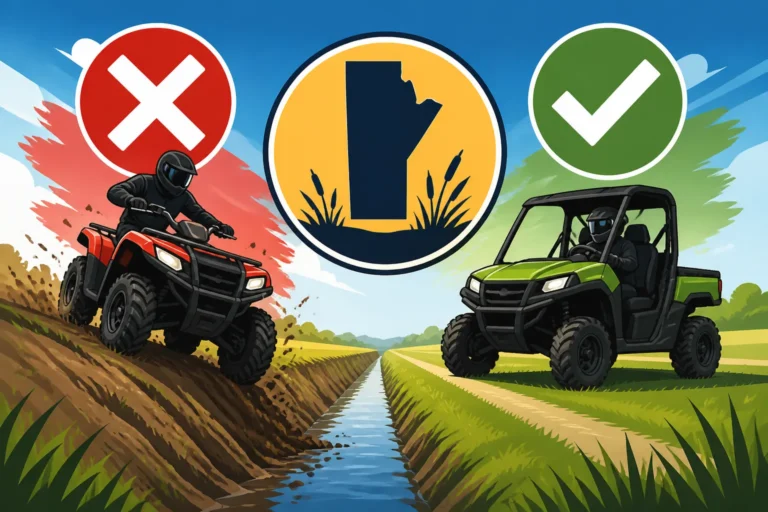
This is where a lot of confusion, and subsequent legal trouble, arises for riders. Many assume that ditches and shoulders are essentially the same – just different parts of the road allowance. However, under Manitoba law, they are treated quite differently, with separate rules and exemptions. Misunderstanding this distinction can quickly lead to fines or worse.
The Critical Differences Between Ditch and Shoulder Rules
Let's lay out the key differences between operating an ORV in a ditch versus on a shoulder in Manitoba.
Ditch Riding:
- General Permissibility: [Manitoba Ditch Riding Rules] are generally more permissive for ORV use, especially outside of specific urban or restricted areas. Many riders rely on ditches for travel between properties, access to trails, or even as part of recreational routes.
- Purpose: While still requiring responsible operation, ditch riding is allowed for a broader range of purposes, including recreational travel, provided other rules (like age, speed, time of day, and proximity to dwellings) are followed.
- Machine Requirements: Basic registration and insurance are mandatory, but the specific requirement for a slow-moving vehicle sign is generally not required for ditch riding alone.
- Operator Requirements: A full driver's license is required for crossing a roadway from a ditch, but not necessarily for simply riding in the ditch itself (though age restrictions apply for younger riders).
Shoulder Riding:
- General Prohibition: As we've established, shoulder riding is generally prohibited for ORVs, except for very specific exemptions.
- Purpose: The primary exemption, and the focus of this guide, is strictly for agricultural purposes. It is not for recreation, commuting, or other general travel.
- Machine Requirements: The slow-moving vehicle sign is mandatory for agricultural shoulder use, along with adequate lighting.
- Operator Requirements: A valid, full driver's license is mandatory for operating on the shoulder under the agricultural exemption.
The key takeaway is this: just because you see a clear, dry ditch and know you could legally ride there, do not assume the adjacent shoulder is fair game. The shoulder is considered closer to the "roadway" itself in terms of legal treatment, which means it carries much stricter operating conditions. The purpose for your travel is the absolute defining factor for shoulder use; for ditches, the rules are more about how you ride and where, not exclusively why.
| Feature | Ditch Riding (General) | Shoulder Riding (Agricultural Exemption) |
|---|---|---|
| Permissibility | Generally permitted with conditions | Generally prohibited; exception for agricultural use only |
| Purpose of Travel | Recreational, access, agricultural | Strictly agricultural purposes (e.g., farm work) |
| Operator License | Driver's license required for crossings, not always for general ditch travel (age limits apply) | Full driver's license mandatory |
| Speed Limit | Varies; generally lower than roadway, depends on specific by-laws or context | Maximum 40 km/h |
| SMV Sign | Not generally required | Mandatory |
| Primary Danger | Obstacles, hidden hazards, crossing traffic | High-speed adjacent traffic, speed differential |
| Visibility Needs | Lights at night, general awareness | SMV sign, lights, high visibility for all conditions |
Penalties for Misusing Road Shoulders
Riding an ORV on a road shoulder without meeting the specific agricultural exemption or other very rare, specific circumstances is a violation of the Off-Road Vehicles Act. The penalties for such infractions can be significant and are designed to deter unsafe operation on public highways.
If you are caught riding your ATV or UTV on a road shoulder for a non-agricultural purpose, or if you are a farmer who is not meeting all the conditions (e.g., no SMV sign, no valid driver's license), you can expect to face fines. [Manitoba Ticket Costs for Riders] can quickly add up, and these aren't minor expenses. Beyond the immediate financial penalty, there can be other consequences. Repeated infractions could lead to more severe penalties, and depending on the nature of the violation, it could even impact your driver's license points, just like a regular traffic ticket.
Furthermore, if an incident or accident occurs while you are illegally operating on a road shoulder, your liability could be significantly higher. Your insurance coverage might be affected if you were operating your machine in violation of provincial law. While [Manitoba Insurance Included With Registration] provides basic liability, operating outside the law can complicate claims and leave you personally exposed to costs that insurance might otherwise cover. Law enforcement officers, particularly the RCMP or local police, are well-versed in the ORV Act, and [Manitoba Equipment Checks by Officers] can include verifying your compliance with all operating conditions, not just registration. It’s far better to err on the side of caution and ensure you are fully compliant than to risk a costly and potentially dangerous encounter with the law or other vehicles.
Practical Advice for Farmers and Responsible Riders
Understanding the letter of the law is one thing, but applying it practically in your day-to-day operations or recreational riding is another. For farmers, navigating the agricultural shoulder exemption requires careful thought and proactive measures. For all other riders, it means recognizing when a shoulder is simply not an option.
Documenting Agricultural Use
While there's no official "agricultural permit" you carry for your ORV, being prepared to demonstrate your legitimate agricultural use can be incredibly helpful if you're ever questioned by law enforcement. It's about showing that your intent and actions align with the spirit of the exemption.
Consider these practical steps:
- Machine Setup: If your ORV is genuinely used for farm work, it often looks the part. A utility UTV equipped with a sprayer, a cargo box filled with fence repair tools, or a small trailer hitch for towing farm implements (perhaps reinforced with SuperATV components) sends a clear message. A sport quad with aggressive tires and no utility features might raise more questions about its purpose on the shoulder.
- Cargo: What you are carrying can be a strong indicator. Bales of hay, bags of feed, tools, or parts for farm machinery are obvious signs of agricultural activity. If your UTV is loaded with fishing gear or picnic supplies, it's pretty clear your trip isn't for farming.
- Route and Destination: Be able to articulate where you are coming from and where you are going, and how that route directly relates to your farm operation. "I'm heading to my north field to check the irrigation" is a strong justification. "I'm just going for a spin" is not.
- Farm Identification: If you have farm-branded clothing, vehicle decals, or even a farm business card, these could serve as supplementary evidence of your occupation, reinforcing your claim of agricultural use.
Remember, the goal isn't to trick anyone, but to clearly and truthfully present your situation if an officer needs clarification. A little preparation can go a long way in avoiding misunderstandings.
When to Choose an Alternative Route
For all riders, and especially for farmers, it's vital to prioritize safety and legality. Even if you theoretically qualify for the agricultural exemption, there might be times when using the shoulder simply isn't the safest or smartest option.
- High Traffic Volume: If the adjacent roadway has heavy, fast-moving traffic, or poor visibility (e.g., blind curves, hills), consider if the risk outweighs the convenience. Even if legal, it might not be wise.
- Weather Conditions: Icy shoulders, heavy rain, or thick fog can make shoulder riding treacherous. Your ORV might not handle these conditions as predictably as a road vehicle.
- Alternative Paths: Are there safer alternatives? Can you travel through your fields? Is there a designated ORV trail nearby that connects your properties? Sometimes, a slightly longer route off the shoulder, or even [Hauling a Machine to a Manitoba Club Trail] on a trailer, might be the more responsible choice.
- Questionable Legality: If you're unsure whether your specific situation falls under the agricultural exemption, it's always best to assume it does not. Don't risk a ticket or, more importantly, an accident. When in doubt, avoid the shoulder.
Remember, the agricultural exemption is a privilege to facilitate farming, not an invitation for casual use of public road infrastructure. Responsible riding means knowing the rules, understanding the risks, and making smart choices that keep you and others safe. Always carry your [Manitoba Registration Cards Carried at All Times] and other necessary documentation. The more informed and prepared you are, the better your riding experience will be in Manitoba's diverse landscapes.
Disclaimer
This article is for general informational purposes only and does not constitute professional advice. Laws, prices and regulations vary by location and change over time. Consult a qualified professional for guidance on your specific situation.