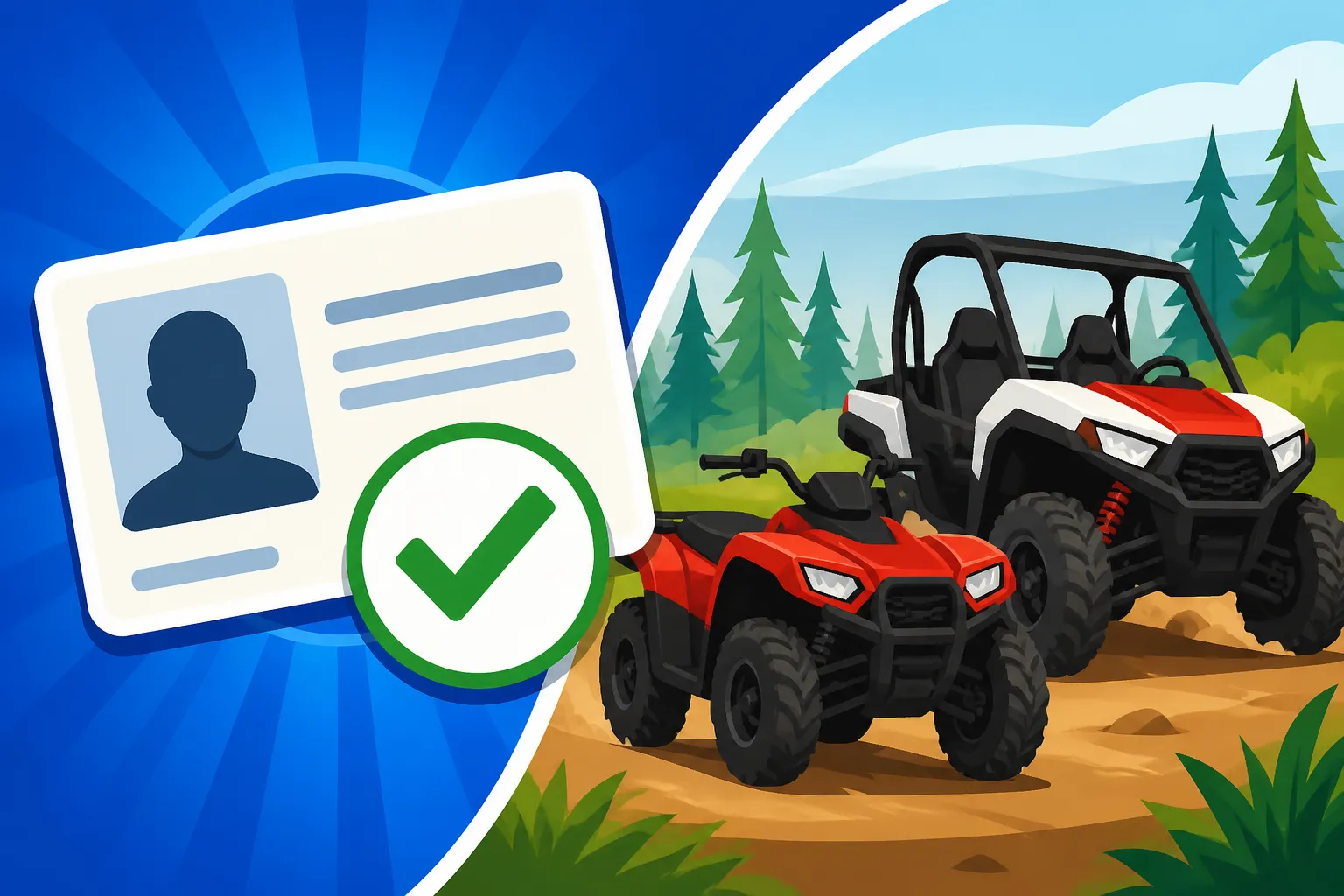
Your Licence Must Carry No ORV Restriction
Riding an ATV or UTV in Manitoba can be an incredible way to explore our beautiful province, but figuring out the exact rules, especially concerning your driver's licence, often leaves riders scratching their heads. Many folks assume that if they have any kind of driver's licence, they're good to go, only to find out there are specific caveats and restrictions that can land them in hot water. This guide will cut through the confusion, explaining precisely what kind of driver's licence you need to legally operate your off-road vehicle (ORV) in Manitoba, particularly when venturing off private property and onto areas where a licence is mandatory.
Understanding Manitoba's ORV Licence Requirements
It's not enough to simply have a driver's licence tucked away in your wallet. When it comes to operating an off-road vehicle on public roadways, shoulders, or even in designated ditches, the type and status of your licence matter immensely. The province of Manitoba has specific expectations for ORV operators, and failing to meet them can result in fines, penalties, and even loss of driving privileges. It's all about ensuring everyone on or near shared spaces is qualified and understands the rules of the road – even the unpaved ones.
The Basic Driver's Licence Expectation for ORVs
For most situations where you'll be operating an ORV in Manitoba on anything other than strictly private land (and even then, there are nuances), you're expected to hold a valid Class 5 Full Stage driver's licence. This is your standard, unrestricted licence that most Manitobans hold for driving cars and light trucks. The reason for this is simple: when you're interacting with public infrastructure, even briefly, you're expected to understand and abide by the rules of the road. This includes everything from signalling intentions to yielding right-of-way, skills that are taught and tested for a Class 5 licence. Without this fundamental understanding and proven capability, you could pose a risk to yourself and others.
Think about it this way: even if you're just crossing a highway, you're still part of the traffic flow for a moment. You're expected to make safe decisions, observe traffic, and execute the manoeuvre properly. This requires the same judgment and knowledge as driving a car, which is why Manitoba's regulations link these activities to a standard driver's licence. The rules are designed to keep everyone safe, whether they're in a car, on a motorcycle, or operating an ORV.
What "No ORV Restriction" Truly Means
The phrase "Your Licence Must Carry No ORV Restriction" goes beyond just having a Class 5 licence. It specifically excludes situations where your licence might have conditions that would prevent you from safely or legally operating an ORV in situations where a licence is required. This primarily refers to learner's permits (Class 5L) and sometimes provisional licences (Class 5P), but it can also encompass specific medical conditions or legal restrictions placed on an individual's driving privileges.
For instance, if you hold a Class 5L learner's permit, you're already operating under significant restrictions: you need a supervising driver, you can't drive after midnight, and there are passenger limits. These restrictions inherently make you unable to meet the requirements for independently operating an ORV on public-access areas where a licence is mandatory. The law generally views an ORV as an independent vehicle, and therefore, an independent operator is required. A licence restriction for an ORV might also be imposed if you've had previous infractions or convictions related to impaired driving or dangerous operation of a motor vehicle. It's crucial to understand that any conditions on your licence that limit your general driving ability likely extend to ORV operation in the contexts where a licence is required. Checking with an Autopac agent is always a good idea if you're unsure about your specific licence conditions.
Age and Licensing for Off-Road Vehicle Operators
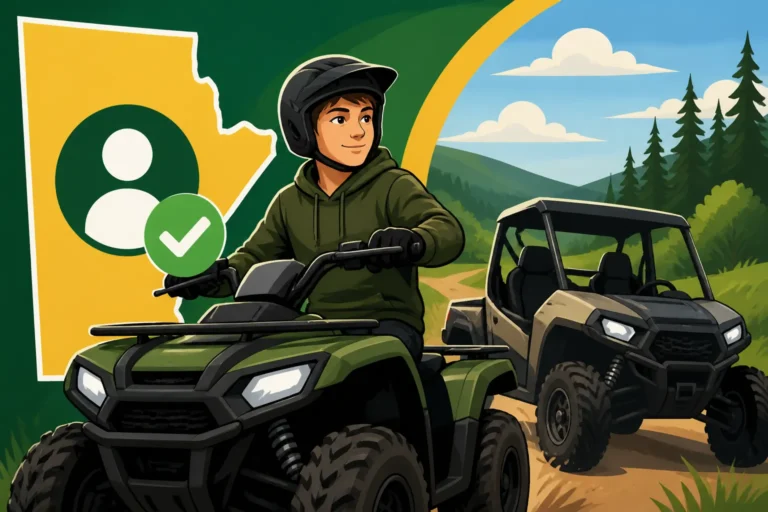
The age at which you can operate an ORV in Manitoba is closely tied to licensing, especially for younger riders. While a child under 14 can ride an ORV on private land with supervision, the rules shift dramatically as soon as you consider public access points. For riders aged 14 and 15, they are generally allowed to operate an ORV in ditches or on certain other routes without a full driver's licence, but they must be under the direct supervision of an adult who holds a Class 5 Full Stage licence and is at least 18 years old. This adult must also be operating an ORV and be able to provide immediate guidance and intervention. [Manitoba Rules for a 14-Year-Old Rider] provides more detail on this.
It's when a rider turns 16 that the full weight of the licensing requirement comes into play for certain types of public ORV use. At 16, a rider can register an ORV in their own name, but for operating that machine on roadways, shoulders (under specific conditions), or when crossing highways, they must possess at least a Class 5L (Learner) licence. However, remember the "no ORV restriction" rule; a learner's permit comes with its own set of limitations. For instance, [Manitoba Crossings Need a Driver's Licence] emphasizes that only a driver with a full licence can perform a highway crossing. So, while a 16-year-old might start the licensing process, the ability to fully navigate public ORV rules often requires a more advanced licence stage. It can be a real headache to keep all these age tiers straight, but it's essential for safe and legal riding.
Navigating Roadways, Shoulders, and Ditches with Your Licence
This is where many ORV riders in Manitoba find themselves in a bind. The perception that ORVs are only for trails or private land isn't entirely accurate. There are specific, limited circumstances where you can legally operate your ORV on public land that isn't a designated trail. However, these situations are heavily regulated, and having the correct, unrestricted driver's licence is paramount. Understanding these nuances can save you from a costly ticket or, worse, a dangerous incident.
When a Licence is Absolutely Essential for ORV Operation
There are several scenarios where a valid, unrestricted driver's licence isn't just a good idea, it's a legal requirement. These are typically situations where your ORV is interacting with or close to vehicular traffic, or where the rules of the road apply.
- Crossing a Highway: This is probably the most common scenario. If you need to cross a provincial highway or municipal road that is generally open to vehicular traffic, you absolutely must have a valid Class 5 Full Stage driver's licence. You can't cross with a learner's permit, and you must adhere to specific rules like stopping, yielding, and crossing at designated points. This isn't just about legality; it's about safety, as highway crossings are high-risk manoeuvres. [Manitoba Crossings Need a Driver's Licence] details these critical requirements.
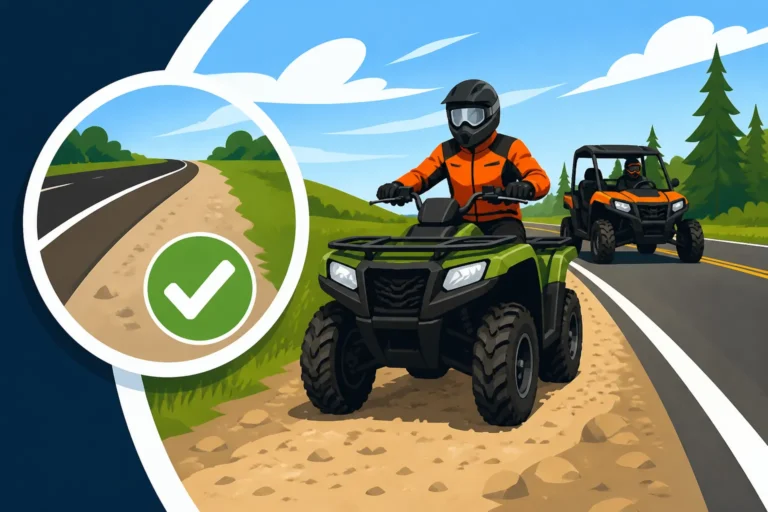
- Ditch Riding: In Manitoba, riding in the ditch to the right of a roadway is permitted in many areas, but again, a valid driver's licence is required for the operator. The ditch is not a free-for-all; you must travel in the same direction as traffic, adhere to speed limits, and be aware of other vehicles. This isn't considered "off-road" in the same sense as a bush trail, as you're still within the road allowance and subject to many of the same rules that govern other road users. [Manitoba Ditch Riding Rules] lays out the specifics.
- Shoulder Riding for Farming: There's a specific exemption that allows farmers to use the shoulder of a provincial road for agricultural purposes. If you're utilizing this exemption, you'll need a Class 5 Full Stage licence, and your machine must be equipped with a slow-moving vehicle sign. This is a very specific use case and not generally applicable to recreational riders. [Manitoba's Agricultural Shoulder Exception] explains who can use it and when.
- Designated Road Sections: Some municipalities might have by-laws that designate certain low-traffic roads or road sections as open to ORVs. Even in these cases, a driver's licence for the operator is almost always a requirement, as you are operating on a public thoroughfare. Always check local by-laws!
The Dangers of Riding Unlicensed or Restricted
Operating an ORV without the proper licence, or with a restricted licence in a scenario where a full licence is required, carries significant risks beyond just getting a ticket.
- Legal Penalties: Expect fines, potential vehicle impoundment, and demerit points on your driving record. These can quickly add up, making future insurance more expensive or even leading to licence suspension. [Manitoba Ticket Costs for Riders] can give you an idea of the financial impact. Ignorance of the law is generally not considered a valid defence.
- Insurance Implications: This is a huge one. Your basic ORV registration in Manitoba includes some third-party liability insurance, but if you're operating the machine illegally (e.g., without the correct licence), your insurance coverage could be null and void in the event of an accident. This means you could be personally liable for damages or injuries you cause, which could be financially devastating. [Manitoba Insurance Included With Registration] explains what the basic coverage entails, but remember the "legally operating" clause.
- Safety Risks: The licensing requirements aren't just bureaucratic hurdles; they're there for safety. A licensed driver has demonstrated a basic understanding of traffic laws, defensive driving, and hazard perception. Someone operating with a restricted licence or no licence might lack this crucial knowledge, putting themselves, passengers, and other road users at risk. This is especially true for complex maneuvers like highway crossings or navigating ditches alongside active traffic. The skills and judgment of a fully licensed driver are invaluable in these situations.
Specific Scenarios for Farm and Commercial Use
While the general rule is a Class 5 Full Stage licence for public access, there are a few very specific commercial or agricultural scenarios that might have slightly different considerations, though a foundational understanding of road rules is still paramount.
For farmers using ORVs primarily on their own land, or between fields on shoulders as described above, the licensing requirements remain critical when on public roadways. While a farmer might be exempt from registration in very specific instances when using a machine exclusively on their own land, this does not extend to licensing requirements when operating on public property. [Manitoba Farm Machines Used Only on Your Own Land] explains that exemption for registration, but it's vital to remember that operating rules, including licensing, still apply if you venture beyond your own fence line.
Similarly, for commercial operations, like land surveying, utility work, or even guiding tours, while the machine might have specific commercial registration, the operator must still hold the appropriate driver's licence for any public road interaction. Even a specialized rig built by a company like SuperATV with enhanced lighting or heavy-duty suspension, designed for tough work, still needs to be operated by a properly licensed individual when crossing public roads. The machine's features don't negate the operator's legal responsibility.
Licence Classes and ORV Operation: What to Look For
Let's break down the different classes of licences you might encounter in Manitoba and how they specifically relate to operating an ORV where a driver's licence is required. Understanding these distinctions is key to staying on the right side of the law and ensuring you're properly qualified for your ride.
The Standard Class 5 Licence: Your Go-To for ORVs
The Class 5 Full Stage driver's licence is your best friend when it comes to ORV operation on public access points in Manitoba. This is the licence most people think of when they talk about driving. It signifies that you've passed both written and practical tests, demonstrating a comprehensive understanding of traffic laws, safe driving practices, and the ability to operate a vehicle responsibly.
With a Class 5 Full Stage licence, you meet the primary licensing requirement for:
- Crossing highways at legal crossing points.
- Riding in designated ditches (to the right, with traffic).
- Using shoulders for approved agricultural purposes.
- Operating in any municipal area where a by-law specifically allows ORVs on certain roads.
This licence implies that you have the skills and knowledge to interact safely with other road users, which is precisely what's needed when your ORV ventures beyond purely private property. It shows you're not just a capable off-road rider, but a capable driver in a broader sense. [Manitoba Riders 16 With a Full Licence] highlights how this licence empowers riders with full operating privileges where permitted.
Learner Permits and ORV Riding Limitations (Class 5L)
Holding a Class 5L learner's permit is a critical first step towards getting your full licence, but it comes with significant limitations for ORV operation on public pathways. As mentioned, the "no ORV restriction" rule effectively bars Class 5L holders from independently operating an ORV in situations where a full driver's licence is required.
Consider the core conditions of a learner's permit:
- You must have a supervising driver (at least 18 years old, holding a Class 5 Full Stage licence, seated in the front passenger seat).
- You cannot drive between midnight and 5:00 a.m.
- You have passenger restrictions.
These conditions make it impractical, if not impossible, to legally meet the requirements for ORV operation on public roads or crossings. For example, how would a supervising driver sit in the passenger seat of an ATV? Or how could they effectively supervise you on a ditch ride from another machine? The spirit of the law implies independent operation for ORVs in these contexts. Therefore, if you're a Class 5L holder, you should generally restrict your ORV riding to private property where a driver's licence isn't strictly enforced, or within specific supervised scenarios that adhere to the age-tier rules, such as being 14 and supervised by a full-licensed adult on a separate ORV. [Manitoba Learner Stage Riders at 15 and a Half] further clarifies these limitations.
Provisional Licences and Potential ORV Restrictions (Class 5P)
The Class 5P provisional licence is the intermediate step between a learner's permit and a full licence. While it offers more freedom than a learner's permit, it still carries certain restrictions that might impact ORV operation. The key restrictions for a Class 5P holder usually involve passenger limitations for the first few months and a zero blood alcohol content requirement.
For ORV use, a provisional licence holder generally has more latitude than a learner. If your Class 5P licence carries no specific ORV-related restrictions, you might be able to operate an ORV in situations requiring a driver's licence (like ditch riding or highway crossings), provided you adhere to all other ORV regulations and your provisional licence conditions. However, it's always best practice to confirm with an Autopac agent. Some provinces might have stricter rules for provisional drivers and ORVs, and while Manitoba aims for clarity, individual licence conditions can vary. It's really about ensuring that the experience level and demonstrated responsibility align with the demands of operating an ORV on shared pathways.
| Licence Class | ORV Operation on Public Roads/Ditches | Key Restrictions Affecting ORVs |
|---|---|---|
| Class 5 Full | Generally Permitted | Must follow all ORV Act rules (registration, helmet, age, etc.) |
| Class 5 Provisional | Potentially Permitted | Must follow all provisional licence conditions (e.g., passenger limits) and ORV Act rules |
| Class 5 Learner | Generally Not Permitted for Independent Operation | Requires a supervisor, passenger limits, time restrictions (impractical for ORV use) |
| No Licence | Never Permitted | Illegal operation, severe penalties, no insurance coverage |
Common Misconceptions and Proactive Steps
The world of ORV regulations in Manitoba can feel like a maze, leading to several common misunderstandings about driver's licence requirements. Getting these wrong can have serious consequences, both legally and financially. Let's clear up some of these myths and discuss how you can be proactive in ensuring you're always riding legally.
"I Only Ride on My Own Land, So My Licence Doesn't Matter"
This is a widespread misconception, and it's important to understand why it's potentially dangerous. While it's true that if your ORV never leaves your private property, the requirement for a driver's licence becomes less of a factor, the reality for most riders is that they will, at some point, venture beyond their property lines.
Consider these scenarios:
- Accessing a Neighbour's Property: Even if it's just across a small gravel road, that road is likely public property, and operating your ORV on it requires a licence.
- Getting to a Trail Head: Most riders trailer their machines to a trailhead, but even the act of moving your ORV from your trailer to the start of the trail might involve a brief moment on public land, such as a parking lot entrance or a service road, where a licence would be expected. [Crossing a Parking Lot to Reach a Trail] discusses this very situation.
- Inadvertent Trespass: It's surprisingly easy to accidentally stray onto Crown land, a road allowance, or another person's property without realizing it, especially in heavily treed or remote areas. If you're caught operating on such land without the proper licence, you're still liable.
The safest approach is to always assume that if you're taking your ORV anywhere outside of your completely enclosed, private property, you need to be prepared with a valid, unrestricted Class 5 driver's licence. It's better to be over-prepared than to face a ticket or an insurance nightmare. [Manitoba Trespass Law for Riders] is another good read if you often ride near property lines.
"My Friend Let Me Borrow Their Quad, So Their Rules Apply"
No, definitely not! When you operate an ORV, you are responsible for your own compliance with the law, regardless of who owns the machine. This means you need to have the appropriate driver's licence. The owner of the machine can give you permission to ride, but they cannot grant you an exemption from the licensing requirements.
Furthermore, if you, as an unlicensed or restricted driver, have an accident while operating a borrowed ORV, it creates a massive headache for everyone involved. As discussed, your insurance (or the owner's insurance) could deny a claim if the operator was not legally qualified. This puts the owner in a terrible position, potentially facing liability for damages you caused. Even if a machine is decked out with safety features or performance upgrades from a brand like SuperATV, it doesn't excuse an improperly licensed operator. Always ensure that anyone borrowing your machine, and you, when borrowing theirs, meets all the legal requirements for operation, starting with the driver's licence. [Manitoba Insurance Included With Registration] briefly touches on who the policy covers, but this hinges on legal operation.
Verifying Your Licence Status and Staying Informed
The best proactive step you can take is to verify your current driver's licence status and ensure you understand any restrictions.
- Check Your Licence Card: Look for any codes or conditions printed on your physical licence card. If you're unsure what they mean, don't guess.
- Contact an Autopac Agent: Your local Manitoba Public Insurance (MPI) Autopac agent is an invaluable resource. They can look up your licence details, explain any restrictions, and clarify what type of ORV operation you're legally permitted to engage in. [Manitoba Autopac Agents and ORV Registration] are your go-to experts for all things related to ORV paperwork and rules.
- Review the ORV Act and Regulations: MPI's website and the provincial government's legislation portal are excellent sources for the most up-to-date regulations. Laws can change, so a quick check every so often isn't a bad idea.
- Stay Informed: Join local ATV clubs or follow provincial ORV associations. These groups often share updates on regulations, by-laws, and best practices, helping you stay ahead of any changes that might affect your riding.
By taking these steps, you not only protect yourself from legal trouble but also contribute to a safer and more responsible ORV community in Manitoba. Ensuring your licence carries "no ORV restriction" means you're prepared for whatever legal riding opportunities our beautiful province offers.
Disclaimer
This article is for general informational purposes only and does not constitute professional advice. Laws, prices and regulations vary by location and change over time. Consult a qualified professional for guidance on your specific situation.