No Law Requires an ATV Safety Course
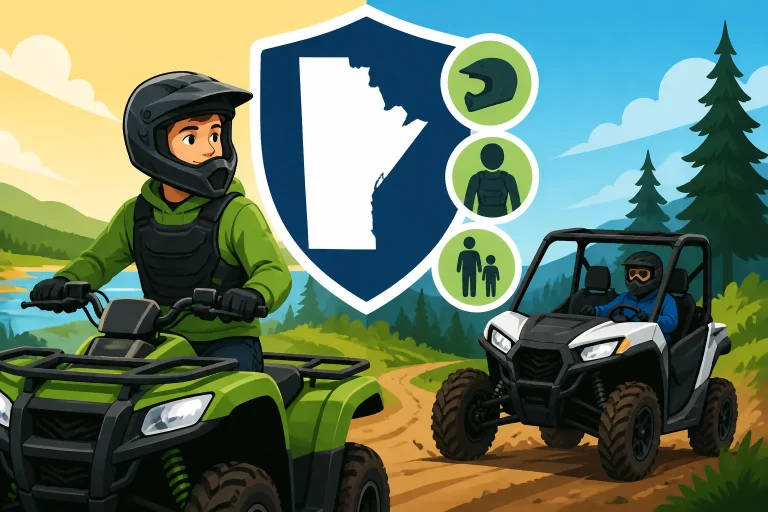
If you’re buying an ATV or UTV in Manitoba, you may be wondering whether you or your child must pass a safety course before riding. The short answer is no: Manitoba does not generally require an ATV safety certificate to operate an off-road vehicle. But age, supervision, registration, insurance and riding rules still apply, and training can help prevent avoidable mistakes.
Is an ATV safety course legally required in Manitoba?
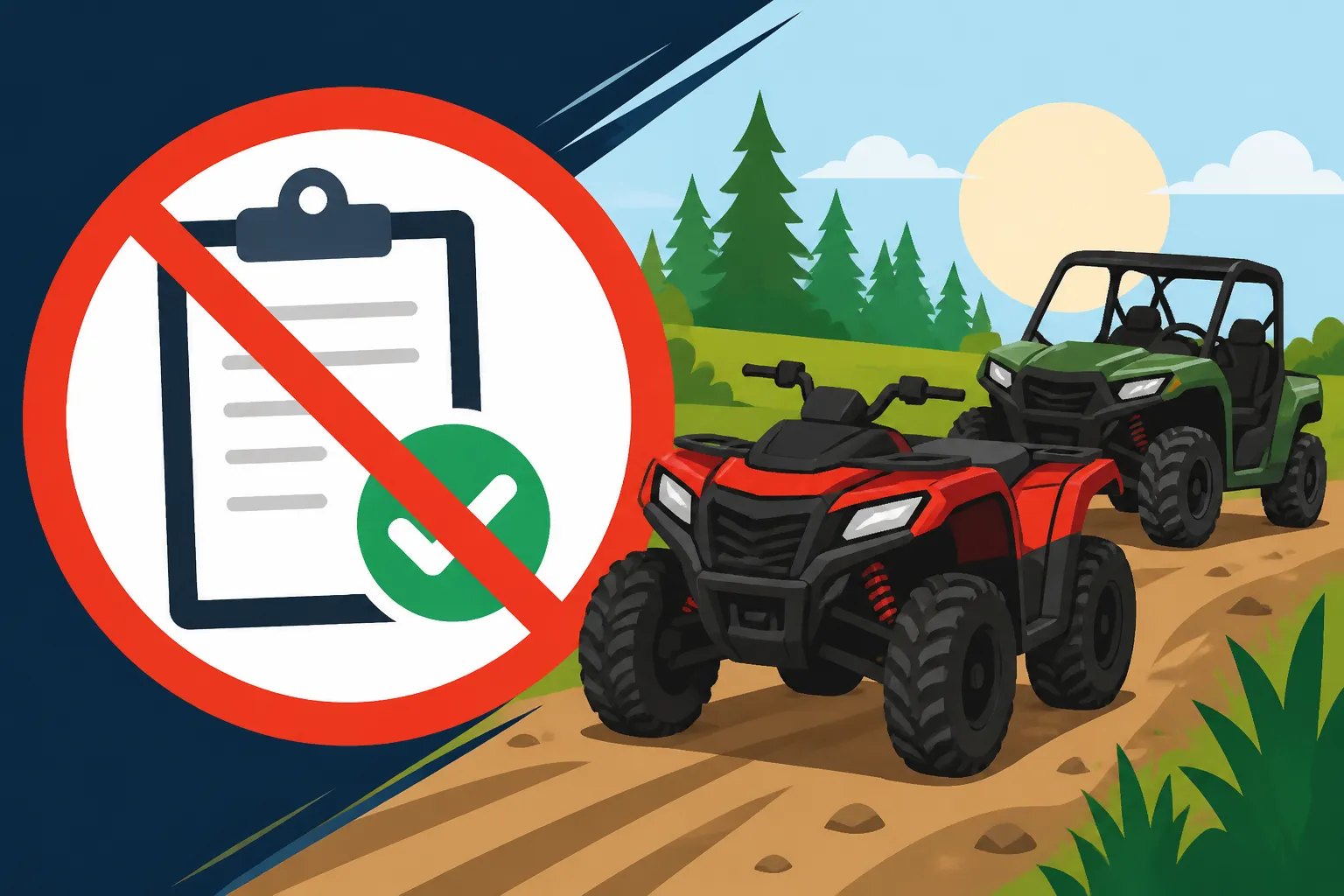
Manitoba does not make an ATV safety course or training certificate a general legal condition for riding an off-road vehicle. A rider does not have to complete a provincial course simply to qualify to operate an ATV or UTV on a permitted route.
That answer is narrower than it may first sound. It does not mean every person can ride every machine wherever they choose. The rules that matter depend on the rider’s age, the type of machine, where it will be used, and whether the route involves a road crossing or other special circumstances.
A course can also be required by someone other than the province. An employer may set training conditions for workers using machines on the job. A landowner, event organizer, rental operator or club may require participants to demonstrate competence or complete instruction before taking part. Those conditions are not the same as a general provincial law requiring every ATV rider to hold a safety certificate.
| Situation | Is a safety course generally required by Manitoba law? | What to check instead |
|---|---|---|
| Riding an ATV or UTV on a permitted off-road route | No general ATV course requirement | Age, supervision, registration, insurance, permission and local rules |
| Riding as a young person | No general safety certificate requirement | Age-based operating and supervision rules |
| Crossing a highway | A safety course is not a substitute for the required licence conditions | Whether the rider is eligible to cross and how the crossing must be made |
| Using a machine for work | No general recreational-course rule applies automatically | Employer, worksite or industry training requirements |
| Joining an event, club activity or guided ride | No universal course requirement | The organizer’s participation rules |
| Renting a machine | No general course requirement applies to every rental | The rental provider’s age, instruction and experience conditions |
The important distinction is between training and legal eligibility. Training teaches skills and safer habits. It does not replace registration, insurance, a required driver’s licence, a helmet, permission to use the land, or compliance with operating rules.
For the broader legal picture, see Manitoba ORV Road Rules Explained and Manitoba ATV Age Requirements. Those rules remain relevant whether or not a rider has taken a course.
What rules still apply if no course is required?
Not having to show a course certificate does not remove the other requirements for riding. Before heading out, check the machine’s registration status, the rider’s age and supervision needs, insurance, the route’s access conditions and any local restrictions.
Age and supervision
Manitoba has age-related operating rules. A rider’s age can affect whether adult supervision is required and where the rider may operate. A parent should not treat the absence of a course requirement as permission for a child to ride without checking those rules first.
The rules can be easy to mix up because they do not all answer the same question. A child might be old enough to operate a machine in one setting but still need supervision or be barred from another activity. A course certificate does not change the legal age categories.
Start with the rules that match the child’s exact age, rather than relying on a general statement about “kids on quads.” These pages explain the distinctions:
- Manitoba Riders Under 14 Need Supervision
- Manitoba Riders 14 and Over in Ditches
- Manitoba Learner Stage Riders at 15 and a Half
- Manitoba Riders 16 With a Full Licence
Also check the manufacturer’s age recommendation for the machine. That recommendation is not the same as Manitoba’s legal age rule, but it is an important safety consideration. A young rider who is legally allowed to operate a machine may still be physically unable to control its weight, speed, steering or braking.
For a child’s first quad, consider whether the machine’s controls and size suit the rider’s strength and experience. A powerful adult-sized ATV can be difficult for a young person to control, especially on uneven ground or when carrying a passenger or cargo. The legal minimum is not a recommendation that every rider should use the largest machine they can operate.
Driver’s licence rules for road crossings
A safety course does not give a rider permission to cross a highway. Manitoba has specific rules for crossing, including requirements tied to the operator’s licence and the location and manner of the crossing. A learner’s permit, for example, does not necessarily provide the same crossing authority as a full licence.
Treat a road crossing as a separate legal question. Before setting out, identify the roads on the route and confirm whether each crossing is permitted. Do not assume that a trail map, a familiar route or a group ride makes a crossing lawful.
The relevant rules are covered in Manitoba Crossings Need a Driver’s Licence and Manitoba Rules for Crossing a Highway. A course can help teach hazard awareness, but it cannot replace the licence requirements or crossing rules.
Registration, insurance and documents
The machine may need registration even if it is used only on private property or only on a trail. Registration, insurance and any applicable exemptions are separate from rider training. A course certificate does not make an unregistered machine legal to operate where registration is required.
Before a ride, check that the registration details belong to the machine and that required documents are available. Review the insurance requirements as well; do not assume that registration alone provides all the protection you might expect.
Useful starting points include Do You Need to Register an ATV in Manitoba?, Manitoba ATV Insurance Requirements and Carrying Your Registration Card on Every Ride.
Location, permission and local restrictions
A safety course does not grant access to a trail, private land, Crown land, a park or a road. You need to confirm that riding is allowed in the specific place and that you have the required permission. Municipal rules and route designations can also differ by location.
Before trailering a machine to a riding area, check the trail status and access conditions. A route shown on an old map may be closed, restricted or unsuitable for the machine you plan to use. Park rules are not interchangeable with general off-road rules, and permission from a landowner does not automatically override a legal restriction.
For land access, see Manitoba Private Land Permission, Manitoba Crown Land Riding Explained and Manitoba Provincial Park Machine Rules. If a route passes through a municipality or community, confirm the applicable by-law rather than assuming provincial rules are the only rules involved.
What a voluntary ATV safety course can teach
Although a course is not generally mandatory, practical instruction can be useful for new riders, returning riders and parents teaching children. A good course focuses on more than which lever operates the brakes. It helps riders understand how machine design, speed, terrain and judgment affect control.
Course content varies, so ask what the instruction actually includes before signing up. Some options may be classroom-based, some may involve supervised machine practice, and some may focus on workplace or fleet use rather than recreational trail riding. A course is most helpful when its material matches the machine and riding conditions the participant will face.
Topics worth looking for include:
- Controls and pre-ride checks: Throttle, brakes, steering, lights, tires, fluid leaks and basic machine condition.
- Mounting and dismounting: Keeping stable footing and avoiding contact with hot or moving parts.
- Starting, stopping and speed control: Using smooth inputs rather than abrupt acceleration or braking.
- Turning and shifting body position: Understanding how rider posture affects balance and steering.
- Hills and uneven ground: Choosing a manageable line, controlling speed and recognizing when to turn around.
- Traction and terrain: Adjusting riding decisions for mud, gravel, sand, roots, rocks, snow or wet ground.
- Passengers and cargo: Respecting the machine’s design and avoiding extra weight that changes handling.
- Group riding: Maintaining space, communicating hazards and avoiding pressure to follow a faster rider.
- Emergency response: Stopping safely, contacting help and responding to a breakdown or injury.
- Environmental care: Staying on permitted routes and avoiding damage to sensitive ground.
A course is not a guarantee against crashes. It cannot make a machine safe for a rider who is too small to reach the controls, erase the risks of poor visibility or bad weather, or make an unlawful route legal. Training works best when it is paired with appropriate equipment, conservative choices and supervision that matches the rider’s ability.
For training options and the distinction between voluntary instruction and legal requirements, see Manitoba Safety Services Training Options, Manitoba Training Is Voluntary for Everyone and Manitoba Youth Certification Is Not Required.
Questions to ask before enrolling
A course title alone may not tell you whether it suits your needs. Ask the provider:
- Is the course intended for recreational ATV and UTV riders, workplace operators, or both?
- Does it include supervised practice on a machine, or only classroom instruction?
- Are participants expected to bring their own machine or protective equipment?
- Is the content suitable for the rider’s age, experience and machine type?
- What does the certificate represent, and who recognizes it?
- Does the course cover the riding environment you expect to use, such as trails, farm property or remote terrain?
Be cautious about assuming that a certificate from one provider will satisfy every employer, event or organization. If a workplace or organizer has its own requirement, ask what proof it accepts before booking a course.
When training is especially worthwhile
A course may be optional under provincial law but still be a sensible choice. The value is often highest when a rider has little experience, is moving to a larger or different kind of machine, or will ride in conditions that demand careful control.
New riders and returning riders
A first-time rider benefits from learning the basics before entering a busy trail system or joining a group. The same is true for someone who has not ridden in years. Familiarity with one ATV does not automatically transfer to every machine: steering response, braking, power, centre of gravity and passenger capacity can vary.
New riders should have time to practise in a controlled, permitted area before attempting difficult terrain. Begin with basic starts, stops and turns at a speed that allows the rider to make deliberate decisions. Increase difficulty gradually. A rider who is uncomfortable with a manoeuvre should not be pushed into it because others in the group are ready to go.
Young riders and family groups
Parents often have to balance a child’s interest in riding with legal responsibilities and real limits in strength and judgment. A course can give the family shared language for hazards and riding habits, but it does not replace direct supervision or the need to select a suitable machine.
Set family rules before starting the engine. Agree on where the child may ride, how far ahead an adult may travel, what signal means “stop,” and what to do if the group becomes separated. Keep the pace appropriate for the least experienced rider, not the most confident one.
Review the legal details separately in Manitoba Parent Riding With a Child and Manitoba Supervision Requirements for Young Riders. For children, a parent should also check the machine’s age guidance and ensure that the rider can operate every control while maintaining a stable position.
Riders changing machine types
A person with years of ATV experience may be new to a side-by-side. A UTV’s steering, seating, restraint system and dimensions differ from those of a quad. It may feel more familiar because the operator sits and steers with a wheel, but its size and weight can create different hazards on narrow trails, slopes and soft ground.
Likewise, experience on a recreational ATV does not automatically prepare someone for a utility machine carrying tools or cargo. A loaded machine may handle differently and need more distance to stop. Training or a careful familiarization period can help riders understand these differences before a demanding trip.
Work and organized rides
Recreational law is only one part of the picture when a machine is used on a job. Employers may have occupational safety procedures, equipment-specific instruction or site rules. A worker should follow the employer’s requirements even though there is no general provincial ATV course mandate for all riders.
Events and guided rides can have their own conditions as well. Organizers may set age limits, require prior experience, ask participants to attend a briefing or restrict certain machine types. Read those requirements before travelling. If the terms are unclear, ask the organizer directly rather than assuming that a provincial course rule decides the matter.
A practical pre-ride plan without a course certificate
Because a certificate is not the general legal gatekeeper, use a pre-ride routine that checks the things that actually affect legality and safety. This is especially helpful when several riders, machines or jurisdictions are involved.
- Confirm who is riding. Check each rider’s age, experience and supervision needs. Do not treat a course certificate as a substitute for the applicable age rules.
- Choose a suitable machine. Match its size, power, controls and passenger capacity to the operator. Follow the manufacturer’s instructions and do not exceed the machine’s design.
- Check registration and insurance. Confirm that required documents are current and carried as required. Review what the policy does and does not cover.
- Plan a lawful route. Verify access, landowner permission, trail status, park conditions and local by-laws. Identify road crossings before departing.
- Inspect the machine. Check tires, brakes, steering, lights, fuel, controls and any protective equipment. Look for damage or loose parts that could affect handling.
- Set a group plan. Choose a pace everyone can manage, agree on stopping points and establish a way to communicate if riders become separated.
- Use suitable protective equipment. Follow helmet and other equipment rules, and choose gear appropriate for the weather and terrain.
- Set limits in advance. Decide when the group will turn back, avoid a route or stop for changing conditions. Do not let schedule pressure or peer pressure make the decision.
For more on the required papers and practical preparation, see Manitoba Registration Cards Carried at All Times, Manitoba Helmet Law and Its Exemptions and Manitoba Trail Conditions Before You Haul.
A useful family or group rule is that anyone can call for a stop without having to argue their case on the trail. That gives a less experienced rider room to speak up about fatigue, a difficult section or a machine problem. It also reduces the chance that someone will continue simply to keep up.
If you are riding somewhere unfamiliar, plan for the possibility of delays or a breakdown. Share your route and expected return time with someone who is not on the ride. Carry supplies appropriate to the length and remoteness of the trip, and do not assume that a phone will have service everywhere.
Frequently Asked Questions
Does Manitoba require an ATV safety certificate?
No general Manitoba law requires every ATV or UTV operator to hold a safety course certificate. Other legal requirements, including age, supervision, registration, insurance and operating rules, still apply.
Does a safety course let a young rider operate any ATV?
No. A certificate does not override Manitoba’s age and supervision rules or the manufacturer’s age guidance. The machine must also be appropriate for the rider’s size and ability.
Can a safety course replace a driver’s licence for crossing a highway?
No. A course does not replace licence requirements or authorize a crossing that is otherwise prohibited. Check the crossing rules and the operator’s licence status before planning a route.
Can an employer or event require training?
Yes. An employer, event organizer, club, rental provider or landowner may set conditions that go beyond the general provincial course requirement. Ask what training or proof they expect before participating.
Is voluntary training still worth taking?
It can be, particularly for new riders, young riders, people changing machine types and anyone riding in unfamiliar terrain. Choose instruction that matches the machine and the conditions where it will be used.
Disclaimer
This article is for general informational purposes only and does not constitute professional advice. Laws, prices and regulations vary by location and change over time. Consult a qualified professional for guidance on your specific situation.