Manitoba Riders 14 and Over in Ditches
Riding an off-road vehicle in Manitoba can be an exhilarating experience, offering a fantastic way to explore our beautiful province. However, a common point of confusion and frustration for many riders, especially those new to the scene or with younger family members, revolves around where you can actually take your ATV or UTV – specifically, whether roadside ditches are fair game. It’s easy to misunderstand the rules, and getting it wrong can lead to tickets or, worse, dangerous situations. This comprehensive guide is here to clear up the often-murky waters of Manitoba's ORV ditch riding regulations, focusing on what riders aged 14 and over need to know to stay safe and legal.
Navigating Manitoba's Ditch Riding Rules for Ages 14 and Up
Let's face it, for many of us, the ditch seems like a natural extension of our riding experience, especially when moving between trails or accessing different areas. It's not a highway, after all, so what's the big deal? Well, Manitoba's Off-Road Vehicles Act has some pretty specific guidelines that differentiate ditches from roadways, but also places clear boundaries on their use. It's a balancing act designed to keep riders safe while still allowing some flexibility.
The Legal Right to Ride a Ditch
You might be surprised to learn that, yes, in Manitoba, there are circumstances where it's perfectly legal to operate your ORV in a ditch. This isn't just a rumour or something "everyone does"; it's actually written into the law. The province recognizes that these machines are used for recreation, utility, and even as primary transportation in certain areas, and sometimes a ditch is the most sensible and safest route to take when a designated trail isn't available.
However, this right comes with a whole lot of asterisks. A ditch isn't just any low-lying area beside a road. It's defined by law, and the permission to ride there is conditional. We're talking about the unpaved, usually grassy or gravelled strip between the edge of the roadway and the property line or fence. It’s not the shoulder, and it’s definitely not the paved or gravelled road surface itself. The intention behind allowing ditch riding is to provide a way to move machines without interfering with vehicular traffic, which means staying out of the traffic lanes entirely. It also means you need to be constantly aware of what's happening on the road itself, as your proximity to it means shared responsibilities for safety.
Understanding the "Right-Hand Ditch" Mandate
This is one of the most critical rules that often gets overlooked or misunderstood: [Manitoba Ditches to the Right of a Roadway]. When you're operating your ORV in a ditch, you must travel on the right-hand side of the roadway, in the same direction as the adjacent traffic. This isn't a suggestion; it's a hard and fast rule, and it's all about safety. Imagine trying to navigate a ditch against the flow of traffic on the road above – it's a recipe for disaster, significantly increasing the risk of head-on collisions if you or a driver misjudge something.
The purpose of this rule is to maintain a predictable flow of movement. Drivers on the adjacent roadway expect traffic, even slow-moving ORVs in the ditch, to be travelling in the same direction. This predictability helps avoid sudden swerves, unexpected turns, or dangerous interactions. If you're riding an ORV, you're expected to be just as vigilant as any other vehicle operator, constantly scanning for hazards, observing road signs that might affect your ditch use, and being ready to react. This means that if you need to travel in the opposite direction, you're generally expected to find an alternative route, or carefully cross the road and ride the ditch on the other side, always following the "right-hand ditch" principle.
Exceptions and Prohibitions: Where Ditches Are Off-Limits
While ditches offer some riding freedom, there are specific places where they become absolute no-go zones, regardless of your age or skill level. These prohibitions are in place for public safety and to maintain the integrity of our transportation infrastructure. For instance, you absolutely cannot ride in a ditch that is part of a highway median or an interchange. [Manitoba Bans Riding a Median] and [Manitoba Bans Riding an Interchange] are clear on this. These areas are designed for high-speed vehicle traffic, and an ORV, even in the ditch, creates an unacceptable hazard.
Similarly, specific distances apply around intersections. You cannot ride in a ditch within five metres of an intersection, nor can you cross a highway within three kilometres of the nearest interchange. These rules are crucial because intersections and interchanges are high-traffic, complex areas where drivers are focused on turning vehicles, pedestrians, and other road users. An ORV popping out of a ditch, even with the best intentions, can cause serious problems. Furthermore, riding on sidewalks is also strictly prohibited. [Manitoba Bans Riding a Sidewalk] is another rule designed to protect pedestrians and keep ORVs off dedicated pedestrian paths. Always assume that if you're near a built-up area, major roadway, or a busy crossing, the ditch is probably off-limits or requires extreme caution and adherence to specific crossing rules, which we'll touch on later.
Age-Specific Requirements for Ditch Operators in Manitoba
Manitoba's ORV Act uses age as a primary factor in determining what you can and cannot do on an off-road vehicle, especially when it comes to accessing public spaces like ditches. It's not just about physical capability; it's about experience, judgment, and legal responsibility. The rules change significantly as riders mature, granting more privileges while still emphasizing safety.
What Changes at Age 14 for ORV Riders
This is a big one for many families with budding ORV enthusiasts. Prior to turning 14, riders face much stricter supervision requirements. However, upon reaching their 14th birthday, a significant shift occurs: [Manitoba Riders 14 and Over in Ditches] are generally permitted to operate an ORV in ditches without direct adult supervision. This doesn't mean a free-for-all, but it does grant a level of independence that younger riders don't have.
This allowance for 14-year-olds recognizes that at this age, many individuals have developed sufficient coordination, judgment, and understanding of the rules to operate an ORV safely, particularly in less complex environments like ditches. However, it's still crucial for parents and guardians to ensure that a 14-year-old rider is truly competent and understands all the nuances of the law and safe operating practices. While direct supervision isn't legally mandated in ditches at this age, ongoing mentorship and education remain vital. It's about empowering them with responsibility, not just freedom. They must still adhere to all other operating rules, including helmet laws, lighting requirements, and restrictions around specific areas.
From 16 Onward: Full Licencing and Fewer Restrictions
The next major milestone for ORV riders in Manitoba comes at age 16. At this point, if you hold a valid driver's licence (even a learner's permit for a car, with the appropriate endorsements or stages), your ORV privileges expand, particularly regarding road crossings. [Manitoba Riders 16 With a Full Licence] gain the ability to legally cross a roadway, which is a significant difference from younger riders. This is tied to the general legal recognition of their driving maturity and understanding of traffic laws that comes with a driver's licence.
Prior to 16, even if a 14 or 15-year-old is riding in a ditch, crossing a highway is usually off-limits or requires specific, much more restrictive conditions, if allowed at all. With a full licence, a 16-year-old can perform these crossings, but it’s still not a casual affair. Every crossing demands extreme caution, a clear view, and adherence to specific procedures like stopping, yielding to traffic, and crossing at a 90-degree angle. The law trusts that a licensed driver understands these responsibilities on the road, and by extension, with an ORV. This progression in age and licencing stage reflects a belief that increased experience and formal training lead to safer decision-making, even when operating an ORV.
Parental Consent and Supervision for Younger Riders
Even with the increased privileges at age 14, parents and guardians still play an absolutely critical role in ensuring the safety and legal compliance of young ORV riders. While the law allows 14-year-olds to operate unsupervised in ditches, this doesn't absolve adults of their responsibilities. For instance, while the official [Manitoba Parental Consent From 16 to 18] deals specifically with registration, the spirit of parental oversight extends to all aspects of riding for minors. Before a young rider even gets on a machine, especially one that will be used in public spaces like ditches, parents need to ensure they have proper training, understand the rules, and possess a machine appropriate for their age and skill level.
It's also worth remembering that the law still has strict rules for [Manitoba Riders Under 14 Need Supervision]. This highlights that the jump to 14 is a specific legal threshold, but good judgment should always prevail. Even if not legally mandated to be beside them, parents should ensure they know where their 14-year-old is riding, that the area is safe, and that the rider is making responsible choices. Providing quality safety gear, maintaining the ORV, and reinforcing good habits are ongoing parental duties. No matter the age, an ORV is a powerful machine, and an adult's guidance, even from a distance, is invaluable for fostering safe and respectful riding habits that protect everyone on and around the trails and ditches.
Safe Ditch Riding Practices and Equipment for Manitoba ORV Riders
Riding in ditches, while sometimes permitted, presents its own unique set of challenges and risks compared to dedicated trails. You're closer to active roadways, hidden obstacles, and variable terrain. That's why understanding safe practices and having the right equipment isn't just about following the law; it's about protecting yourself and others.
Visibility and Awareness: Crucial for Ditch Safety
When you're riding in a ditch, you're in a liminal space – not quite on the road, but not entirely off it either. This requires a heightened sense of awareness. You need to be constantly scanning not just the ditch ahead for hazards like culverts, deep ruts, or unexpected debris, but also the roadway beside you. Vehicle traffic is moving at speed, and drivers might not be expecting an ORV in the ditch. Making eye contact with drivers at potential crossing points or when you're visible from the road can save lives.
Furthermore, being seen is just as important as seeing. Consider the colour of your machine and gear. Bright, reflective clothing, especially during dawn, dusk, or overcast days, can significantly improve your visibility to passing motorists. Always assume you haven't been seen. This proactive approach to safety is paramount. If you're on a blind rise or coming around a corner in a ditch, slow down, be prepared to stop, and listen for approaching vehicles before proceeding. Remember, the ditch is often a shared space, not just for other ORV riders, but for wildlife, pedestrians, and sometimes even agricultural equipment.
Essential Gear and Machine Upgrades for Ditch Riding
When it comes to equipment, the law is clear on some basics, and common sense fills in the rest. First and foremost, helmets are not optional. [Manitoba Helmet Law and Its Exemptions] clearly mandates helmet use for almost all ORV operators and passengers, regardless of where they are riding. This is your single most important piece of safety gear; never skimp on a quality, properly fitting helmet. Beyond that, eye protection, sturdy boots, gloves, and durable clothing are highly recommended to protect against debris, falls, and the elements.
Your machine itself also needs to be up to snuff. Proper lighting is essential, especially if there's any chance you'll be riding within half an hour before sunset or after sunrise. [Manitoba Lighting Requirements on a Machine] states that your ORV needs lights visible from 60 metres. If your stock lights aren't cutting it, consider upgrading. Many riders turn to aftermarket solutions, and companies like SuperATV offer a range of powerful LED light bars and auxiliary lights that can dramatically improve your visibility and ability to see obstacles in dimly lit ditches. Beyond lighting, ensuring your brakes are in perfect working order, tires have adequate tread for varied terrain (which ditches often present), and having basic protection like skid plates can save you a headache (and a repair bill) if you encounter unseen hazards in the ditch.
Navigating Different Ditch Conditions
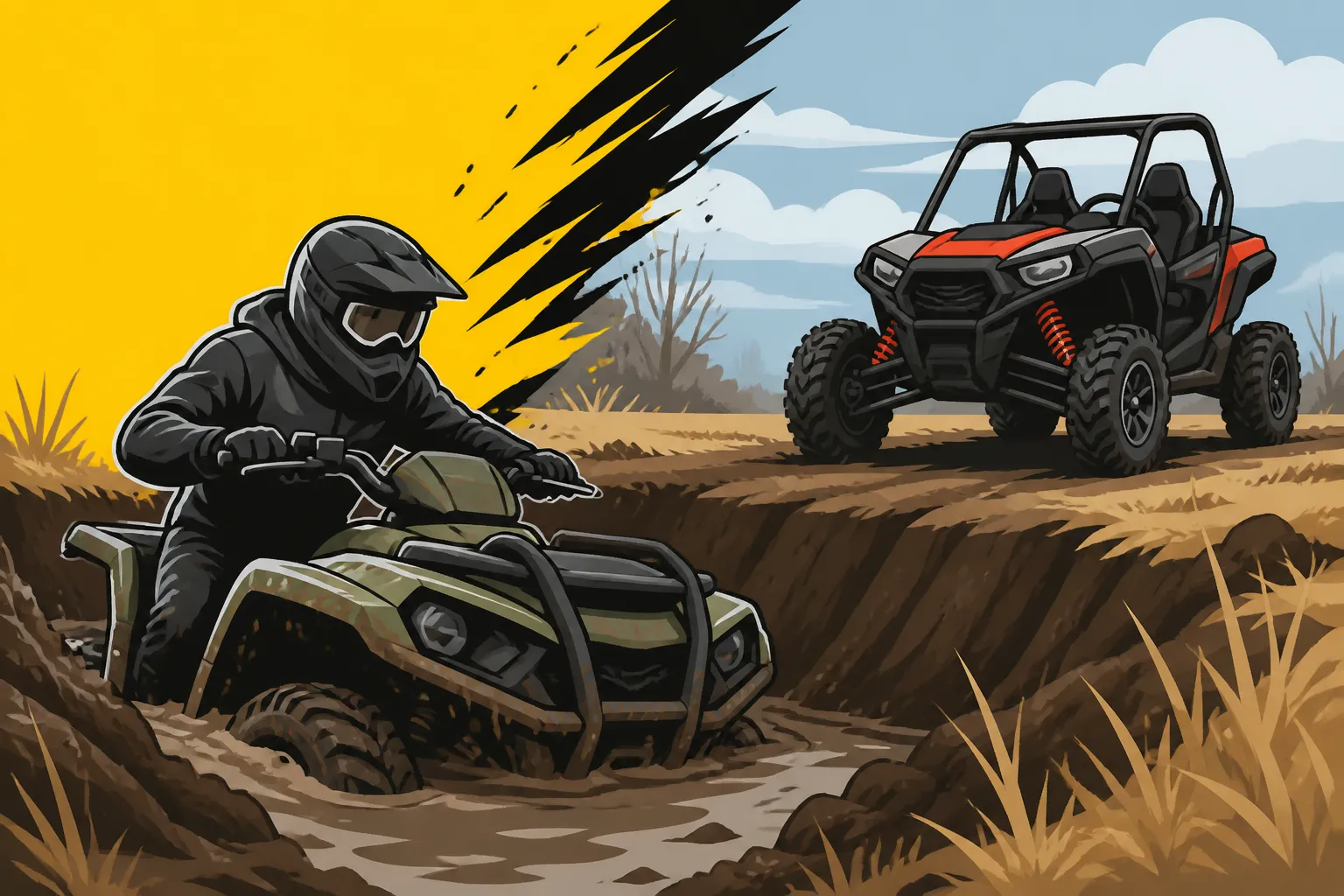
Ditches are rarely uniform. They can range from smooth, grassy strips to rough, rocky, or muddy trenches, especially after rain or during spring thaw. These varying conditions demand adaptability and appropriate preparation. Riding through deep mud in a ditch, for example, requires a different approach than cruising along a dry, gravelly section. You'll need to assess the depth, potential for hidden obstacles, and whether your machine's capabilities (and your own skill) are up to the task.
Tires are your primary contact with the ground, so having tires with aggressive tread patterns suited for mud, dirt, and varied off-road conditions is key. If you know you'll be encountering a lot of swampy areas or muskeg (a common Manitoba challenge!), [Tires for Manitoba Muskeg] are a worthwhile investment. Be aware of the presence of culverts – these hidden waterways can create sudden drops or impassable sections. Always approach any water crossing or obscured dip with caution. During winter, ditches can fill with snow, transforming into new riding opportunities, but also presenting risks like hidden ice or deeper drifts. Understanding the specific challenges of each season and preparing your machine and yourself accordingly is vital for enjoyable and safe ditch riding throughout the year.
Understanding Prohibitions and Penalties Related to Ditch Riding
It's one thing to know where you can ride, but it's equally, if not more, important to understand where you absolutely cannot and the consequences of ignoring those rules. The law isn't just a suggestion; it carries significant weight, and enforcement officers are out there to ensure compliance.
Where Ditch Riding is Strictly Forbidden
Let's reiterate some of the critical areas where ditch riding is simply not allowed. The big one is clear: [Manitoba Bans Riding on Roadways]. This means no matter how tempting it is to just "hop on the road for a second" to get past a difficult ditch section, it's illegal. The ditch is the ditch, the road is the road, and the two shall not mix for ORV operators. This includes shoulders of paved roads unless specifically designated for agricultural use with proper signage, but that's a different exemption and not general ORV ditch riding.
Beyond that, remember the strict rules about proximity to intersections and interchanges. Within five metres of an intersection, and within three kilometres of an interchange, your ditch riding privileges evaporate. Furthermore, riding too close to private dwellings at night can also land you in hot water. The "30-metre dwelling rule" states that between midnight and 7 a.m., you must stay at least 30 metres from any dwelling. This is a noise abatement rule, ensuring residents aren't disturbed by engine noise. Disregarding these prohibitions isn't just about a potential ticket; it's about respecting other road users, landowners, and the peace and quiet of communities.
Fines and Legal Consequences for Non-Compliance
Breaking the rules, even if you believe it's just a minor infraction, can lead to serious consequences. Enforcement officers, whether it's the RCMP, municipal police, or conservation officers, have the authority to issue citations under the Off-Road Vehicles Act. [Manitoba Ticket Costs for Riders] can vary widely depending on the severity of the offense. A simple technical violation, like not having your registration card on you, might be a lesser fine, but operating an ORV carelessly or dangerously can result in much heftier penalties.
For instance, [Manitoba Careless Operation Penalties] can be substantial, sometimes leading to fines in the thousands of dollars, and even potential impoundment of your machine. Repeated offenses or particularly egregious behavior can lead to court appearances, further fines, and even suspension of your driver's licence. It's not just about the monetary cost; it's about the time, stress, and inconvenience of dealing with legal issues. These penalties are designed to deter unsafe and illegal riding, emphasizing that ORV operation is a privilege that comes with significant responsibilities.
Local By-Laws: The Hidden Rules You Need to Know
Here's where things can get a little tricky and often catch riders off guard: local by-laws. While the provincial Off-Road Vehicles Act sets the baseline, municipalities in Manitoba have the power to create their own by-laws that can further restrict or, in some rare cases, even expand ORV access within their specific jurisdictions. [Manitoba Municipal By-Law Powers] means that what's legal in one rural municipality might be illegal just across the boundary in another.
These by-laws are often implemented to address specific local concerns, such as noise complaints in residential areas, preservation of sensitive ecosystems, or managing traffic flow on local roads. This means that before you plan a ride through a new area, especially if it involves traversing ditches near towns or villages, it's always a good idea to check with the local municipal office or their website for any specific ORV by-laws. Ignorance of a local by-law is not a valid defense, and an officer will still issue a ticket if you're in violation. It’s a good habit to call ahead or check online, especially when riding in unfamiliar territory, to avoid an unexpected encounter with local law enforcement.
Broader ORV Rules and How They Intersect with Ditch Riding
Riding in a ditch doesn't make you exempt from the larger framework of ORV laws in Manitoba. All the general rules about registration, insurance, and proper documentation still apply. Understanding these foundational requirements is crucial, whether you're hitting a backcountry trail or just using a ditch to get from point A to point B.
Registration, Insurance, and Documentation
Just like any other vehicle operating on public land (which includes ditches), your ORV needs to be properly registered and insured. This process is handled through MPI, and it's quite straightforward. [Manitoba ORV Registration Through MPI] ensures that your machine is legally recognized and that you have basic liability coverage. This basic coverage, which comes with your registration, provides third-party liability insurance, meaning it covers damage you might cause to another person's property or injuries you might cause to others. [Manitoba Insurance Included With Registration] covers the basics, but many riders opt for additional coverage for their own machine and personal injury, as the basic package has limitations.
Critically, you must always carry your registration card with you when operating your ORV. [Manitoba Registration Cards Carried at All Times] is not negotiable. An officer can, and will, ask to see it, and not having it can result in a ticket. It's wise to keep it in a waterproof bag or pouch on your person or securely attached to your machine, ensuring it's protected from the elements and easily accessible. Think of it like your driver's licence and vehicle registration for your car – it's proof that you're operating legally.
Road Crossing Rules Beyond Ditches
While this guide focuses on ditch riding, it's impossible to talk about ORV operation near roads without also touching on proper road crossing procedures. If you need to cross a paved roadway from one ditch to another, or to access a trail, there are very specific rules to follow to ensure safety. First, you must hold a valid driver's licence to cross a road; [Manitoba Crossings Need a Driver's Licence] is a non-negotiable requirement. This is why the age 16 milestone is so important, as it often aligns with getting your driver's licence.
When crossing, you must stop, yield to all traffic, and ensure you have a clear view in both directions. [Manitoba Crossings Need a Clear View] is paramount. You must cross at a 90-degree angle to the road and travel the shortest possible distance. Group crossings must be done one machine at a time. Never assume a driver has seen you or will slow down for you. These rules are designed to minimize the risk of collision on high-speed roadways where ORVs are particularly vulnerable. Treating every road crossing as a potentially high-risk maneuver is the safest approach.
The Role of the $25 Trails Fee
When you register your ORV in Manitoba, you'll notice a mandatory $25 trails fee added to your total. [Why Manitoba Adds $25 to Every ORV Registration] is a question many riders ask, especially if they primarily ride on private land or in ditches. This fee isn't arbitrary; it's a dedicated surcharge designed to support the development and maintenance of Manitoba's provincial ORV trail system.
This money directly funds grants for ORV clubs and associations, helping them to build new trails, maintain existing ones, and promote rider education. So, even if you spend most of your time in ditches, that $25 is contributing to the larger ORV community infrastructure that benefits everyone in the long run. It's a way to ensure that Manitoba continues to have accessible and well-maintained areas for off-road enthusiasts to enjoy, and it highlights the province's commitment to supporting this popular pastime.
Comparing Age-Based Ditch and Road Crossing Privileges
To help clarify the various rules for different age groups in Manitoba, here's a handy comparison table. This highlights the critical distinctions for ORV riders, particularly when it comes to accessing ditches and crossing roadways.
| Age Group | Ditch Riding (Right-Hand Side) | Roadway Crossing | Supervision Requirement for ORV Operation | Primary Legal Document |
|---|---|---|---|---|
| Under 14 | Permitted, but only under direct adult supervision. | Generally NOT permitted. If allowed in specific scenarios (e.g., farming), requires extreme caution and adult supervision. | Direct adult supervision is mandatory. | ORV registration card. |
| 14 & 15 | Permitted without direct adult supervision. Must travel on the right-hand side, with traffic flow. | Generally NOT permitted to cross roadways. | No direct supervision required in ditches. | ORV registration card. |
| 16+ (with full driver's licence) | Permitted without direct adult supervision. Must travel on the right-hand side, with traffic flow. | Permitted to cross roadways, provided a clear view, 90-degree angle, stopping, yielding, and one machine at a time. | No direct supervision required. | Valid driver's licence, ORV registration card. |
Disclaimer
This article is for general informational purposes only and does not constitute professional advice. Laws, prices and regulations vary by location and change over time. Consult a qualified professional for guidance on your specific situation.