Manitoba Training Is Voluntary for Everyone
Manitoba riders may wonder whether an ATV or UTV safety course is required before they can ride. It is not a province-wide legal prerequisite, but that does not make training pointless. Here’s what voluntary instruction can teach, who may benefit, and how to choose training that complements Manitoba’s age, operating and registration rules.
Is ATV or UTV training mandatory in Manitoba?
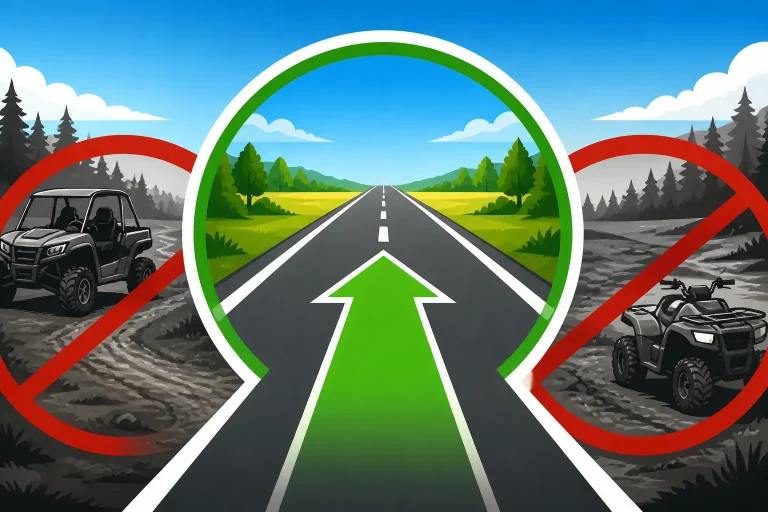
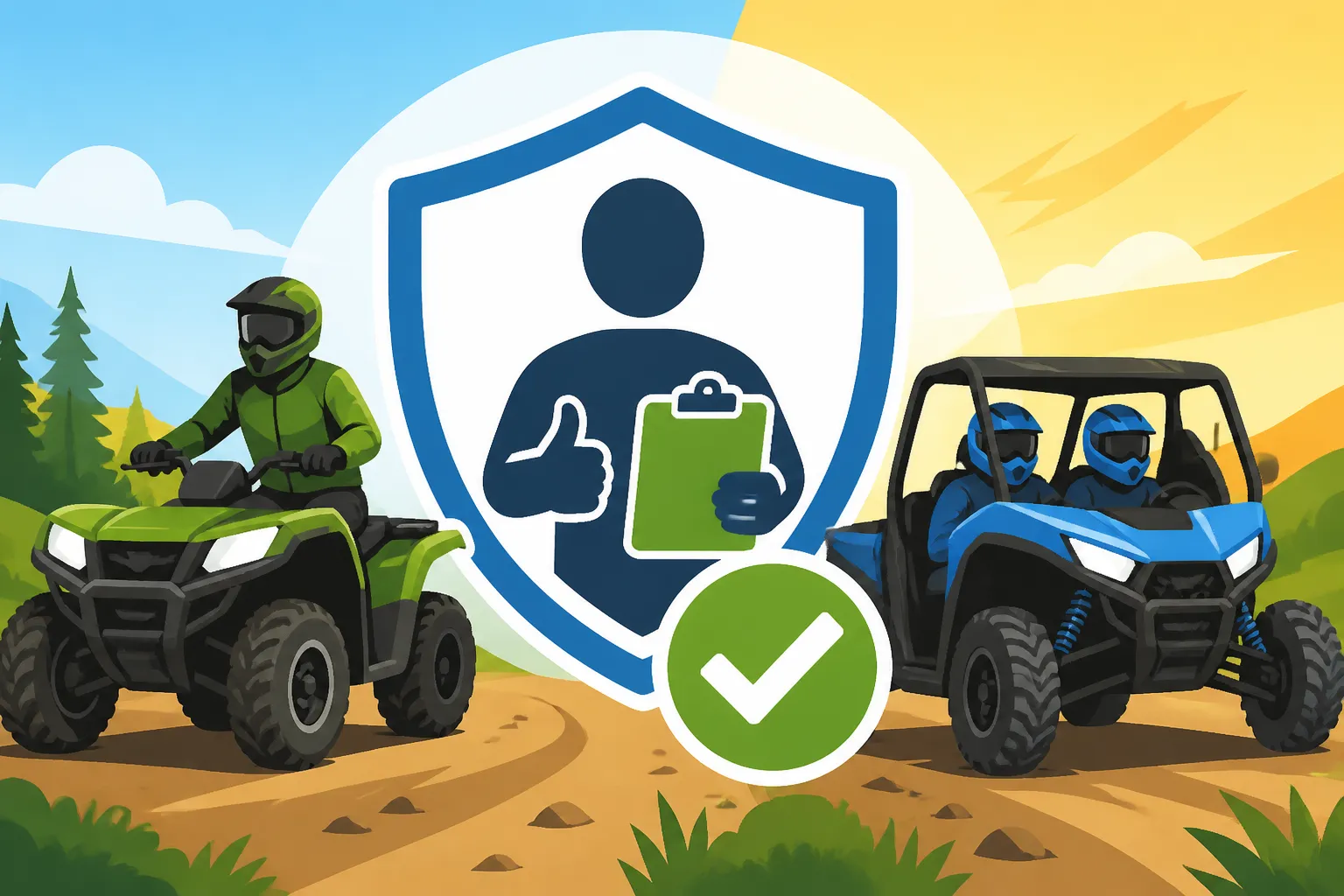
Manitoba does not require every ATV or UTV rider to complete a safety course or hold a safety certificate before riding. Training is voluntary for riders of all ages. A course can improve a rider’s preparation, but it is not a permit, licence or replacement for legal requirements.
That distinction matters because several different rules can apply to the same ride. Age and supervision requirements concern who may operate a machine and under what circumstances. Registration and insurance rules concern the machine and its use. Separate restrictions apply to where and how you ride. Completing a course does not override any of them.
For example, a course certificate does not make a child eligible to ride without the supervision required by law. It does not authorize a rider to use a roadway, cross a highway without meeting the applicable conditions, or ride on land without permission. The age rules are covered in Manitoba ATV Age Requirements, while Manitoba Supervision Requirements for Young Riders explains why a young rider’s experience does not automatically remove supervision requirements.
Likewise, a training card does not register an ATV or UTV. Riders should check whether their machine must be registered and insured, and visitors should understand how their home registration applies. Manitoba Visitors Registered at Home explains the registration point for out-of-province riders; visitors must still follow Manitoba’s operating rules.
| Question | Practical answer |
|---|---|
| Must every Manitoba ATV or UTV rider take a safety course? | No. Safety training is voluntary. |
| Does a course certificate replace registration? | No. Registration requirements apply separately. |
| Does training remove age or supervision limits? | No. Legal age and supervision rules still apply. |
| Does a certificate permit road or highway use? | No. Road use and crossings have separate restrictions. |
| Can a voluntary course still be useful? | Yes. It can help riders practise controls, judgment and safe habits. |
If you are unsure whether a rule applies to a particular machine or situation, settle that question separately rather than relying on a course provider’s description of the training. A class can teach safe operation; it cannot grant permissions the law does not provide.
Why voluntary training can still be worthwhile
A rider can know the basic controls and still be unprepared for changing ground, poor visibility, a passenger’s movement or a machine that starts to slide. Training gives riders a chance to work through situations deliberately, before they face them on an unfamiliar trail or in the bush.
That can be valuable for new riders, but experience is not a guarantee of good habits. Someone who has ridden for years may have learned informally, may be moving to a different type of machine or may be bringing a passenger for the first time. A structured course can help identify assumptions and fill gaps.
Training can be particularly useful when:
- A new rider is learning where the controls are and how the machine responds.
- A young rider needs close adult guidance and age-appropriate practice.
- An experienced ATV rider is switching to a side-by-side or another unfamiliar model.
- A rider expects to carry passengers or work with a machine on a property.
- A group wants consistent expectations about spacing, communication and stopping.
- A rider has had a long break and wants to refresh skills before returning.
- The machine will be used in conditions such as mud, sand, slopes or narrow bush trails.
A course is also a chance to practise decisions that are easy to overlook in a casual lesson. Riders can discuss when to turn around, how to approach an obstacle, how to avoid carrying too much weight, and what to do when the route ahead is not safe. These judgment calls matter because a machine that feels capable may still get stuck, tip or become difficult to control.
Training does not eliminate risk. It also does not make a rider competent on every machine or in every environment. A brief introductory session on a small quad, for instance, may not prepare someone to operate a heavier side-by-side with a passenger and cargo. Training is most useful when it matches the rider, the machine and the conditions the rider expects to encounter.
For young riders, adult supervision remains important even when the child has practised or completed a course. The supervising adult should be able to see and respond to the rider, select an appropriate practice area and stop the session when conditions exceed the child’s ability. A certificate should never be treated as proof that a young rider can safely handle any machine.
What a useful course should cover
Course names and formats can differ, so look at what instruction actually includes rather than choosing by title alone. A useful program should combine explanation with practical learning appropriate to the participants. If it is entirely classroom-based, ask how riders will practise machine handling. If it is hands-on, ask how the provider controls the practice area and whether the instruction is suitable for the particular machine.
Machine familiarization and fit
Riders should learn how to identify and use the controls on the machine they will operate. That includes starting and stopping, steering, shifting where applicable, braking, using the throttle and understanding the machine’s indicators. Riders should also know how to check the owner’s manual for model-specific instructions and warnings.
Physical fit matters. The rider should be able to reach controls and operate them without losing a stable position. A machine that is too large, powerful or heavy for the rider can make basic skills harder to learn. For a UTV, instruction should account for its different controls, seating and occupant-protection features rather than treating it as a larger quad.
A thorough introduction also covers a pre-ride inspection. Riders can learn to check tires, brakes, steering, lights, fuel or battery status, and visible damage, following the manufacturer’s instructions. The point is not to turn every course into a repair class. It is to help riders recognize obvious problems before they head out and know when a machine needs attention.
Balance, speed and terrain
Safe operation depends on more than memorizing controls. Riders need to understand how speed, traction, slope and load affect stability. A course may use a controlled area to practise starting, stopping, turning and adjusting speed. Riders should be able to build skills gradually, with enough space to stop and without pressure to attempt a manoeuvre beyond their ability.
Terrain lessons are especially relevant in Manitoba, where a route may change from firm ground to sand, mud, ruts or wet low areas. An instructor should discuss how to assess an obstacle and when not to proceed. If the machine becomes stuck or the ground is unstable, forcing it forward can increase the risk of losing control or damaging the machine and trail.
A good instructor should not present one technique as a universal answer for every machine and surface. Follow the manufacturer’s guidance, use the course’s controlled practice setup and avoid trying a technique on a trail unless you understand the risk and have room to respond.
Passengers, cargo and protective equipment
Passengers change how a machine handles and should be carried only when the machine is designed for them. Riders should understand the manufacturer’s passenger limits, seating positions and restraint requirements. A passenger should not be treated as extra cargo, and a machine should not be overloaded simply because there is physical room to add another person or bag.
Protective equipment should fit the rider and suit the conditions. A helmet is an important part of riding preparation, but a course should also address clothing, footwear and eye protection. UTV occupants should understand the protective equipment and occupant-protection features specified for their machine. Manitoba’s rules have their own requirements and exceptions; a course’s general safety recommendation is not a substitute for checking Manitoba ATV Helmet Law.
Planning, communication and emergencies
A course can help riders think beyond operating technique. Before a ride, they need to consider the route, weather, daylight, fuel or battery range, communication options and the ability of the group. Riders should understand that a navigation app or a visible trail does not establish legal access. Confirm permission and route status before setting out.
Group riding deserves particular attention. Riders should agree on a route, a way to communicate, where to stop and what to do if someone is separated or a machine breaks down. A faster rider should not pressure a less experienced rider to keep up. The group should choose a pace that allows everyone to stay in control.
Basic emergency planning may include carrying suitable first aid supplies, a way to contact help where service is available, and tools or equipment appropriate to the trip. Training cannot guarantee that a rescue will be easy, especially in remote areas, but it can prompt riders to plan for foreseeable problems instead of assuming the ride will go exactly as expected.
How to choose voluntary training
The right course depends on the rider and the intended use. Before enrolling, ask the provider what the course covers, how much time is spent practising, what types of machines are used and whether a rider can use their own machine. Confirm the minimum age, any equipment the participant must bring, and whether the course is designed for beginners, experienced riders or a specific workplace.
These questions can help you compare options:
- Is the course for the machine you plan to operate? ATV and UTV controls, seating and handling are not identical. Ask whether the instruction covers the machine type you will use.
- Does the course include practical instruction? Ask what riders will actually practise and whether the exercises take place in a controlled setting.
- How are riders grouped? Beginners and experienced riders may need different instruction. Young participants should receive supervision appropriate to their age and ability.
- What does completion mean? Find out whether you receive a record of attendance or another certificate, and what it represents. Do not assume it is a government permit or a substitute for legal requirements.
- What safety procedures are in place? Ask about helmets and other equipment, instructor supervision, practice-area conditions and what happens if weather or ground conditions are unsuitable.
- Will the course fit your use? Recreational trail riding, farm work and workplace use can involve different machines and hazards. Ask whether the content matches your intended setting.
Training options may be available through different providers and organizations, and availability or course content can change. Manitoba Safety Services Training Options is a useful starting point for checking possible options. Ask providers directly for current details instead of assuming a course listed previously is still offered or suitable for your rider.
Workplace instruction may need to cover more than basic recreational riding. Employers and work crews should consider the particular machine, terrain, tasks, loads, communication procedures and emergency plan. A recreational course may be a helpful foundation, but it may not address every job-specific hazard. Corporate ORV Training Offered to Work Crews provides a related overview.
If a rider is not ready to operate a machine confidently after training, the sensible next step is more supervised practice or a smaller, more suitable machine—not a more demanding trail. The goal is sound judgment and controlled operation, not simply course completion.
Training does not replace Manitoba rules or ride planning
The most useful way to think about voluntary training is as one part of preparation. It can improve skills, but a legal check and a route check are still necessary. Before riding, confirm that the machine can be used where you plan to go, that the rider meets the applicable age and supervision requirements, and that the machine’s registration and insurance arrangements are in order.
Road and highway crossings deserve special care. A safety course does not grant permission to use a roadway or remove crossing conditions. Check the specific rules before planning a route that involves a crossing; Manitoba Crossings Need a Driver’s Licence explains one of the requirements riders should understand.
For visitors, completing a course at home does not exempt them from Manitoba’s operating rules. A rider’s home registration may be relevant, but access and operation in Manitoba are separate questions. Visitors should check both before travelling and carry the documents required for their machine. Manitoba Visitors and Operating Rules covers the operating-rule distinction.
Before each ride, it helps to work through a short checklist:
- Confirm the route is open and that you have permission to use it.
- Check local restrictions, closures and conditions that may affect the route.
- Match the route and machine to the least experienced rider in the group.
- Inspect the machine and make sure passengers and cargo stay within its design limits.
- Carry required documents and suitable safety equipment.
- Agree on a plan for communication, regrouping and turning back.
- Stop or change plans if weather, visibility, fatigue or ground conditions make the ride unsafe.
For newer riders, short and controlled practice sessions are usually more useful than trying to cover a long distance immediately. Start in an appropriate area, practise one skill at a time and have an experienced adult or instructor provide feedback. Build up to more challenging conditions only when the rider can control the machine consistently and make sensible decisions.
A course is not a one-time guarantee of safe riding. Skills fade, machines change and conditions vary. Refresher instruction can help when a rider moves from an ATV to a UTV, returns after time away, starts carrying passengers or takes on unfamiliar work. The best measure of training is not the certificate itself; it is whether the rider uses better judgment and knows when to slow down, ask for help or turn back.
Frequently Asked Questions
Do Manitoba ATV riders need a safety certificate?
No. Manitoba does not make a safety course or certificate a general legal prerequisite for ATV or UTV riding. Training is voluntary, and other requirements—such as age, supervision, registration and operating rules—still apply.
Does completing a course let a young rider ride alone?
No. Course completion does not cancel age-related supervision rules. Check the requirements for the rider’s age and intended riding situation before allowing a young person to operate a machine.
Does a training certificate count as a licence for crossing a highway?
No. Highway-crossing requirements are separate from safety training. Riders must meet the applicable legal conditions for a crossing; a course certificate does not provide permission.
Are Manitoba visitors required to take a course?
Safety training is not a general requirement for Manitoba visitors. Visitors must still follow Manitoba operating rules and confirm that their machine meets the relevant registration and insurance requirements.
Disclaimer
This article is for general informational purposes only and does not constitute professional advice. Laws, prices and regulations vary by location and change over time. Consult a qualified professional for guidance on your specific situation.