Manitoba Youth Certification Is Not Required
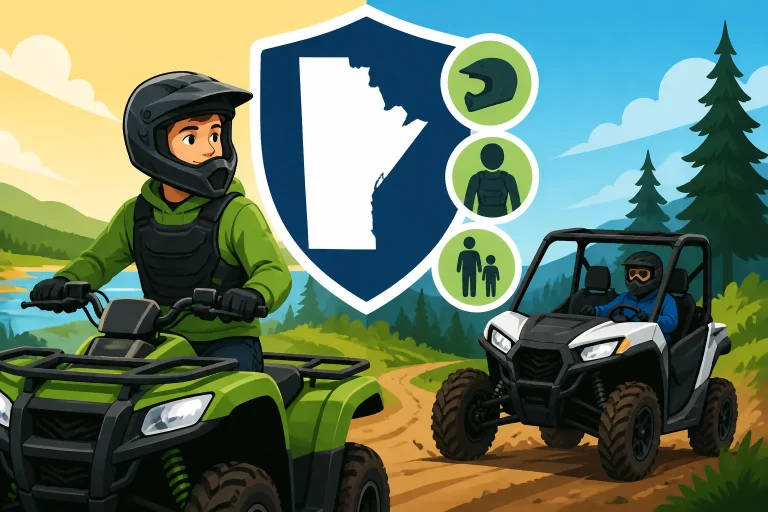
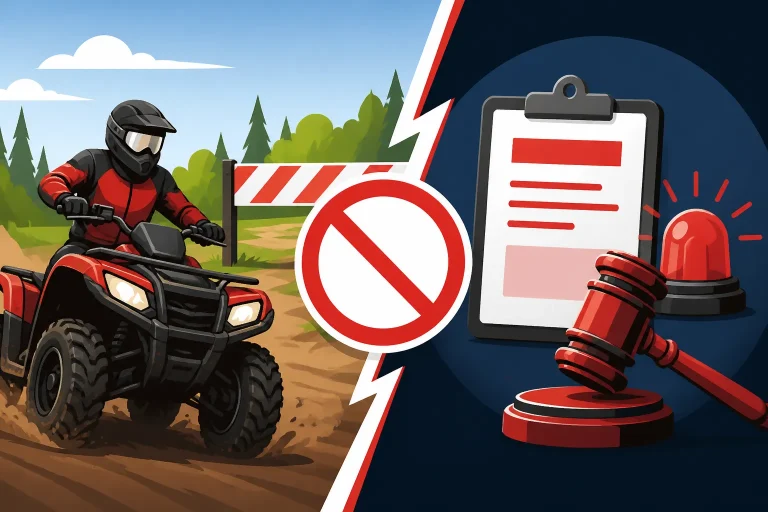
Manitoba youth riders do not need an ATV or UTV safety certificate just to operate an off-road machine. That does not mean every young rider can ride anywhere, alone, or on any vehicle. The important distinctions are between training, age-based operating rules, supervision, registration and the rules for crossings and public areas.
What “youth certification” means in Manitoba
Manitoba does not require an ATV or UTV safety course or certificate as a general legal condition for riding. A young rider is not automatically barred from operating a machine because they have not completed a course, and there is no safety certificate that replaces the rules governing how and where they may ride.
That distinction matters because several different requirements can sound like “certification” in casual conversation:
- A safety course teaches practical skills and safety habits. Training can be valuable, but it is not a mandatory certificate under Manitoba’s general ORV rules.
- A driver’s licence is a separate credential. It may matter for particular activities, including some road crossings; completing an ATV course does not give a rider a driver’s licence.
- Registration identifies the machine and is separate from the operator’s training. The owner’s registration obligations do not disappear because the rider is young.
- A manufacturer’s age recommendation relates to the machine’s design and intended user. It is not the same thing as a Manitoba safety certificate or a substitute for legal operating rules.
- Permission to ride depends on the place and circumstances. Landowner consent, park rules, municipal by-laws and temporary closures can all affect access.
For that reason, “no certificate required” is a narrow answer to a narrow question. It does not mean there are no legal conditions for youth riding. A family may still need to check the rider’s age, supervision, the machine, the route and the paperwork before heading out.
The province’s voluntary training options can help new operators build confidence and learn safer habits. But a course does not grant an exception to age rules, authorize a ride on a closed route or make an otherwise prohibited crossing legal. The key point is simple: training and legal permission are related to safety, but they are not interchangeable.
What rules still control youth riding
Age and riding circumstances matter even when no safety certificate is required. Rules can differ according to the operator’s age and whether the machine is being used on private land, on a trail or near a roadway. Before a ride, check the requirements that apply to that exact situation rather than relying on a general statement such as “kids can ride without a course.”
Age and supervision
Young riders may be subject to supervision requirements. In particular, Manitoba’s rules for riders under 14 include supervision by an adult and a requirement that the adult remain in clear view. A completed course does not cancel that requirement. Nor should a child’s confidence, experience or ability to handle a machine be treated as a substitute for any legally required supervision.
Age-related rules can also change with the type of activity. A rider may be allowed to operate on a private property under conditions that do not let them ride on a public roadway or make a highway crossing. Manitoba ATV Age Requirements explains the age framework in more detail, while Manitoba Riders Under 14 Need Supervision focuses on the supervision rule.
Parents should look closely at what “supervision” requires in the circumstances. An adult who is elsewhere on the property may not meet a rule requiring the rider to stay in clear view. If the group will spread out on a trail or enter terrain where sightlines disappear, plan a route and riding arrangement that keep the required supervision practical.
Crossings and roadway access
A young rider’s ability to operate an ATV or UTV off-road should not be confused with permission to travel along a road. Manitoba generally restricts ORVs from roadways, with specific rules for permitted crossings and limited exceptions. Age, licence status, visibility and the location of a crossing can affect what is allowed.
A safety course cannot stand in for a driver’s licence where one is required. It also does not permit a rider to use a ditch, shoulder, street or roadway merely because the rider has completed training or is accompanied by an adult. For crossings, review Manitoba Rules for Crossing a Highway and Manitoba Crossings Need a Driver’s Licence. For the broader restrictions, see Manitoba ORV Road Rules Explained.
A practical rule for families is to treat a road crossing as a separate legal question, not as an ordinary part of the trail ride. Identify the crossing before arriving, confirm that the operator is allowed to make it, and follow the applicable stopping, visibility and traffic rules. If the rider does not meet the requirements, choose another route rather than assuming adult supervision or course completion makes the crossing acceptable.
The machine and the place
A rider’s age is only one part of the decision. The machine should be suitable for the rider’s size, strength, experience and ability to reach and operate its controls. A course does not make an oversized, overly powerful or poorly fitted machine safe for a child.
The place matters too. Private land, Crown land, club trails and provincial parks can have different access conditions. Permission from a landowner does not override every law, and a route that is open to one type of machine may not be open to another. On public land, check current access information and local restrictions before unloading.
Families planning a park outing should distinguish between a machine’s registration and any park permit or access condition that may apply to the vehicle or site. For Crown land, confirm that the specific area is open and that the rider has the required permission. [Manitoba Crown Land Riding Permission] and Manitoba Provincial Park Machine Rules are useful starting points.
Registration and the paperwork
No safety certificate does not mean no paperwork. The machine may still need to be registered, and the operator may need to carry the registration certificate while riding. Registration applies to the machine, not to the rider’s training history. Check whether an exemption applies before relying on one; do not assume a youth rider, a private-land ride or an off-road location is automatically exempt.
If an officer asks to see documents, a course card is not a substitute for the machine’s registration certificate. Keep required paperwork protected from water and accessible during the ride. Manitoba Registration Cards Carried at All Times covers the certificate requirement, and Manitoba Registration Exemptions Explained explains why exemptions should be checked against the specific facts.
| Question | What it concerns | What a course does not do |
|---|---|---|
| Does the young rider need a safety certificate? | General Manitoba ATV and UTV training requirement | A course is not a mandatory certificate under the general rule |
| Is the rider old enough to operate in this situation? | Age-based operating rules and any supervision requirement | Training does not waive age or supervision rules |
| Can the rider use this route or make this crossing? | Road, trail, park, landowner and local access rules | Training does not authorize access or a road crossing |
| Is the machine properly registered? | The machine’s registration and required documents | A course card does not replace the registration certificate |
| Is the machine a suitable size and type? | Fit, power, controls and the manufacturer’s guidance | A course cannot make an unsuitable machine appropriate |
Why voluntary training can still be worthwhile
A course is not a legal prerequisite, but it can be a sensible choice, especially for a new rider. Young operators may understand the controls quickly yet have little experience judging speed, stopping distance, changing surfaces or the way a machine responds on a slope. Practice and instruction can help address those gaps before they become problems on a busy trail.
Useful training should match the machine and the rider. An ATV and a side-by-side have different seating, steering and control arrangements, and the habits that work on one do not automatically transfer to the other. A passenger in a UTV also needs to understand the machine’s restraint system and passenger limits. For course choices and voluntary instruction, see Manitoba Safety Services Training Options and Voluntary ATV and UTV Training for Riders.
What instruction can reinforce
A good learning plan goes beyond memorizing controls. It gives a young rider time to practise basic actions in a controlled setting and to understand why they matter:
- Pre-ride checks: Inspect tyres, brakes, steering, lights and visible damage before starting.
- Starting and stopping: Practise smooth starts, controlled braking and stopping on the type of surface the rider will encounter.
- Low-speed control: Build familiarity with turning, looking ahead and keeping a safe distance from other machines.
- Terrain awareness: Learn to recognize mud, loose gravel, ruts, water, slopes and other conditions that can change how the machine handles.
- Group riding: Follow instructions, leave space and stop safely if the group becomes separated.
- Emergency decisions: Know when to stop, turn back or ask an adult for help instead of attempting a risky manoeuvre.
- Protective equipment: Understand how to wear and secure the gear required for the ride.
A course can also give parents and young riders a shared vocabulary for discussing hazards. That makes it easier to set boundaries, such as a maximum speed for the group, a no-passing rule or a requirement to stop at every junction and wait for the adult.
Training does not guarantee readiness
Completion of a course should not be treated as proof that a child is ready for every machine or every route. A rider can understand a lesson in a practice area and still struggle with fatigue, fear, peer pressure or unexpected obstacles. Readiness depends on the individual rider and the conditions of the day.
Likewise, a rider who has learned informally from family members may still benefit from structured instruction. Familiarity can build confidence, but it can also normalize unsafe shortcuts. A neutral instructor may help identify habits that a family has overlooked.
The most useful approach is to view training as one part of preparation. Pair it with supervision where required, a suitable machine, protective gear, a manageable route and clear rules for stopping. If a young rider is hesitant, distracted or struggling to control the machine, shorten the ride or stop. A certificate should never be used to pressure a child into riding beyond their ability.
How families can prepare for a youth ride
Before taking a young rider out, work through the legal and practical checks in order. This avoids arriving at a trailhead only to discover that the route, machine or rider does not meet the conditions.
- Confirm the rider’s age and the applicable supervision rule. Check the requirements for the rider’s age and the planned activity. If supervision is required, arrange for an adult to remain in the position the rule requires throughout the ride.
- Choose a suitable machine. Consider the operator’s size, strength, experience and ability to use the controls. Check passenger limits and any manufacturer guidance. Never assume that a machine is suitable simply because a young person can sit on it.
- Choose a route the rider can handle. Start with a familiar, manageable area. Account for terrain, traffic, weather, distance and how easy it will be to stop or turn back.
- Check access and permissions. Confirm that the route is open to the machine and that any required landowner, park or local permission is in place. Pay attention to posted signs and closures.
- Check registration and documents. Confirm the machine’s registration status and carry the required certificate. A training card does not replace vehicle paperwork.
- Review road crossings separately. Do not assume a trail route is legal simply because it appears on a map. Confirm the operator’s eligibility and the crossing conditions before setting out.
- Inspect the machine and protective equipment. Check the machine before riding and make sure the rider has properly fitted equipment, including a helmet that meets applicable standards.
- Set simple riding rules. Agree on following distance, speed, stopping points, signals and what the young rider should do if separated from the group.
- Reassess during the ride. Fatigue, weather and changing trail conditions can make a route harder. Stop early if the rider or machine is no longer coping safely.
These steps do not create a new legal requirement for a safety certificate. They help families avoid confusing the absence of a course mandate with the absence of other responsibilities.
What to do if the rider is close to an age threshold
When a young person is approaching an age at which rules change, do not rely on memory or on a rule that applied to an older sibling. Verify the current requirements for the rider’s exact age and activity. The relevant question may not be simply “Can they ride an ATV?” It may be whether they can ride that machine, in that place, under those supervision conditions, or make a particular crossing.
Keep the planned activity conservative when the answer is unclear. Staying on a permitted private area or choosing a route that avoids road crossings may be safer than trying to resolve a legal uncertainty at the roadside. For a more focused look at the relevant age bands, see Manitoba ATV Age Requirements.
What to ask before enrolling in a course
Because training is voluntary, families can compare options rather than choosing a course just to satisfy a legal certificate requirement. Ask whether the instruction covers the type of machine the young person will use, how much supervised practice is included, what protective equipment is expected and how the course handles different experience levels.
Also ask what the course certificate represents. It may document participation or completion, but it should not be assumed to be a licence, a registration document or an authorization to ride in a particular area. If a provider describes a course as “required,” ask which rule or specific activity makes it necessary. There may be a separate condition, event policy or land-use requirement, but that is different from a general Manitoba youth certification rule.
Common misunderstandings about youth certification
“If there is no certificate requirement, any child can ride”
No. The absence of a general course requirement does not remove age-based rules, supervision requirements, access limits or machine suitability concerns. A rider’s age and the location of the ride still matter.
“An adult riding nearby makes every situation legal”
Not necessarily. Supervision has to meet the applicable rule, and adult presence does not automatically authorize a road crossing, a ride on a closed trail or entry onto land without permission. Check each condition separately.
“A course lets a young rider cross a road”
No. Training and crossing eligibility are separate. A course does not provide a driver’s licence or waive crossing requirements. Review the crossing rules before choosing a route.
“The manufacturer’s age recommendation is the Manitoba legal age”
These are different considerations. Manufacturer guidance can help families assess whether a machine is appropriate, but it does not replace Manitoba’s operating rules. Conversely, the absence of a mandatory safety certificate does not mean a machine is a sensible fit for every child.
“A certificate replaces the registration card”
No. The registration certificate relates to the machine and is separate from training. Carry the required vehicle document while riding and check the machine’s registration status before use.
“A youth riding only on private property never needs to check rules”
Private land may avoid some access issues, but it does not make every safety or operating rule irrelevant. Confirm the actual location, the owner’s permission, the rider’s supervision needs and whether the activity involves a roadway or public route.
Frequently Asked Questions
Does a youth need an ATV safety certificate in Manitoba?
A safety course or certificate is not generally required just to operate an ATV or UTV under Manitoba’s ORV rules. Age, supervision, location and other operating requirements still apply.
Can a young rider take a course anyway?
Yes. Training is voluntary and can help develop safe operating habits. A course does not replace a driver’s licence, machine registration, land access permission or any required adult supervision.
Does completing a course change the rules for a rider under 14?
No. Course completion does not remove age-based requirements, including applicable supervision rules. Check the specific conditions for the planned ride.
Does a safety certificate let a youth ride on a road?
No. A course certificate does not authorize roadway travel or replace any licence or crossing requirement. Check the rules for the specific crossing and route.
What should parents check before a first ride?
Confirm the rider’s age and supervision needs, choose a suitable machine and permitted route, check registration and access requirements, inspect protective gear and review the road-crossing rules. If any requirement is unclear, verify it before riding.
Disclaimer
This article is for general informational purposes only and does not constitute professional advice. Laws, prices and regulations vary by location and change over time. Consult a qualified professional for guidance on your specific situation.