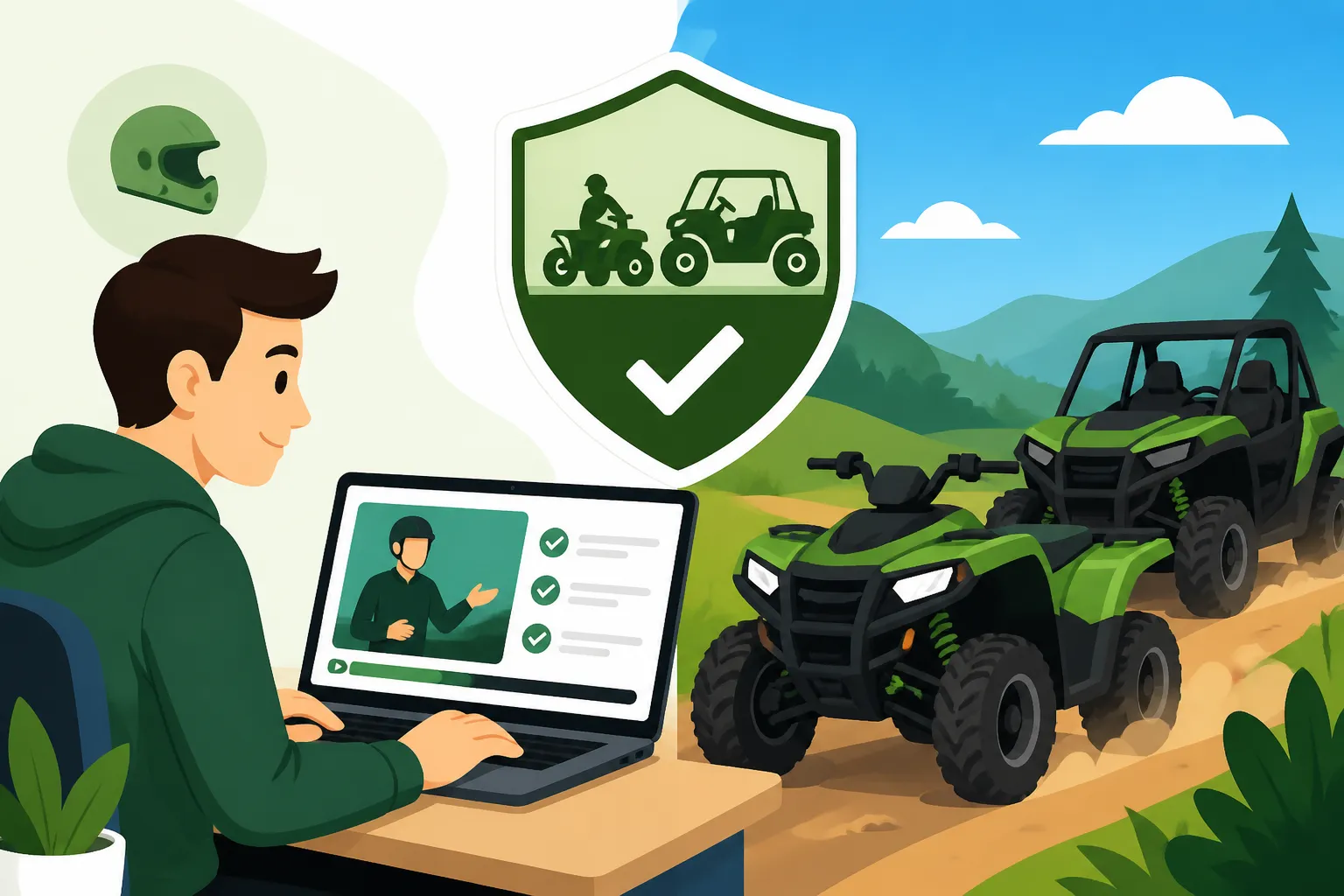
Signing Up for a Safety Course Online
Signing up for an ATV or UTV safety course online can be a useful way to build confidence before riding in Manitoba. The key is knowing what the course does—and does not—do: training is voluntary, and an online certificate does not replace registration, insurance, land permission, or operating rules. Use these steps to choose a course and enrol with clear expectations.
What online safety-course sign-up means in Manitoba
Manitoba does not require riders to complete an ATV safety course as a general condition of riding. Training is voluntary, including for young riders; a course certificate is not a substitute for meeting the rules that apply to the rider, machine, location, and trip. For the legal distinction, see No Law Requires an ATV Safety Course and No Safety Certificate Required at Any Age.
That does not make training pointless. A well-chosen course may help a new rider understand basic controls, safe riding habits, hazards, and responsible machine use. It can also give a parent or other supervising adult a structured way to talk through safety before a young person rides. The course is education, not permission to ride.
An online sign-up usually means you choose a course or training option, provide the requested details, and receive instructions for accessing the learning materials or arranging any next steps. The exact process depends on the provider. Some offerings may be fully online, while others may include a practical component, instructor contact, or an assessment. Confirm the format before paying or relying on a completion document.
It is also important to separate safety training from permits and reciprocity. Completing a course does not register a machine, provide insurance, or grant access to a trail, park, private property, or Crown land. If you are visiting Manitoba, your home registration and insurance are separate questions from training. Start with Manitoba Visitors Registered at Home and Manitoba Visitors and Operating Rules when planning an out-of-province ride.
| What you want to do | What an online course can help with | What it does not replace |
|---|---|---|
| Build basic knowledge before riding | Structured instruction and safety information | Registration, insurance, or permission to ride |
| Prepare a young rider | A starting point for learning and family discussion | Age, supervision, and machine-use rules |
| Ride in Manitoba as a visitor | General preparation for operating safely | Home-province requirements or Manitoba operating rules |
| Meet a requirement set by someone else | Potentially, if that organization accepts the course | Confirmation from the organization that the course qualifies |
If a club, employer, event organizer, insurer, or another organization has asked you to take training, ask that organization which course it accepts. Do not assume that any course found online will meet a particular requirement. Manitoba’s general rules and a separate organization’s expectations may not be the same.
Check the course before you enrol
A course title is not enough to tell you whether the content fits your needs. Before entering personal information or paying, check the course provider’s current description and confirm that it covers the machine and type of riding you have in mind. A course focused on one type of off-road vehicle may not cover every issue relevant to a different machine.
Confirm the machine and rider fit
Look for clear information about whether the course is intended for ATV riders, UTV or side-by-side operators, or both. Check whether its examples and instruction match the machine you plan to use. For a UTV, for example, it may be useful to confirm that the material addresses vehicle-specific topics such as occupant protection and passenger practices, rather than assuming an ATV course covers them in depth.
Check who the course is designed for, too. Some courses may be introductory, while others may assume prior knowledge or be intended for a particular age group or workplace. If you are enrolling a young rider, ask the provider whether a parent or guardian needs to help with registration, access, or course participation. Do not rely on the course’s age guidance to determine the rider’s legal requirements; those must be checked separately. Manitoba Youth Training Options provides a useful starting point for thinking about training for younger riders.
Understand the format and completion rules
“Online” can describe several different arrangements. It might mean independent learning at your own pace, scheduled online instruction, or online theory followed by an in-person activity. Find out what the course actually includes before you start.
Ask or check:
- Whether the instruction is entirely online or includes an in-person component.
- Whether you can pause and return to the material.
- Whether there is a test, quiz, skills check, or other completion step.
- How the provider confirms completion and whether it issues a certificate or other record.
- Whether you need to complete the course within a set access period.
- What device, internet access, or software you need.
- How to get help if you cannot access the material or your progress does not save.
Providers set their own course formats and completion processes, so check current details directly. For a broader comparison of available options, see Manitoba Safety Course Providers. If course duration matters for your schedule, Manitoba Safety Course Length can help you know what to ask, but confirm the actual time commitment with the provider.
Check what the certificate is for
A completion certificate can document that you finished a particular course. It does not automatically prove that you meet every legal, employment, club, event, insurance, or land-access requirement. If you need the course for a specific purpose, get confirmation from the person or organization setting that requirement before enrolling.
This is especially important for visitors. A training certificate does not settle whether your machine is properly registered or insured, and it does not exempt you from Manitoba operating rules. Visitors must check their home requirements as well as the rules that apply where they ride. For additional context, read Visitors Must Meet Their Home Insurance Rules and Visitors Follow Every Operating Rule Residents Do.
How to sign up for a course online
The following process works as a practical checklist. Providers differ, so follow the instructions for the course you choose and contact the provider if a step is unclear.
- Decide what you need the course for. Are you looking for general preparation, enrolling a young rider, training for work, or satisfying a club or event request? Knowing the purpose helps you check that the course is suitable.
- Identify the machine and rider. Note whether the rider will operate an ATV, a UTV, or another type of machine, and whether the course is intended for their experience and age group.
- Compare course descriptions. Check the subject coverage, delivery format, instructor involvement, assessment, and any practical portion. If the course must meet an outside requirement, confirm acceptance with that organization first.
- Review the provider’s enrolment terms. Read the current instructions for access, completion, cancellations, refunds, and any certificate or record provided. Costs and terms vary, so confirm them with the provider rather than relying on an old listing or a search-result summary.
- Enter the requested information carefully. Use the rider’s correct details and a reliable email address if the provider sends access instructions or completion information by email. If a parent or guardian is involved, follow the provider’s directions about whose details to enter.
- Save the confirmation. Keep the enrolment email, login instructions, and any receipt or reference information somewhere you can find them. Avoid sharing account credentials, and use the provider’s support channel if the confirmation does not arrive.
- Complete every required part. Work through the material, assessments, and any additional component described by the provider. If you are unsure whether a step counted, ask before assuming you are finished.
- Keep the completion record. Download or save the certificate or other proof if one is issued. Check the name and course details for errors, and ask the provider how to correct them if needed.
Take care when entering personal information on a course site. Confirm that you are dealing with the provider you intended to contact, and read its privacy and payment information before submitting details. If an enrolment page is unclear about what happens after payment, pause and ask the provider for clarification.
For a parent enrolling a young rider, consider completing the preparation together. A course can provide information, but a child still needs appropriate supervision and must follow Manitoba’s age-related operating rules. Training is not an exception to those rules. The related overview Manitoba Supervision Requirements for Young Riders can help identify questions to resolve before the first ride.
After enrolment: finish the course and plan the ride
Once you have access, set aside enough time to complete the course without rushing. Keep any notes that help you remember practical points, and make a list of questions that the course does not answer. Online learning is most useful when the rider can apply it to the actual machine, terrain, and riding conditions they will face.
If the course includes a practical session, find out what to bring and what the provider expects before travelling. Check whether you need to supply a machine or protective equipment, whether the session can be rescheduled, and how the provider records completion. Do not assume that the online portion alone completes the course if the provider describes an additional step.
After completion, store the certificate or record with other important riding documents. It may be useful to keep a digital copy and a backup, but do not treat it as a substitute for documents required on the ride. Manitoba riders should separately confirm registration, insurance, and the requirement to carry the registration certificate. The Certificate Manitoba Riders Must Carry at All Times explains why course records and machine paperwork serve different purposes.
Before choosing a riding location, check access rules and any local restrictions. A safety course does not grant permission to enter private land or a Crown lease, and it does not make every trail or public area open to off-road vehicles. Visitors should confirm their machine’s status at home and then follow the operating rules where they ride. For a Manitoba trip, Does a Visiting Rider Have to Register in Manitoba? is relevant to the registration question, while course completion remains a separate matter.
A useful final check is to ask four questions:
- Is the course appropriate for this rider and machine?
- Have all course requirements been completed?
- Is any outside organization that requested training satisfied with this specific course?
- Are registration, insurance, permission, and operating rules handled separately?
If all four answers are clear, you can treat the course for what it is: a voluntary learning step that may help a rider prepare, not a pass that authorizes every ride.
Disclaimer
This article is for general informational purposes only and does not constitute professional advice. Laws, prices and regulations vary by location and change over time. Consult a qualified professional for guidance on your specific situation.