Manitoba Parent Riding With a Child
Riding with a child in Manitoba means balancing time outdoors with rules that depend on the child’s age, whether they’re operating or riding as a passenger, and where you plan to go. A parent nearby does not automatically make every ride legal or safe. Here’s how to think through supervision, machine fit, protective gear and route planning before you unload.
Start With the Child’s Role and Age
The first question is whether your child will operate a machine or ride as a passenger. Those are different situations, and a child who is old enough to ride along may not be legally eligible to drive. Manitoba has age-based rules for young ORV operators, so check the requirements for the child’s age before planning a ride. Manitoba ATV Age Requirements
Children under 14 need adult supervision when operating an off-road vehicle. A parent or guardian can supervise, but being at the same trailhead or somewhere nearby is not the same as supervising a child on the trail. Keep the child within clear view and close enough to respond. Avoid routes, terrain and riding speeds that make it hard to stay together. For the details, see Manitoba Supervision Requirements for Young Riders.
A child’s age does not tell you whether a particular machine is appropriate for them. The machine must be manageable for the child’s strength and coordination, and the child needs to understand the controls before riding. A parent’s presence cannot make an oversized or unfamiliar machine a good choice.
Use both the legal rules and the machine maker’s age guidance when deciding what your child may operate. The maker’s recommendation is a safety guide, not a replacement for Manitoba law; meeting one does not necessarily mean the other is met. A child who can reach the controls while parked may still struggle to steer, brake or react on uneven ground.
| Situation | What to consider |
|---|---|
| Child operating an ATV or UTV | Check the age rules, required supervision and whether the child can control that specific machine |
| Child riding as a passenger | Confirm the machine is designed for a passenger and has an appropriate seat and restraints |
| Child under 14 operating | Adult supervision is required; keep the child in clear view |
| Riding near or across a roadway | Road and crossing rules still apply; parental supervision does not replace operator requirements |
| Riding on private or managed land | Confirm permission, access conditions and any local restrictions |
For age-specific guidance, read Manitoba Rules for a 12-Year-Old Rider or Manitoba Rules for a 14-Year-Old Rider. Ages and abilities vary, but the legal age rules do not. Do not assume a child may operate just because a friend of the same age does.
Keep supervision practical
A useful way to supervise is to make the ride short and predictable. Choose a route where you can see the child, avoid difficult intersections and turn around before fatigue becomes a problem. Agree on simple instructions before starting: stop when signalled, keep a safe gap, wait at turns and never ride ahead out of sight.
If you are supervising more than one child, think about whether you can actually watch each one while operating your own machine. A large group, a winding trail or a long gap between riders can make close supervision difficult. It may be safer to have another capable adult ride with the group or choose a simpler route.
Decide Whether the Child Should Ride as a Passenger
A passenger seat is not just an extra place to sit. The machine must be designed to carry a passenger, and the child must be able to sit securely in the intended position. Do not carry a child on a one-person ATV, on a cargo rack or on any other part of the machine that is not meant for a passenger. Manitoba’s passenger rules are based on the machine’s design and seating capacity. Manitoba Rules for a Child Passenger and Manitoba Passenger Limits by Design
Before the ride, check that the child can sit properly without leaning into the operator’s controls or shifting around to hold on. If the child cannot stay seated and use the passenger handholds or restraints as intended, the machine is not a suitable ride for them. A short trip does not remove the risk of a sudden stop, rut or sharp turn.
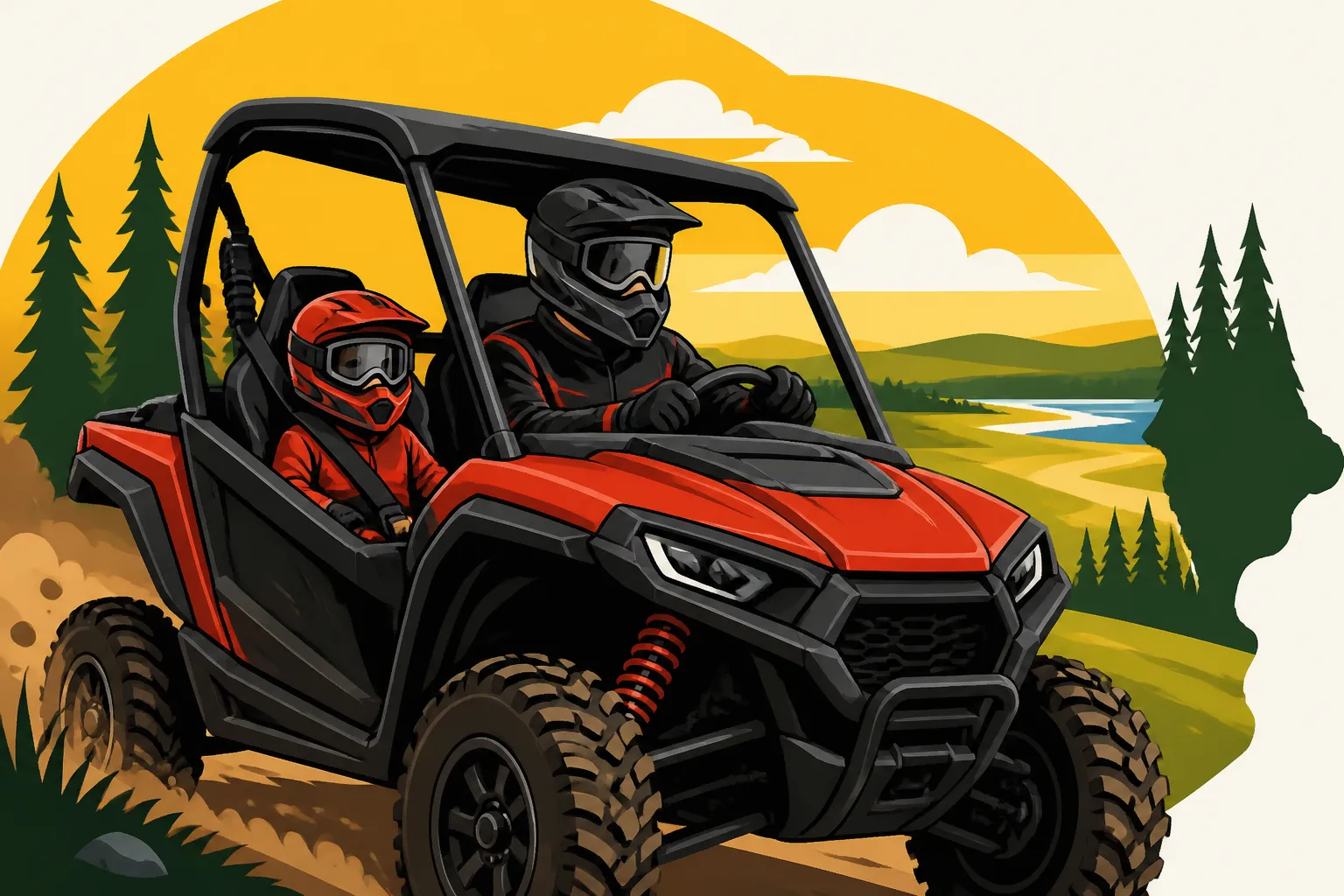
On a side-by-side or other UTV, use the seat and restraint system the machine was built with. Each passenger should occupy a designated seat, and seat belts should be worn wherever the machine is equipped with them. Do not let children share a seat or ride in the cargo area. The vehicle’s seating capacity is a safety limit, not a suggestion. See Manitoba Seat Belt Rules before taking a child in a UTV.
A passenger also needs protective equipment. Check the helmet requirements for the vehicle and situation, and choose a helmet that fits the child rather than one they can “grow into.” A loose helmet may shift or come off in a crash. Use the chin strap as intended and check that the child can keep the helmet on comfortably for the planned ride. Manitoba ATV Helmet Law
If you shop through a local dealer or Amazon, verify the helmet’s certification marks, size and fit rather than relying only on a product title or age range. Have the child try it on if possible. A helmet that rocks from side to side, sits too high or presses painfully is a poor fit, even if the label lists the child’s age.
For an operator, passenger or both, use clothing that covers arms and legs, gloves and sturdy footwear. Loose drawstrings, dangling straps and footwear that can slip off are poor choices around moving parts. Dress for the weather and bring an extra layer: children can become cold or tired before adults notice.
Choose a Route That Matches the Child
A quiet trail is not automatically an authorized trail. Before the ride, confirm that ORVs may use the route and that access is open that day. Private land requires permission, and managed areas can have their own restrictions. Local rules may also affect where machines can travel. Start with Manitoba ORV Road Rules Explained and check access conditions for the place you plan to ride.
Do not treat road shoulders, ditches or road crossings as convenient shortcuts for a child. Manitoba restricts where off-road machines may travel, and a crossing has its own requirements. The supervising adult should plan around legal routes rather than expecting a child to make a last-minute decision at a road. A parent riding beside the child does not override the rules for the child operating a machine. See Manitoba Rules for Crossing a Highway.
For a first outing, a short, familiar route with room to stop is usually a better choice than a long loop through unfamiliar terrain. Avoid routes where the child would have to keep up with faster adults, handle difficult mud or steep ground, or ride beyond the point where you can maintain visual contact. Plan a turnaround point and make clear that stopping early is fine.
Before leaving, check that the child can explain the basic plan: who leads, where to stop, what to do if separated and how to signal that they need help. Keep the group together and pause at turns so nobody has to guess which way to go. If the trail becomes more difficult than expected, turn back instead of pressuring a child to continue.
Do a brief pre-ride check
A child may not notice a loose strap or a problem with the machine, so check together before starting:
- Confirm the route is open and that your group has permission to use it.
- Check the machine’s controls, brakes, tires, lights and fuel.
- Fit and fasten helmets, seat belts and other required protective equipment.
- Make sure the passenger is in a designated seat and the operator can reach and use the controls.
- Set a pace and agree on signals, stopping points and what to do if the group separates.
- Carry registration documents required for the ride and keep them protected from water. See Manitoba Registration Cards Carried at All Times.
A pre-ride check is especially useful when the child is learning. Explain what you are checking and let them ask questions, but do not make a child responsible for deciding whether a machine is safe to operate.
Keep the Ride Within Your Limits
A parent can make a ride more controlled, but cannot remove every risk. Choose conditions that match the child’s skills and energy, and be willing to shorten the trip. Mud, poor visibility, cold weather and a busy trail can change a familiar route into a more demanding ride. If the child is tired, frightened or having trouble keeping control, stop somewhere safe and reassess.
Avoid turning the ride into a test of bravery. Children may keep going because they do not want to disappoint an adult, even when they are uncomfortable. Tell them before the ride that they can ask to stop, slow down or turn around. Praise careful decisions, including choosing not to tackle an obstacle.
Keep a phone or other communication method accessible where service is available, but do not rely on coverage in remote areas. Let someone know where you are going and when you expect to return. For longer outings, bring water, basic first-aid supplies and clothing suited to changing weather. If you cannot supervise closely, manage the route and respond if something goes wrong, choose a different activity or ride without the child operating a machine.
The safest family ride is one where the child’s role, machine, protective gear and route all fit together. Check the rules for the child’s age, use only a proper passenger position, and keep supervision close enough to matter. When any part of the plan feels uncertain, pause and confirm the requirement before riding.
Disclaimer
This article is for general informational purposes only and does not constitute professional advice. Laws, prices and regulations vary by location and change over time. Consult a qualified professional for guidance on your specific situation.