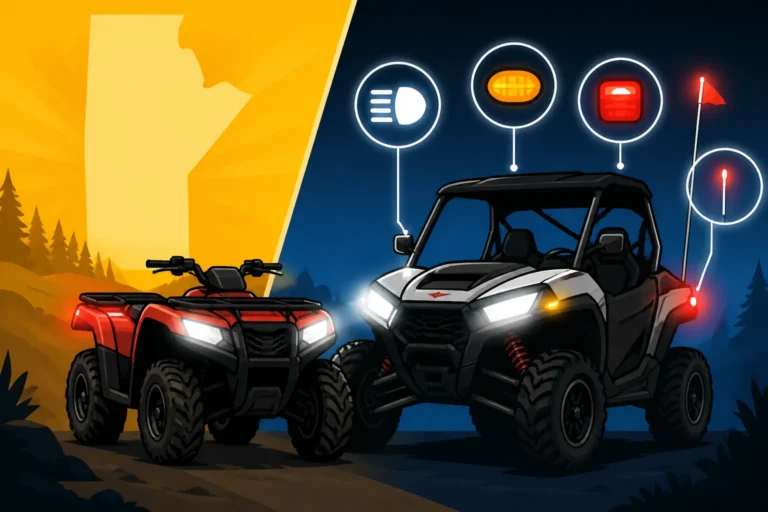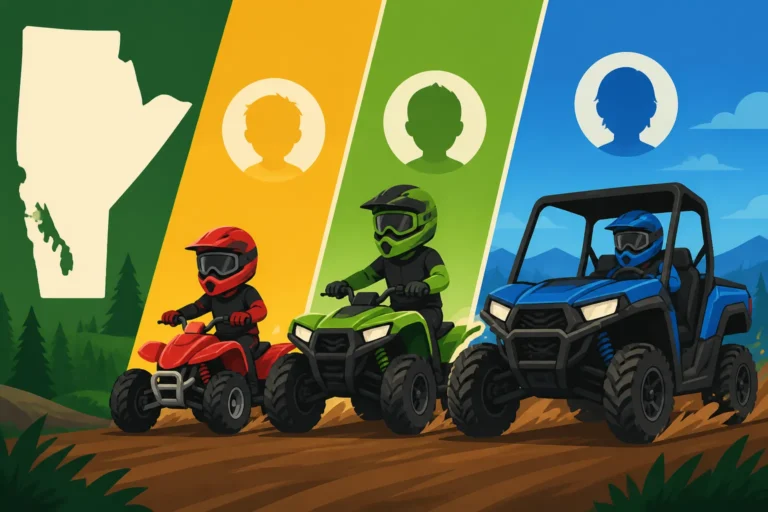
Manitoba Rules for a 12-Year-Old Rider
Many parents across Manitoba find themselves scratching their heads when it comes to letting their 12-year-old ride an off-road vehicle. It's not just about the excitement; it's about navigating a maze of age limits, supervision rules, and where they can legally and safely operate an ATV or UTV. Trying to figure out the exact provincial regulations can feel overwhelming, leaving you worried about making a wrong move. This guide is here to untangle all that confusion, giving you a clear, empathetic breakdown of Manitoba's rules specifically for 12-year-old riders, so you can feel confident and informed.
Understanding Manitoba's Age Tiers for Young Riders
Manitoba has set up clear guidelines under its Off-Road Vehicles Act to ensure that young riders are kept safe while enjoying the thrill of the trails and open spaces. It's not a free-for-all, and for good reason—these machines demand respect and skill. When it comes to a 12-year-old, they fall squarely into the "riders under 14 years of age" category, which carries some very specific, and non-negotiable, requirements. The province doesn't just arbitrarily pick these ages; they're based on developmental stages, physical capabilities, and the need for mature judgment.
This means that a 12-year-old isn't treated the same way as, say, a 16-year-old who might be able to ride unsupervised in certain areas. The entire framework for someone so young is built around protection and gradual introduction to the sport. It acknowledges that while a 12-year-old might have the physical prowess to handle a machine, they might not yet have the critical thinking skills or impulse control necessary for independent operation, especially in unpredictable environments. So, the rules aren't there to stifle fun, but to foster it responsibly.
The "Under 14" Category and What It Means
For any rider in Manitoba who hasn't yet celebrated their 14th birthday, the rules are quite stringent: direct adult supervision is not just recommended, it's absolutely mandatory. This isn't a suggestion or a guideline; it's law. What does "direct adult supervision" truly entail? It means a responsible adult—someone who is at least 18 years old and capable of operating an ORV themselves—must be physically present and actively monitoring the 12-year-old rider at all times. They need to be close enough to intervene immediately if there's a problem, offer guidance, and ensure safety.
This isn't just about sharing the trail; it's about constant vigilance. The supervising adult should be able to see and hear the young rider, providing instruction and corrections as needed. Think of it like teaching someone to swim – you don't just point them to the deep end. You're right there, hands-on, guiding them through every stroke. For a 12-year-old on an ORV, this means the adult should ideally be riding their own machine alongside or very close by, or at least following in another vehicle if the terrain allows for direct line-of-sight supervision. The spirit of the law is to have an experienced mentor guiding the young rider through their learning phase, mitigating risks that a child simply isn't equipped to foresee or manage on their own.
The Nuances of Supervision Requirements
The requirement for direct adult supervision goes beyond just being in the general vicinity. The law specifies that the supervising adult must be someone who understands the rules of the road (or, in this case, the trail), has experience with ORVs, and is prepared to take immediate action. This isn't a job you can delegate to an older sibling who's only a few years their senior, nor is it a situation where you can drop your child off at a field and come back an hour later. The adult must be engaged, attentive, and responsible for the safety of the young rider.
Furthermore, this supervision applies to all riding activities, whether it's on private land or a designated trail. It doesn't matter if your 12-year-old is a natural at riding; the law prioritizes their safety above perceived skill. This continuous oversight helps young riders develop good habits, learn about risk assessment, and understand the importance of respecting the machine and the environment. It's a critical period for instilling safe riding practices that will serve them well as they get older and gain more independence. For more details on what supervision entails, you might find [Manitoba Riders Under 14 Need Supervision] helpful.
Machine Restrictions for a 12-Year-Old
It's one thing to know who can ride, but it's another entirely to understand what they can ride. Not all off-road vehicles are created equal, especially when it comes to age and size appropriateness. For a 12-year-old in Manitoba, simply having an adult present isn't enough; the machine itself must be suitable for their age, height, weight, and skill level. This is where manufacturer recommendations become absolutely paramount, even more so than specific provincial engine size limits, which are often generalized for older riders.
The goal here is to prevent a situation where a child is attempting to control a machine that is too powerful, too heavy, or too large for them to safely manage. An ill-fitting machine can lead to loss of control, fatigue, and significantly increase the risk of an accident. As parents, we all want our kids to have fun, but not at the expense of their safety. This means a careful assessment of the ORV itself, not just the rider's enthusiasm.
Adhering to Manufacturer's Age Ratings
This is perhaps the most critical rule when choosing an ORV for a 12-year-old: always, always adhere to the manufacturer's age recommendations for the specific machine. These ratings aren't arbitrary; they're based on extensive testing, design considerations, and an understanding of a child's physical and cognitive development. Most manufacturers produce youth-specific models that are designed with features like reduced power, lower top speeds, lighter frames, and appropriate ergonomics (smaller handlebars, accessible footrests) for younger riders.
For example, you won't typically find a 12-year-old legally or safely operating a full-sized, high-horsepower sport quad that's designed for experienced adult riders. Even if the provincial law doesn't explicitly state an engine size limit for this age group, the manufacturer's guidelines effectively do. Ignoring these recommendations is not only incredibly risky but could also invalidate warranties or, worse, lead to serious injury. While you might be looking at aftermarket accessories from brands like SuperATV to enhance a machine's durability or customize it, the fundamental suitability for a 12-year-old always begins and ends with the vehicle's original design and the age rating provided by its maker.
Engine Size and Type Considerations
While Manitoba's Off-Road Vehicles Act doesn't specify a maximum engine displacement (like 90cc or 125cc) for riders under 14, the implicit expectation is that the machine will be appropriate for their size and maturity. This naturally steers parents towards youth-model ATVs and UTVs. These smaller machines are usually equipped with lower displacement engines, which provide less speed and torque, making them much more manageable for a developing rider.
A 12-year-old typically benefits from an ORV that offers responsive but not overwhelming power delivery. Many youth models also come with adjustable throttle limiters, which allow parents to progressively increase the available power as their child gains experience and confidence. This gradual approach is crucial for building foundational riding skills safely. Choosing a machine that is simply too powerful, even if the child thinks they can handle it, is a recipe for disaster. It's about empowering them with the right tool for their current stage of development, not just any tool available.
Legal Riding Areas for Young Riders in Manitoba
Knowing where a 12-year-old can legally and safely ride an ORV in Manitoba is just as important as knowing the age and machine restrictions. This is an area where many misunderstandings arise, often leading to fines or dangerous situations. The core principle is clear: public roads, ditches, and highways are generally off-limits for ORVs, especially for young, unsupervised riders. The rules are designed to keep ORVs separate from regular traffic flow, where they pose a significant safety risk.
For a 12-year-old, the options are quite limited, focusing almost exclusively on supervised, controlled environments. This isn't just about following the law; it's about providing a safe space where they can learn and enjoy their machine without the added dangers of cars, trucks, and unforeseen obstacles associated with public thoroughfares. It's a critical distinction to make, and one that every parent must understand before their child even turns the key.
Riding on Private Property with Consent
The safest and most straightforward option for a 12-year-old to ride an ORV in Manitoba is on private property, provided you have explicit permission from the landowner. This could be your own acreage, a friend's farm, or a family cabin property. The beauty of private land is the ability to control the environment. You can set up specific riding areas, monitor conditions, and ensure that the space is clear of hazards.
Even on private property, the requirement for direct adult supervision for a 12-year-old remains. This isn't an exemption that suddenly makes it okay for them to ride alone. It's simply the location where they have the most freedom to learn and practice, away from public access points. Always remember to respect property boundaries and ensure any riding activity doesn't disturb neighbours or local wildlife. Acquiring proper consent is paramount; you can't just assume it's okay. For more information on this, check out [Manitoba Rules for Riding Private Land].
Designated Trails and Club Lands: What's Allowed?
Manitoba boasts a growing network of designated ORV trails, many maintained by local clubs. These trails offer fantastic opportunities for riders of all ages to explore the province's natural beauty. However, for a 12-year-old, access comes with specific conditions. They can ride on these trails, but—you guessed it—only under the direct supervision of a responsible adult. This means the adult must be present, riding with them, and actively supervising their actions.
It's also crucial to verify specific club rules or trail restrictions, as some may have additional guidelines regarding age or machine type, although they usually align with provincial regulations. While these trails are generally safer than open terrain due to maintenance and signage, the presence of other riders, varying skill levels, and natural obstacles means constant vigilance is still required. Before heading out, always check trail conditions and ensure the trail is indeed open to ORV traffic. For an idea of where these trails might be, consider looking into [Manitoba ATV Trails: Club Ground and Crown Land].
What's Strictly Off-Limits for Young Riders
This section cannot be stressed enough: public roadways, road allowances (ditches), and highways are strictly off-limits for 12-year-old ORV operators, even with adult supervision. The Off-Road Vehicles Act is quite clear on this. These areas are designed for vehicular traffic, and ORVs, particularly when operated by young riders, simply do not belong there. Mixing ATVs and UTVs with cars and trucks is incredibly dangerous due to speed differentials, visibility issues, and the lack of protective features on an off-road machine.
There are specific scenarios where an ORV might be allowed to cross a roadway, but these are very limited and come with their own set of stringent rules, usually reserved for licensed adult operators. A 12-year-old absolutely cannot participate in these crossings. They cannot ride in the ditch alongside a road, nor can they use the shoulder. These rules are in place for the protection of everyone on the road. For a comprehensive overview of these restrictions, you can refer to [Manitoba Bans Riding on Roadways]. It's a hard line, but it's there for safety.
Essential Safety Gear and Training
Beyond the rules of where and what to ride, the discussion on safety for a 12-year-old absolutely must include personal protective equipment and the benefits of formal training. Simply put, safety gear is non-negotiable, and while formal training isn't mandatory in Manitoba for ORV operation, it is highly recommended, especially for young, developing riders. These elements form the bedrock of responsible off-road riding.
It's tempting to think that basic gear is "good enough," but just like investing in quality parts from SuperATV for your machine's performance, investing in top-tier safety gear for your child is paramount. It's about protecting them from the inevitable bumps, scrapes, and potential impacts that come with learning to ride. Training, on the other hand, gives them the skills and knowledge to avoid those impacts in the first place. Together, they create a comprehensive safety net.
The Mandatory Helmet Law
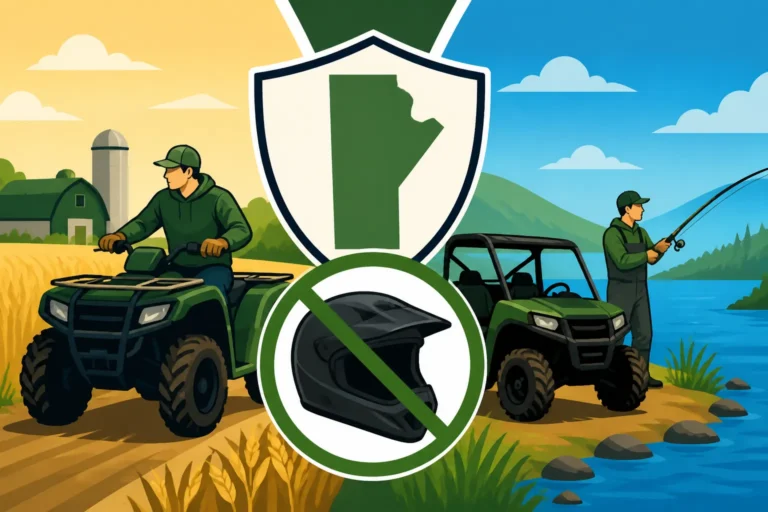
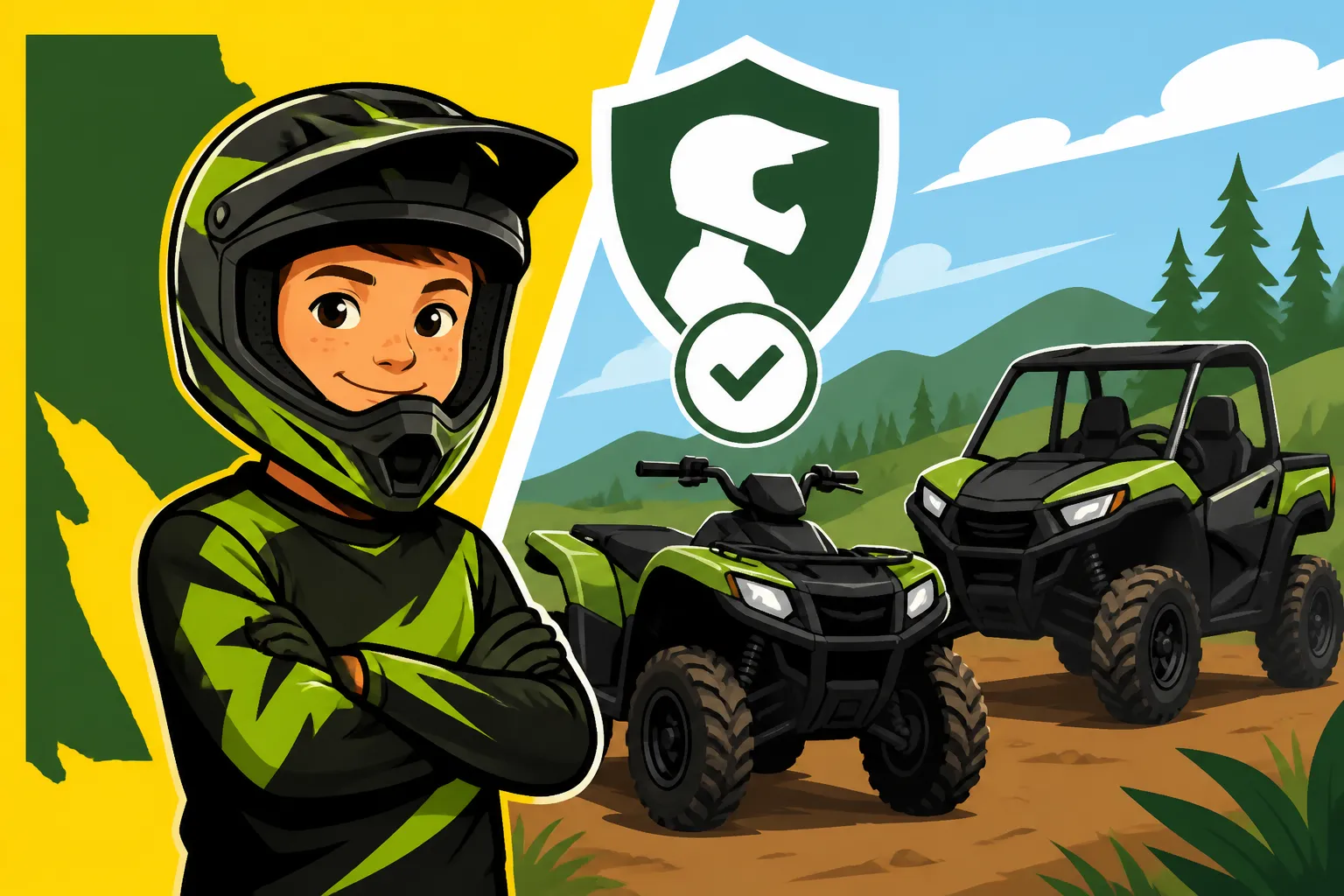
In Manitoba, wearing an approved helmet is mandatory for all ORV operators and passengers, regardless of age. For a 12-year-old, this means no exceptions, no excuses. The helmet must be properly fitted, securely fastened, and meet recognized safety standards (such as DOT, Snell, or ECE). A ill-fitting helmet offers little protection, so taking the time to find one that fits snugly and comfortably is crucial.
Helmets are designed to protect the most vital part of the body—the head—from severe injuries in the event of an impact. Given the dynamic nature of off-road riding, falls and collisions are always a possibility, even at low speeds or on seemingly easy terrain. Eye protection, such as goggles, is also highly recommended to shield against dust, debris, and insects, ensuring clear vision which is critical for safe operation. Don't skimp on this; a good quality helmet is the best investment you can make in your child's safety. For a deeper dive into helmet requirements, see [Manitoba Helmet Law and Its Exemptions].
The Role of Voluntary Training and Safety Courses
While Manitoba does not legally require riders of any age to complete an ORV safety course, it is an incredibly valuable resource, especially for young riders. Think of it as investing in skill development that directly translates to safer riding. These courses teach fundamental operating techniques, risk awareness, environmental responsibility, and emergency procedures. They provide a structured learning environment where children can practice under the guidance of certified instructors.
There are various organizations that offer voluntary ATV and UTV safety training, providing hands-on experience and classroom instruction. For a 12-year-old, learning correct posture, throttle control, braking techniques, and how to navigate different terrains from a professional can dramatically reduce the likelihood of accidents. It builds confidence and competence in a way that informal instruction sometimes cannot. Encouraging your child to take such a course demonstrates a commitment to their safety and helps them become a more responsible rider as they grow. You can explore options through resources like [Manitoba Safety Services Training Options].
| Age Category (Years) | Supervision Required | Machine Type | Permitted Riding Areas (with supervision) | Prohibited Riding Areas |
|---|---|---|---|---|
| Under 14 (e.g., 12) | Direct Adult (18+) | Mfg. Age-rated Youth Models | Private Property (with consent), Designated ORV Trails/Club Lands | Public Roads, Ditches, Highways, Road Allowances |
| 14 to 15.5 (Learner) | Direct Adult (18+) | Mfg. Age-rated | Private Property (with consent), Designated ORV Trails/Club Lands | Public Roads, Ditches (restricted), Highways |
| 16+ (Full Licence) | No (If Licensed) | Mfg. Age-rated | Private Property, Designated ORV Trails, Designated Ditches (with licence) | Highways (generally) |
Disclaimer
This article is for general informational purposes only and does not constitute professional advice. Laws, prices and regulations vary by location and change over time. Consult a qualified professional for guidance on your specific situation.