The Slow-Moving Vehicle Sign a Farm Quad Needs
Navigating the rules for off-road vehicles (ORVs) in Manitoba can feel like a maze, especially when your quad or side-by-side isn't just for recreation but a vital tool for your farm. Many riders assume that because their machine is primarily used on private land, they're exempt from all provincial regulations when they briefly need to cross a road or ride a ditch. This simply isn't the case, and one crucial, often overlooked requirement for farm quads venturing onto public rights-of-way is the slow-moving vehicle (SMV) sign. This guide will walk you through everything you need to know about the slow-moving vehicle sign for your farm quad in Manitoba, helping you stay safe and compliant.
Understanding the Slow-Moving Vehicle Sign in Manitoba
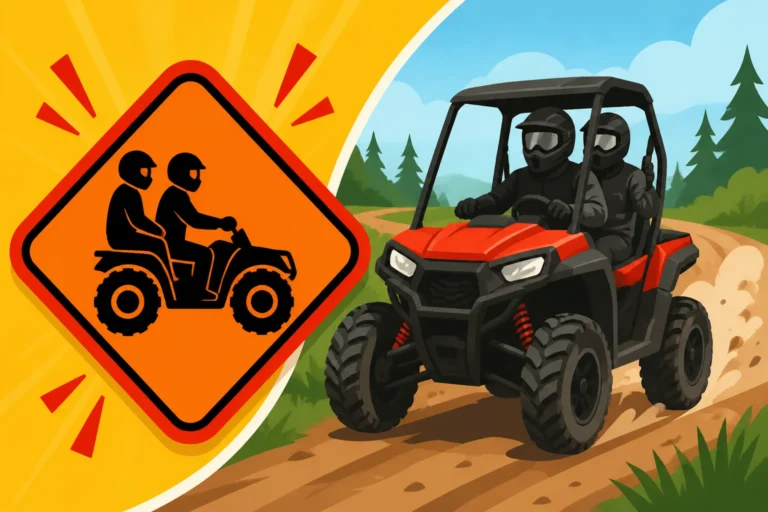
The distinctive orange triangle with a red border is a common sight on Manitoba roads, usually gracing the rear of tractors or other agricultural equipment. For farm quad operators, understanding this sign isn't just about knowing what it looks like; it's about appreciating its critical role in road safety and legal compliance.
What Exactly is an SMV Sign?
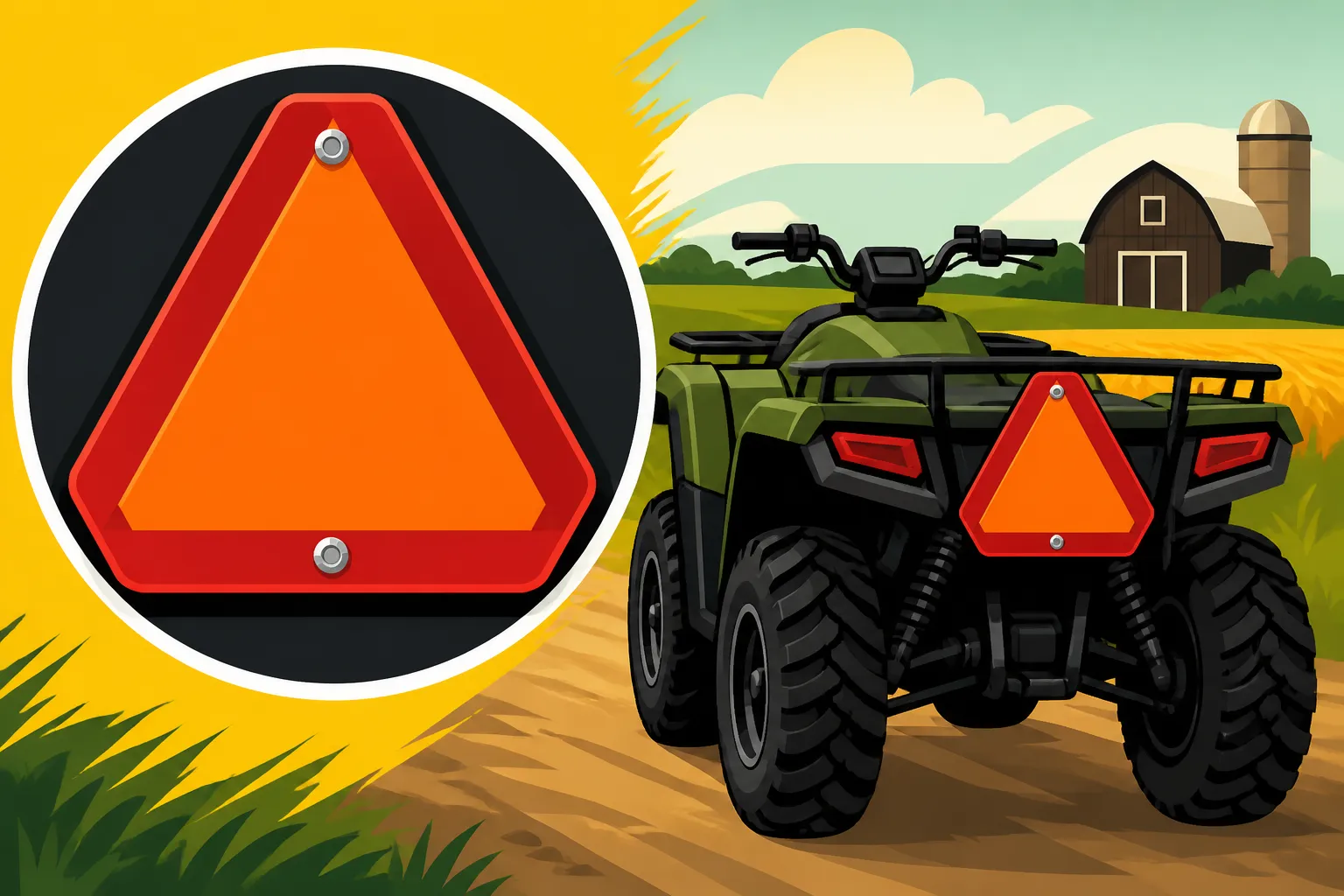
An SMV sign, or Slow-Moving Vehicle sign, is a standardized safety emblem designed to alert other drivers that the vehicle displaying it is traveling at a speed significantly lower than the posted speed limit. It’s an equilateral triangle, typically 14 inches high, with a fluorescent yellow-orange center and a retro-reflective red border. The fluorescent center is designed for daytime visibility, ensuring it catches the eye in bright conditions, while the retro-reflective border illuminates brightly when hit by headlights at night, providing visibility in low-light situations. It's not just a suggestion; these signs are manufactured to specific standards to ensure their effectiveness.
Imagine you're driving down a rural highway at 90 km/h, and ahead of you, almost silently, is a quad operating at 20 km/h. Without a clear, unmistakable warning, the speed differential could lead to a dangerous situation. The SMV sign acts as that immediate, universal signal to approaching traffic, screaming "Caution! Slow Vehicle Ahead!" This simple, yet incredibly effective, piece of equipment is a crucial layer of protection, particularly for the more vulnerable ORV operator on public roadways.
Why Farm Quads Need This Sign
The core reason farm quads need an SMV sign when operating on public roadways or their shoulders and ditches is safety and regulatory consistency. Farm vehicles, by their nature, are often slower and less visible to other motorists than typical road vehicles. When a farm quad needs to travel along a highway shoulder to get from one field to another, or even just cross a paved road, it poses a unique challenge for oncoming or following traffic. The ORV Act in Manitoba recognizes this by specifically including provisions for agricultural operations. The [Manitoba Slow-Moving Vehicle Signs] are a direct answer to this safety concern, aimed at preventing rear-end collisions and ensuring that everyone sharing the road is aware of potential hazards.
Consider a scenario where you're moving a small implement with your quad from the home yard to a back forty a few kilometres down a provincial road. You're likely travelling at a modest speed, focusing on the load you're hauling, and perhaps not as visible as a full-sized tractor with its flashing lights. Without that distinctive orange triangle, other drivers might not register your presence until they're much closer, leaving them less time to react. This sign is about managing expectations and giving other drivers the heads-up they need, ultimately protecting you, your machine, and the public.
The Specific Law Mandating the SMV Sign
In Manitoba, the requirement for a slow-moving vehicle sign on farm implements, which includes farm quads when used in an agricultural context on public ways, is primarily outlined within the Highway Traffic Act and complemented by the Off-Road Vehicles Act. While the ORV Act governs the operation of ATVs and UTVs, certain exemptions and rules for agricultural use cross over into the Highway Traffic Act's domain, especially concerning equipment and signage. For instance, the Highway Traffic Act details the specifications for the SMV sign and mandates its use on vehicles that "normally travel at speeds less than 40 kilometres per hour" when on a highway.
This legal framework means that if your farm quad is operating on a highway (which includes the roadway, shoulder, and ditch) and its typical speed for that operation is below 40 km/h, it must display an SMV sign. It’s not just about what kind of machine it is; it’s about how it's being used and where. Failing to display the sign isn't just a minor oversight; it's a violation of the Act and can lead to fines, because it directly contravenes a safety provision designed to mitigate risks on public thoroughfares. It's one of the [Manitoba Rules Riders Get Wrong] frequently.
When and Where Your Farm Quad Needs an SMV Sign
The application of the SMV sign isn't universal for all ORV use but becomes critical under specific circumstances, particularly those involving public rights-of-way for agricultural purposes. Understanding these nuances is key to staying out of trouble and, more importantly, staying safe.
Riding on Road Shoulders and Ditches
One of the most common situations where your farm quad will require an SMV sign is when you're utilizing the road shoulder or ditch for agricultural purposes. Manitoba's Off-Road Vehicles Act allows for this type of travel under certain conditions, recognizing that farmers need practical ways to move between fields or access different parts of their property that might be separated by a public road. However, this convenience comes with strict rules. The [Manitoba Shoulder Riding for Farming Only] provision explicitly details that ORVs used for farming may operate on the shoulder of a provincial highway, but only if they are equipped with specific safety measures, including an SMV sign and a speed limit of 40 km/h. The same principle often extends to ditch riding when that ditch is part of the highway right-of-way and you are operating a machine that falls under the "agricultural purposes" exemption.
Imagine needing to move some fencing materials or small equipment from one side of your land to another, where a municipal road or provincial highway cuts through. Instead of trailering your quad for a short hop, the ditch or shoulder offers a direct route. However, this is precisely when other vehicles are least expecting a slower-moving ORV. The SMV sign becomes your visual guardian, clearly signaling your presence and slower speed to faster-moving traffic. Without it, you're not just risking a ticket; you're risking a serious incident.
Crossing Public Roadways
While continuous travel on roadways is generally prohibited for ORVs, crossing a roadway is often unavoidable for farm operations. Whether you're moving cattle, checking irrigation, or simply getting to another parcel of land, there are specific [Manitoba Crossing Rules at 5 Metres and 3 Kilometres] that dictate how you must do this safely and legally. When crossing a roadway, especially a provincial highway, your farm quad, if traveling at agricultural speeds, still needs to display an SMV sign. The logic here is straightforward: even a momentary presence on the pavement at a slow speed can be unexpected and hazardous to other drivers.
Consider a busy crossroads where you need to move your quad from a field entrance on one side to another on the opposite. You'll stop, look, and yield, but during the actual crossing, you're a relatively small, slow-moving object in the path of potentially faster traffic. The SMV sign serves its purpose by alerting drivers to your unique status, giving them extra time to anticipate your movement and adjust their speed. This isn't just about avoiding a collision; it's about minimizing the risk of causing other drivers to swerve or brake sharply, which can lead to secondary accidents.
Exemptions and Situations Where It's Not Required
It's important to clarify that the SMV sign isn't required for all ORV use in Manitoba. For recreational riding on designated trails, within private property, or in [Manitoba Machines Used Only in a Remote Community] without public road access, the SMV sign is not necessary. The requirement specifically kicks in when an ORV, used for agricultural purposes, operates on public roadways or their associated shoulders and ditches where faster traffic is expected.
For instance, if you're solely using your quad within your own farmyard, or on private trails you've established on your property, there's no need for the SMV sign. Similarly, if you're trailering your quad to a provincial park for a weekend ride on designated trails, the sign is not required on the quad itself, only on the towing vehicle if it happens to be a slow-moving farm implement (which is a different scenario entirely). The key differentiator is always the location and purpose of travel: is it agricultural use on a public right-of-way where other vehicles will be traveling at higher speeds? If so, the SMV sign is likely a must.
Getting and Displaying Your SMV Sign Correctly
So, you've understood why you need an SMV sign. Now, let's talk about the practicalities: where to get one and how to make sure it's doing its job effectively. It's not enough to just have the sign; it needs to be visible and in good condition.
Where to Purchase a Compliant Sign
Finding a compliant slow-moving vehicle sign is generally quite easy across Manitoba. Most agricultural supply stores, hardware stores, and even some automotive parts retailers will stock them. You can also find them from online retailers that specialize in automotive and farm safety equipment. When purchasing, ensure the sign meets the legal specifications for size and material – specifically, the fluorescent orange centre for daytime and retro-reflective red border for nighttime visibility.
Brands like SuperATV, for instance, known for their wide range of ORV accessories, might not specifically carry SMV signs designed for on-road agricultural use as it's a very specific safety regulation. However, they are a good example of companies that provide high-quality, durable components for ORVs, so checking similar agricultural or safety supply companies for the SMV sign is recommended. Local co-ops, UFA, or other farm equipment dealers are excellent places to start. They often understand the specific needs of farmers and the types of equipment that require these signs. Don't cheap out on this. A faded or undersized sign won't offer the same level of protection or satisfy the legal requirement.
Mounting the Sign for Maximum Visibility
Proper placement of your SMV sign is paramount. It should be mounted on the rear of your farm quad, as close to the centre as possible, and at a height that ensures it's clearly visible to drivers approaching from behind. The standard recommendation is that the bottom edge of the sign should be between 0.6 and 1.8 metres (2 and 6 feet) from the ground. It should be mounted vertically, with the point of the triangle facing upwards. Avoid mounting it in a position where it could be easily obscured by cargo, a trailer, or other equipment you might be hauling.
Think about how other drivers will see your quad. If you're hauling a small utility trailer behind your side-by-side, mounting the sign directly to the back of the ORV might mean the trailer blocks it. In such cases, the sign should be affixed to the rearmost piece of equipment that is travelling on the public right-of-way. Use sturdy hardware to secure it, as vibrations from off-road travel can loosen screws, and you don't want the sign falling off on the highway. This sign is your rear-view mirror for other vehicles; make sure it's unobstructed and prominent.
Maintaining Your SMV Sign
Like any piece of safety equipment, your SMV sign requires a bit of maintenance to ensure its effectiveness. Over time, exposure to sun, dirt, and weather can cause the fluorescent orange to fade and the reflective red border to degrade. A faded sign loses its daytime conspicuity, and a dirty or damaged one won't reflect light as effectively at night.
Regularly inspect your sign for:
- Fading: If the orange is no longer vibrant, it's time for a replacement.
- Damage: Cracks, bends, or missing pieces compromise its integrity.
- Cleanliness: Mud, dust, or snow can quickly obscure the sign. A quick wipe down with a damp cloth is often all that's needed.
It’s a good practice to keep an eye on its condition, especially after a particularly muddy ride or a long season of exposure. Replacing a worn-out sign is a small investment that pays huge dividends in safety and compliance. Think of it as another critical pre-ride check, just like checking your tire pressure or fuel level.
Here's a quick checklist for your farm quad's on-road readiness:
| Requirement | Description | Check Annually | Check Before Public Road Use |
|---|---|---|---|
| SMV Sign (Compliant) | Fluorescent orange center, reflective red border, mounted on rear, point up. | ✅ | ✅ |
| Sign Visibility | Unobscured by cargo, trailer, or machine parts. Bottom edge 0.6-1.8m high. | ✅ | ✅ |
| Sign Condition | Not faded, clean, free from damage. | ✅ | ✅ |
| Working Headlights | Clear and functional for low-light conditions. | ✅ | ✅ |
| Working Taillights | Clear and functional for low-light conditions and braking. | ✅ | ✅ |
| Spark Arrester | Functional to prevent fire hazards. | ✅ | ✅ |
| Registration | Valid Manitoba ORV registration. [Manitoba ORV Registration Cost] | ✅ | ✅ |
| Proof of Ownership | Carrying your registration card. [Carrying Your Registration Card on Every Ride] | ✅ | ✅ |
| Driver's Licence | Valid driver's licence for crossing highways. [Do You Need a Licence for an ATV in Manitoba?] | ✅ | ✅ |
| Speed Limit Awareness | Adherence to 40 km/h on shoulders/ditches. | ✅ |
Beyond the Sign: Other Important Rules for Farm Quads on Public Ways
While the slow-moving vehicle sign is a primary focus for farm quads on public roads, it's far from the only rule you need to keep in mind. Operating these machines, even for agricultural purposes, comes with a broader set of responsibilities and legal requirements.
Speed Limits and Safe Operation
When operating your farm quad on the shoulder or in the ditch alongside a public roadway, remember the speed limit: a maximum of 40 km/h. This isn't just an arbitrary number; it's a critical safety measure designed to minimize the speed differential between your ORV and other road users. Driving faster than 40 km/h, even with an SMV sign, significantly increases the risk of an accident and can lead to penalties. The intent of the agricultural exemption for shoulder use is for practical, low-speed transport, not for quickly covering distances. [Manitoba's 40 km/h Shoulder Limit] is very clear on this.
Beyond the posted speed, safe operation demands constant vigilance. You need to be aware of your surroundings, anticipate the actions of other drivers, and operate defensively. This means avoiding sudden movements, signaling your intentions (if your machine has turn signals, or using hand signals if not), and being extra cautious at intersections, driveways, and field entrances. The responsibility for safe operation ultimately rests with the operator, regardless of whether you're following all the signage rules.
Licensing and Registration for Farm Machines
Even if your quad is primarily for farm use, it still generally requires registration with Manitoba Public Insurance (MPI) if it's going to be operated on public land, including road allowances, shoulders, or ditches. There are certain [Manitoba Registration Exemptions Explained], such as machines used solely on your own property or in designated remote communities, but these typically don't apply when you're moving between properties via public roads. Your farm quad needs to be properly registered, and you'll need to carry the registration card with you.
Furthermore, if you intend to cross a provincial highway, the operator must hold a valid driver's licence. This isn't a requirement for merely riding on private land or within some designated trails, but it becomes essential when interacting with the highway system. So, while your farm quad may be exempt from certain road-specific equipment requirements that a car would have, basic licensing and registration are usually still in play. [Manitoba ORV Registration Through MPI] is a straightforward process, but essential to complete before venturing onto public land.
Lighting and Other Equipment
An SMV sign handles daytime and nighttime rear visibility, but your farm quad also needs appropriate lighting, especially if you're operating it during dusk, dawn, or after dark. This includes working headlights that can illuminate the path ahead for at least 60 metres, and a taillight visible from at least 150 metres to the rear. The [Manitoba Lighting Requirements on a Machine] are not optional; they are fundamental for safe nighttime operation.
Beyond lighting, other standard ORV equipment requirements apply:
- Spark Arrester: All ORVs must be equipped with a muffler and an effective spark arrester to prevent wildfires. This is a year-round requirement, not just during fire season.
- Muffler: The machine must have a muffler that keeps noise levels within legal limits.
- Brakes: Your quad needs fully functional brakes.
While your focus might be on the SMV sign for visibility, neglecting other critical equipment can also lead to fines and unsafe conditions. It's about a holistic approach to safety and compliance for your farm machine.
Common Misconceptions and Avoiding Penalties
It's easy to get caught up in the daily grind of farm work and overlook specific regulations for your equipment. However, ignorance of the law is no excuse, and some common misconceptions about farm quad use on public ways can lead to significant penalties.
"It's Just a Farm Machine, I Don't Need It"
This is perhaps the biggest pitfall for many farm quad operators. The belief that because a machine is used for agriculture, it's somehow "above" or exempt from all road safety regulations, is a dangerous one. While the Off-Road Vehicles Act provides specific allowances for agricultural use on shoulders and ditches, these allowances are conditional upon meeting other safety standards, including the display of an SMV sign. The "agricultural shoulder exception" is not a free pass to operate without regard for other road users or specific safety equipment.
The province understands that farmers need to move their equipment, but that need is balanced against the safety of all Manitobans using public roads. So, even if your machine spends 99% of its time moving hay bales on your private fields, the moment it touches the shoulder of a public road, the rules about the SMV sign and other safety equipment kick in. Assuming "it's just a farm machine" can result in a hefty fine and, more importantly, put you and others at risk.
Officer Discretion and Enforcement
Law enforcement officers in Manitoba, including RCMP and local police, are well-versed in the Off-Road Vehicles Act and the Highway Traffic Act. They recognize the importance of farm vehicles but also the critical need for safety compliance. While an officer might exercise discretion in minor situations, operating a farm quad on a public right-of-way without an SMV sign, or without proper lighting, is not a minor infraction. It's a direct violation of a safety standard and can be easily spotted.
When an officer stops you for not having an SMV sign, they're not trying to be difficult; they're enforcing a law designed to prevent serious accidents. They'll look for:
- Presence and proper display of the SMV sign.
- Functioning headlights and taillights.
- Valid registration and proof of ownership.
- Proof of a valid driver's licence (if crossing a highway).
- Compliance with speed limits.
Failing any of these checks can result in a ticket, which comes with a fine and potentially demerit points, depending on the specific infraction. The cost of a ticket far outweighs the small investment in a compliant SMV sign.
Comparing Manitoba's Rules to Other Jurisdictions
It's also worth noting that rules for farm quads and SMV signs can vary significantly from province to province or even state to state. While Manitoba has its specific set of regulations, a neighbouring jurisdiction like Saskatchewan or Ontario might have slightly different interpretations or additional requirements. For instance, some areas might have different speed thresholds for SMV signs or alternative exemptions.
This is particularly relevant if you operate land that straddles a provincial border, or if you purchase equipment from out of province. Always ensure you are familiar with the specific regulations of the jurisdiction where you are operating your machine. Relying on what's acceptable elsewhere could lead to unintended non-compliance in Manitoba. While this guide focuses specifically on Manitoba, it's a good reminder that [Manitoba Registration Compared to Saskatchewan] or other regions can reveal important differences.
In the end, displaying a slow-moving vehicle sign on your farm quad when operating on public rights-of-way in Manitoba isn't just a hoop to jump through; it's a fundamental part of responsible and safe operation. It's about protecting yourself, your livelihood, and everyone else who shares the roads.
Disclaimer
This article is for general informational purposes only and does not constitute professional advice. Laws, prices and regulations vary by location and change over time. Consult a qualified professional for guidance on your specific situation.