Manitoba’s 40 km/h Shoulder Limit
It’s a common sight across rural Manitoba: a quad or a side-by-side chugging along the shoulder of a road, perhaps heading to a field or moving between properties. But for many riders, understanding exactly when and how this is legal can feel like navigating a maze of conflicting information and hushed local knowledge. The truth is, Manitoba’s Off-Road Vehicles Act has very specific rules about using road allowances, and today, we're going to dive deep into one of the most crucial: the 40 km/h speed limit when you're riding on the shoulder. This guide will clarify the nuances, exceptions, and requirements so you can ride confidently and legally.
Understanding Manitoba's ORV Act and Road Rules
Let's face it, the idea of "road legal" for ATVs and UTVs in Manitoba is often misunderstood. Many riders wish they could just zip down the highway to the next trail, but the reality is far more restrictive. Getting to grips with the basic legal framework is the first step to staying out of trouble and truly enjoying your machine.
The General Ban on Roadways
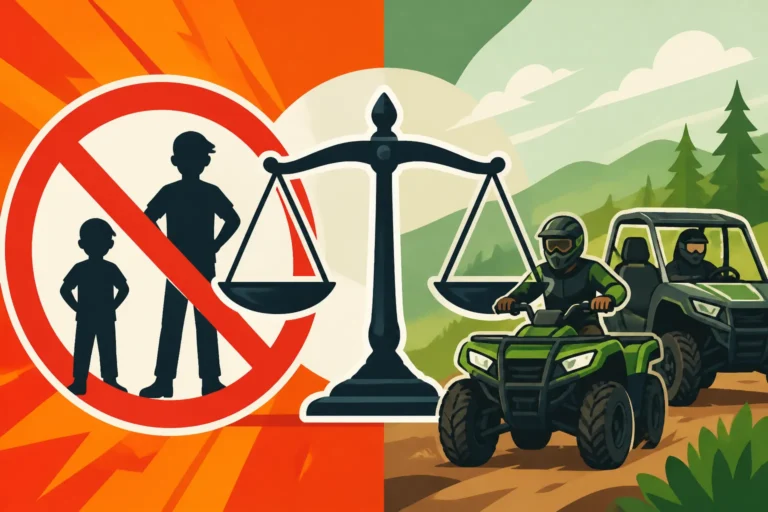
The foundational rule in Manitoba is pretty clear: off-road vehicles are generally prohibited from operating on public roadways. This isn't just a suggestion; it's a hard-and-fast rule designed for safety, given the significant differences in speed, braking, and visibility between an ORV and a typical car or truck. It's frustrating, I know, especially when you can see your destination just a short distance down the paved road, but the ditch or a long, winding back trail seems to be the only legal option. Riders often feel like they're being forced to take the long way around, adding time and wear to their machines, simply because the straightest path is off-limits.
This general ban applies to the paved or gravelled part of the road that cars, trucks, and other highway vehicles typically use. It’s about keeping you and other road users safe. The consequences of ignoring this rule can range from significant fines to having your machine impounded, and even worse, severe accidents that could lead to injury or fatality. It’s a bitter pill to swallow when you're just trying to get from A to B, but the law is the law, and enforcement officers are trained to distinguish between legitimate exceptions and blatant disregard for the rules.
Defining "Roadway" and "Shoulder" in Manitoba Law
One of the biggest sources of confusion comes down to definitions. What exactly constitutes a "roadway," and what's the difference between a "shoulder" and a "ditch" in the eyes of the law? It's not always intuitive, especially when you're looking at a dusty rural road with varying widths of gravel or grass on either side.
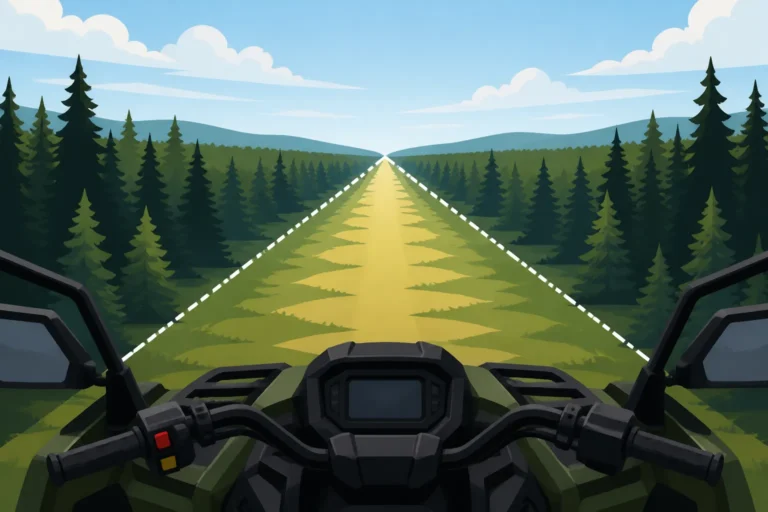
In Manitoba, the "roadway" refers to the part of the highway that is ordinarily used for vehicular traffic. Think of where cars drive. The "shoulder," on the other hand, is the portion of the highway immediately adjacent to the roadway, designed for the temporary stopping of vehicles, emergency use, or, in specific cases, for ORVs. It's that strip of ground, often gravel or even just packed earth, right next to the main travel lanes. And then there's the "ditch," which is generally the sloped area beyond the shoulder, designed to carry water away from the road. Each of these zones has its own set of rules, and mistaking one for the other can land you in hot water.
Understanding these distinctions is absolutely vital for legal ORV operation. You might think, "it's all just 'the side of the road,' right?" But to an enforcement officer, there's a world of difference. For instance, while ditch riding is widely permitted under certain conditions, shoulder riding has a much narrower set of allowances. Many riders mistakenly believe that if they're "off the pavement," they're good to go, but this isn't always true. The nuances here are critical, and knowing them means the difference between a smooth ride and an unwelcome interaction with law enforcement.
The Specifics of Shoulder Riding: When and How
While the general rule is "no ORVs on the roadway," the law does carve out very specific exceptions for shoulder use. These exceptions aren't a free pass, but rather a tightly regulated privilege, primarily intended to support agricultural activities. It's important to recognize that these rules are in place to balance the utility of ORVs for rural residents with the safety of all road users.
The Agricultural Shoulder Exception
The primary reason an ORV might be legally allowed on a highway shoulder in Manitoba is for agricultural purposes. This is a crucial distinction that often gets overlooked. You can't just decide to take the shoulder because it's convenient for a joyride to the next trail system. The law specifically states that an ORV may operate on the shoulder if it is traveling the most direct route for agricultural purposes. This means you’re using your quad or UTV to get to a field, move equipment, check livestock, or perform other tasks directly related to farming or ranching operations.
For instance, imagine a farmer needing to move their utility quad from one side of their property to another, separated by a public road. Instead of trailering it for a short distance, they can legally use the shoulder. This exemption acknowledges the integral role ORVs play in modern farming. However, it’s not an excuse to ride your sport quad to the local diner on the shoulder. The type of machine usually matters here too; utility quads and UTVs, often equipped with racks or beds for carrying tools, are typically the machines associated with farm work, though the law doesn't explicitly exclude a sport model if its use is genuinely agricultural. It’s about the purpose of the trip. Remember, [Manitoba Shoulder Riding for Farming Only] emphasizes this narrow allowance.
The Mandatory 40 km/h Limit
When you do qualify to ride on the shoulder for agricultural purposes, there's a strict speed limit you absolutely cannot ignore: 40 kilometres per hour. This isn't a guideline; it's a mandatory maximum. Exceeding this limit immediately puts you in violation of the ORV Act, regardless of your purpose. The reason for this limit is purely safety-driven. Shoulders are not designed for high-speed travel, and an ORV travelling faster than 40 km/h becomes a significant hazard, both to itself and to other vehicles on the adjacent roadway.
Think about it: at higher speeds, the difference in manoeuvrability, braking distance, and stability between an ORV and a car becomes even more pronounced. A sudden turn or stop at 60 km/h on a gravel shoulder could be disastrous. The 40 km/h limit helps ensure that if something unexpected happens, you have a better chance of reacting safely and minimizing the impact. It's a reminder that even when legally on the shoulder, you are still operating in a shared space with highway traffic. Violating this speed limit not only carries fines but also increases your risk of a serious accident, potentially leading to injuries that basic ORV registration insurance might not even cover. This specific rule is so important, we have a dedicated guide to [40 km/h at Most].
Required Equipment for Shoulder Use
Operating an ORV on the shoulder for agricultural purposes isn't just about speed and intent; it also comes with specific equipment requirements to ensure visibility and safety. These aren't optional upgrades; they're legal necessities. The most prominent of these is the slow-moving vehicle (SMV) sign. This bright orange triangle with a red border is internationally recognized and signifies that the vehicle displaying it is designed to travel at 40 km/h or less. It must be clearly visible from the rear of your machine. This is absolutely critical for alerting faster-moving highway traffic to your presence, giving them ample time to react and pass safely. Many riders mistakenly believe that regular headlights and taillights are enough, but the SMV sign serves a unique and vital purpose for slow-moving vehicles.
Beyond the SMV sign, proper lighting is non-negotiable, especially if there's any chance you'll be on the shoulder during dawn, dusk, or nighttime hours, or even just in inclement weather. Your ORV must have working headlights and taillights that provide adequate visibility from a distance. If your machine is older or has seen a lot of bush time, it's wise to double-check these before you head out. Aftermarket solutions, like robust LED light bars or auxiliary tail lights from brands like SuperATV, can significantly enhance your visibility, going beyond the minimum legal requirements to ensure you're seen by others. These additions aren't just about compliance; they're about preventing accidents. For more details, check out [Manitoba Slow-Moving Vehicle Signs] and [Manitoba Lighting Requirements on a Machine]. Ensuring your machine is up to snuff isn't just good practice; it's the law.
Who Can Ride on the Shoulder and Under What Conditions?
It's not just about the machine or the speed; the operator also has to meet specific criteria to legally use a highway shoulder. These rules focus on operator competency and ensuring that the privilege of shoulder riding isn't abused.
Operator Licence Requirements
Here's another point where ORV rules diverge. While you can operate an ORV off-road on private land or designated trails without a driver's licence (though a minimum age applies), riding on the shoulder of a highway is different. When you venture onto the shoulder, you are interacting with public roads, and therefore, you must possess a valid driver's licence. This means a Class 1, 2, 3, 4, 5, 6, or 7 driver's licence issued by the Province of Manitoba or an equivalent licence from another jurisdiction. This is a non-negotiable requirement.
Why the change? The thinking is that operating any vehicle, even a slow-moving ORV, adjacent to high-speed traffic requires a certain level of driving knowledge, awareness, and maturity that a licenced driver is presumed to have. A young rider with just an ORV safety course under their belt, but no driver's licence, is not permitted to use the shoulder. This can be a real point of confusion and frustration for parents of younger riders who are perfectly competent on trails but are suddenly restricted when it comes to road allowances. For anyone considering crossing a highway, which often involves moving onto the shoulder first, remember that [Manitoba Crossings Need a Driver's Licence] is a key rule.
Machine Type and Configuration
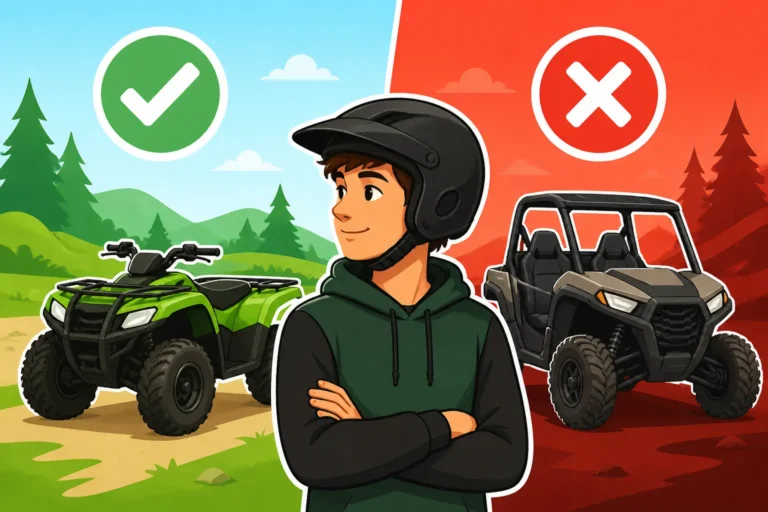
The law isn't just particular about where you ride; it also cares about what you're riding, especially when it comes to shoulder use. Specifically, the exemption for shoulder riding applies only to ORVs with "more than two wheels." This immediately rules out dirt bikes or two-wheeled machines, which, despite being off-road vehicles, are not permitted on highway shoulders in Manitoba. This distinction is likely due to stability considerations and the common agricultural utility of ATVs and UTVs.
Furthermore, if your machine is a side-by-side (UTV), the rules regarding seating capacity and seat belts become paramount. Passengers are only permitted if the machine is specifically designed by the manufacturer to carry more than one person, and they must use available seat belts. Modifying a single-seat ATV to carry a passenger on the shoulder is illegal and incredibly dangerous. The design and configuration of your machine should directly align with its intended use and the legal requirements for shoulder riding. For example, a heavy-duty SuperATV rear cargo box might be perfect for farm gear, but it won't make your single-seat ATV compliant for carrying a passenger on the shoulder. Always respect the manufacturer's design and the legal passenger limits.
The "Most Direct Route" Principle
This is perhaps one of the most important, and often misunderstood, conditions for legal shoulder riding: it must be the "most direct route" for the permitted purpose. This clause is specifically designed to prevent recreational use of highway shoulders. You can't just meander down the shoulder because it's a scenic path or because you're avoiding a rough trail. Your journey on the shoulder must be the shortest, most efficient way to get from your starting point to your destination for agricultural purposes.
Consider a farmer moving from their barn to a distant field. If there’s a shorter, legal path through ditches or private property, using a longer stretch of shoulder might be questioned. This principle underscores that shoulder riding is a functional allowance, not a recreational one. It's about necessity, not convenience for casual rides. An enforcement officer has the discretion to determine if your travel truly adheres to the "most direct route" principle. This means you should be prepared to articulate your destination and the agricultural purpose of your journey if questioned. It’s a subtle but powerful constraint on when and how you can utilize this specific exemption.
Navigating Intersections and Other Roadway Interactions
Even when you're legally on the shoulder, you're not operating in a vacuum. You're still interacting with the broader road network, which means you need to be acutely aware of how to handle intersections, traffic, and local regulations. These are moments of heightened risk and require extra caution and adherence to specific rules.
Crossing Roadways from the Shoulder
A common scenario for agricultural ORV use on the shoulder is needing to cross the roadway itself to access fields on the opposite side. This isn't a free-for-all. Manitoba has very precise rules for crossing highways, which apply whether you're coming from a ditch or a shoulder. First and foremost, you must always stop before crossing, yield to all approaching traffic, and ensure you have a clear, unobstructed view in both directions. There's no exception to this rule; safety is paramount. You can't just dart across.
Beyond stopping and yielding, there are specific distance rules regarding intersections. You must cross the highway at right angles to the roadway. If you're near an intersection, you have two options: either cross within 5 metres of the intersection (but only if the intersecting way is a road or lane, not a private drive) or, if that's not possible, cross at least 3 kilometres from the nearest intersection. This prevents ORVs from suddenly appearing near busy junctions where drivers might not expect them. And critically, only one ORV can cross at a time, and you must have a valid driver's licence. These rules are non-negotiable and designed to prevent collisions. Be sure to familiarize yourself with [Manitoba Crossing Rules at 5 Metres and 3 Kilometres] and always remember the importance of [Stopping and Yielding Before You Cross a Highway].
Interaction with Other Traffic
When you're riding on the shoulder, you are still sharing a space that's fundamentally part of the highway system, even if you're not in the main travel lanes. This means you have a significant responsibility to be predictable, visible, and to avoid interfering with the flow of highway traffic. Your ORV, even with an SMV sign, is much smaller and slower than most vehicles on the road, making you less conspicuous.
Always maintain a consistent speed (remember that 40 km/h limit!) and avoid sudden, erratic movements. If you need to make a turn, use hand signals or, if equipped, your machine's turn signals to clearly indicate your intentions well in advance. Pay close attention to vehicles approaching from behind and those looking to enter or exit the highway. It's a good idea to periodically check your mirrors, if your machine has them, or glance over your shoulder when safe to do so, to stay aware of your surroundings. The onus is on the ORV operator to ensure their presence on the shoulder does not create a hazard for other road users. This proactive approach to safety can make all the difference.
Municipal By-Laws and Local Variations
While the provincial Off-Road Vehicles Act sets the overarching framework for ORV use in Manitoba, it's crucial to understand that municipalities and local government districts also have the power to create their own by-laws. These local rules can sometimes open up or restrict ORV access on certain roads, streets, or even shoulders within their jurisdiction, sometimes even allowing access beyond what the provincial act specifies for certain periods or areas.
This means that while the 40 km/h shoulder limit and agricultural exemption are provincial rules, a specific municipality might have a by-law that further defines or modifies ORV access within its own boundaries. For example, a rural municipality might have a by-law that permits ORVs on specific municipal roads or shoulders for local residents, even for non-agricultural purposes, during certain seasons. Conversely, another municipality might have stricter rules, closing certain sections altogether. It can be incredibly frustrating to keep track of these variations, but before you venture into a new area, especially if you're riding beyond your usual haunts, it's always wise to check with the local municipal office or their website for any specific ORV by-laws. Ignoring these local rules, even if you're following provincial guidelines, could still lead to fines or other penalties. The power of local government is significant, as detailed in [Manitoba Municipal By-Law Powers].
The Importance of Safe Practices and Enforcement
Beyond simply knowing the rules, actually living them out on the trail and shoulder is paramount. Safety isn't just about avoiding tickets; it's about protecting yourself, your passengers, and your investment in your machine. And when rules are broken, there are tangible consequences.
Safety Gear and Machine Readiness
Your personal safety starts before you even turn the key. Helmets are not just a good idea; they're the law in Manitoba for most ORV operators and passengers. The only significant exemption for helmet use when operating on a shoulder or roadway for agricultural purposes is if the ORV has a roll-over protective structure (ROPS) and seat belts, and the operator and passengers are wearing those seat belts. Otherwise, a properly fitted, approved helmet (look for Snell or FMVSS standards) is mandatory. It's easy to get complacent on a short trip, but even a low-speed tip-over can result in serious head injuries. For full details on helmet rules, check out [Manitoba Helmet Law and Its Exemptions].
Beyond helmets, a thorough pre-ride inspection of your machine is critical, especially when you're interacting with public roads. Check your tires for proper inflation and damage, ensure your brakes are responsive, and verify all your lights – headlights, taillights, and any additional visibility lighting you’ve installed – are working correctly. If you're using a UTV, make sure all seat belts are functional and everyone is buckled in. Aftermarket safety accessories, like sturdy doors or expanded visibility mirrors from a company like SuperATV, can significantly enhance your protection and awareness. Never assume your machine is ready to go; a quick check can prevent a breakdown or, worse, an accident on the shoulder. Don't forget, [Seat Belts and Passenger Limits on a Manitoba UTV] are also critical.
Penalties for Non-Compliance
Breaking the rules of ORV operation on Manitoba’s shoulders can lead to a range of penalties, from immediate fines to more serious legal consequences. Exceeding that 40 km/h limit, for instance, isn't just a minor infraction; it's a direct violation of the ORV Act, and you can expect a ticket. Similarly, riding on the shoulder for non-agricultural purposes, without the required SMV sign, or without a valid driver's licence can all result in fines. These tickets can add up quickly, not to mention the potential impact on your driver's licence record.
Enforcement of these rules is carried out by both the Royal Canadian Mounted Police (RCMP) and Manitoba Conservation officers. They are trained to identify illegal ORV operation and are empowered to issue citations. Beyond monetary penalties, repeat offenses or egregious violations could lead to your machine being impounded, or in severe cases of reckless or dangerous operation, charges of careless operation. These charges carry much higher fines and could even lead to imprisonment. It's easy to think "no one will see me out here," but officers patrol rural areas specifically looking for compliance. Understanding [Manitoba Ticket Costs for Riders] and the potential for [Manitoba Careless Operation Penalties] should serve as a strong deterrent to cutting corners.
Insurance and Liability Considerations
Every ORV registered in Manitoba automatically comes with basic third-party liability coverage through MPI, included with your registration fee. This basic coverage helps protect you if you cause damage to someone else's property or injure another person while operating your ORV. However, it's absolutely crucial to understand the limitations of this basic coverage. For instance, [Manitoba Basic Manitoba ORV Coverage Skips Injuries] to yourself, and it also doesn't cover damage to your own machine or theft.
When you're operating on a highway shoulder, even legally, you're in a higher-risk environment than a secluded trail. The potential for a collision with a much larger, faster-moving highway vehicle is real, and the damages could be catastrophic. While your basic liability might cover the other vehicle's damage, you could be left with enormous medical bills for your own injuries and the cost of replacing your ORV if you don't have additional accident benefits, collision, or comprehensive coverage. It's always a good idea to speak with an Autopac agent about enhancing your coverage beyond the basic minimum, especially if you regularly use your ORV for agricultural purposes on road allowances. An incident on the shoulder could quickly turn into a financial nightmare if you're underinsured. You can learn more about what's included in your base registration by looking into [Manitoba Insurance Included With Registration].
Summary Table of Shoulder Riding Rules
To help clarify the various conditions and requirements for shoulder riding in Manitoba, here's a quick reference table. Keep in mind this is a summary and always refer to the full details in the Off-Road Vehicles Act and municipal bylaws.
| Rule Category | Requirement | Details |
|---|---|---|
| Location | Highway Shoulder | Must be immediately adjacent to the roadway, not on the main travel lanes. |
| Purpose | Agricultural Use Only | Must be the "most direct route" for farming or ranching activities. Not for recreational travel. |
| Speed Limit | Maximum 40 km/h | Strict, mandatory speed limit. Exceeding it is a violation. |
| Machine Type | More Than Two Wheels | ATVs, UTVs (side-by-sides) are permitted; dirt bikes (two-wheelers) are not. |
| Operator Licence | Valid Driver's Licence Required | Any class of Manitoba driver's licence (or equivalent from another jurisdiction). |
| Required Equipment | Slow-Moving Vehicle (SMV) Sign | Must be clearly displayed on the rear of the ORV. |
| Required Equipment | Working Headlights & Taillights | Essential, especially during low light or adverse weather conditions. |
| Safety Gear | Helmet or ROPS + Seatbelt | Helmet mandatory unless the ORV has a factory-installed ROPS and seatbelts are worn. |
| Passenger Rules | Manufacturer Designed Seating & Seatbelts | Passengers only allowed if machine is designed for it, and they must use seatbelts. |
| Crossing Roadways | Stop, Yield, Clear View, Right Angle Crossing | Specific rules for crossing: within 5m of an intersection (not private drive) or at least 3km away. One ORV at a time. |
| Local Variations | Check Municipal By-Laws | Local governments may have additional rules or exemptions. Always verify local regulations. |
Navigating Manitoba's ORV rules can certainly feel complex, but with the right information, you can ensure your rides are both enjoyable and compliant. Understanding the specific 40 km/h shoulder limit and its associated conditions is a key part of responsible ORV ownership in our beautiful province.
Disclaimer
This article is for general informational purposes only and does not constitute professional advice. Laws, prices and regulations vary by location and change over time. Consult a qualified professional for guidance on your specific situation.