What a 14-Year-Old May Ride Without Supervision
It's incredibly frustrating for parents and young off-road enthusiasts alike to wade through the regulations to understand what's truly allowed, especially when it comes to the freedom (or lack thereof) for a 14-year-old to ride an ATV or UTV without an adult literally at their elbow. This guide aims to cut through the confusion and clarify the specific rules governing unsupervised riding for 14-year-olds in Manitoba, ensuring you understand the legal landscape and can make informed decisions about safe and compliant off-road adventures.
Understanding the Manitoba ORV Act for Young Riders
Navigating the rules for young riders in Manitoba can feel a bit like trying to find your way through a dense forest without a map. There are age restrictions, supervision requirements, and specific stipulations about where and how a young person can operate an off-road vehicle (ORV). It's not just about knowing the age; it's about understanding the nuances of the law that define what "unsupervised" truly means in practice. Many folks assume that once a certain age is hit, it's open season, but Manitoba's Off-Road Vehicles Act is quite specific, especially for those who haven't yet reached full adult riding privileges.
The Legal Age for Unsupervised Riding
Here's the heart of the matter for many families: under the Manitoba Off-Road Vehicles Act, a 14-year-old may operate an ORV without direct adult supervision, but with very specific limitations on where they can ride. It’s not a blanket permission to hit any trail or ditch. The law differentiates between various age groups, and 14-year-olds fall into a category that grants them more independence than younger children, but still less than someone 16 or older. This means while a parent doesn't necessarily have to be on a separate machine riding right beside them, the 14-year-old's riding zones are quite restricted to ensure their safety and the safety of others.
The intent behind these rules is clearly to allow young riders to gain experience and enjoy the sport, but within a controlled environment. It acknowledges that a 14-year-old has a certain level of maturity and skill development, but still benefits from a more protected riding space. It's a progressive system, aiming to build responsible riders over time, rather than throwing them into complex situations without adequate preparation. This age tier specifically targets that transitional period where independence begins to blossom, but full responsibility isn't yet granted.
Defining "Supervision" in Manitoba
For the purposes of the Off-Road Vehicles Act, "supervision" for riders under 14 means the direct, immediate presence of an adult. However, for a 14-year-old, the concept shifts slightly. While they can ride "unsupervised" in certain areas, this doesn't mean they're completely off the hook or that an adult isn't generally responsible for their actions. What it really means is that a parent or guardian doesn't need to be literally riding on the same machine or even on an adjacent machine to fulfill the legal supervision requirement in specific contexts.
It's more about having an adult present within the general riding area or readily available, rather than right alongside them. For example, if a 14-year-old is riding on private land, the adult doesn't have to be breathing down their neck every minute, but they should be on the property and aware of the riding activity. This nuanced definition allows for a degree of independence while still ensuring a responsible adult is ultimately accountable. It's about finding that balance between fostering skill development and maintaining safety oversight. You can learn more about specific age guidelines in [Manitoba Age Tiers for Young Riders].
How Age Tiers Affect Riding Privileges
Manitoba's ORV Act uses age tiers to define what a rider can do. For instance, riders under 14 generally need direct supervision, often meaning an adult on the same machine (if designed for two) or an adjacent machine. Once a rider hits 14, they enter a new tier. This allows them to operate an ORV without direct, immediate supervision, but primarily within designated safe zones like private property or specific club trails where the adult is generally present but not necessarily side-by-side.
Contrast this with a 16-year-old, who with a valid driver's licence (even a learner's permit with specific endorsements), gains more extensive ditch riding and roadway crossing privileges, often with supervision requirements for the learner stage. At 16, they are much closer to adult riding responsibilities, though some restrictions still apply. The 14-year-old tier is a crucial stepping stone, providing a structured environment for skill progression. It recognizes that while a 14-year-old might be physically capable and have some riding experience, they might not yet possess the judgment required for complex public road interactions or navigating heavy traffic areas.
| Age Group | Supervision Requirement (General) | Primary Legal Riding Areas | Licence Required (for public land) |
|---|---|---|---|
| Under 14 | Direct, immediate adult supervision | Private Land, Designated supervised areas | No |
| 14 Years Old | No direct supervision required | Private Land, Designated trails | No |
| 15.5 Years Old | Supervision for Learner's permit | Private Land, Ditches (with permit) | Class 6 (Learner's) for public |
| 16 Years and Over | None (with full licence) | All legal ORV areas | Class 6 (Full) for public |
This table illustrates the progressive nature of the rules, emphasizing that the 14-year-old category is a significant step towards independence but is still distinct from the full privileges and responsibilities granted at age 16. It's a bridge, not the destination, in terms of riding freedom.
Specific Riding Scenarios for 14-Year-Olds
The "where" you can ride without supervision as a 14-year-old is just as important as the "if." Manitoba's regulations are designed to protect young riders by limiting their exposure to high-risk environments. It's tempting to think that "unsupervised" means total freedom, but that's a dangerous misconception. Understanding these specific scenarios can help avoid potential fines, accidents, and most importantly, keep your young rider safe.
Riding on Private Land
This is where a 14-year-old has the most freedom to ride without direct supervision. If you own the land, or have explicit permission from the landowner, a 14-year-old can ride an ORV without an adult riding alongside them. This is considered a controlled environment, where the risks are generally lower and managed by the landowner. It's the ideal place for young riders to hone their skills, practice maneuvers, and gain confidence without the added pressures of public access or road crossings. Many families start their young riders here, often in a large field or a wooded area on their own property.
However, "private land" isn't a free-for-all. The ORV itself must be appropriate for the rider's age and skill level. While the direct supervision rule may be relaxed, the adult owner of the property or the parent is still responsible for ensuring the machine is safe and that the rider is operating it responsibly. It’s also important to remember that this exemption applies to the supervision aspect, not necessarily to other safety requirements like wearing a helmet, which is generally mandatory regardless of location. You can explore [Manitoba Machines Used Only on Your Own Land] for further details on this exemption.
Riding in Ditches and Roadways
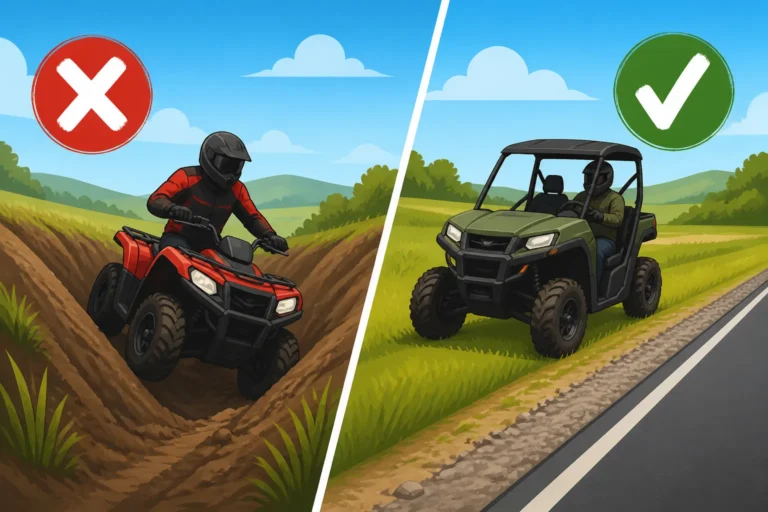
This is a critical area where 14-year-olds face significant restrictions, even when allowed to ride "unsupervised" on private land. Generally, a 14-year-old cannot ride in ditches alongside public roadways, or on the roadways themselves, without an adult present and with the appropriate licensing if applicable (though this generally applies to 16+ learners). The provincial rules for ditch riding are specific and typically require the operator to be 16 years of age and hold a valid driver's licence. This is a common point of confusion and a frequent source of tickets.
The ditches are considered part of the highway right-of-way in many cases, and operating an ORV there brings inherent risks associated with traffic, intersections, and other road users. The law recognizes that 14-year-olds may not have the judgment, experience, or spatial awareness to safely navigate these environments. Even if they are allowed to ride "unsupervised" on private land, that freedom does not extend to public ditches or shoulders. Parents should make this distinction very clear to their young riders. For more on ditch riding rules, refer to [Manitoba Ditch Riding Rules].
Crossing Highways and Public Roads
Similar to ditch riding, crossing highways and public roads is another area where 14-year-olds face strict limitations. While an ORV can technically cross a public road at specific points and under certain conditions, these crossings generally require the operator to be at least 16 years old and hold a valid driver's licence. A 14-year-old, even if riding without direct supervision on adjacent private land, cannot legally make these crossings on their own.
These rules are in place for very good reasons. Crossing a road involves complex decision-making, judging traffic speed and distance, and understanding right-of-way. It requires a level of maturity and driving experience that a 14-year-old might not yet possess. If a ride for a 14-year-old involves crossing a public road to get from one piece of private land to another, an adult who meets the legal requirements for crossing must operate the machine for that segment, or the machine must be trailered across. It’s a strict rule to prevent serious accidents. [Manitoba Crossing Rules at 5 Metres and 3 Kilometres] provides additional context on these regulations.
Responsibilities and Limitations for Unsupervised Riding
Even when a 14-year-old is legally allowed to ride an ORV without direct supervision in permitted areas, it doesn't mean a complete absence of responsibility. In fact, the onus is on both the young rider and the supervising adult (who might not be riding alongside) to ensure all other aspects of the Off-Road Vehicles Act are met. Ignoring these responsibilities can lead to fines, legal issues, and most importantly, jeopardize the safety of the rider.
Carrying Documentation and Proof of Age
This is non-negotiable for any ORV operator, regardless of age. If a 14-year-old is riding, they must be able to produce their registration card for the ORV, and proof of their age if requested by law enforcement. While a driver's licence isn't required for a 14-year-old to ride in designated unsupervised areas, a birth certificate or other government-issued ID showing their date of birth is essential to prove they meet the age requirement for "unsupervised" operation.
Imagine a scenario: a conservation officer approaches a 14-year-old riding on a recognized club trail (where unsupervised riding might be permitted for this age group) and asks for documentation. If the rider cannot produce proof of age, they could be seen as a minor riding without proper authorization, potentially leading to a ticket or other intervention. Always ensure young riders have their [Manitoba Registration Cards Carried at All Times] and a clear form of ID with them, perhaps in a waterproof pouch on the machine.
Adhering to Equipment Requirements
Just because a 14-year-old can ride without an adult right beside them doesn't mean the machine itself is exempt from safety and equipment requirements. Every ORV operated in Manitoba must meet specific standards, including a working headlight and tail light (especially if riding near dusk or dawn), effective brakes, a spark arrester, and appropriate tires. Neglecting these can be a serious issue. For instance, a missing spark arrester isn't just a fine waiting to happen; it's a wildfire risk.
Furthermore, any modifications to the ORV should be done with safety in mind. While an adult might enjoy pushing their machine to the limits, a 14-year-old's machine should prioritize stability and control. Adding aftermarket parts like durable skid plates or A-arm guards from a brand like SuperATV can protect the machine from damage, but ensure they don't compromise the machine's handling or suitability for a younger rider. The machine must also be rated by the manufacturer as appropriate for the rider's age and weight. Don't put a young rider on an overpowered or oversized machine just because they can ride without supervision.
Understanding Penalties and Liabilities
It's crucial that 14-year-olds and their parents understand the potential consequences of not following the rules. While a 14-year-old might not face the same legal ramifications as an adult, penalties for ORV infractions can still be significant. This could include fines, the ORV being impounded, or even more serious charges in the event of an accident. Ultimately, the parents or guardians are typically held responsible for the actions of a minor operating an ORV.
This liability extends beyond just fines. In the event of an accident where the rules were broken (e.g., riding in a prohibited area, not wearing a helmet), insurance coverage could be jeopardized, leading to massive out-of-pocket expenses for damages or injuries. It's a heavy burden, and one that emphasizes the importance of strict adherence to all regulations, even when "unsupervised" riding is permitted. Educating young riders about these potential consequences isn't about scaring them, but empowering them to make responsible choices on the trail.
Essential Gear and Safety Considerations
Allowing a 14-year-old to ride unsupervised doesn't mean skimping on safety. In fact, it often means being even more diligent about ensuring they have the right gear and that the machine is in top condition. Without an adult right there to spot potential hazards or immediately react to an issue, the rider's preparedness becomes paramount.
The Mandatory Helmet Law
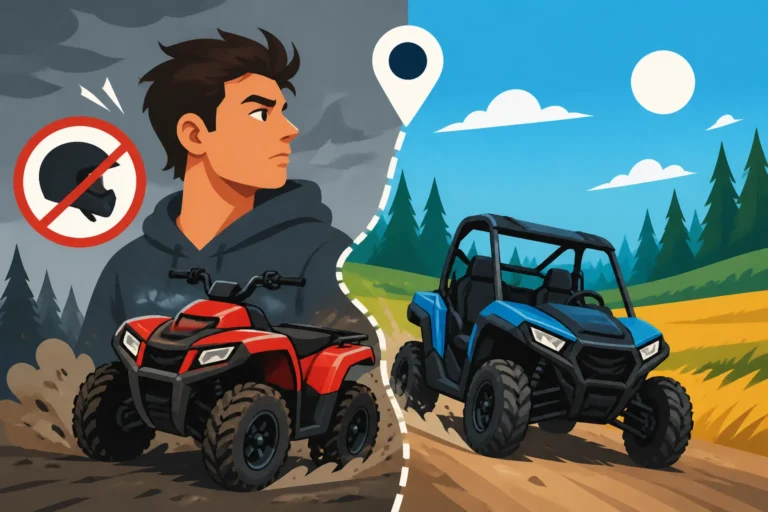
This is perhaps the most fundamental safety rule for any ORV rider in Manitoba, and it applies unequivocally to 14-year-olds, whether supervised or not. The law mandates that all operators and passengers of ORVs must wear an approved helmet. There are very few exemptions, and none of them apply to a typical recreational 14-year-old rider. A helmet is a life-saving piece of equipment, and it should be properly fitted and in good condition.
Emphasize to your young rider that a helmet isn't optional, it's a requirement for every single ride. Investing in a high-quality helmet that meets safety standards (such as DOT or Snell) is not just about compliance; it's about protecting their most valuable asset. Even for a quick spin on private land, that helmet needs to be strapped on securely. For more on helmet requirements, see [Manitoba ATV Helmet Law].
Machine Suitability and Maintenance
The type of machine a 14-year-old rides without supervision is incredibly important. It should be appropriately sized and powered for their age, weight, and skill level. Many manufacturers provide age recommendations for their machines, and it's wise to follow these closely. Putting a young rider on a machine that's too powerful or too heavy for them to control easily increases the risk of an accident.
Regular maintenance is also critical. An unsupervised 14-year-old might not recognize or be able to address a mechanical issue while out riding. Therefore, ensure the ORV is in excellent working order before every ride. Check tires, brakes, fluid levels, and ensure all lights are functional. Teaching young riders basic pre-ride checks is a great habit to instill. Considering robust protection accessories, perhaps like heavy-duty bumper kits or rock sliders from SuperATV, can also safeguard the machine against unexpected bumps and scrapes, making it more resilient for a young rider.
Promoting Safe Riding Habits
Finally, even though a 14-year-old might be riding "unsupervised," they still need to adhere to safe riding practices. This includes knowing the terrain, riding within their limits, never riding while impaired, and respecting private property and the environment. Before allowing them to ride solo, ensure they have a solid understanding of basic ORV safety courses or extensive practical training under direct supervision.
Talk to your 14-year-old about common hazards, like uneven terrain, hidden obstacles, or changing weather conditions. Discuss the importance of slowing down around blind corners, staying on marked trails, and always being aware of their surroundings. This open communication, coupled with a foundation of practical training, will equip them to make smart, safe decisions even when an adult isn't right beside them. Fostering a culture of safety from a young age will serve them well throughout their riding career.
Disclaimer
This article is for general informational purposes only and does not constitute professional advice. Laws, prices and regulations vary by location and change over time. Consult a qualified professional for guidance on your specific situation.