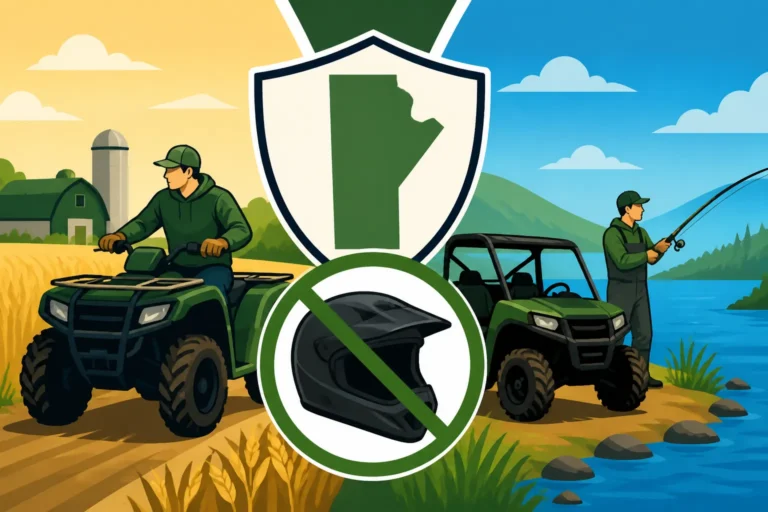
Only One Ditch of the Two Is Legal
Riding your ATV or UTV in Manitoba can be an incredible experience, offering access to stunning landscapes and challenging trails. However, navigating the rules of the road – or more accurately, the rules of the ditch – can feel like trying to decipher an ancient riddle. Many riders get frustrated, confused, or even caught off guard by the specific regulations around ditch riding, especially the common misconception that any ditch is fair game. This guide is here to cut through the confusion and explain clearly why [Only One Ditch of the Two Is Legal] for off-road vehicle travel in Manitoba, helping you stay safe, legal, and enjoying your ride without unnecessary stress or fines.
The Fundamental Rule: Always to Your Right
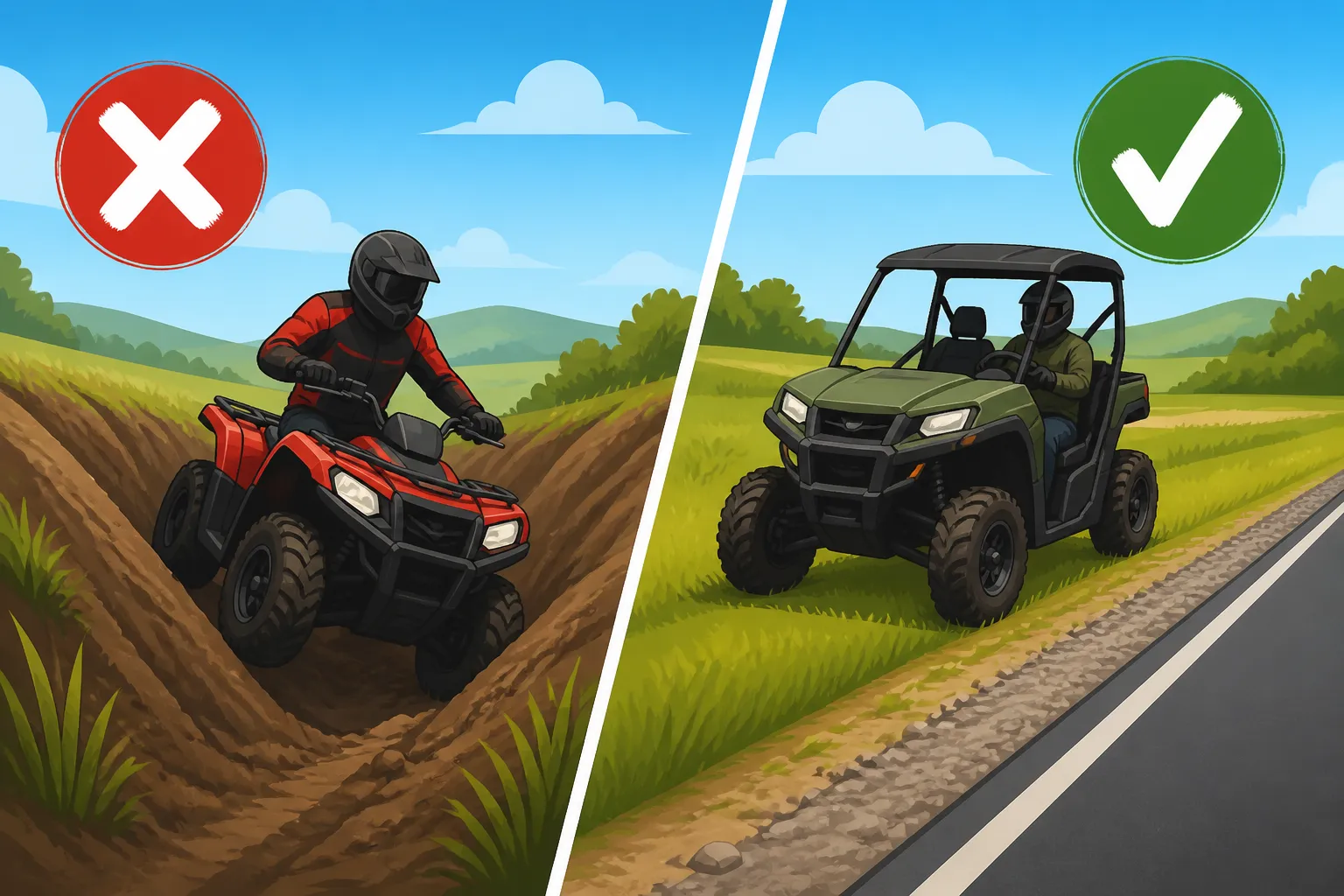
One of the most crucial rules for operating an Off-Road Vehicle (ORV) in Manitoba, especially if you find yourself needing to travel alongside a roadway, is understanding which ditch you're actually allowed to use. It’s a simple rule on paper, but in practice, many riders misunderstand it, leading to potential fines or even dangerous situations. The law is very clear: you are only permitted to operate your ORV in the ditch to the right of the roadway, and you must travel in the same direction as the adjacent traffic.
Imagine you’re heading out for a day of riding near Beausejour, making your way to a club trail. You pull out of a friend's driveway and immediately see two ditches flanking the road. Your instinct might be to just pick the one that looks easiest to ride or seems less muddy. However, the law insists that you must be in the ditch that is on your right-hand side as you face the direction of traffic on the paved or gravel road. This isn't just a suggestion; it's a critical safety measure designed to prevent head-on collisions with other ditch-riders or unexpected encounters with vehicles entering or exiting driveways. [Manitoba Ditch Riding Rules] are in place to keep everyone safe.
Understanding "Right-Hand Ditch" in Practice
Let’s be honest, the term "ditch" itself can be a bit ambiguous, especially when you’re out in the field. It usually refers to the graded, unpaved area immediately adjacent to the road surface, often designed for drainage. It might be grassy, muddy, sandy, or a mix of all three, depending on the season and location. For ORV purposes, the "right-hand ditch" means the one that puts you on the same side of the road as the shoulder, and where you'll be moving with the flow of vehicles beside you.
Consider a situation where you're riding your SuperATV Defender along a rural road, trying to get to a different section of trail. If you're travelling north on the road, your ORV must be in the ditch on the east side of that road, moving north. If you were to cross over to the west side ditch, even if it looks like a smoother ride, you would be riding in the "wrong" ditch – meaning you're in the ditch that would be to the left of oncoming traffic, which is absolutely prohibited. This becomes even more critical on roads with higher speed limits or more traffic, where unexpected movements can have serious consequences. Always ensure your orientation matches the direction of the road traffic. [Manitoba Ditch Travel With Traffic] is a cornerstone of safe riding.
Why This Specific Ditch Rule Exists
The reason behind this seemingly strict rule isn't to make your life harder; it's purely for safety. Imagine if ORVs could ride in either ditch, in any direction. You'd have machines potentially travelling head-on towards each other in the ditch, creating a significant risk of collision. Furthermore, drivers of cars, trucks, and other vehicles on the main roadway are accustomed to seeing traffic move in a predictable direction. If an ORV suddenly appears from the "wrong" ditch, especially near driveways, intersections, or curves, it can create a dangerous surprise.
The rule reinforces predictable behaviour. It allows other riders, landowners, and road users to anticipate where an ORV will be. It also reduces the chances of an ORV operator having to make sudden, unexpected manoeuvres when encountering an obstacle or another vehicle. While it might sometimes feel inconvenient to have to cross a road to get to the correct ditch, or to take a longer route to stay on the proper side, these regulations are designed to minimize risk for everyone. Ignoring this rule isn't just a minor infraction; it's a direct threat to safety, which is why enforcement officers take it seriously.
Navigating Intersections and Crossings
While ditch riding can be a convenient way to travel between trails or access private land, you'll inevitably encounter situations where you need to cross a road or navigate an intersection. These moments are particularly high-risk and come with their own set of specific rules designed to minimize the chance of accidents with road traffic. It's not as simple as just hitting the gas and going; there are procedures to follow, and understanding them is crucial for your safety and legal compliance.
Many riders, especially those new to the sport or visiting from other regions, assume they can just cross wherever it's convenient. This couldn't be further from the truth in Manitoba. The provincial legislation outlines very precise conditions for crossing roadways, conditions that often surprise riders who are used to more lenient rules elsewhere. Failing to adhere to these rules can not only result in hefty fines but, more importantly, put you and others in severe danger.
The Five-Metre Rule for Intersections
When you're approaching an intersection, whether it's another road or a public trail crossing, you cannot simply continue riding your ORV through the ditch directly across it. The law requires you to stop your ORV and yield to all traffic on the intersecting roadway. More specifically, you must not operate your ORV within 5 metres of an intersection. This means you need to pull your machine to a complete stop, give way to any vehicles on the intersecting road, and then, only when safe, proceed to cross.
Think of it like this: that 5-metre buffer zone is there to give you and other drivers time and space. When you're in a ditch, your visibility might be obscured by brush, varying terrain, or even the gradient of the ditch itself. Similarly, drivers on the main road might not easily see an ORV tucked away in the ditch until it's too late. Stopping at least 5 metres back allows you to get a clear view of traffic, and it gives drivers a better chance to see you before you commit to crossing. It's a moment to pause, assess, and act decisively when the path is clear. Ignoring this rule is a common mistake and one that can lead to collisions. [Crossing Within 5 Metres of an Intersection] is a non-negotiable step.
Crossing a Roadway Safely and Legally
Beyond the 5-metre rule for intersections, there are further stipulations for how and where you can actually cross a paved or gravel road. You're not allowed to travel for extended distances on the paved surface itself. Instead, the crossing should be as direct and perpendicular to the roadway as possible, and you must yield to all vehicular traffic. Furthermore, you must only cross at locations where you have a clear, unobstructed view of traffic in both directions for a safe distance. The law also states that you must cross one machine at a time if you are riding in a group.
If you're in a rural area and need to cross a highway, for instance, to access a trail on the other side, you must choose your crossing point wisely. It's often safer to cross where there's less traffic, better sightlines, and not directly at a crest of a hill or a sharp curve. If there’s an alternative, such as an underpass or a designated ORV crossing point, these are always the preferred and safest options. Always remember, the goal is to minimize your time on the paved surface and maximize your visibility to other road users. Some areas might even have specific designated ORV crossings that are clearly marked, and these should be utilized whenever possible. A SuperATV winch might be great for getting unstuck on the trail, but it won't help if you get hit crossing a road illegally. Always prioritize safety and legal compliance. [Group Crossings Go One Machine at a Time] is another key rule for riding with friends.
Exceptions and Specific Scenarios for Ditch Riding
While the general rule of sticking to the right-hand ditch and moving with traffic is firm, like many regulations, there are a few specific exceptions or nuanced scenarios that riders in Manitoba need to be aware of. Understanding these can prevent fines and ensure you’re operating your ORV within the bounds of the law, even when circumstances seem to bend the rules a little. These exceptions are usually tied to particular uses or local governance, highlighting the importance of knowing both provincial regulations and any local by-laws.
One of the biggest frustrations for riders is when they see someone else doing something that looks illegal, only to find out there’s a specific exemption that applies. This can lead to confusion and incorrect assumptions about what’s allowed. It’s critical to remember that these exceptions are often very narrow in scope and do not grant a blanket permission to ignore the general rules. Always verify if an exception truly applies to your situation before proceeding.
Agricultural and Farming Exemptions
Farmers in Manitoba rely on their ATVs and UTVs for a wide range of tasks, from checking fences and herding livestock to accessing remote parts of their land. Recognizing this essential utility, the province has carved out specific exemptions for agricultural operations. If you are operating an ORV solely for agricultural purposes, you may be permitted to ride on the shoulder of a provincial highway, or even cross a highway in ways that would be prohibited for recreational riders. However, these exemptions typically require that the ORV display a "slow-moving vehicle" sign, and often specify speed limits (e.g., [Manitoba's 40 km/h Shoulder Limit]). The ORV must also be directly involved in the farming operation.
This exemption is not a free pass. It means a farmer using their SuperATV Crew to haul tools to a field might be able to use the shoulder for a short distance to get to their access point, while a recreational rider heading to a trail would not. It’s also important to note that these exemptions usually apply to the operator and the immediate task, not to friends or family members who might be riding along for pleasure. If you are a farmer, familiarize yourself with [Manitoba's Agricultural Shoulder Exception] and ensure your machine is properly marked. Using the exemption for recreational riding could lead to penalties.
When Municipal By-Laws Change the Game
While the provincial Off-Road Vehicles Act sets the overarching framework for ORV use, municipalities and local government districts in Manitoba have the power to create their own by-laws that can either open or close specific roads and ditches to ORV traffic. This is where things can get particularly confusing for riders. One municipality might permit ORVs to use certain streets or ditches within its boundaries, while the very next town over might strictly prohibit it.
These local by-laws are often created to address specific local concerns, such as access to local businesses, connecting local trail systems, or managing noise and safety within residential areas. This means that a ditch that is perfectly legal to ride in one area might become illegal the moment you cross an invisible municipal boundary line. Always check with the local municipal office or look for posted signage when riding in a new area. Relying on what you "heard" or "saw someone else do" can land you in trouble. [Manitoba Municipal By-Law Powers] mean that a quick phone call or check of the local government's website before you haul your machine out can save you a lot of grief.
What Happens if You Ride the Wrong Ditch
Ignoring the rule about which ditch to ride on can lead to more than just a stern talking-to. Operating your ORV in the wrong ditch is a violation of the Off-Road Vehicles Act and can result in significant fines. These penalties are in place because riding against traffic in a ditch or in the left-hand ditch is considered a serious safety risk. An officer witnessing this type of operation is well within their rights to issue a ticket.
Beyond the immediate financial penalty, there's the much more severe consequence of an accident. As discussed, riding against traffic flow dramatically increases the risk of a collision, either with another ORV, a vehicle, or a pedestrian. Such an accident could lead to serious injuries, property damage, and potential liability issues that far outweigh the cost of any fine. Always remember that enforcement officers are looking for compliance that ensures safety for all road users, and ignoring fundamental rules like [The Only Legal Ditch Is on Your Right] is a surefire way to draw their attention.
Equipping Your Machine for Safe Ditch Operations
Riding in ditches, even the legal ones, often means navigating uneven terrain, unpredictable surfaces, and varying visibility. Unlike a groomed trail, ditches can be filled with hidden obstacles, deep ruts, or sudden drops. Therefore, ensuring your ATV or UTV is properly equipped for these conditions, and that you as the operator are prepared, isn't just about comfort—it's about safety and compliance. Having the right setup can make the difference between a smooth, enjoyable ride and a frustrating, or even dangerous, experience.
Many riders invest heavily in engine performance or flashy accessories, but sometimes overlook the fundamental safety and utility equipment that’s vital for riding off-pavement, especially in areas adjacent to public roads. Thinking about what your machine needs for optimal visibility and protection is key.
Visibility and Lighting Requirements
Visibility is paramount when operating an ORV, especially when you're riding parallel to a road where cars and trucks are travelling at higher speeds. The law in Manitoba requires your ORV to be equipped with specific lighting that must be turned on from half an hour before sunset until half an hour after sunrise, or at any other time when there isn't enough light to see clearly for 60 metres. This means having a working headlight and taillight that meet provincial standards.
But beyond the minimum legal requirements, enhancing your visibility is a smart move. Aftermarket LED light bars, like those offered by SuperATV, can drastically improve your forward visibility, illuminating obstacles in the ditch that your stock headlights might miss. Rear-facing amber or red lights can also make you more noticeable to anyone approaching from behind, whether it's another ORV or a vehicle on the road. Reflective tape on your machine or helmet can also add an extra layer of passive visibility, which is particularly useful in low-light conditions or when crossing roads. Always conduct a pre-ride check to ensure all your lights are functional. [Manitoba Lighting Requirements on a Machine] are there for a reason – don't overlook them.
Essential Safety Gear Beyond the Machine
While your ORV needs to be properly equipped, so do you! Riding in ditches, especially ones that might be overgrown or have unseen hazards, carries inherent risks. The single most important piece of safety gear for any ORV operator in Manitoba is a helmet. [Manitoba Helmet Law and Its Exemptions] are clear: with very few exceptions, you and any passengers must wear an approved helmet at all times when operating an ORV. This means a helmet that meets standards like Snell or DOT.
Beyond the helmet, consider other protective gear. Goggles or safety glasses are crucial to protect your eyes from dust, debris, and insects. Sturdy over-the-ankle boots will protect your feet and ankles from impacts and provide better grip. Long pants and a long-sleeved shirt can help prevent scrapes and abrasions from branches or falls. Gloves offer better grip and hand protection. While a SuperATV skid plate protects your machine, proper riding gear protects you. Investing in quality personal protective equipment isn't just about compliance; it's about protecting yourself from the unpredictable nature of off-road riding, especially when you're operating near busy roadways. Don't compromise on your personal safety.
| Aspect | Legal Ditch Riding (Right-Hand) | Illegal Ditch Riding (Left-Hand / Against Traffic) |
|---|---|---|
| Location | Ditch to the right of the roadway | Ditch to the left of the roadway |
| Direction of Travel | Same direction as adjacent roadway traffic | Opposite direction of adjacent roadway traffic |
| Safety Implications | Predictable movement, reduced collision risk | High risk of head-on collisions, unexpected encounters |
| Visibility to Others | Expected by road users and other ORV operators | Unexpected by road users, increases reaction time |
| Intersections | Must stop 5 metres back, yield, then cross directly | Prohibited, highly dangerous, and illegal |
| Fines/Penalties | Generally none if compliant with all rules | Significant fines, potential for impoundment or court costs |
| Applicable Law | Manitoba Off-Road Vehicles Act and any local by-laws | Violation of Manitoba Off-Road Vehicles Act |
| Exceptions | Specific agricultural use, some municipal by-laws | No general exceptions for recreational riders |
Disclaimer
This article is for general informational purposes only and does not constitute professional advice. Laws, prices and regulations vary by location and change over time. Consult a qualified professional for guidance on your specific situation.