Manitoba Farming and Fishing Helmet Exemptions
It can feel incredibly frustrating to try and keep all the rules straight when you’re out using your off-road vehicle (ORV) in Manitoba, especially when it comes to something as fundamental as wearing a helmet. For many, an ATV or UTV isn't just a recreational toy; it's a vital piece of equipment for their livelihood. Thankfully, Manitoba's Off-Road Vehicles Act recognizes this, providing specific helmet exemptions for those using their machines for legitimate farming and commercial fishing purposes. This guide will dive deep into these crucial exceptions, helping you understand when and why you might be able to ride without a helmet.
Understanding Manitoba's General Helmet Law for ORVs
Before we get into the specifics of exemptions, it's really important to grasp the baseline: in most situations, if you're operating or riding as a passenger on an off-road vehicle in Manitoba, you must wear a helmet. This isn't just a suggestion; it's a legal requirement designed to protect riders from serious injury in the event of an accident. The trails and terrain in Manitoba can be unpredictable, and a helmet significantly reduces the risk of head trauma.
The law applies broadly to various types of ORVs, including ATVs, dirt bikes, and snowmobiles. The goal is to promote rider safety across the board, recognizing the inherent risks involved with operating these machines. While it might sometimes feel cumbersome, especially on a hot day, the intent is always to keep you safe when you're out exploring our beautiful province.
The Rationale Behind Mandatory Helmets
The reason helmets are mandatory for most ORV use is rooted purely in safety. Head injuries are among the most devastating consequences of off-road vehicle accidents. Helmets are scientifically proven to reduce the severity of head injuries and fatalities. When you're riding an ATV or UTV, especially on varied terrain, there's always a risk of rollovers, collisions, or being thrown from the machine.
Think about hitting a hidden rock, a sudden ditch, or even just losing control on a slippery patch of mud or ice. Even at low speeds, the impact your head can sustain if it hits the ground or another object can be life-altering. The helmet acts as a crucial barrier, absorbing much of that force and distributing it across a larger area, thereby protecting your brain. This fundamental safety principle underpins the entire [Manitoba Helmet Law and Its Exemptions].
Who the General Rule Applies To
The general helmet rule applies to nearly everyone operating or riding as a passenger on an ORV in Manitoba. This includes seasoned riders, beginners, and even children (though there are specific age-related rules for young riders, too). Whether you're tearing up a designated trail, cruising through a field on private land for recreation, or simply moving your machine from one spot to another, the expectation is that a properly fastened, approved helmet is on your head.
It's important to remember that this broad application is designed to create a culture of safety for all recreational riders. The law doesn't differentiate based on skill level or how often you ride; if you're on the machine, the helmet should be on you. This sets a clear standard for safe ORV operation throughout the province.
The Farming Exemption: Riding for Agricultural Purposes
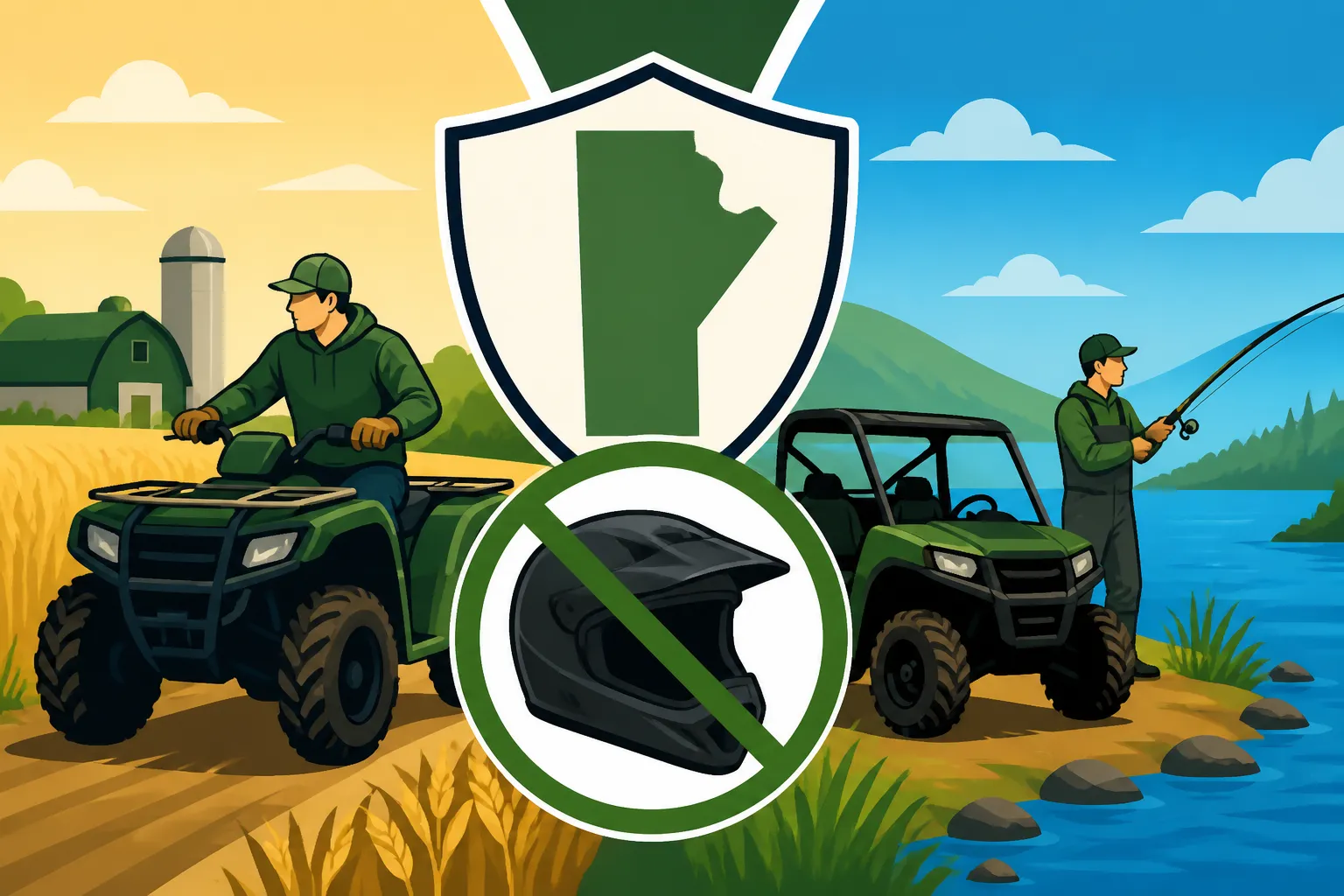
Now, let's talk about where the rules start to bend a little, specifically for those whose livelihoods depend on their land and their machines. Manitoba understands that a farmer using an ATV or UTV as a tool, not just for fun, might have different operational needs. This is where the [Manitoba Farming and Fishing Helmet Exemptions] really come into play. If your machine is genuinely being used for agricultural purposes, you may be exempt from the helmet requirement.
This exemption isn't a free pass for every ride on a farm. It’s tied directly to the purpose of your ride. The idea is to allow farmers the flexibility they need to carry out their essential work without unnecessary hindrances, while still acknowledging the importance of safety when possible.
Defining "Agricultural Purpose" in Manitoba
So, what exactly counts as an "agricultural purpose" in Manitoba? Generally, this refers to activities directly related to the operation of a farm. This could include tasks like inspecting crops, checking livestock, repairing fences, hauling small equipment or feed, or moving between fields. The key is that the ORV is an integral part of the farming operation at that moment, serving a functional role rather than a recreational one.
It’s about the specific activity you are engaged in. If you're using your ATV to check a water trough for your cattle, that's an agricultural purpose. If you're using your UTV to scout for new fence line placements, that also qualifies. The law aims to be practical, recognizing that for many farmers, their ORV is as essential as their tractor or pickup truck. Just make sure your machine is set up for work, perhaps with a utility box or a small trailer hitch, from brands like SuperATV, which makes a lot of useful accessories for farm utility.
Practical Scenarios for Farmers
Imagine a Manitoba farmer needing to quickly check on a calving cow in a distant pasture, or perhaps drive out to inspect a pivot irrigation system after a storm. In these scenarios, the urgency and practical nature of the task might make stopping to put on and take off a helmet repeatedly impractical or inefficient. This is precisely where the farming exemption finds its most common use.
Another example might be a farmer moving a small sprayer or spreading seed by pulling a specific attachment with their quad. These are all legitimate agricultural activities where the ORV is functioning as a work vehicle. The exemption acknowledges that the speed and nature of these tasks often differ significantly from high-speed recreational trail riding, where the risks are generally higher and more varied. For more on how these machines are classified, you might find [Manitoba Classes Covered by the Act] helpful.
Important Caveats for Farm Use
While the farming exemption offers flexibility, it's crucial to understand its limitations. This isn't an "anything goes on the farm" rule. If you're a farmer and you decide to take your ATV out for a joyride around the property on a Sunday afternoon, just for fun, the helmet exemption likely wouldn't apply. The purpose has shifted from agricultural work to recreation, and with that shift, the general helmet rule kicks back in.
Furthermore, this exemption typically applies to your own land or land you are legally operating on for farming purposes. If you're transporting your farm quad on a public road or ditch to get to another parcel of land, and that road segment is not covered by a specific roadway use exemption for farmers, you would generally need to follow all applicable road rules, which might include wearing a helmet depending on the specific circumstance. It’s always about the context of your ride. For a deeper dive into rules for agricultural use, check out [Manitoba Rules for a Farm Machine].
The Commercial Fishing Exemption: On the Water and Ice
Just like farming, commercial fishing in Manitoba often relies heavily on ORVs, particularly for ice fishing operations in winter or accessing remote areas during other seasons. Recognizing the unique operational environment and needs of these commercial enterprises, the province also provides a helmet exemption for individuals engaged in commercial fishing activities. This is particularly relevant when operating on frozen lakes or navigating remote shorelines.
The commercial fishing industry is a vital part of Manitoba's economy and culture, and ORVs are essential tools for setting nets, checking traps, transporting equipment, and accessing remote fishing grounds. The exemption is a practical consideration for those who depend on their machines for their livelihood.
What Constitutes "Commercial Fishing"
For this exemption to apply, you must be actively engaged in licensed commercial fishing activities. This means you’re not just an angler out for a leisurely day on the lake; you are operating under a valid commercial fishing license and typically using your ORV to support those operations. This could involve hauling fish, equipment like ice augers, nets, or shelter components, or checking existing fishing sites.
The key distinction here is "commercial." If you’re recreationally ice fishing with your buddies, even if you sell a few fish to friends, you likely wouldn't qualify for this specific exemption. It’s about the full-time, licensed, and business-oriented nature of the activity. The [Manitoba Commercial Fisher Exemption] exists to support professional fishers in their demanding work.
On-Ice and Shoreline Operations
The most common scenario where the commercial fishing helmet exemption comes into play is during winter ice fishing. Imagine a commercial fisher needing to drill dozens of holes, set multiple nets, and continuously move their gear and catch across vast expanses of frozen lake. The repeated donning and doffing of a helmet in cold, often windy conditions can be incredibly impractical and time-consuming.
Similarly, accessing remote shorelines or carrying heavy gear to a boat launch in an isolated area could also fall under this exemption. The ORV acts as a heavy-duty transport and utility vehicle, crucial for efficient operations. Whether it's a quad pulling a sled full of equipment or a side-by-side carrying crew and supplies, the exemption allows for operational flexibility in these unique work environments. For UTVs, the presence of a Roll-Over Protection System (ROPS) might further factor into overall safety considerations, which we’ll discuss next.
Distinguishing Commercial from Recreational Fishing
It cannot be stressed enough that this exemption is strictly for commercial purposes. If you are heading out to your favourite spot on Lake Winnipeg for a weekend of recreational ice fishing, you are still expected to wear a helmet while operating your ATV or snowmobile. The spirit of the law prioritizes safety for recreational riders, while acknowledging the very specific and often unique operational challenges faced by commercial fishers.
An officer checking on compliance would be looking for clear indicators of commercial activity, such as commercial fishing licenses, significant amounts of specialized gear (beyond typical recreational equipment), and the nature of the work being performed. Don't assume that just because you're on the ice, you're exempt. The "commercial" aspect is non-negotiable for this particular rule.
Beyond Helmets: Other Safety Considerations for Exempted Riders
Even with a helmet exemption for farming or commercial fishing, safety should always be your top priority. While the law might permit you to ride without a helmet in specific work-related scenarios, it doesn't mean you should throw caution to the wind. Many other safety measures are still vital, perhaps even more so when operating in potentially rugged or isolated work environments.
It’s about making smart choices to protect yourself and others, recognizing that an accident can still happen even if you’re exempt from one particular rule. From machine maintenance to situational awareness, there's a lot you can do to ensure your safety.
The Role of Roll-Over Protection Systems (ROPS)
For those operating side-by-sides (UTVs) for farming or commercial fishing, a significant safety feature is the Roll-Over Protection System (ROPS), often integrated with seatbelts. While not a direct substitute for a helmet, a properly designed and utilized ROPS, combined with seatbelts, offers a high level of protection in the event of a rollover. In some contexts, and depending on the specific wording of the law, the presence of a ROPS might even be a factor in helmet exemptions for certain types of machines or activities. [Manitoba Roll-Over Protection Exemptions] sometimes touch on this.
It's wise to ensure your UTV's ROPS is in excellent condition and that you always wear your seatbelt when operating the machine. Many aftermarket accessories, like those from SuperATV, offer additional protection such as full windshields, roofs, and door panels that can enhance safety and comfort, even if they don't replace the ROPS or a helmet. Think of these as layers of protection that, when combined, significantly mitigate risks.
Enhancing Visibility and Machine Safety
Regardless of helmet exemptions, visibility is paramount, especially when operating ORVs for work purposes, often in remote or less-trafficked areas. Ensure your machine's lights are always in good working order, both front and rear. Consider adding reflective tape or a bright flag, particularly if you're working near roads or other areas where you might encounter other vehicles.
Regular maintenance is also critical. Check your tires, brakes, fluid levels, and steering components before each use. A breakdown in a remote field or on a frozen lake can turn a minor inconvenience into a serious hazard. Keeping your machine in top shape is an investment in your safety and efficiency. [Manitoba Equipment Checks by Officers] details what they look for.
Responsible Riding, Even with Exemptions
An exemption from a helmet law doesn't exempt you from responsible and safe operating practices. Always operate your ORV within its capabilities and your own skill level. Avoid excessive speeds, especially on unfamiliar terrain or when hauling heavy loads. Be mindful of your surroundings, whether it's livestock, other workers, or changing weather conditions.
Carrying essential safety gear, such as a first-aid kit, communication device, and tools for minor repairs, is always a good idea. Even if you're not wearing a helmet for a specific task, prioritizing overall safety and preparedness demonstrates a commitment to your well-being and the safety of those around you.
Common Misconceptions and Enforcement Realities
Despite the existence of these exemptions, there's often confusion among riders, and sometimes even among enforcement officers, about when they truly apply. It’s vital to be clear about the specifics and to be prepared to demonstrate that your situation genuinely meets the criteria for an exemption. Misunderstanding these rules can lead to unwanted interactions or, worse, unnecessary risks.
Being caught riding without a helmet when you're not actually exempt can lead to fines and penalties. Ignorance of the law is generally not considered an excuse, so taking the time to truly understand these nuances is worth it.
When Exemptions Don't Apply
One of the biggest misconceptions is that if you own a farm or a commercial fishing license, you're always exempt from wearing a helmet on your ORV. This is simply not true. As discussed, the exemption is tied to the purpose of the ride. If you finish your farm chores and decide to take your kids for a rip around the back forty, that's recreational, and a helmet is required. The same goes for the commercial fisher who takes their spouse out for an afternoon cruise on the lake; the commercial exemption would not apply.
Another common mistake is assuming the exemption applies when crossing public roads or ditches for purposes that aren't directly part of the exempted activity. Always verify local bylaws and provincial road rules. Just because you're a farmer doesn't mean you can ignore general ORV operating laws when off your private land or not engaged in a specific, recognized agricultural use.
Proving Your Exemption to an Officer
If you are stopped by an enforcement officer while operating an ORV without a helmet and believe you are covered by an exemption, you need to be able to clearly articulate and, if possible, demonstrate your situation. For farmers, this might involve explaining the task you are currently performing (e.g., "I'm checking the fence line for my cattle"). Having your agricultural vehicle registration or other proof of farm ownership or operation could be helpful.
For commercial fishers, carrying your valid commercial fishing license is paramount. Be prepared to explain how your ORV use directly relates to your commercial operations. While officers generally understand these exemptions, having clear, concise information readily available can prevent misunderstandings and unnecessary delays. Remember, clear communication and cooperation go a long way.
The Spirit of the Law: Safety First, Even with Exceptions
Ultimately, the spirit behind all ORV laws in Manitoba, including these exemptions, is safety. The exemptions are a pragmatic acknowledgment of specific work-related contexts where a helmet might be less practical or where other safety measures (like ROPS and seatbelts in UTVs) provide equivalent protection. However, this doesn't diminish the overall importance of personal safety.
Even when legally exempt, consider if there are situations where wearing a helmet might still be the wisest choice. For instance, if you're navigating particularly rough terrain on the farm, or if conditions on the ice are exceptionally challenging, adding that layer of head protection might prevent a serious injury. Always exercise good judgment and prioritize your well-being. Failing to do so can lead to consequences beyond just a ticket, including severe personal injury, or even charges for [Manitoba Careless Operation Penalties].
Summary of Helmet Requirements and Exemptions
To help keep everything straight, here’s a quick overview of when helmets are generally required and when you might be exempt for farming or commercial fishing in Manitoba.
| Activity/Context | Helmet Required? | Exemption Applies? | Key Condition for Exemption |
|---|---|---|---|
| Recreational Trail Riding | Yes | No | N/A (General rule applies) |
| Recreational Private Land | Yes | No | N/A (Unless specific local by-law changes this) |
| Farming Operations | No | Yes | Directly engaged in agricultural purposes on owned/leased farm land |
| Commercial Fishing | No | Yes | Actively engaged in licensed commercial fishing activities |
| Road Crossing (General) | Yes | No (Unless specific roadway exemption applies) | N/A (General road rules usually require helmets) |
| Transporting Machine | Yes | No (Unless operating for an exempted purpose en route) | N/A (If driving machine, not trailering) |
| Passengers (General) | Yes | No | N/A (Passengers also require helmets) |
| UTV with ROPS & Seatbelts | Yes | Potentially, depending on specific exemption details (e.g., some ROPS exemptions can exist for certain work tasks) | Wearing seatbelt, machine equipped with ROPS (check specific rules) |
Remember, this table is a general guide. Always verify the most current regulations and specific conditions for any exemptions you intend to rely on.
Disclaimer
This article is for general informational purposes only and does not constitute professional advice. Laws, prices and regulations vary by location and change over time. Consult a qualified professional for guidance on your specific situation.