Manitoba Hunting and Trapping Helmet Exemptions
Navigating the rules for off-road vehicles in Manitoba can feel like trying to find your way through thick bush with an outdated map. Many riders wonder if a helmet is truly required for every single trip, especially when they're deep in the wilderness for hunting or trapping. This guide will cut through the confusion, clearly explaining the specific situations where Manitoba law provides helmet exemptions for those using their ATVs and UTVs for hunting and trapping purposes, helping you stay compliant while focusing on your outdoor pursuits.
Understanding Manitoba's General Helmet Law for ORVs
Before we dive into the specific exemptions, it's crucial to understand the baseline: Manitoba has a helmet law for off-road vehicle operators and passengers. The province takes rider safety seriously, and for good reason. Accidents involving ATVs and UTVs can be severe, and head injuries are among the most tragic outcomes. This general rule aims to protect riders from impacts and other hazards encountered on trails, ditches, and other off-road environments.
Who Needs a Helmet Under Normal Circumstances
Typically, anyone operating or riding as a passenger on an off-road vehicle in Manitoba must wear an approved helmet. This isn't just a suggestion; it's a legal requirement that applies to almost all riding scenarios. Whether you're cruising a well-maintained club trail, exploring a gravel pit, or just zipping across a field, the expectation is that your head is protected. This rule applies across most age groups, although there are specific [Manitoba Age Tiers for Young Riders] that dictate supervision, the helmet requirement is fairly universal.
Think about a typical weekend ride with friends or family. Everyone gears up: sturdy boots, gloves, and, crucially, a helmet. This is the norm, and it's what enforcement officers expect to see. It’s about minimizing risk, whether you're an experienced rider or just starting out. Even for short trips, the law generally requires a helmet, so ditching it for a quick run down the lane can still put you in violation.
Accepted Helmet Standards in Manitoba
Not just any helmet will do. Manitoba's regulations specify that helmets must meet certain safety standards to be considered legal. These aren't arbitrary requirements; they ensure the helmet provides a tested level of protection. Common standards include those set by the Snell Memorial Foundation, the U.S. Department of Transportation (DOT), or specific Canadian Standards Association (CSA) standards for motorized vehicle helmets. When you buy a helmet, look for a sticker or label inside that indicates it meets one of these recognized standards.
This means that while a bicycle helmet might offer some protection, it likely won't meet the more rigorous standards required for ATV or UTV use. The forces involved in an off-road vehicle incident are significantly different and often much higher. So, investing in a helmet designed specifically for motorized off-road use is not just about compliance, but about genuine safety. Always check the markings on your helmet to ensure it aligns with provincial requirements. You can learn more about this in [Manitoba Helmet Standards Accepted].
The Specifics of Hunting and Trapping Helmet Exemptions
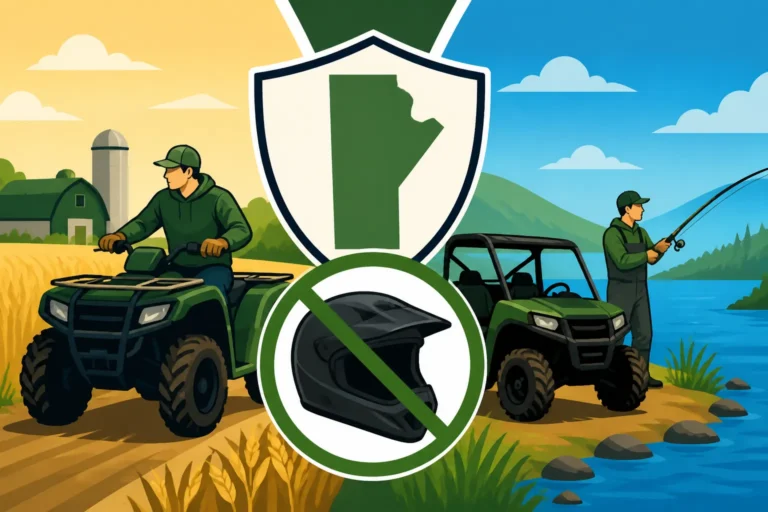
Now for the good news for our dedicated hunters and trappers. While the general rule is helmets on, Manitoba's Off-Road Vehicles Act does make some very practical allowances for those engaged in specific outdoor pursuits. These exemptions acknowledge the unique challenges and operational needs that come with hunting and trapping in remote or challenging terrain. They aren't a free pass to forgo safety entirely, but rather a recognition that sometimes, for specific tasks, a helmet can be a hindrance.
Conditions for Roll-Over Protection Systems (ROPS)
One of the most significant exemptions revolves around the use of roll-over protection systems, commonly known as ROPS, found on many modern UTVs and some larger ATVs. If your off-road vehicle is equipped with a factory-installed or properly installed aftermarket ROPS and you are wearing a seat belt, the helmet requirement can be waived while you are actively engaged in hunting or trapping. This is a crucial detail. The presence of a ROPS structure, combined with seatbelt use, is seen as providing a substantial level of protection in the event of a roll-over, mitigating some of the primary risks a helmet addresses.
This exemption is often a huge relief for UTV owners who spend long days in the field. Imagine trying to constantly take off and put on a helmet while scouting, setting traps, or tracking game in dense bush. It can be cumbersome, reduce visibility, and even hinder communication. Having a robust ROPS, which could include an aftermarket cage from a brand like SuperATV that enhances both safety and utility, means you're still protected from crushing injuries if the machine tips, allowing you to operate more freely. Check out [Manitoba Roll-Over Protection Exemptions] for more details.
Exemptions for Low Speed Operation During Hunting or Trapping
Beyond ROPS, there's also an exemption that acknowledges the need for helmet-free operation at very low speeds when actively involved in hunting or trapping. This applies when the ORV is being operated at speeds not exceeding 20 kilometres per hour. This low-speed clause is incredibly practical for situations like creeping through thick brush to retrieve game, slowly checking a trap line, or navigating challenging, rocky terrain where speed is inherently low, and peripheral vision is paramount.
Consider trying to spot subtle tracks or listen for distant calls with a helmet on. The restricted vision and muffled sounds can be a real disadvantage in these critical moments. At very low speeds, the risk of a high-impact head injury is significantly reduced, making this exemption sensible. However, it's vital to remember that "low speed" means low speed. As soon as you open up the throttle and exceed that 20 km/h limit, the helmet rule kicks back in, regardless of whether you're still technically hunting or trapping. This exemption is about operational necessity, not general convenience.
Specific Activities Covered by the Exemption
It's not enough to simply be a hunter or trapper. The exemption only applies when you are actively engaged in hunting or trapping activities. What does "actively engaged" mean? It covers things like scouting for game, accessing trap lines, retrieving harvested animals, setting snares, or travelling directly to or from a hunting or trapping site within a specified area. It's about the purpose and context of your ride.
For instance, if you're taking your ATV out for a leisurely ride on a trail after the hunting season, the exemption doesn't apply, even if you're a licensed hunter. Similarly, if you're using your UTV to transport firewood for your cabin, that's not considered a hunting or trapping activity. The law is quite specific about the activity for which the exemption is granted. It's not a blanket pass for anyone with a hunting or trapping license, but rather a targeted allowance for specific tasks related to those pursuits. Understanding [Manitoba Rules for Carrying a Firearm] might also shed light on the scope of hunting-related activities.
Why These Exemptions Exist: Practicality in the Bush
The existence of these helmet exemptions isn't about diminishing safety standards; it's a pragmatic recognition of the realities of hunting and trapping in Manitoba's diverse and often challenging environment. Lawmakers understand that sometimes, the equipment designed for general recreational riding can impede the very activities these outdoor enthusiasts are engaged in.
Enhancing Visibility and Situational Awareness
When you're actively hunting or trapping, your senses are your most important tools. A helmet, by its very nature, can restrict peripheral vision, muffle sounds, and limit your ability to quickly scan your surroundings. In situations where you're trying to spot subtle game trails, identify specific bird calls, or detect the presence of wildlife, these restrictions can be a genuine detriment. The ability to quickly turn your head, hear distant rustling, and maintain a full field of view is often critical for success and even for personal safety, especially when dealing with wildlife.
Consider tracking an animal through dense undergrowth. You need to see every broken twig, every subtle print. A helmet's visor or chin bar can obstruct this crucial vision. Similarly, when setting traps, precision and clear sight lines are essential. The exemption allows riders to maximize their sensory input in environments where heightened awareness is not just an advantage, but often a necessity.
Comfort and Practicality for Long Days in the Field
Hunting and trapping often involve long, arduous days in remote areas, frequently in extreme weather conditions. Constantly donning and doffing a helmet can be incredibly uncomfortable and inefficient. Imagine wearing a helmet for hours in the bitter cold of winter, or in the sweltering humidity of summer, all while performing physically demanding tasks. The fatigue, fogging visors, and general encumbrance can quickly become a significant issue.
The exemption recognizes that for these specific, often slow-speed, and task-oriented activities, removing the helmet can improve comfort without significantly compromising safety when other protective measures (like a ROPS and seat belt) are in place or when speeds are kept to a minimum. This practicality helps hunters and trappers focus on their work, rather than struggling with their gear. For those out for extended periods, carrying [Carrying Your Registration Card on Every Ride] becomes just one more piece of essential paperwork to keep track of.
Specialized Equipment and Low-Speed Manoeuvres
Many hunters and trappers use their ORVs not just for transport, but as mobile workstations or to navigate extremely challenging terrain. This often involves very slow, deliberate manoeuvres, where fine control and precise movements are more important than speed. Attaching specialized equipment, loading game, or pulling a sled with traps all require an unobstructed view and the ability to communicate easily with partners.
For instance, if you're pulling a trapper's sled with equipment, or trying to carefully navigate around fallen trees with a loaded UTV, the focus is on slow, controlled movement. At these speeds, the primary risks shift from high-speed impact to roll-overs or entanglement, which are better addressed by a ROPS and seat belt or simply by vigilant, slow operation. Aftermarket additions like cargo racks, winches, or specialized lighting, perhaps from a reputable outfitter or even a brand like SuperATV, can greatly enhance a machine's utility for these tasks, and the helmet exemption helps riders use these tools effectively.
Essential Gear and Safety Beyond the Helmet
While the helmet exemption offers flexibility, it's absolutely critical to remember that it is not a license to be unsafe. These exemptions are for specific circumstances and activities, and they never negate the need for overall rider responsibility and good judgment. In fact, when operating without a helmet, other safety precautions become even more paramount.
Eye Protection is Always Essential
Even if you're exempt from wearing a helmet, you are never exempt from protecting your eyes. Whether you're moving at 5 km/h or 20 km/h, dust, bugs, branches, and debris can still fly up and cause serious eye injury. Imagine a low-hanging branch whipping back, or a stone kicked up by a tire. Without eye protection, you risk permanent damage. So, a good pair of safety glasses, goggles, or even a face shield attached to a cap or other headwear, should always be part of your kit.
This is non-negotiable. Whether you're tracking a deer in a forested area or checking a trap line near a dusty field, clear vision and eye protection are vital for both safety and effectiveness. Don't compromise on this, even when you're taking advantage of the helmet exemption.
Layering and Cold Weather Gear
Manitoba's seasons can be extreme, and hunters and trappers often operate in the harshest conditions. Proper clothing is not just about comfort, but survival. Layering is key, allowing you to adapt to changing temperatures and exertion levels. Waterproof and windproof outer layers are essential, as are insulated inner layers, especially during the fall and winter seasons. Frostbite and hypothermia are real threats, far greater than a low-speed head injury in many backcountry scenarios.
Think about a breakdown far from the nearest road in sub-zero temperatures. Your clothing, emergency kit, and communication devices become your lifelines. While a helmet might be off, heavy gloves, warm boots, a sturdy jacket, and emergency blankets must always be considered essential gear. Don't forget that [Manitoba Wildfire Season Rules for Riders] also emphasize preparedness, even in warmer months.
Enhanced ROPS and Other Protective Accessories
If your exemption relies on having a ROPS, ensure it's in top condition and consider enhancing it. Aftermarket ROPS or accessories like windshields, cab enclosures, and even door inserts can offer additional protection from the elements and potential hazards, all while maintaining the functionality that allows for the helmet exemption. A full cab enclosure, for instance, might not be required by law, but it provides immense protection from cold, wind, and rain, significantly improving comfort and endurance during long days in the bush.
Companies like SuperATV offer a range of accessories from full windshields to hardened roofs and door panels that integrate with existing ROPS. These items can dramatically increase the safety and utility of your UTV, offering protection even when a helmet isn't worn. It's about building a safe, functional environment that supports your hunting or trapping activities.
Communication and Emergency Preparedness
Venturing into remote areas for hunting or trapping means you must be prepared for anything. This includes having reliable communication methods. Cell service is often non-existent in the deep bush, so satellite messengers, two-way radios, or satellite phones are crucial. An emergency kit with first aid supplies, navigation tools, fire starters, and emergency food and water is also non-negotiable.
Remember, the helmet exemption applies to specific operational contexts. It doesn't mean you're immune to other risks like getting lost, having a mechanical breakdown, or encountering an emergency. Always inform someone of your route and estimated return time. Being prepared goes far beyond what's on your head; it encompasses your entire approach to safety in the wilderness. For general safety information, you might also want to review [Manitoba Lighting Requirements on a Machine].
Navigating the Rules: When the Exemption Applies and When It Doesn't
Understanding the nuances of the helmet exemption is key to staying compliant and safe. It's not a blanket waiver; it's conditional. Knowing precisely when you can ride helmet-free and when you need to put it back on is crucial. Misinterpreting these rules can lead to fines and, more importantly, put your safety at risk.
Combined Activities and Transitional Zones
This is where it can get a little tricky. What if you're using your ORV to check a trap line, but then you decide to take a scenic detour on a recreational trail? Or you're leaving your hunting camp, but before you get to your hunting ground, you're travelling on a non-exempt portion of Crown land or a road where the general helmet rule applies? The exemption only covers you when you are actively engaged in hunting or trapping. The moment you transition to a recreational ride, or you're simply transporting your machine to a non-exempt area, the helmet rule likely applies again.
A good rule of thumb is this: if you're unsure, put the helmet on. It's better to be safe and compliant than to risk a ticket or, worse, an injury. Keep your helmet easily accessible, perhaps strapped to your machine, so you can quickly put it on when the situation dictates. Be mindful of your purpose for riding at all times.
Municipal By-Laws and Local Restrictions
While provincial law outlines these exemptions, it's vital to remember that municipalities and local government districts in Manitoba can enact their own by-laws regarding ORV use within their boundaries. Some may have stricter rules about helmet use, even for hunters and trappers, or may restrict ORV access entirely in certain areas. It's rare for a municipal by-law to override a provincial exemption for specific activities like hunting/trapping with ROPS, but it's not impossible for them to add specific rules about where or when such activities can take place.
Always check with the local authorities of the area you plan to hunt or trap in. What's allowed in one rural municipality might be prohibited in another, or a town might have specific ingress/egress routes that require helmets regardless of your activity. A quick call to the local council office can save a lot of headaches, especially if you're planning to ride through or near developed areas. Reviewing [Manitoba Municipal By-Law Powers] can help clarify this.
Officer Discretion and Proof of Activity
Finally, remember that enforcement officers have discretion. If you're stopped without a helmet, you'll need to be able to demonstrate that you qualify for the exemption. This means being able to clearly articulate that you are actively engaged in hunting or trapping, and that your machine meets the necessary criteria (e.g., ROPS with seat belt, or operating at a speed under 20 km/h). Having your hunting or trapping license readily available is always a good idea, as is any other relevant documentation.
If an officer observes you tearing down a trail at 60 km/h without a helmet, simply claiming "I'm a hunter" isn't going to cut it. The circumstances must genuinely align with the spirit and letter of the exemption. Always be polite, cooperative, and prepared to explain your situation. Ignorance of the law is never an excuse, so being informed about [Manitoba Hunting and Trapping Helmet Exemptions] is your best defense.
Table: Summary of Helmet Exemption Conditions for Hunters & Trappers
Here's a quick overview of the key conditions for helmet exemptions when hunting or trapping in Manitoba. Remember, these are specific and conditional.
| Condition for Exemption | Applies To | Key Requirements | Important Considerations |
|---|---|---|---|
| Roll-Over Protection System (ROPS) | UTVs and some larger ATVs with ROPS | – ROPS (factory or approved aftermarket) installed | – Must be actively engaged in hunting/trapping activities |
| – Operator and passengers wearing seat belts | – Helmet required if not wearing seat belt | ||
| – Aftermarket ROPS from trusted brands like SuperATV recommended for robustness | |||
| Low Speed Operation | Any ORV (ATV, UTV, Snowmobile, etc.) | – Speed not exceeding 20 km/h | – Must be actively engaged in hunting/trapping activities |
| – Helmet required if speed exceeds 20 km/h | |||
| – Useful for scouting, retrieving game, trap checking |
This table summarizes the core components, but it's essential to understand the full context as described in the sections above.
Conclusion: Balancing Freedom and Responsibility in the Bush
Manitoba's helmet exemptions for hunters and trappers are a thoughtful recognition of the unique demands of these traditional outdoor activities. They provide a degree of flexibility, allowing riders to prioritize situational awareness and comfort in specific, low-risk operational contexts. However, this flexibility comes with a significant responsibility. These aren't blanket waivers but precise conditions that must be met.
The key takeaway is to always ride smart, be informed, and never compromise on safety. Even when a helmet isn't legally required, other protective measures – from eye protection and appropriate clothing to comprehensive emergency preparedness – become even more vital. Whether you're navigating your SuperATV-equipped UTV through rugged terrain or checking a trap line on your trusty quad, understanding and adhering to these rules ensures you can pursue your passion safely and legally in Manitoba's beautiful backcountry.
Disclaimer
This article is for general informational purposes only and does not constitute professional advice. Laws, prices and regulations vary by location and change over time. Consult a qualified professional for guidance on your specific situation.