60 Metres of Visibility
Picture this: you're out on a beautiful Manitoba trail, the sun dipping below the tree line, painting the sky in fiery oranges and purples. It's breathtaking, but as twilight deepens, that sense of freedom can quickly turn to anxiety if you're not confident in your machine's visibility. Riding an ATV or UTV in Manitoba comes with responsibilities, and one of the most crucial for your safety and the safety of others is ensuring your machine is properly lit and visible. This guide will meticulously break down what "60 metres of visibility" really means, why it's a non-negotiable part of riding, and how to make sure your off-road vehicle meets the mark, no matter the conditions.
The Critical Need for Visibility on Manitoba Trails and Roads
Riding an off-road vehicle is an exhilarating experience, offering unparalleled access to Manitoba's stunning landscapes. However, that freedom comes with the responsibility of ensuring you and your machine are easily seen by others. This isn't just about avoiding a ticket; it's about preventing accidents, protecting yourself, your passengers, and anyone else you might encounter.
Why 60 Metres Isn't Just a Number – It's Safety
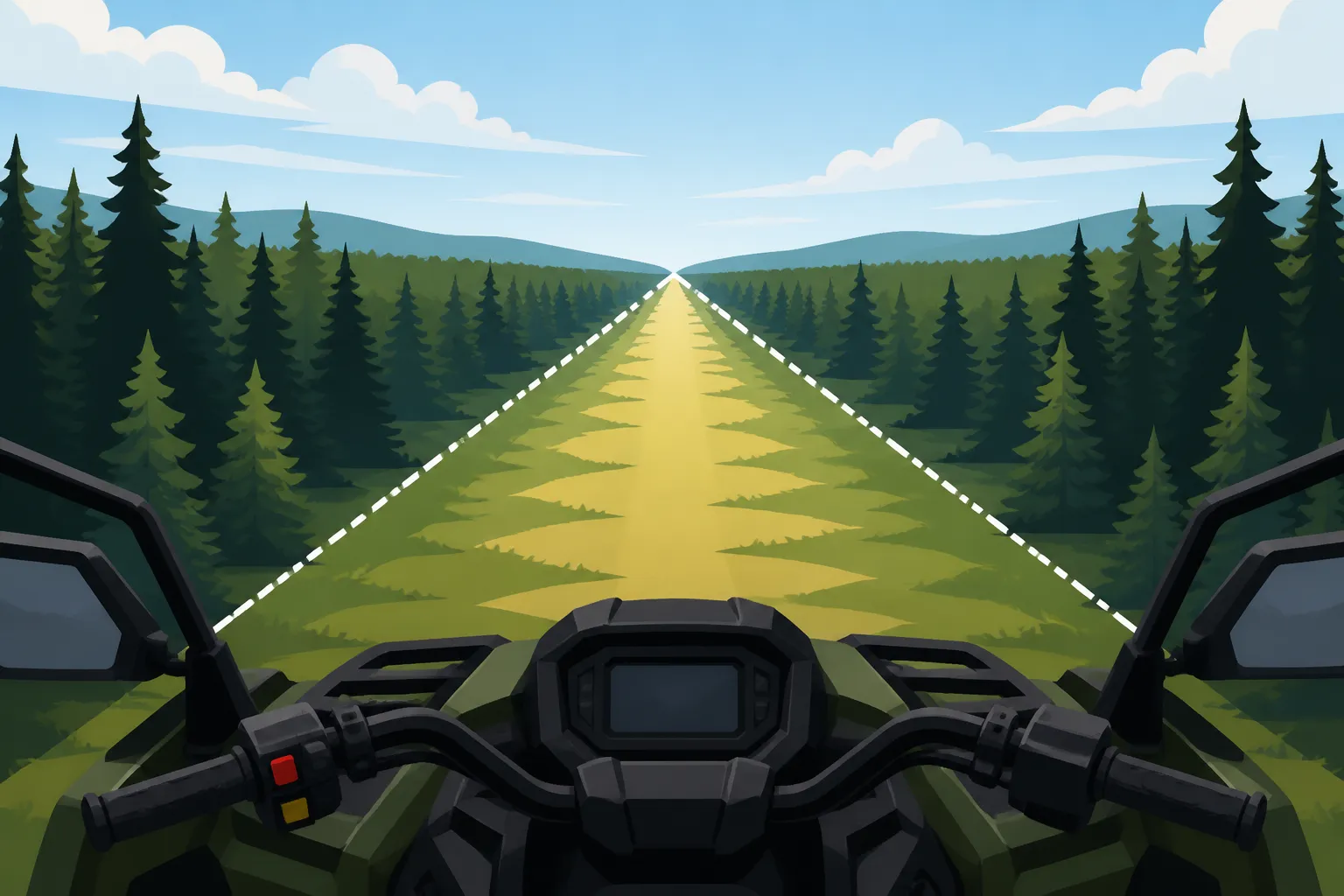
The "60 metres of visibility" rule isn't some arbitrary figure dreamt up by bureaucrats; it's a carefully considered distance designed to provide a critical safety buffer. Imagine you're approaching a blind corner on a winding trail, or perhaps navigating a busy section of crown land where other riders, hikers, or even wildlife might be present. Sixty metres gives everyone involved a crucial window of time to react.
Think about the physics of it: even at relatively low speeds, say 30 km/h, your machine covers about 8.3 metres per second. If another rider, or an unexpected obstacle like a fallen log, only becomes visible at, say, 10 or 20 metres, your reaction time is severely limited. You'd have barely a second or two to process, brake, and steer. Sixty metres, on the other hand, gives you around seven seconds. That's enough time to assess the situation, slow down safely, and take appropriate action. This buffer is especially vital on shared trails, where you might encounter slower-moving vehicles, equestrians, or families out for a walk. Good visibility helps prevent surprising anyone and allows for smoother, safer interactions.
Understanding the Manitoba Lighting Requirements
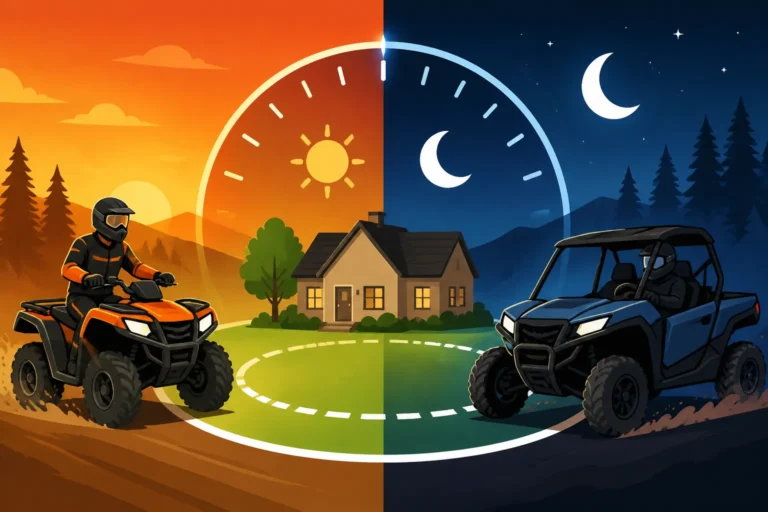
Manitoba's regulations are pretty clear when it comes to lighting: your off-road vehicle must be equipped with at least one headlight and one tail light, and these lights must be turned on during specific times and conditions. The key phrases here are "half an hour before sunset and half an hour after sunrise" and "at any other time when, due to insufficient light or unfavourable atmospheric conditions, persons or vehicles are not clearly discernible on the highway or trail at a distance of 60 metres." This is where the [60 Metres of Visibility] rule truly comes into play.
What this means in practice is that even if it's technically daytime, but a heavy fog rolls in, or you're caught in a downpour that significantly reduces visibility, your lights need to be on. It's not just about darkness; it's about being seen. The regulation doesn't specify how bright your lights need to be, but it implies they must be sufficient to make your machine clearly discernible. This applies whether you're on a designated trail, crossing a field, or navigating a permissible ditch area. [Manitoba Lighting Requirements on a Machine] encompass these details, ensuring that every rider understands their responsibility. It's all about ensuring that you don't become an invisible hazard, even in challenging conditions.
Essential Lighting Components for Your Manitoba ORV
Ensuring your off-road vehicle has the right lighting isn't just a matter of compliance; it's about enhancing your safety and the enjoyment of your ride. While the basic requirements are straightforward, there's a spectrum of options to consider for optimal visibility.
Headlights and Tail Lights – The Bare Minimum
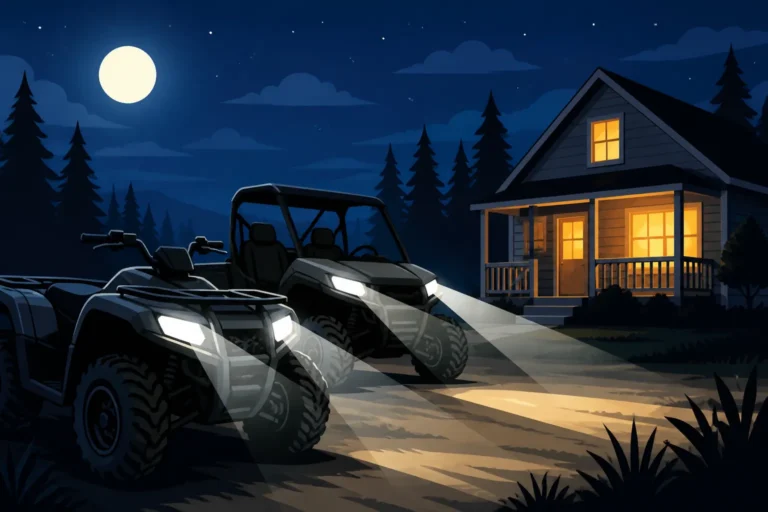
Every ATV and UTV sold today comes equipped with a headlight and a tail light, which serve as your primary tools for meeting the 60-metre visibility standard. Your headlight must emit white or amber light and be positioned to illuminate the path ahead effectively, allowing you to see obstacles and be seen by oncoming traffic or other trail users. The tail light, on the other hand, must emit red light and be clearly visible from the rear, warning anyone behind you of your presence.
These lights are crucial. It's not enough for them to just be there; they must be functional. Regular checks are essential:
- Headlight Function: Does it cast a clear, steady beam? Is it aimed correctly so it doesn't blind others but still illuminates your path?
- Tail Light Function: Is it bright and distinct? Are there any cracks in the lens that could obscure the light?
- Brake Lights (if equipped): Do they activate reliably when you apply the brakes? This is a critical safety feature, especially if you're riding in a group.
Many riders, especially those with older machines, might find their stock lights are dim or offer insufficient coverage for challenging Manitoba terrain. Over time, bulbs can lose their intensity, wiring can corrode, or lenses can become foggy. Replacing old halogen bulbs with modern LED equivalents can drastically improve both your ability to see and your ability to be seen, often with less drain on your machine's electrical system. This fundamental system is the backbone of your visibility, so don't overlook its proper function and maintenance.
Beyond the Basics: Enhancing Your Visibility
While stock headlights and tail lights meet the minimum legal requirement, many serious riders choose to go beyond the basics, especially for those venturing into remote areas or tackling aggressive night rides. Auxiliary lighting can transform your riding experience, turning challenging conditions into manageable ones.
- Light Bars and Pod Lights: These are popular additions for off-road use, casting a much wider and brighter beam than standard headlights. They can illuminate obstacles far in advance, making high-speed night riding safer and more enjoyable. Brands like SuperATV offer a range of durable, high-performance LED light bars and pod lights designed to withstand the rigours of off-road environments. They are fantastic for brightening up a dark trail in the middle of nowhere, helping you spot wildlife or challenging terrain much sooner. However, it is critical to remember that such powerful auxiliary lights are typically not legal for use on public roads, ditches, or when crossing highways, as they can blind other drivers. Always turn them off when you're not in a purely off-road, unpopulated setting.
- Reflective Tape and Decals: A simple, cost-effective way to boost your passive visibility is to add reflective tape to your machine. Placed on fenders, racks, or the rear of your UTV, reflective materials catch and return light from other sources, making you more visible to headlights or flashlights even when your own lights are off. This is particularly useful if your machine breaks down after dark.
- Bright Apparel: Don't forget about personal visibility! Wearing brightly coloured gear, especially vests or jackets with reflective strips, significantly increases your profile to others. This is particularly important for group rides, making it easier for riders to keep track of each other, and for other trail users to spot you as you approach. For riders exploring Manitoba's dense bush or riding in variable weather, ensuring your lights are up to par, perhaps even upgrading with a durable light kit from SuperATV, can make all the difference. These enhancements not only keep you safer but also contribute to a more confident and enjoyable ride.
Practical Tips for Maintaining Optimal Visibility
Having the right lighting equipment is only half the battle; ensuring it performs consistently is just as important. Manitoba's riding conditions can be tough on electrical components, so a proactive approach to maintenance is key to meeting the [Manitoba Lighting Requirements on a Machine] and staying safe.
Regular Checks and Maintenance
Just like checking your oil or tire pressure, inspecting your lighting system should be a routine part of your pre-ride checklist. It's far better to discover a faulty bulb in your garage than out on a remote trail after dark.
- Pre-Ride Inspection: Before every ride, take a moment to walk around your machine. Turn on your headlight, tail light, and any auxiliary lights. Are they all working? Are they bright? A quick visual check can identify burnt-out bulbs, loose connections, or cracked lenses. Don't forget to check your brake lights if your machine has them.
- Bulb Replacement: Keep spare bulbs for your headlights and tail lights on hand, especially for older machines that use incandescent bulbs. LED lights are more durable, but even they can fail. Replacing a bulb is usually a quick and easy fix that can prevent a serious safety issue.
- Wiring Inspections: Vibration, mud, and water can wreak havoc on electrical wiring. Periodically inspect visible wiring for fraying, nicks, or corrosion. Ensure all connections are secure and free of rust. A loose wire can cause intermittent light failure, which is incredibly dangerous. Consider using dielectric grease on connections to protect against moisture.
- Battery Health: Your lighting system relies on your machine's battery. A weak battery can lead to dim lights or, worse, lights that flicker and fail. Ensure your battery terminals are clean and tight, and that your battery is holding a charge properly. If you typically ride short distances or infrequently, consider a battery tender to keep it topped up.
- Cleaning Lenses: Mud, dust, and grime can quickly obscure your light lenses, significantly reducing their output. Carry a small cloth and some water or lens cleaner with you on rides, especially after navigating muddy sections. A simple wipe can restore much-needed brightness. This is particularly important if you've invested in quality lights, as even the best optics are useless when caked in dirt.
Adapting to Manitoba's Diverse Conditions
Manitoba's weather and terrain offer a wide range of riding experiences, but they also present unique challenges for visibility. Being prepared to adapt your lighting and riding style is crucial.
- Fog and Haze: Fog can dramatically reduce visibility to mere metres, making the 60-metre rule extremely difficult to meet. In foggy conditions, turn on all your available lights, including any auxiliary floodlights (if safe and legal in your location). Ride at a reduced speed, increase your following distance from other riders, and be extra vigilant for obstacles or other trail users. Yellow-tinted fog lights can sometimes improve contrast, though the primary goal is simply to be seen.
- Snow and Blizzards: Winter riding is popular in Manitoba, but snow can reflect light, creating glare, and active snowfall can cut visibility down to zero. Ensure your lights are clear of snow and ice, and consider wearing polarized goggles to reduce glare. Again, slow down and maintain extra caution.
- Heavy Rain: Downpours reduce visibility and can quickly get electrical components wet. Check that your lights are sealed properly to prevent water ingress. Wet surfaces also reflect less light, making it harder for others to gauge your distance.
- Dusty Trails: Riding in dry conditions can kick up significant dust, creating a blinding cloud for anyone behind you. While your front lights might penetrate the dust to some extent, your tail light becomes critically important. Some riders use a rear-facing amber strobe light (again, for off-road use only) to cut through dust and warn those behind them.
- Bush Riding: Manitoba's dense forests mean sudden changes in light, from bright sun to deep shadow. Your lights should be ready to switch on instantly as you enter darker sections. For these varied and often unpredictable conditions, the robustness of your equipment matters. For example, a heavy-duty light from SuperATV is designed to withstand the jostling and impacts of bush riding, ensuring it performs when you need it most. Always consider the conditions you're heading into and prepare your machine and your riding habits accordingly.
Common Misconceptions and Legal Pitfalls
It's easy to assume certain things about off-road vehicle rules, but some common misunderstandings can lead to fines, or worse, accidents. When it comes to visibility, knowing the exact regulations is paramount for every Manitoba rider.
The "Daylight Riding Only" Fallacy
One common misconception is that if you only plan to ride during daylight hours, you don't really need to worry about your lights. This is a dangerous assumption and one that can get you into trouble. The [Manitoba Lighting Requirements on a Machine] explicitly state that lights are required not just from half an hour before sunset to half an hour after sunrise, but also "at any other time when, due to insufficient light or unfavourable atmospheric conditions, persons or vehicles are not clearly discernible… at a distance of 60 metres."
This means that even on a bright sunny day, if a sudden, heavy thunderstorm rolls in, or a thick fog bank unexpectedly descends upon your trail, you are legally required to turn on your lights. Imagine a situation where you're riding a familiar trail, the sun is high, but then you enter a particularly dense, shaded forest section where the light is significantly diminished. Even if it's technically midday, if someone else can't clearly see you from 60 metres away, your lights need to be on. Failing to do so isn't just a minor oversight; it's a violation that can result in a ticket under the ORV Act, and more importantly, it puts you and others at risk. Conservation officers or RCMP performing [Manitoba Equipment Checks by Officers] will be looking for this. It's always best practice to ensure your lights are in perfect working order, even if you never plan to ride in low-light conditions.
Road vs. Trail: Different Rules for Different Places
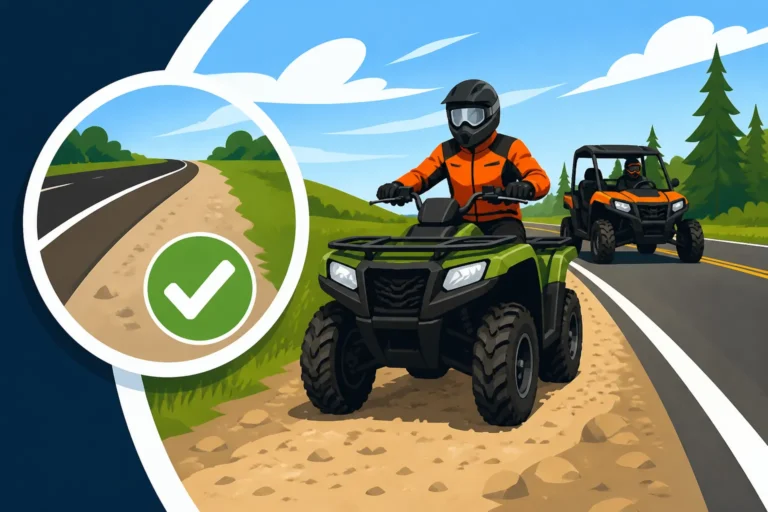
This is a critical distinction that many riders get wrong, especially when it comes to powerful auxiliary lighting. While a high-wattage LED light bar might be perfect for illuminating a remote forest trail at night, it is almost certainly illegal to use on any public roadway, even if you're just [Manitoba Ditch Riding Rules].
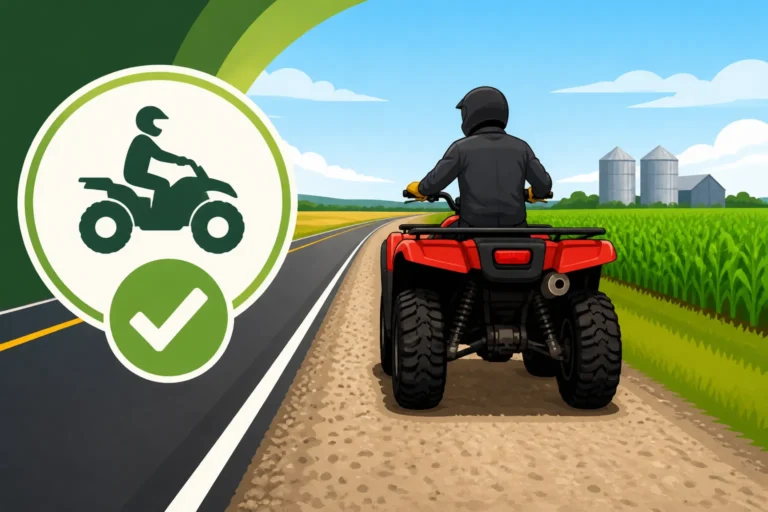
Manitoba's ORV Act generally [Manitoba Bans Riding on Roadways], with very specific exceptions for ditch riding, agricultural shoulder use, and crossing highways. When operating in these environments, your machine is interacting with conventional road traffic, and the rules shift dramatically. Powerful, off-road specific light bars can produce immense glare that blinds oncoming drivers, creating a severe hazard. While a powerful SuperATV light bar might transform night riding on a remote trail, remember to understand local laws before using it on areas like ditches or road crossings.
If you're using your ORV in any capacity near public roads, ensure that your auxiliary lights are covered or switched off, and only your standard, compliant headlights and tail lights are active. This distinction is not just a technicality; it's about road safety and the legal operation of your vehicle. Ignoring this can lead to significant fines and dangerous situations, not to mention impacting the public perception of off-road riders. Always be aware of your surroundings and adapt your lighting to the specific environment you're in.
Manitoba ORV Lighting Requirements at a Glance
| Component | Requirement | Visibility Distance | When Required | Key Reminder |
|---|---|---|---|---|
| Headlight(s) | At least one, white or amber, steady beam. | 60 metres | Half an hour before sunset to half an hour after sunrise, OR any time visibility is less than 60m due to light/weather (e.g., fog, heavy rain). | Aim correctly; avoid blinding others. Maintain regularly. |
| Tail Light(s) | At least one, red, steady beam. | 60 metres | Same as headlights. | Ensure it's clear of mud/snow. Critical for group riding. |
| Brake Light(s) | (If equipped) Red, activates with braking. | Clearly visible | Always when brakes are applied. | Test functionality before each ride. |
| Auxiliary Lights | Floodlights, light bars. (Optional) | N/A | Only for off-road use, on private land, or designated trails. Must be OFF when on public roads, ditches, or crossing. | Check local by-laws; never use on public roads. Consider brands like SuperATV for trails. |
| Reflectors | (Optional, but recommended) | Varies | Always provide passive visibility. | Add to fenders/rear for breakdown visibility. |
This article is for general informational purposes only and does not constitute professional advice. Laws, prices and regulations vary by location and change over time. Consult a qualified professional for guidance on your specific situation.