3 Kilometres From the Nearest One
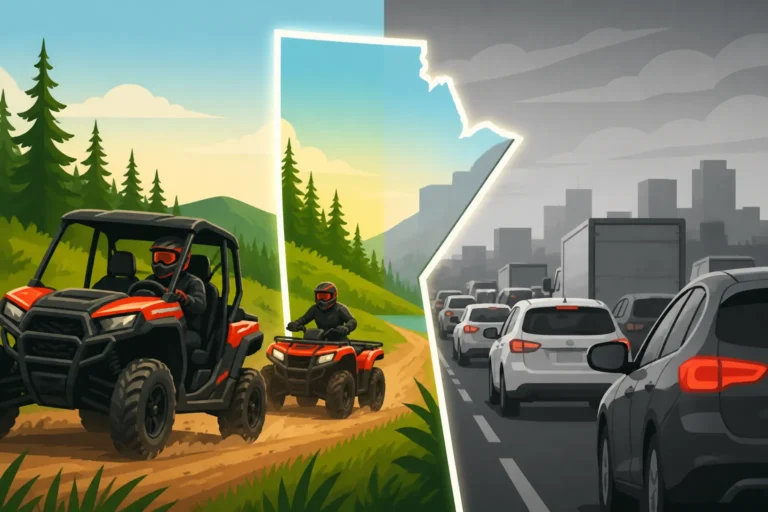
It’s a common frustration for off-road vehicle (ORV) enthusiasts in Manitoba: you’ve got your quad or side-by-side ready for an adventure, but the rules for getting from your driveway to the nearest trail can feel like a maze. Many riders wonder if they can simply use a road or ditch to connect the dots, only to find the regulations are far more complex than they initially appear. This guide is here to untangle the often confusing rules surrounding ORVs on Manitoba's roads, ditches, and shoulders, so you can ride legally and safely.
The Harsh Reality: Why Roads Are Generally Off-Limits
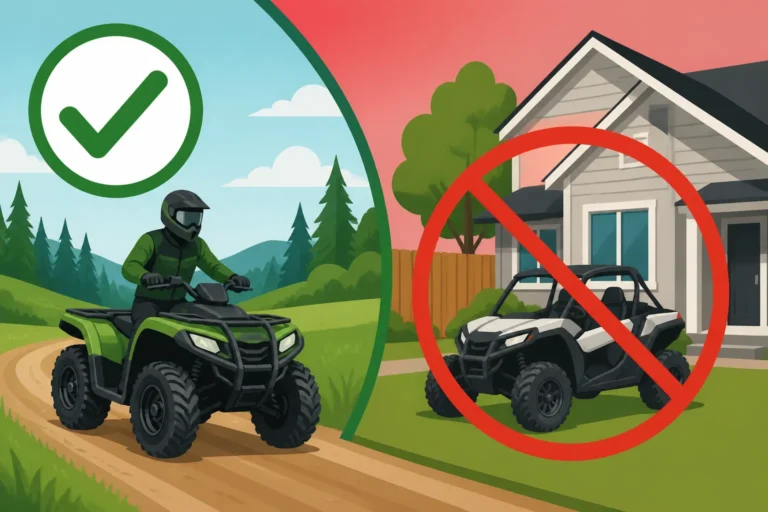
Let's face it, the convenience of just hopping onto a paved road or even a gravel road to get where you're going sounds appealing. Unfortunately, Manitoba's rules for off-road vehicles (ORVs) are pretty clear on this point: public roadways are, for the most part, off-limits. This can be a tough pill to swallow, especially when the trail system doesn't directly connect to your starting point, but these regulations are in place for some very good reasons, primarily safety.
Understanding the Blanket Ban on Roadways
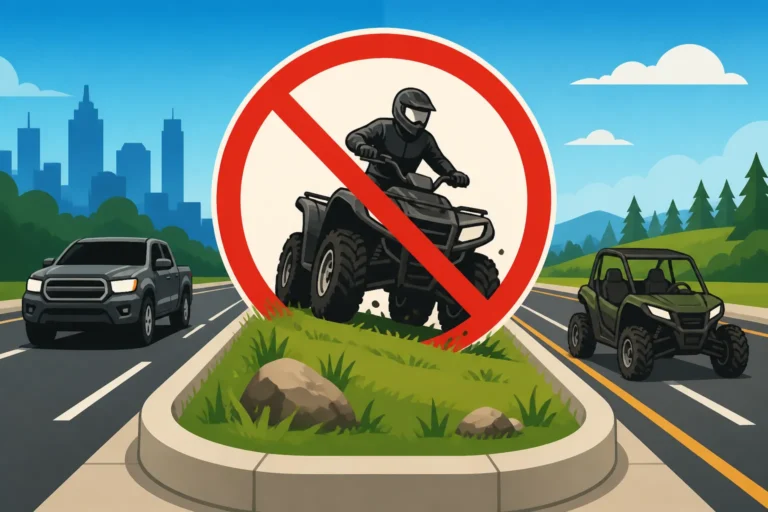
The law in Manitoba draws a firm line when it comes to ORVs and what's considered a "roadway." Simply put, your ATV or UTV is designed for off-road use, and public roads are designated for conventional vehicle traffic. This means you generally cannot ride your quad or side-by-side on any paved or gravel road. It's not just about the main traffic lanes either; the prohibition extends to several other areas that you might think are fair game.
For instance, the median of a divided highway is explicitly off-limits. You also can't ride your ORV through an interchange, which includes those complex intersections with ramps and overpasses. And don't even think about using a sidewalk as a shortcut; sidewalks are strictly for pedestrians and are also explicitly banned for ORV use. These restrictions are detailed in the legislation, leaving little room for interpretation. Understanding that [Manitoba Bans Riding on Roadways] is the foundational rule will save you a lot of headache and potential fines.
The Rationale Behind the Restrictions
So, why are these rules so strict? It primarily boils down to safety for everyone using the roads. ORVs are fundamentally different from cars and trucks. They typically have different handling characteristics, are often slower, and can be harder for other motorists to see, especially at highway speeds. Imagine a side-by-side, even one with a full roll cage, encountering a semi-truck at 100 km/h; the size and weight disparity alone highlight the danger.
The rules aim to prevent collisions and minimize risks for both ORV operators and other road users. The speed difference between an ORV and a typical vehicle on a highway creates a hazardous situation, increasing the risk of rear-end collisions or sudden maneuvers by other drivers trying to avoid a slower-moving machine. Also, ORV tires are designed for traction on dirt, mud, and rocks, not necessarily for optimal grip and braking on pavement, especially in wet conditions. These are not minor concerns; they're critical safety considerations that shape the laws governing where we can ride.
Navigating Crossings: The Strict Rules for Getting to the Other Side
While riding on a public roadway is generally prohibited, the reality is that sometimes you simply have to cross one to access a trail or another permitted riding area. Manitoba's legislation acknowledges this necessity but lays out very specific and stringent rules for how these crossings must be executed. It’s not a free-for-all; rather, it’s a carefully regulated maneuver designed to ensure maximum safety. Ignoring these rules can lead to serious fines or even accidents.
The '3 Kilometres' Rule and Its Implications
One of the most surprising and often frustrating rules for riders is the "3 kilometres from the nearest intersection" clause. In Manitoba, if you need to cross a paved provincial highway, you generally must do so at a point that is at least 3 kilometres away from the nearest intersection with another public road or railway track. This is in addition to the rule that prohibits crossing within 5 metres of an intersection, which applies more broadly.
This 3-kilometre rule can mean taking a significant detour to find a legal crossing point, even if it feels counterintuitive to ride further just to cross. It’s particularly challenging in areas where intersections are frequent. The intent behind this rule is to minimize conflicts with other traffic and to give drivers on the highway ample warning and reaction time. Highway intersections are often busy areas with merging, turning, and accelerating traffic, making them high-risk zones for ORV crossings. By pushing crossings further away, the law aims to place them in less complex, more predictable sections of the road. For a deeper dive into this, you might want to read [Manitoba Crossing Rules at 5 Metres and 3 Kilometres].
Safety Protocols and Licensing Requirements for Crossings
Beyond the location, there are strict safety protocols that must be followed every single time you cross a roadway. You are required to come to a complete stop before entering the roadway, just like any other vehicle. You must then yield the right-of-way to all oncoming traffic, ensuring the path is absolutely clear before proceeding. The crossing itself must be executed as directly and quickly as possible, at a 90-degree angle to the roadway. This minimizes your time spent in the flow of traffic.
Furthermore, a clear view is absolutely essential; if you cannot see oncoming traffic clearly in both directions, you cannot cross. This means avoiding blind spots caused by hills, curves, or roadside vegetation. Riders are also expected to cross one machine at a time, preventing a group from potentially overwhelming traffic flow. Crucially, the operator crossing the highway must hold a valid driver's licence. A learner's permit for a car or truck, for example, is not sufficient. These rules, covering aspects like [Manitoba Crossings Need a Driver's Licence] and [Manitoba Crossings One Machine at a Time], underscore the seriousness with which these maneuvers are viewed by the authorities.
Ditch Riding: Where It's Allowed (and Not)
Many Manitoba ORV riders correctly understand that ditches offer some opportunity for travel when roads don't. While ditch riding is certainly more permissible than direct roadway use, it's not a blanket allowance. There are very specific conditions that must be met, and misunderstandings here are common, often leading to tickets or unsafe situations. It’s crucial to know which ditch is fair game and what kind of machine is permitted within it.
The "Ditch to the Right" Principle
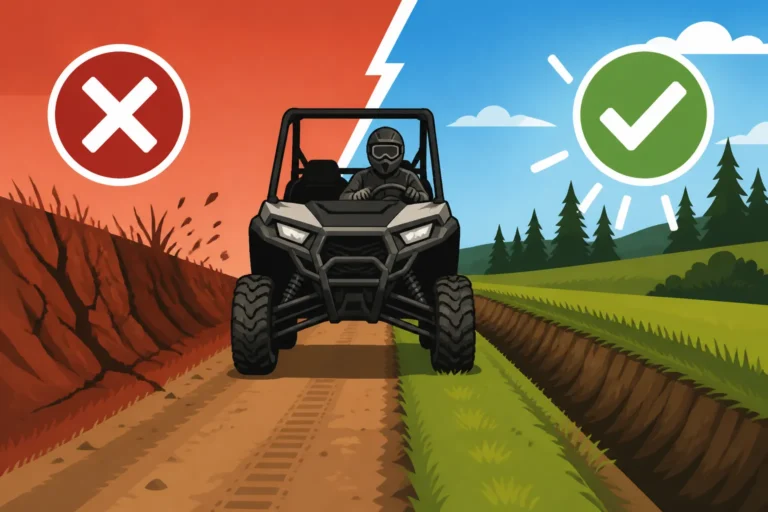
One of the most fundamental rules of ditch riding in Manitoba is that you must operate your ORV in the ditch immediately adjacent to the right-hand side of the roadway, in the same direction as the flow of traffic on that side of the road. This might seem obvious, but it's often overlooked. You can't just pick any ditch; it has to be the one on the right, and you must travel with traffic, not against it. This helps ensure predictability and reduces the risk of head-on encounters, even in the ditch.
The ditch is generally defined as the area between the shoulder of the roadway and the property line, often characterized by a sloped or graded area that collects runoff. It’s important to recognize that the rules for ORVs in ditches are distinct from those for agricultural implements or even snowmobiles in winter, which sometimes have different allowances. For clarity on these specifics, refer to [Manitoba Ditch Riding Rules]. This clear delineation helps maintain safety and order, preventing unexpected movements that could endanger other road users or the ORV operator.
Restrictions and Exceptions within Ditches
While ditch riding is allowed under certain conditions, not all machines are permitted. Specifically, the law prohibits "four-wheel-drive motor vehicles" from operating in the ditch. This isn't just about trucks or SUVs; it also applies to larger, truck-like side-by-sides if they are not specifically designed and classified as ORVs. The distinction often comes down to the manufacturer's intent and the vehicle's design for off-road use versus highway travel. Generally, typical ATVs and UTVs are fine, but if your side-by-side starts to blur the lines with a small truck, you might fall under this restriction. This is why [Manitoba Four-Wheel-Drives Barred From Ditches] is a rule many riders might not immediately understand, thinking all 4x4s are fair game.
Age restrictions also play a significant role. Operators under the age of 14 are generally not permitted to ride in ditches unless they are directly supervised by an adult on another ORV, and even then, there are limitations. Riders who are 14 years and older, however, can generally operate an ORV in a ditch without direct supervision, provided they meet other licensing and safety requirements. These age-related rules, like those found under [Manitoba Riders 14 and Over in Ditches], are crucial for protecting younger riders and ensuring they have the necessary experience and judgment before venturing into areas adjacent to busy roads.
| Riding Zone | General Rule | Key Conditions/Restrictions | Relevant Internal Link Example |
|---|---|---|---|
| Roadway | Generally Prohibited | No riding on paved or gravel lanes, medians, interchanges, sidewalks. | [Manitoba Bans Riding on Roadways] |
| Ditch | Permitted (Limited) | Must be to the right of the roadway, travelling with traffic. No 4WD motor vehicles (some large UTVs). Age restrictions apply. | [Manitoba Ditch Riding Rules] |
| Shoulder | Generally Prohibited | Agricultural exception only. Requires slow-moving vehicle sign, 40 km/h limit. | [Manitoba's Agricultural Shoulder Exception] |
| Crossing | Permitted (Limited) | Must stop, yield, clear view, one at a time. Requires valid driver's license. Rule to be 3 km from nearest intersection for paved highways. | [Manitoba Crossing Rules at 5 Metres and 3 Kilometres] |
Shoulder Use: The Agricultural Exception
The shoulder of a roadway, that strip of paved or gravel ground directly next to the traffic lane, is another area where ORV use is highly restricted in Manitoba. Unlike ditches, which have broader allowances, shoulders are generally considered part of the roadway for most ORV purposes. However, there's a very specific and important exception that many rural riders rely on: the agricultural exception. This rule allows certain types of ORVs to use the shoulder for farming-related activities, but it comes with its own set of strict conditions.
When and How a Shoulder Can Be Used
If you're operating an ORV in Manitoba for agricultural purposes, such as moving between fields or accessing farm property, you may be permitted to use the shoulder of a provincial road. This is not an open invitation to ride the shoulder for recreational purposes; it's explicitly tied to farming operations. The machine must be directly involved in the agricultural activity, meaning you're usually moving equipment, supplies, or directly managing livestock.
When using the shoulder for farming, several safety requirements kick in. Firstly, your ORV must display a slow-moving vehicle sign (the orange triangle with a red border) prominently on the rear, making it clearly visible to traffic approaching from behind. This is crucial because ORVs, even when speeding, are significantly slower than highway traffic. Secondly, there's a strict speed limit: you cannot exceed 40 km/h while operating on the shoulder. This low speed helps minimize the speed differential with other vehicles and reduces the risk of accidents. For more on this, you can check out [Manitoba's Agricultural Shoulder Exception] and [Manitoba's 40 km/h Shoulder Limit]. It's a pragmatic rule, acknowledging the needs of the agricultural community while prioritizing road safety.
Equipment and Visibility for Shoulder Riding
Given the inherent risks of sharing space, even a shoulder, with faster-moving highway traffic, visibility is paramount. For those ORVs permitted to use the shoulder for agricultural purposes, ensuring you are seen by other drivers is non-negotiable. This means having properly functioning headlights and taillights, especially during dawn, dusk, or adverse weather conditions, as well as at any time from a half-hour before sunset to a half-hour after sunrise.
Riders can also consider aftermarket accessories to enhance their visibility. Products like bright LED light bars or auxiliary lighting from brands like SuperATV can make a significant difference in how noticeable your machine is to other motorists. Similarly, robust rearview mirrors are essential for operators to keep an eye on approaching traffic. Beyond lighting, wearing high-visibility clothing, such as reflective vests or bright colours, adds another layer of protection. These measures, combined with the slow-moving vehicle sign and adherence to the speed limit, create the safest possible environment for this limited type of shoulder use.
Essential Equipment and Rider Requirements
Beyond where you can ride, the Manitoba Off-Road Vehicles Act also dictates who can ride and what equipment your machine must have to be legal, especially when operating in proximity to public roads. These regulations are designed to protect the operator, passengers, and other members of the public. Whether it’s wearing a helmet or ensuring your machine is properly equipped, adhering to these rules is not just about avoiding a ticket; it's about staying safe.
The Helmet Law and Its Specific Exemptions
For most ORV riders in Manitoba, wearing a helmet is mandatory. This includes operators and any passengers. The helmet must meet specific safety standards (such as Snell, DOT, or ECE) to be considered legal. This rule is a cornerstone of ORV safety, as head injuries are among the most serious consequences of accidents. A proper helmet can literally be a life-saver, absorbing impact forces and protecting your brain.
However, the law does provide for some very specific exemptions to the helmet rule. For instance, if you are operating an ORV primarily for farming, fishing, hunting, or trapping purposes, you may be exempt from wearing a helmet. This is often in recognition of the practicalities of these activities, where helmets might impede vision or hearing necessary for the task. Another key exemption applies to machines equipped with a manufacturer-installed roll-over protective structure (ROPS) and seatbelts, where the operator and passengers are properly secured by those seatbelts. There are also specific geographic exemptions, such as for Hydro crews operating north of the 53rd parallel during certain months. It’s vital to understand these nuances, as outlined in [Manitoba Helmet Law and Its Exemptions], to avoid inadvertently breaking the law or, worse, risking serious injury.
Age, Passengers, and Licence Rules for Operators
Who can ride an ORV in Manitoba is also clearly defined by age. Generally, riders under the age of 14 face significant restrictions, typically requiring direct adult supervision and often being limited to private land. From 14 to 15 and a half, operators can ride in ditches without direct supervision but need a valid learner's permit to cross roadways. Once a rider turns 16 and holds a full driver's license (not just a learner's), many of the age-related restrictions ease, allowing more freedom of operation within the permitted areas. You can find detailed breakdowns of these age requirements in [Manitoba ATV Age Requirements], [Manitoba Rules for a 12-Year-Old Rider], [Manitoba Rules for a 14-Year-Old Rider], and [Manitoba Rules for a 16-Year-Old Rider].
When it comes to passengers, the rule is straightforward: your ORV can only carry as many passengers as it was designed for by the manufacturer. If your ATV is a single-rider model, then no passengers are allowed. Side-by-sides are often designed for two or more occupants, and these machines must have designated seating and seatbelts for each person. Everyone, including passengers, must use the seatbelts provided if the machine is equipped with them. It's crucial to respect these limits, as overloading an ORV can severely impact its stability and handling, making it much more dangerous. For detailed information, see [Seat Belts and Passenger Limits on a Manitoba UTV].
Machine Requirements: Lights, Spark Arresters, and More
Your ORV itself needs to be up to snuff to be legal on public lands or when interacting with roadways. Two critical equipment requirements are proper lighting and a spark arrester. From a half-hour before sunset to a half-hour after sunrise, or whenever visibility is less than 60 metres, your ORV must have its headlights and taillights on. These lights must be capable of illuminating objects at least 60 metres ahead. This is not just a suggestion; it's a legal requirement to ensure you can see and be seen. Investing in reliable lighting, perhaps even brighter aftermarket options from a brand like SuperATV, can significantly enhance safety.
Another crucial component, often overlooked, is a spark arrester. All ORVs in Manitoba must be equipped with a spark arrester in good working order. This device prevents hot carbon particles from escaping the exhaust system, which can otherwise ignite dry grass or leaves and cause wildfires. This requirement is in place year-round, not just during fire season. Additionally, your machine should be in good mechanical condition, with functioning brakes, a proper exhaust system (not excessively loud), and tires suitable for the terrain you'll be riding. Many riders choose to enhance their machines with durable accessories like skid plates, robust bumpers, or even full windshields from providers such as SuperATV to protect against the rigours of the Manitoba bush, which also contribute to overall safety and machine longevity. For specific details on lighting and spark arresters, consult [Manitoba Lighting Requirements on a Machine] and [Manitoba Spark Arrester Requirements].
Local By-Laws and Enforcement
While the province sets the overarching rules for ORV operation, it’s important to remember that local authorities also have a significant say. Municipalities, Local Government Districts, and even Northern Community Councils in Manitoba have the power to create their own by-laws that can either further restrict or, in some cases, permit ORV use within their specific boundaries. This adds another layer of complexity for riders, as what's legal in one town might not be in the next.
Understanding Municipal Authority Over ORVs
Local governments in Manitoba have the authority to enact by-laws that modify the provincial ORV Act within their jurisdictions. This can mean a few things for riders. For example, a municipality might decide to open certain low-traffic roads or streets to ORV use, perhaps to connect residential areas to a local trail network, often with specific speed limits or time-of-day restrictions. Conversely, a municipality might choose to ban ORVs entirely from certain areas, such as within town limits or specific parks, even if the provincial rules might otherwise allow some form of operation (like ditch riding).
This patchwork of regulations means that "do your homework" isn't just a suggestion; it's a necessity. Before embarking on a ride through or near a town, it's always a good idea to check with the local municipal office or look up their by-laws online. Not doing so could lead to an unexpected fine or a confrontation with local law enforcement. [Manitoba Municipal By-Law Powers] highlights the extent of this local control, so always be aware that rules can change significantly from one community to another.
Penalties and Officer Checks
Ignoring the rules, whether provincial or municipal, can lead to serious consequences. Law enforcement officers, including RCMP, local police, and conservation officers, have the authority to pull over ORV operators and issue tickets for violations. Penalties can range from fines for minor infractions, such as not carrying your registration card (a requirement at all times, as detailed in [Carrying Your Registration Card on Every Ride]), to much steeper fines for more serious offences.
For example, operating an ORV carelessly, or in a manner that endangers others, can lead to significant financial penalties, potentially thousands of dollars, and even impoundment of your machine. [Manitoba Ticket Costs for Riders] can give you an idea of the financial impact of various infractions. Officers also conduct equipment checks, ensuring your ORV meets all the necessary requirements like proper lights, spark arresters, and a functioning exhaust. They might also verify your age, licence, and registration. It's not just about getting caught; these rules are in place to prevent accidents and ensure everyone's safety, so understanding and following them is paramount to a responsible and enjoyable riding experience.
Disclaimer
This article is for general informational purposes only and does not constitute professional advice. Laws, prices and regulations vary by location and change over time. Consult a qualified professional for guidance on your specific situation.