Manitoba Bans Riding a Median
It can be incredibly frustrating to see wide-open spaces, like the median of a divided highway, and wonder why you can't just take your off-road vehicle across it to get where you're going. Many riders, especially those new to Manitoba, assume these areas are fair game or at least less regulated than the main roadway. But in reality, riding your ATV or UTV on a median is not only against the rules but can also be incredibly dangerous. This guide will clarify why medians are strictly off-limits, what the law actually says, and where you can legally and safely enjoy your machine in Manitoba.
Understanding the Median Ban for Off-Road Vehicles
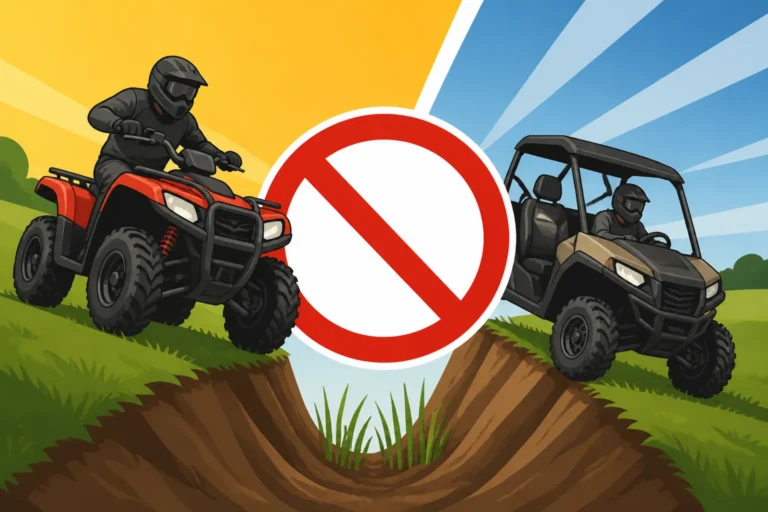
Let's cut right to the chase: operating an off-road vehicle (ORV) on the median of a divided highway in Manitoba is prohibited. It's not a grey area, and it's not something that changes with the season or your specific machine. This rule exists for very important reasons, primarily focused on public safety for both ORV operators and other road users, as well as the protection of public infrastructure.
Riders often express confusion because some might think of a median as just another piece of unpaved land, similar to a ditch or a field, which might have different rules. However, legally and practically, a median is an integral part of a roadway structure. Its purpose is to separate traffic moving in opposite directions, and it often contains signage, lighting, and even emergency crossover points that are not designed for ORV traffic. The laws are clear on this, and enforcement is in place to ensure everyone's safety.
What Exactly is a Median?
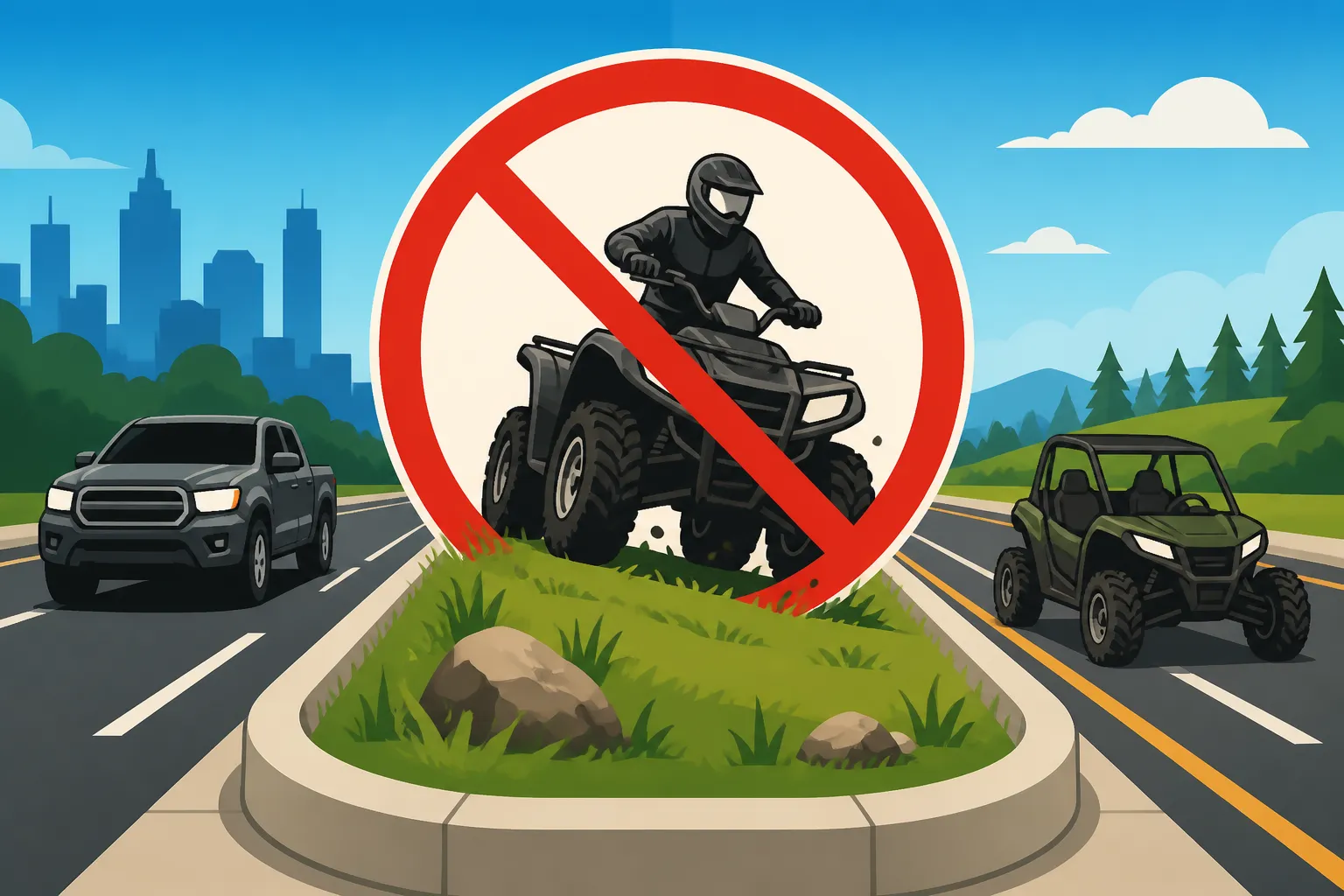
When we talk about a "median" in the context of a divided highway, we're referring to the strip of land or barrier that separates opposing lanes of traffic. It can be a narrow concrete barrier in urban areas, or a wide, grassy expanse in rural settings, sometimes even with trees or ditches within it. The key characteristic is that it divides two distinct roadways. For example, think of the Trans-Canada Highway heading east and west out of Winnipeg—that strip in the middle, whether it's grass or concrete, is the median.
Many riders might mistakenly think that a wide, uncultivated median resembles a trail, especially if it appears to be unused. However, its primary function is always traffic separation. It's not designed for recreational ORV use, and the terrain within it, while perhaps looking natural, can hide hazards not typically found on designated trails, such as drainage culverts, buried cables, or even remnants of old road structures. [The Median of a Divided Highway Is Closed] is a fundamental principle to remember.
Why Medians Are Off-Limits for ORVs
The primary reasons for banning ORVs from medians boil down to safety, infrastructure protection, and maintaining the integrity of roadway design. Imagine the chaos if ORVs were freely crossing and riding along these central strips. It would introduce unpredictable elements into a high-speed traffic environment.
For starters, a median is not engineered to handle the weight and movement of ORVs, particularly in its drainage, landscaping, or any structures it might contain. Second, and perhaps most critically, allowing ORVs on medians would increase the risk of collisions with highway traffic. Operators would need to cross active lanes of traffic to access and exit the median, creating hazardous situations for everyone involved. Visibility can be poor for both ORV riders and drivers, especially at highway speeds. Think about the sightlines for a driver travelling at 100 km/h; they are focused on traffic and road conditions, not potential ORV activity on the median.
Defining the "Roadway" and Its Components in Manitoba
Understanding the legal definition of a "roadway" and its various components in Manitoba is crucial for any ORV operator. It helps clarify why certain areas, like medians, are prohibited, while others, like ditches, might be permissible under specific circumstances. The Off-Road Vehicles Act in Manitoba is quite specific about where ORVs can and cannot be operated, drawing clear lines to ensure safety and prevent conflicts with conventional vehicle traffic.
A "roadway" isn't just the paved part where cars drive. It encompasses a broader area that includes the median, shoulders, and sometimes even the adjacent ditches. When an ORV is on a median, it is considered to be on a part of the roadway that is not designated for its use, which immediately puts the operator in violation of the law. This distinction is vital because it explains why simply being off the asphalt isn't enough to make an area legal for ORV travel.
Legal Terminology: What "Roadway" Includes
In Manitoba, the legal definition of a "roadway" is extensive and includes all parts of a highway or street intended for the passage of vehicles. This definition broadens the scope beyond just the paved lanes. It often encompasses the shoulders, which are the strips of land immediately adjacent to the travel lanes, and critically, the medians that separate traffic directions on divided highways. This means that if you're on a median, you're considered to be on a part of the roadway, even if it's not a paved surface.
This comprehensive definition serves to regulate all activity within the highway's right-of-way, ensuring that any use of these areas is consistent with traffic safety and infrastructure preservation. It's why the rules for ORVs are often quite restrictive regarding road-related areas. It's also why [Roadways Are Closed to Every Off-Road Machine] is such a critical concept for riders to grasp.
Distinguishing Medians from Ditches and Shoulders
While medians are strictly off-limits, it's worth noting that Manitoba's ORV laws have different provisions for ditches and shoulders. This can be a source of confusion for riders, as some parts of the highway right-of-way can be used by ORVs under certain conditions.
- Ditches: [Manitoba Ditch Riding Rules] allow for ORV operation in the ditch to the right of a roadway under specific conditions, such as travelling in the same direction as traffic and within certain speed limits. The intent here is often to provide a safe travel corridor in areas where no dedicated trails exist, particularly for access to properties or for specific purposes like farming.
- Shoulders: The use of shoulders by ORVs is far more restricted, primarily limited to agricultural purposes and requiring specific signage like a slow-moving vehicle sign. [Manitoba's Agricultural Shoulder Exception] exists for farmers needing to move equipment between fields.
- Medians: Unlike ditches and shoulders, there are virtually no exceptions for ORV use on medians. Their central location and role in separating high-speed traffic make them inherently unsafe for ORV operation. There's no "direct route home" or "farming access" exception that applies to a median.
This clear differentiation underscores the unique hazards posed by medians compared to other parts of the road allowance.
The Risks and Dangers of Median Riding
Riding an ORV on a median might seem like a shortcut or a harmless deviation, but the risks involved are significant and multifaceted. These dangers extend beyond just the ORV operator, potentially affecting other motorists, emergency services, and even the natural environment that medians sometimes encompass. Understanding these risks can help reinforce why the ban is in place and why compliance is so important.
The speeds of highway traffic create an incredibly unforgiving environment. Even if you're only on the median for a brief moment, the dynamic nature of highway operations means you're placing yourself and others in immediate jeopardy. It's a risk that far outweighs any perceived convenience or thrill.
High-Speed Traffic and Limited Visibility
One of the most immediate and obvious dangers is the proximity to high-speed vehicular traffic. Highways are designed for vehicles travelling at high velocities, and drivers are not expecting to encounter an ORV in the median. This lack of expectation dramatically increases the risk of collision. If an ORV operator needs to enter or exit the median, they must cross active lanes of traffic, which is exceptionally dangerous at highway speeds.
Furthermore, medians often have vegetation or other obstructions that can obscure visibility for both the ORV rider and approaching motorists. A driver might not see an ORV until it's too late to react, and an ORV operator might misjudge the speed or distance of oncoming traffic. Imagine trying to make a quick decision about crossing multiple lanes of 100 km/h traffic from a hidden vantage point; it’s a recipe for disaster. This is why you need to be very aware of your surroundings, especially when legally crossing a highway at designated points. [Manitoba Crossings Need a Clear View] for a reason.
Unexpected Obstacles and Unstable Terrain
Beyond traffic, medians themselves often present a host of hidden hazards for ORVs. While some medians might appear to be flat, grassy areas, they can conceal a variety of obstacles not present on maintained trails. These can include:
- Drainage infrastructure: Culverts, catch basins, and underground piping can create sudden drops or soft spots that can easily catch a tire or flip an ORV.
- Utility access points: There might be unmarked covers for electrical, communication, or water lines.
- Debris: Road debris, discarded construction materials, or even parts of vehicles from past accidents can be sharp and damaging.
- Unstable ground: Medians are not designed as travel surfaces. They can have uneven grading, loose soil, or unexpected slopes that can destabilize an ORV, especially a side-by-side or a quad with a high centre of gravity. A machine from a brand like SuperATV, while built for tough trails, is still vulnerable to unforeseen conditions like these.
Attempting to navigate such terrain, often at speed or while distracted by traffic, significantly increases the risk of an accident or serious mechanical damage to your machine.
Consequences and Penalties for Illegal Median Riding
Breaking the rules regarding ORV operation on medians in Manitoba comes with a set of very real consequences, ranging from fines to potential impoundment of your machine, and even more severe penalties in the event of an accident. These aren't just minor infractions; they reflect the serious safety concerns associated with operating an ORV in prohibited areas of the roadway.
Enforcement officers, including RCMP and Conservation Officers, are well aware of the regulations and the dangers posed by non-compliance. They are authorized to issue tickets and take further action as deemed necessary. It's always better to know the rules and stick to legal riding areas than to face the repercussions of an illegal shortcut.
Fines and Enforcement Action
If you're caught operating an ORV on a median, you can expect to face fines under Manitoba's Off-Road Vehicles Act. The general penalty for violating provisions of the Act can be substantial, with specific infractions carrying their own set fines. For instance, operating an ORV in a prohibited area of a highway is a clear violation. An officer has the discretion to issue tickets, and these fines can quickly add up.
Beyond the monetary penalty, an officer may also require you to remove your machine from the prohibited area immediately, potentially by towing it if you are unable to do so safely or if they deem it necessary. Your machine could even be impounded. An officer might also perform [Manitoba Equipment Checks by Officers] during the stop, ensuring your machine meets all legal requirements, which could lead to additional fines if deficiencies are found. It's a costly lesson to learn, not just in terms of dollars, but also in time and hassle.
Potential for Injury, Damage, and Liability
The most severe consequences, however, extend beyond fines. Riding on a median significantly increases your risk of injury or even death, given the high-speed environment of a highway. A collision with a motor vehicle at highway speeds can be catastrophic for an ORV operator. Even an accident where no other vehicle is involved, caused by unexpected terrain or an obstacle on the median, can lead to serious injuries.
In addition to personal injury, your ORV could sustain significant damage. Repairs can be expensive, and if you're found to be operating illegally, your insurance coverage might be affected. While [Manitoba Insurance Included With Registration] provides basic third-party liability, operating outside the law can complicate claims. You could also be held liable for damages to public property, such as landscaping or infrastructure on the median, or for injuries to others if your actions cause an accident involving highway traffic. The potential for [Manitoba Careless Operation Penalties] can also escalate the severity of the legal consequences, including much higher fines.
Safer, Legal Alternatives for Your Ride
While the median of a divided highway is clearly off-limits, Manitoba offers an abundance of legal and enjoyable opportunities for ATV and UTV enthusiasts. Instead of trying to find shortcuts through prohibited areas, focusing on designated trails, permissible ditches, and private land with consent will ensure a safe, legal, and much more rewarding riding experience.
Manitoba is a province rich in natural beauty, with numerous areas that welcome ORV riders. It's about knowing where to go and respecting the rules that are in place to protect riders, the environment, and other users. Investing your time and effort into finding these legal spaces is far more beneficial than risking penalties and accidents.
Designated ORV Trails and Riding Areas
The absolute best places to ride your ATV or UTV are on designated ORV trails. These trails are specifically designed, maintained, and often clearly marked for off-road vehicle use, taking into account safety, environmental impact, and rider enjoyment. Manitoba has a growing network of such trails, often managed by local ATV clubs or within provincial parks.
Examples include the popular Mossberry Trail in Duck Mountain Provincial Park or the club trails managed by associations like the Eastman ATV Association. These trails provide varying levels of difficulty, scenic routes, and often connect to other amenities. You can find maps and information from local clubs or government websites. [Manitoba ATV Trails: Club Ground and Crown Land] are fantastic resources. Many clubs also organize events, providing a great way to meet other riders and explore new areas safely. A robust machine, perhaps enhanced with parts from a brand like SuperATV for better durability or navigation, will thrive in these environments.
Permissible Ditches and Road Crossings
While medians are out, remember that [Manitoba Ditch Riding Rules] do allow for some ditch riding under strict conditions. This is often crucial for accessing properties or connecting short distances between trails. Always remember:
- Right-hand ditch only: You must ride in the ditch to the right of the roadway, travelling in the same direction as traffic. [Only One Ditch of the Two Is Legal] for ORV use.
- Speed limits: Observe any posted speed limits for ditch riding, which are often significantly lower than highway speeds.
- Driver's licence: When crossing a highway, a valid driver's licence is often required. [Manitoba Crossings Need a Driver's Licence] to ensure you have the necessary driving experience.
- Visibility and yielding: Always ensure you have a clear view of traffic and yield to all vehicles when crossing a roadway. Cross one machine at a time.
For full details, it's essential to review the complete rules for ditch riding and highway crossings.
Private Land and Crown Land Considerations
Riding on private land is another excellent option, provided you have explicit consent from the landowner. Always get permission before venturing onto someone's property; trespassing can lead to legal issues and damages. Many farmers or large landowners are amenable to allowing ORV use, especially if you demonstrate respect for their land and property.
For [Manitoba Crown Land Riding Explained], there are also opportunities, though these come with their own set of rules and restrictions. Not all Crown land is open to ORV use, and certain sensitive areas are off-limits. Always check with the provincial government (Manitoba Conservation and Climate) for specific regulations regarding Crown land access, fire bans, and any temporary closures before planning your ride. Respecting these boundaries ensures continued access for all responsible riders.
| Area Type | Legal for ORV Riding? | Key Conditions/Restrictions | Why It's Regulated |
|---|---|---|---|
| Median | No, never | Strictly prohibited under all circumstances. | High-speed traffic, safety, infrastructure protection. |
| Right-Hand Ditch | Yes, under conditions | Must travel with traffic, specific speed limits, clear view. | Connects areas, provides alternatives to roads, property access. |
| Left-Hand Ditch | No, never | Prohibited as it's against traffic flow. | Extreme safety hazard due to opposing traffic. |
| Roadway (Paved) | No, never | Except for direct crossings (with licence, visibility) or specific shoulder use (farming). | Designed for motor vehicles, high speeds, ORVs are not road-legal. |
| Shoulder | Very limited (e.g., farming) | Requires specific signage, low speed, for agricultural purposes only. | Designed for emergencies or specific work, not general ORV travel. |
| Designated Trails | Yes | Follow trail rules, stay on marked paths, often require registration. | Created for safe recreational ORV use, minimizes environmental impact. |
| Private Land | Yes, with consent | Always obtain explicit permission from the landowner. | Respects property rights, avoids trespassing issues. |
| Crown Land | Yes, with restrictions | Check local regulations, adhere to fire bans, avoid sensitive areas. | Manages public land use, environmental protection. |
Disclaimer
This article is for general informational purposes only and does not constitute professional advice. Laws, prices and regulations vary by location and change over time. Consult a qualified professional for guidance on your specific situation.