Manitoba Ditch Travel With Traffic
Riding your ATV or UTV in Manitoba can be an incredible experience, offering access to stunning landscapes and an escape from the everyday grind. However, the rules around where you can actually ride, especially when it comes to ditches alongside public roads, often feel like a tangled mess of regulations that can be confusing and, let's be honest, pretty frustrating. Many riders just want to know if they can safely and legally get from Point A to Point B without breaking the law or endangering themselves, particularly when sharing space with vehicle traffic. This guide aims to clear up the most common questions and anxieties you might have about navigating Manitoba's ditches, focusing specifically on how you must travel with respect to the flow of road traffic.
Understanding Manitoba's Ditch Riding Landscape
The allure of ditch riding is strong for many Manitoban ATV and UTV enthusiasts. It offers a way to connect trails, bypass busy stretches, or simply extend your ride. But before you even think about throttling up, it's crucial to understand that ditch riding isn't a free-for-all. The rules are specific, and they're designed with safety in mind, both for you and for other road users. Ignoring these regulations can lead to fines, accidents, and a lot of unnecessary hassle. It’s not just about knowing that you can ride in a ditch, but how you can do it legally and responsibly. The province has put these guidelines in place to minimize conflicts and ensure everyone can enjoy the outdoors safely, whether they're on four wheels or more.
The Legal Right-Hand Ditch
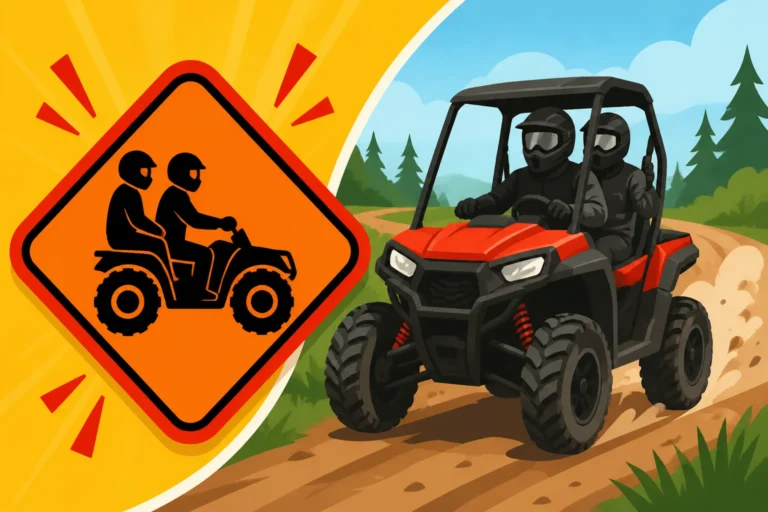
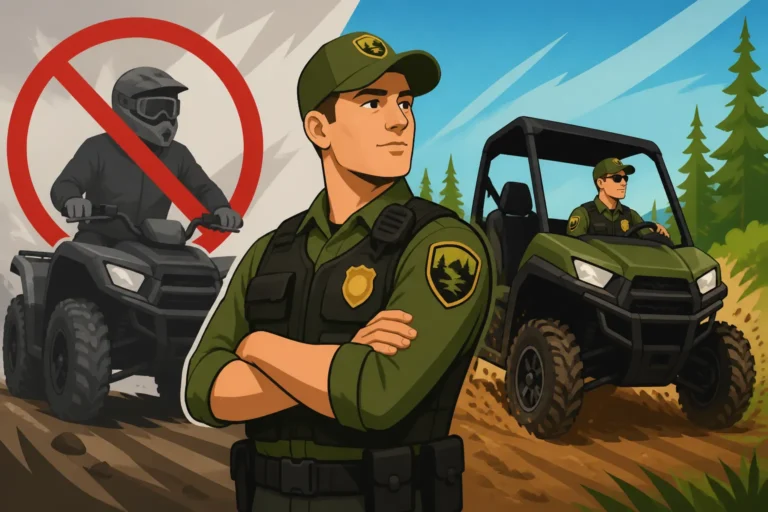
One of the most fundamental rules of ditch riding in Manitoba is incredibly clear: you can only operate your off-road vehicle in the ditch on the right-hand side of the roadway, relative to the direction of vehicle traffic. This might seem like a small detail, but it’s a massive one for safety. Imagine a busy road with cars zipping by; if you're riding in the ditch on the opposite side of traffic flow, you become a hard-to-predict hazard for drivers, who are often not looking for traffic coming at them from the ditches. The simple logic here is to maintain a predictable pattern of movement that aligns with established road safety principles.
This means if you're travelling northbound on a road, you must be in the ditch to the east. If you're going southbound, you'll be in the ditch to the west. It sounds straightforward, but in practice, riders often find themselves needing to switch directions or navigate around obstacles, which can lead to confusion. Always remember: the goal is to ride in a way that is consistent with the flow of traffic on the adjacent road, staying in that right-hand ditch. Ignoring this rule isn't just a minor infraction; it can put you directly in harm's way, and it’s one of the first things an officer will look for if they observe you operating near a roadway. This foundational principle is echoed in [Manitoba Ditches to the Right of a Roadway] and reinforced by [Only One Ditch of the Two Is Legal].
Why Your Machine Matters
Not every off-road vehicle is treated equally when it comes to ditch riding in Manitoba. While ATVs and UTVs (often referred to as side-by-sides) are generally permitted in the designated right-hand ditches, certain other four-wheel-drive vehicles are explicitly barred. For instance, you might see a modified Jeep or pickup truck with off-road tires, but these vehicles are typically not considered "off-road vehicles" under the Act for ditch riding purposes. The regulations are specifically tailored to the types of machines designed for trail and off-road use, not road-going vehicles that happen to have four-wheel drive.
This distinction is crucial because it speaks to the intent and design of the vehicle. ATVs and UTVs are built to handle uneven terrain, have specific weight and dimension characteristics, and are generally slower-moving than road vehicles. A large truck, even if it's capable of going off-road, presents a different set of safety considerations and impacts on the ditch environment. So, before you head out, make sure your machine fits the legal definition of an off-road vehicle permitted to be in the ditch. If you're riding something like a utility vehicle that might blur the lines, it’s always best to err on the side of caution and consult the regulations or an Autopac agent. You can find more detail on this in [Why a Jeep May Not Ride a Ditch].
Municipal By-Laws and Their Impact
Here's where things can get a little tricky for riders: provincial rules provide the overarching framework, but individual municipalities in Manitoba have the power to create their own by-laws concerning off-road vehicle use within their boundaries. This means that what's perfectly legal in one rural municipality might be prohibited or heavily restricted just a few kilometers down the road in a different town or Local Government District. It's a localized patchwork that can catch even experienced riders off guard.
These by-laws can dictate specific hours of operation, prohibit ORV use on certain streets or within residential areas, or even impose outright bans on ditch riding in particular zones. For example, a village might decide that for safety reasons, ORV use in ditches within its core residential area is not allowed, even if the provincial rules would otherwise permit it. The onus is on the rider to know the local rules of the area they're riding in. Before embarking on a long trip that spans different municipalities, it's a wise practice to check the websites of the relevant local governments or make a quick call to their offices. This proactive approach can save you from an unexpected ticket or, worse, a preventable accident.
Navigating Traffic Flow in the Ditch
The directive to travel "with traffic" in the ditch isn't just a suggestion; it's a critical safety measure embedded in Manitoba's off-road vehicle regulations. When you're operating an ORV in a ditch adjacent to a roadway, you are, in essence, sharing that corridor with other forms of traffic. While you're not on the paved surface, your movements still need to be predictable and aligned with the general flow of vehicles on the road. This synchronization is paramount for preventing collisions, as drivers on the road are accustomed to traffic moving in a specific direction.
Staying With the Flow of Traffic
When the provincial regulations state that you must travel in the ditch with the flow of traffic, it means exactly that: if vehicles on the adjacent road are moving north, your ORV in the ditch should also be moving north. This principle of "Travelling the Same Way as Traffic" ensures that you are always on the right-hand side ditch relative to your direction of travel and that you are approaching any intersections or road features from a predictable angle. Imagine a driver checking their mirrors or making a turn; they expect to see movement in a consistent direction. If you're coming at them from an unexpected angle in the ditch, it creates a significant and dangerous surprise.
This rule also helps with visibility. When you're moving with traffic, other road users who might briefly glance into the ditch are more likely to register your presence and direction. It’s a subtle but powerful way to reduce the risk of an incident. It's not about matching the speed of traffic (your machine is almost certainly slower and shouldn't be on the roadway anyway), but about aligning your directional movement. This simple rule is a cornerstone of safe ditch riding and one that every Manitoban ORV operator needs to internalize and consistently follow, especially given the shared nature of these corridors.
Hazards of Contra-Flow Riding
Riding against the flow of traffic in a ditch, often called "contra-flow" riding, is not only illegal in Manitoba but also incredibly dangerous. Picture yourself on a trail heading one way, while cars are speeding past in the opposite direction on the road next to you. The visual and spatial disorientation this creates for both you and the drivers is immense. For drivers, seeing an ORV moving against traffic in the ditch can be startling and confusing, leading to sudden braking or swerving. Your presence becomes an unpredictable element that increases the likelihood of an accident.
From your perspective as the ORV operator, contra-flow riding significantly reduces your reaction time. Vehicles on the road are approaching you at combined speeds, meaning you have less time to see and react to potential hazards, whether it's a vehicle turning into the ditch, an obstruction, or even another ORV. Moreover, it makes it much harder to safely cross roadways or merge with other traffic. The rules are designed to put you in the safest possible position when you're near busy roadways, and riding against traffic fundamentally undermines that safety. This is a primary reason for the clear directive: ditch riding must always be [Travelling the Same Way as Traffic].
Situational Awareness and Safety
Operating an ORV in a ditch requires a heightened level of situational awareness, arguably more so than riding on a dedicated trail. You're not just contending with the terrain of the ditch itself – which can be uneven, full of hidden obstacles, or have varying depths – but also with the dynamic environment of the adjacent roadway. This means constantly monitoring traffic flow, anticipating turns, and being aware of driveways or culverts where vehicles might enter or exit the ditch area.
Effective situational awareness includes:
- Checking mirrors frequently: If your UTV has mirrors (and many do, some even from aftermarket brands like SuperATV that focus on utility and safety), use them. Even on an ATV, actively turning your head to scan behind you is critical.
- Listening for traffic: The sound of approaching vehicles can give you an early warning, especially if visibility is limited by brush or terrain.
- Scanning ahead: Look far down the road and ditch line to identify potential conflict points like intersections, blind curves, or parked vehicles.
- Being seen: Ensure your lights are on, especially at dawn, dusk, or in poor weather. Consider bright clothing.
Riding defensively means always assuming that drivers on the road might not see you, and being prepared to react safely. It’s a constant dance between enjoying your ride and being acutely aware of your surroundings to prevent any unpleasant surprises.
Crossing Roadways From the Ditch
While ditch riding can be a convenient way to get from one section of a trail system to another, or even to access a local business, you’ll inevitably encounter situations where you need to cross a paved roadway. This is arguably one of the most hazardous maneuvers an ORV operator can make, and Manitoba has very specific rules designed to minimize that risk. Simply put, you can't just cross anywhere you please. There are designated distances and prerequisites that must be met to ensure the safety of everyone involved. These rules are in place because crossing a highway or road, even a less busy one, places your off-road machine directly in the path of much larger and faster-moving vehicles.
The "Five Metres from an Intersection" Rule
When you need to cross a roadway from the ditch, one of the primary rules to remember is that you must do so within five metres of an intersection. This specific distance, [5 Metres From an Intersection], isn't arbitrary; it's a safety measure. Intersections are typically areas where drivers on the main road are already anticipating slower speeds, turning traffic, and potential hazards. They are generally more alert to their surroundings, and the sightlines are often clearer than in mid-block locations.
By mandating that you cross within five metres, the regulations aim to consolidate ORV crossings into these already high-alert areas. This reduces the element of surprise for drivers. It’s crucial to understand that "within five metres" means close to the intersection, not exactly at the painted lines, and you must always yield to all other traffic, pedestrians, and cyclists before making your move. A proper crossing involves coming to a complete stop, looking both ways multiple times, and only proceeding when you have a clear and safe opportunity. This also means [Manitoba Crossings Need a Clear View] and that you should cross [Manitoba Crossings One Machine at a Time].
When to Cross Further Away (3 Kilometres)
While crossing within five metres of an intersection is the general rule, there’s an important exception that applies when intersections are very close together. If the next intersection is less than three kilometres away, you are actually required to cross at a point at least three kilometres from the nearest intersection. This sounds counterintuitive, but it’s another safety measure designed to avoid creating multiple, close-proximity crossing points that could confuse drivers. [3 Kilometres From the Nearest One] highlights this specific distance.
Imagine a situation where there are multiple cross roads or driveways in very quick succession. If ORVs were crossing at every single one, it would create an unpredictable and chaotic environment for road users. By consolidating crossings to either very near an intersection or a considerable distance away from any intersection (if they are too frequent), the rule aims to create predictable patterns. This scenario requires careful planning if you’re riding in an area with many closely spaced side roads. Always check your route and be mindful of intersection spacing to ensure you're crossing at a legally permissible and safe location.
Driver's Licence Requirements for Crossings
One of the most frequently misunderstood aspects of ORV operation, especially concerning roadway crossings, is the requirement for a valid driver's licence. Many riders believe that because they’re on an off-road vehicle, a driver's licence isn't necessary. However, if you plan to cross a provincial highway or any public road, you must possess a valid driver's licence of any class (Class 1-6). This is clearly stated in [Manitoba Crossings Need a Driver's Licence]. This means a learner's permit (Class 7) typically won't cut it for crossing a highway, though it may allow you to ride in the ditch with proper supervision.
This requirement underscores the serious nature of roadway crossings. Operating an ORV on a public thoroughfare, even for a brief crossing, demands the same level of judgment, understanding of traffic laws, and responsibility as driving a car. A driver's licence indicates that you've passed the basic tests of road knowledge and driving skill, which are essential when interacting with active road traffic. Failing to have a valid licence while crossing a road can result in significant fines and penalties, and it compromises your ability to make safe decisions in a potentially high-risk situation. It's a non-negotiable prerequisite for anyone undertaking this particular maneuver.
Exemptions and Special Considerations for Ditch Travel
While the general rules for ditch riding in Manitoba are quite clear, the province also acknowledges that there are specific situations and needs that warrant exceptions or different considerations. These exemptions aren't carte blanche to ignore all rules, but rather carefully carved-out allowances for particular purposes or in certain geographic areas. Understanding these special cases is crucial, as they apply to a relatively small segment of the riding population, but can be a game-changer for those who qualify. Always remember that an exemption for one rule does not grant permission to disregard all others; safety and responsible operation remain paramount.
Agricultural Shoulder Exception
Farmers in Manitoba have a unique set of circumstances that often require them to move machinery between fields or to and from their homesteads. Recognizing this, the regulations include an "agricultural shoulder exception" that permits ORVs used for agricultural purposes to operate on the shoulder of a provincial road. This is distinct from ditch riding, as it involves the paved or gravel shoulder adjacent to the roadway, not necessarily the ditch itself. [Manitoba Shoulder Riding for Farming Only] goes into more depth on this.
However, this exception comes with strict conditions. The ORV must be actively used for farming, and the operator must take the most direct route. Furthermore, the machine must display a slow-moving vehicle sign, clearly indicating its presence and slower speed to other drivers. This sign, discussed in [The Slow-Moving Vehicle Sign a Farm Quad Needs], is a vital safety feature. The maximum speed for an ORV on a shoulder under this exemption is typically capped at a lower speed (often around 40 km/h) to minimize the speed differential with regular traffic. This exemption is not for recreational riding; it's a practical allowance for the needs of the agricultural community.
Remote Community Riding Privileges
For residents of Manitoba's remote communities, life often involves relying on off-road vehicles for transportation, hunting, trapping, and accessing resources, especially where conventional roads are scarce or non-existent. The province acknowledges this reality by offering certain privileges regarding ORV use within these designated remote communities. In many of these areas, local by-laws may permit ORVs to be operated on public roads or streets where it would be prohibited elsewhere.
The key here is that these allowances are typically governed by specific local by-laws, which can vary significantly from one remote community to another. What constitutes a "remote community" is also defined within the regulations, generally referring to areas not served by an all-weather road. For residents in these areas, an ORV isn't just a recreational toy; it's a vital tool for daily life. However, even with these expanded privileges, safety rules like speed limits, helmet requirements (though some exemptions might apply in specific situations above the 53rd parallel, for example), and responsible operation still apply. It's never a free-for-all, but a recognition of unique transportation needs.
Dealer Plates and Exempted Travel
For those involved in the sale, repair, or demonstration of off-road vehicles, there's another specific exemption that allows for certain movements of unregistered machines. When an ORV is on a dealer's lot, or being transported for a test drive, repair, or delivery, it can be operated with a valid dealer plate. This plate temporarily covers the machine, allowing for its movement on roads or in ditches for legitimate business purposes without needing individual registration.
This exemption is critical for the industry, allowing dealerships to conduct their operations efficiently. However, it's not a loophole for personal use. The operation must be directly related to the dealer's business, such as moving a new UTV from the storage lot to the showroom, or conducting a supervised test drive. If you're a potential buyer, remember that while the machine might be on a dealer plate, you're still expected to follow all operating rules, including helmet laws and safe driving practices. Dealerships like those stocking SuperATV accessories often have their own internal policies to ensure safe and compliant demonstrations. This exemption simplifies the business process while still maintaining accountability for vehicle movements.
Equipment and Preparedness for Ditch Riding
Riding your ATV or UTV in Manitoba's ditches isn't just about knowing the rules of the road; it's also about ensuring your machine is properly equipped and that you, as the operator, are prepared for any eventuality. The conditions in a ditch can be varied – from soft shoulders to rocky patches, and from clear visibility to overgrown areas. Having the right equipment isn't just a matter of convenience; it’s often a legal requirement and, more importantly, a critical component of your safety and the safety of others.
Essential Lighting Requirements
Visibility is paramount when operating an ORV near public roadways, especially in ditches. This is why Manitoba's regulations have clear rules about lighting. Your off-road vehicle must be equipped with at least one headlight and one taillight, and these lights must be illuminated from half an hour before sunset until half an hour after sunrise, or at any other time when visibility is poor. [Lights From Half an Hour Before Sunset] emphasizes this. This isn't just for you to see the ditch; it's so that drivers on the adjacent road can see you.
Many modern ATVs and UTVs come with adequate lighting from the factory. However, if you have an older machine, or if you plan to ride extensively in conditions with reduced visibility, consider upgrading or adding auxiliary lighting. Aftermarket solutions, sometimes available from brands like SuperATV, can significantly improve your forward visibility and make your machine more conspicuous from behind. Regularly check that your lights are clean, functioning correctly, and properly aimed. A burnt-out bulb isn't just an inconvenience; it's a safety hazard and a potential ticket.
Spark Arresters and Fire Safety
Manitoba's natural landscapes are beautiful but also vulnerable, particularly to wildfires. As such, all off-road vehicles operating in the province must be equipped with a spark arrester that is in good working order. A spark arrester, usually located in the muffler system, prevents hot carbon particles from escaping the exhaust and potentially igniting dry grass, leaves, or other flammable materials. This requirement is in effect year-round, not just during peak fire season.
This seemingly small piece of equipment plays a huge role in fire prevention. A single spark from an improperly maintained exhaust can rapidly escalate into a devastating wildfire, threatening lives, property, and natural habitats. Operators are responsible for ensuring their spark arrester is installed and functioning correctly. Regular maintenance, including checking for damage or blockages, is crucial. If you’re unsure about your machine’s spark arrester, consult your owner’s manual or a qualified mechanic. Being proactive about fire safety is a responsibility shared by all outdoor enthusiasts.
Carrying Your Registration Card
It might seem like a minor administrative detail, but carrying your ORV registration card with you at all times while operating your machine is a legal requirement in Manitoba. Think of it like carrying your driver's licence and vehicle registration when you're driving your car; it’s proof that your machine is legally registered and ready for the trail or ditch. [Carrying Your Registration Card on Every Ride] is a key point to remember.
An enforcement officer, such as an RCMP officer or a Conservation Officer, has the authority to request proof of registration at any time. If you can't produce it, you could face a fine. Beyond the legal aspect, having your registration card handy contains vital information about your machine, which could be important in case of an accident or breakdown. Many riders use waterproof pouches or storage compartments on their machines to keep their documents safe and dry, ensuring they’re always accessible. It’s a simple step that shows you're a responsible operator and helps avoid unnecessary complications during a ride.
Key Ditch Riding Scenarios in Manitoba
| Scenario | Legal Ditch Side | Direction of Travel | Road Crossing Rules | Special Notes |
|---|---|---|---|---|
| Connecting Trails | Right-hand ditch | With traffic flow | Within 5m of intersection OR 3km if next int. < 3km. Must have valid driver's licence. | Most common use. Be extra vigilant near populated areas. |
| Accessing a Business | Right-hand ditch | With traffic flow | Within 5m of intersection OR 3km if next int. < 3km. Must have valid driver's licence. | Check local by-laws, as some areas prohibit ORVs on streets or near businesses. |
| Farm Operation | Right-hand ditch or shoulder | With traffic flow | Standard crossing rules apply. | Must be for bona fide agricultural purposes, display slow-moving vehicle sign. |
| In a Remote Community | Varies by local by-law | Varies by local by-law | Varies by local by-law, potentially relaxed for essential travel. | Check specific community by-laws. Often more leeway for essential transport. |
| Riding Against Traffic (Contra-Flow) | Left-hand ditch or right-hand | Against traffic flow | Illegal | Highly dangerous and strictly prohibited. Risk of severe penalties and accidents. |
| Using a Non-ORV in the Ditch | N/A (e.g., Jeep, Truck) | N/A | N/A | Generally prohibited. Ditch riding rules apply specifically to designated ORVs. |
Disclaimer
This article is for general informational purposes only and does not constitute professional advice. Laws, prices and regulations vary by location and change over time. Consult a qualified professional for guidance on your specific situation.