Towing With a Rigid Bar Under 3 Metres
Getting stuck out on a trail in Manitoba with a broken-down ATV or UTV is every rider's nightmare. You're miles from the nearest road, your machine won't budge, and you're left wondering how on earth you're going to get it back to civilization. This guide dives deep into one specific, legal, and often safest solution for those challenging situations: towing with a rigid bar, specifically why Manitoba law mandates it be under 3 metres, and how to do it right.
Why Manitoba Regulates Towing Methods for Off-Road Vehicles
When you're out exploring the vast and beautiful landscapes of Manitoba, whether it's the dense forests of the Eastman region or the sprawling trails of the Interlake, the last thing you want to think about is your machine breaking down. But accidents happen, and mechanical failures are a fact of life for even the most well-maintained ATVs and UTVs. When that moment comes, and you need to tow your machine, it's crucial to understand that simply chaining it up to another quad and pulling away isn't always safe or legal. Manitoba has specific regulations in place for towing off-road vehicles (ORVs), and for good reason: safety. These rules are designed to protect you, your fellow riders, and other trail users from preventable accidents. Ignoring them can lead to serious risks and, yes, even fines from a conservation officer or local RCMP.
The Dangers of Improper Towing
I've seen it firsthand on the trails, and maybe you have too. Someone tries to tow a buddy's broken quad with a stretchy rope, and the towed machine ends up slamming into the back of the tow vehicle when the rope goes slack. Or worse, the rope snaps under tension, flinging dangerously through the air, or the towed machine careens off the trail because it's not securely attached. These scenarios aren't just inconvenient; they're incredibly dangerous. Improper towing can lead to:
- Loss of control: A towed ORV that isn't properly attached or has too much slack can become a projectile or swerve unpredictably, especially on uneven terrain or around corners.
- Collisions: Sudden stops or changes in speed can cause the towed vehicle to crash into the one doing the towing.
- Equipment damage: Using the wrong towing equipment or attaching it improperly can damage the frames, hitches, or suspension of both vehicles.
- Injuries: Beyond the immediate crash risk, unsecured or improperly towed machines can cause severe injuries to operators, passengers, or even bystanders.
Manitoba's regulations aim to mitigate these risks by setting clear standards, and the rigid bar rule is a prime example of this proactive safety approach. It's not about making things harder; it's about making things safer. You might be surprised at what an officer can ask to see in Manitoba when it comes to your setup, so being prepared is key.
Legal Implications of Non-Compliance
Beyond the safety aspect, there are real legal consequences for not adhering to Manitoba's towing rules. If you're stopped by an enforcement officer and found to be towing an ORV improperly, you could face penalties. This isn't just a slap on the wrist; these can include significant fines. More critically, if an accident occurs due to improper towing, your actions could be deemed "careless operation," which carries even steeper penalties and potential liability issues. [Manitoba Careless Operation Penalties] are no joke and can seriously impact your riding privileges and wallet. It's always better to take the extra time to ensure your setup is compliant and safe rather than risking an incident that could ruin your day, or even your season. While [Manitoba Insurance Included With Registration] provides some basic coverage, serious incidents due to negligence might not be fully covered, leaving you in a financial bind.
The Rigid Bar: Why Under 3 Metres Matters for ORV Towing
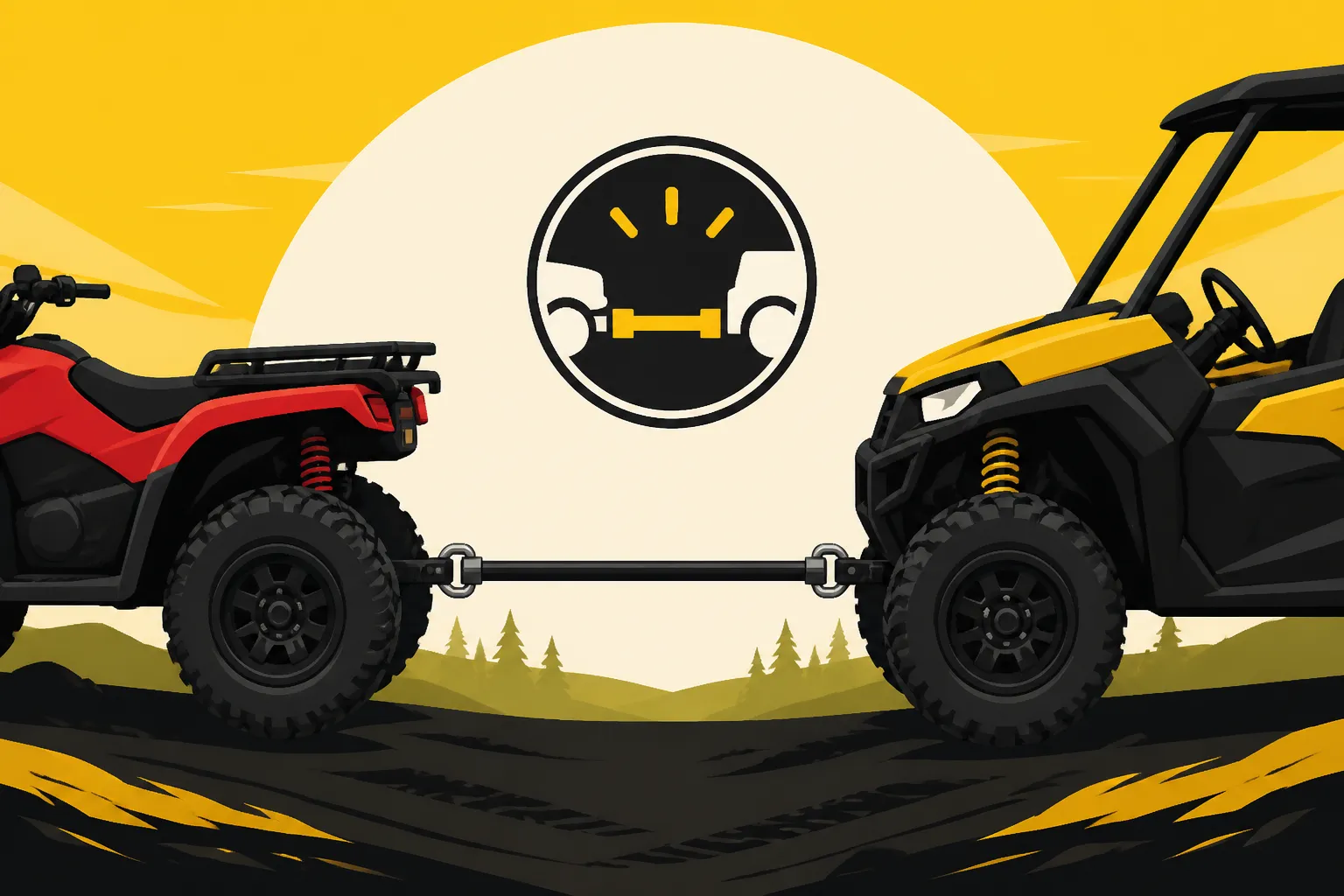
When it comes to towing a disabled ATV or UTV in Manitoba, the law specifically points to a rigid bar as the preferred method, with a critical length restriction: it must be less than 3 metres long. This isn't an arbitrary number; it's a carefully considered safety measure designed to maintain control and prevent accidents, especially when navigating unpredictable off-road terrain. Understanding why this specific length is mandated helps you appreciate the wisdom behind the rule.
Maintaining Control and Proximity
A rigid bar's primary advantage over ropes or chains is that it keeps a constant, fixed distance between the towing and towed vehicles. This eliminates the dangerous slack that can develop with flexible towing lines. Imagine trying to navigate a tight bush trail or a muddy section with a rope that constantly stretches and contracts. The towed machine would be surging forward and backward, making it incredibly difficult for the operator of the tow vehicle to maintain a steady pace or react to obstacles. The 3-metre limit ensures:
- Enhanced Steering Control: With a shorter rigid connection, the towed vehicle effectively becomes an extension of the tow vehicle, allowing for more precise steering and turning. This is crucial on winding trails where sudden directional changes are common.
- Reduced Braking Distance: The shorter distance means less momentum for the towed vehicle to build up, making it easier for the tow vehicle to manage its weight and come to a controlled stop. This prevents the towed machine from "jack-knifing" or colliding with the tow vehicle during deceleration.
- Clearer Communication: A shorter distance also means the operators are closer, making visual and verbal communication much easier. Hand signals or shouts are more likely to be seen or heard, which is vital for coordinating movements, especially when traversing challenging terrain.
This fixed, close proximity is a game-changer for safety and control, making the under 3-metre rigid bar a far superior option for most ORV towing scenarios on the trails compared to a longer, flexible connection. You might see a similar principle applied in [Manitoba Towing Rules for a Sled], highlighting a consistent approach to safe towing across different ORV types.
Preventing Whiplash and Sway
One of the biggest hazards of towing with a long, flexible connection is the potential for the towed vehicle to develop dangerous side-to-side sway or to "whiplash" forward and backward. This is especially true when traversing uneven ground, crossing ditches, or going over bumps. A rigid bar, particularly one under 3 metres, fundamentally changes this dynamic:
- Eliminates Slack: Because the bar is rigid, there's no slack to absorb, preventing the sudden jerking motions that can throw off the balance of both machines and their riders.
- Minimizes Sway: The short, fixed connection greatly reduces the ability of the towed vehicle to swing independently. This stability is paramount on narrow trails or when navigating obstacles, keeping both machines in a predictable line of travel.
- Predictable Behaviour: With a rigid bar, the towed machine's movements are directly dictated by the tow machine. This predictability allows the tow operator to anticipate how the entire "train" will react, improving overall safety and reducing surprises.
Think of it like trying to lead a dog on a very long leash versus a short one. With a long leash, the dog has a lot of room to wander and pull in different directions. With a short, rigid leash, its movements are much more controlled and predictable, staying close by your side. That's essentially the benefit the 3-metre rigid bar provides for ORV towing.
Practical Considerations for Towing with a Rigid Bar
Okay, so you understand why a rigid bar under 3 metres is the preferred and often legally mandated method for towing a disabled ORV in Manitoba. Now, let's talk about the practical side of things. Having the right equipment and knowing how to use it safely can make a world of difference when you're stuck far from home. This isn't just about avoiding a ticket; it's about making a tough situation as manageable and safe as possible.
Choosing and Inspecting Your Rigid Bar
Not all rigid bars are created equal, and choosing the right one for ORV use is crucial. You'll want something robust, durable, and specifically designed for the forces involved in towing. Many reputable brands offer such equipment. For instance, SuperATV provides a range of heavy-duty hitches and towing accessories that can be adapted for rigid bar setups, ensuring you have reliable connection points.
Here's what to look for and consider:
- Material Strength: Look for heavy-gauge steel or another high-strength alloy. It needs to withstand the weight and dynamic forces of a towed ORV without bending or breaking.
- Attachment Points: Ensure the bar has secure, strong attachment points that can connect firmly to the hitches or recovery points on both the towing and towed vehicles. Shackles, pins, and clevises should be robust and rated for towing. Avoid any bar that relies on flimsy clips or hooks.
- Length: Double-check the length. It must be under 3 metres to comply with Manitoba regulations. Measure it if you're unsure.
- Visibility: Some rigid bars come with reflective tape or bright colours. While not legally required for a rigid bar itself, adding a small red flag or cloth to the middle of the bar can increase visibility, especially in low light or dusty conditions.
- Condition: Before every ride where you might need to tow, quickly inspect your rigid bar. Look for rust, cracks, bends, or damage to the attachment points. A compromised bar is a dangerous bar. If it looks suspect, replace it.
Proper Attachment and Operation
Even the best rigid bar is useless if it's not attached correctly or if the operators aren't on the same page. This is where attention to detail and clear communication really matter.
- Secure Connection: Attach the rigid bar to a designated towing point on both machines. For most ATVs and UTVs, this will be a hitch receiver, a sturdy bumper, or a reinforced frame point. Never attach it to an axle, a suspension component, or anything that could bend, break, or interfere with steering. Make sure all pins are fully seated and secured with cotter pins or clips.
- Clear the Path: Before moving, ensure there are no loose ropes, chains, or accessories hanging from either machine that could get caught in tires or moving parts.
- Operator Communication: This is paramount. The operator of the towed vehicle must be able to steer and, if possible, brake. They need to know what the tow vehicle is going to do. Agree on hand signals for "stop," "slow down," "turn left," "turn right," and "all clear." Verbal communication, if possible (e.g., via helmet communicators), is even better.
- Slow and Steady Wins the Race: Towing is not a race. Maintain a slow, consistent speed. Avoid sudden acceleration, sharp turns, or abrupt braking. The goal is a smooth, controlled journey.
- Watch the Terrain: The tow vehicle operator needs to be extra vigilant, choosing the easiest path, avoiding deep ruts, large rocks, or steep inclines that could destabilize the towed machine. The towed operator also needs to keep an eye on the path and react accordingly.
- Braking: If the towed ORV has working brakes, its operator should assist in braking to prevent pushing the tow vehicle. If not, the tow vehicle must compensate for the extra weight.
- Turning: Make wide, gradual turns. The rigid bar limits articulation, so sharp turns can put immense strain on the connection points or even cause one of the machines to tip.
Remember, [Manitoba ORV Road Rules Explained] covers general operating procedures, and while towing off-road is different, the underlying principle of safe and controlled operation always applies.
Alternatives and When Not to Use a Rigid Bar
While a rigid bar under 3 metres is often the safest and legally compliant choice for towing a disabled ORV in Manitoba, it's not the only option, nor is it always the best option for every scenario. Understanding the limitations of a rigid bar and knowing when other methods might be necessary or when you should simply call for professional help is crucial for responsible riding.
When a Rigid Bar Excels (and When it Doesn't)
A rigid bar shines in situations where you need precise control over the towed vehicle and where the terrain is somewhat predictable.
Ideal Scenarios for a Rigid Bar:
- Controlled Descent/Ascent: On moderate slopes, the rigid connection prevents the towed machine from rolling freely or slamming into the tow vehicle.
- Muddy/Soft Terrain: By keeping the machines in close proximity, it's easier to maintain momentum and navigate challenging ground without the towed vehicle getting bogged down and creating slack.
- Short to Medium Distances: For getting back to a truck or a main road a few kilometres away, a rigid bar is efficient and safe.
- Steering & Braking Functionality: If the towed ORV still has working steering and at least some braking capability, a rigid bar allows the operator to assist, significantly improving safety.
Situations Where a Rigid Bar Might Be Challenging or Inappropriate:
- Severely Damaged ORV: If the towed machine has non-functional steering, brakes, or severely compromised wheels, a rigid bar might not provide enough control, even with an operator on board.
- Very Tight, Technical Trails: While a rigid bar offers control, its fixed length limits the articulation between machines. Extremely tight, winding trails might become impossible to navigate without damaging the vehicles.
- Long-Distance Towing (Highway): A rigid bar is for getting off the trail, not for towing down a highway. If you're planning to transport a machine over a significant distance on public roads, it needs to be loaded onto a trailer. This is a key part of [Manitoba ORV Road Rules Explained].
- Heavy ORV with Light Tow Vehicle: Always ensure the tow vehicle is sufficiently capable of safely pulling the disabled machine. Overloading the tow vehicle can lead to a loss of control.
Other Towing Methods (and Their Limitations)
While not always ideal or legally preferred for ORVs on trails, other towing methods exist, primarily for specific uses or as a last resort.
- Tow Ropes or Chains: These are common, but they come with significant drawbacks for ORVs.
- Pros: Flexible, compact to carry, can be used for pulling out stuck machines.
- Cons: Lack of constant tension leads to dangerous slack, making collisions, whiplash, and loss of control highly probable. They don't provide the same level of control as a rigid bar for sustained towing. They're generally not advised for towing a disabled ORV over any distance on a trail in Manitoba if a rigid bar is an option, and could be seen as non-compliant with the spirit of the law, which prioritizes rigid connections.
- Best Use: Primarily for short-distance recovery from being stuck, not for towing a disabled machine for miles.
- Winches: Integral for self-recovery or assisting a stuck buddy.
- Pros: Powerful, controlled pulling force, ideal for getting out of mud, snow, or steep predicaments.
- Cons: Not designed for sustained towing of a disabled vehicle over a distance. Requires a fixed anchor point. Slow.
- Best Use: Recovery from being stuck.
Ultimately, the goal is always to get your machine home safely and legally. If your machine is truly incapacitated, or the terrain is too dangerous for even a rigid bar, sometimes the best course of action is to call for professional help, arrange for a proper trailer, or use a vehicle that is designed for heavy towing and highway travel. Always carry a cell phone or satellite communicator in case of emergencies, and be aware of [Manitoba Accident Reporting Rules] if the situation escalates.
Towing Equipment Comparison Table
To help you visualize the different options and their characteristics, here's a quick comparison of common towing methods for ORVs:
| Feature | Rigid Bar (< 3 metres) | Tow Rope / Chain | Winch |
|---|---|---|---|
| Control | Excellent (fixed link) | Poor (slack, whiplash risk) | Excellent (controlled pull) |
| Safety | High (prevents collision) | Low (high accident risk) | Moderate (snapping cable risk) |
| Distance | Short-Medium (trail use) | Very Short (recovery only) | Very Short (recovery only) |
| Speed | Slow, controlled | Variable, unpredictable | Very slow |
| Operator Needed | Two (one for each machine) | Two (one for each machine) | One (operates winch) |
| Manitoba Legality | Preferred/Mandated for towing | Discouraged for towing, risks non-compliance | Recovery, not towing |
| Typical Use | Towing disabled ORV on trail | Pulling stuck ORV out of mud | Self-recovery, assisting stuck ORV |
Remember, this table highlights general characteristics. For actual towing of a disabled ORV over a distance on Manitoba trails, a rigid bar under 3 metres is consistently the safest and most legally sound choice.
Disclaimer
This article is for general informational purposes only and does not constitute professional advice. Laws, prices and regulations vary by location and change over time. Consult a qualified professional for guidance on your specific situation.