5 Metres From an Intersection
It's incredibly frustrating when you're out enjoying the vast trails and open spaces of Manitoba on your ATV or UTV, only to hit a paved road or highway and feel completely uncertain about the rules for crossing. Many riders get confused about how close they can be to an intersection, leading to hesitation, illegal moves, or even costly tickets. This guide is here to untangle the complexities of Manitoba's off-road vehicle (ORV) roadway crossing regulations, especially focusing on that critical "5 metres from an intersection" rule, so you can ride confidently and safely.
Understanding Manitoba's Fundamental Roadway Restrictions
Let's face it, one of the biggest misconceptions many new (and even some seasoned) ORV riders have is thinking they can just zip across any paved road or even ride a short stretch on it to get from one trail section to another. It seems logical, right? Quick, easy, and gets you where you need to go. But Manitoba's rules are quite specific, and for good reason.
The General Prohibition Against Roadway Use
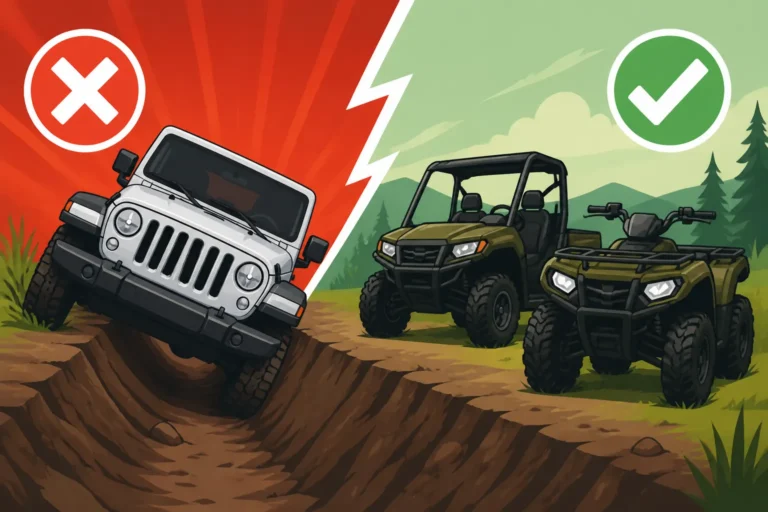
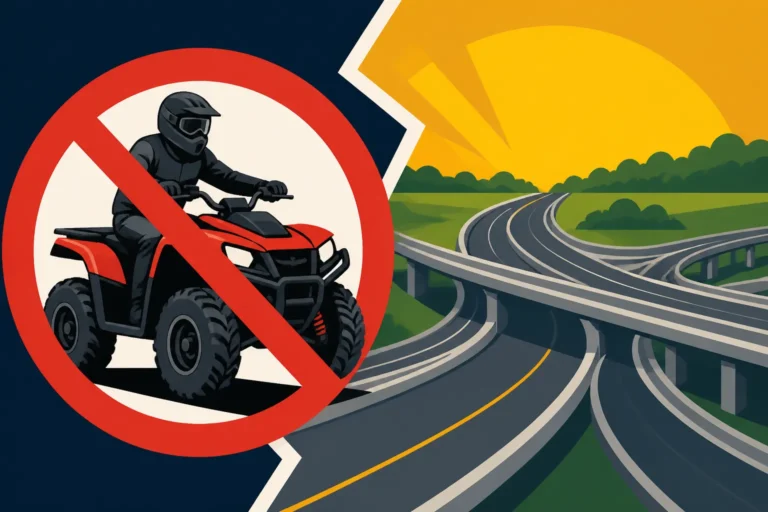
The core of it all is simple: [Manitoba Bans Riding on Roadways]. This isn't just a suggestion; it's a fundamental rule. An off-road vehicle, by its very definition and design, isn't meant for paved public highways or roads where cars and trucks travel at much higher speeds. Your ATV or UTV is built for rough terrain, mud, rocks, and dirt – not for smooth asphalt or concrete. The tires are different, the suspension is different, and the visibility to other traffic can be severely limited.
Think about it from a safety perspective. A side-by-side, even a powerful one, doesn't accelerate or brake like a car. It doesn't have the same crash protection, and its handling characteristics are entirely unsuited for high-speed road travel. Trying to mix these vehicles on a busy provincial road is a recipe for disaster. The law recognizes this inherent danger, which is why the default position is a firm "no." This prohibition applies to the travelled portion of the road, meaning the part that cars actually drive on. It also extends to medians, which are the strips of land separating opposing lanes of traffic on divided highways. They might look like an extension of the ditch, but they are absolutely off-limits. Riders often get frustrated because these roads can sometimes seem like the only way to connect trail systems, but the law prioritizes the safety of all road users.
The Ditch Riding Conundrum: What's Allowed and What's Not
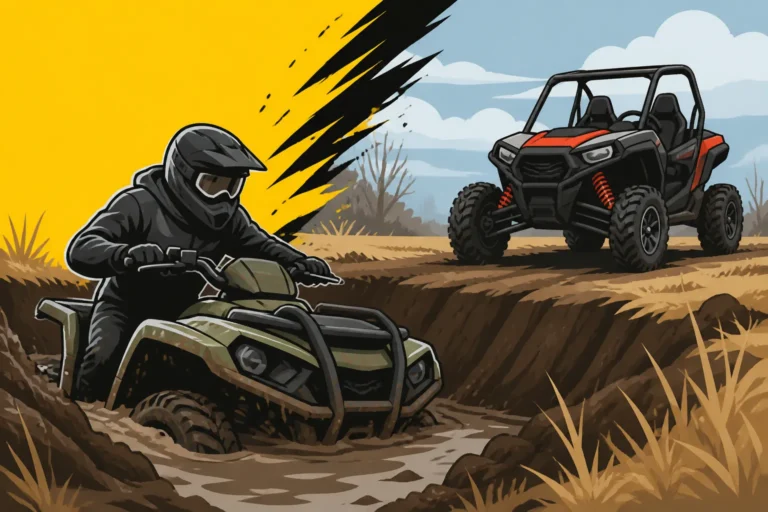
Now, this is where things get a bit more nuanced and where many riders find themselves scratching their heads. While riding on the paved roadway is generally forbidden, many assume that the ditch, being "off-road," is always fair game. This isn't entirely true either. Manitoba has specific [Manitoba Ditch Riding Rules]. Yes, in many areas, riding in the ditch can be permissible, but it comes with significant caveats and restrictions that are crucial to understand.
The primary rule you need to engrave in your mind when it comes to ditches is that [The Only Legal Ditch Is on Your Right]. This means if you're travelling alongside a road, you must always be in the ditch to the right of the direction of traffic flow. You cannot cross over to the left-hand ditch, even if it looks like an easier ride or offers a better path. This rule exists for similar safety reasons as the roadway prohibition: it reduces the chance of head-on collisions with oncoming traffic if an ORV were to somehow enter the roadway from the wrong side, and it makes you more predictable to other drivers. Furthermore, not all ditches are created equal. Some ditches are incredibly steep, filled with culverts, or have hidden obstacles that make them unsafe for ORV travel. Other ditches might be on private land where you haven't secured permission, or within municipal boundaries where local bylaws prohibit ORV use entirely. It's not enough to simply be "off the pavement"; you need to ensure you're in a legal and safe ditch, always on the right side, and constantly aware of any local restrictions that might apply.
The Specifics of Intersection Crossings: The 5-Metre Rule Explained
So, you can't ride on the road, and ditch riding has its rules. But what about getting from one side of a provincial road or highway to the other when your trail continues on? This is where specific crossing rules come into play, and the "5 metres from an intersection" rule is one of the most important to grasp.
Why 5 Metres From an Intersection?
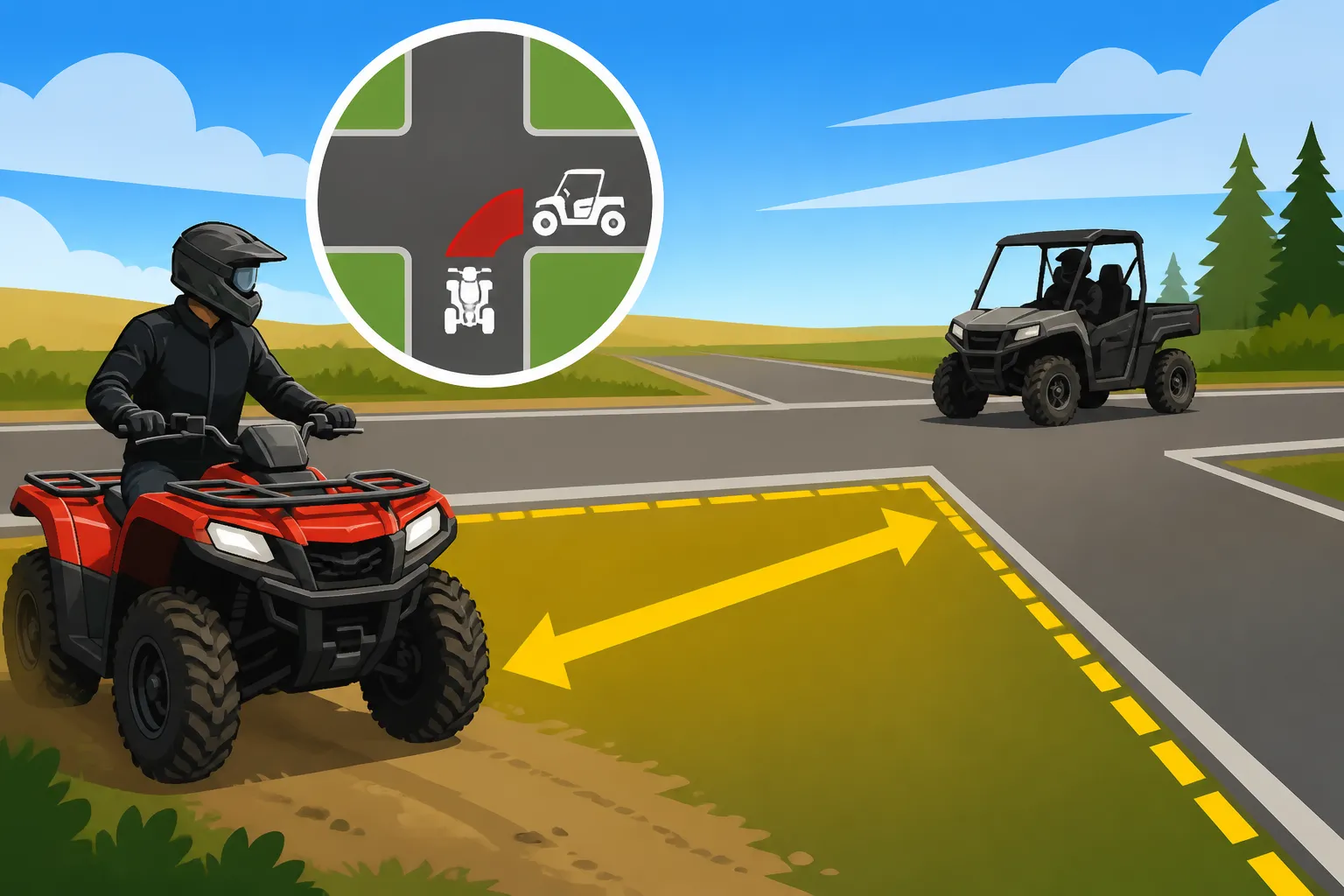
The rule that states you cannot cross a highway or road within [5 Metres From an Intersection] isn't arbitrary. It's a critical safety measure designed to protect both ORV operators and the drivers of other vehicles. Imagine a vehicle turning into or out of an intersection. Their attention is on other road traffic, pedestrians, and signals. If an ORV suddenly appears just a few feet from their turning path, there's very little time for anyone to react. This restriction ensures that ORVs attempting to cross are doing so in a more predictable location, away from the immediate chaos and increased traffic activity that naturally occurs at intersections.
The "5 metres" provides a buffer zone. It gives drivers a moment longer to spot your machine and allows you, the ORV operator, a clearer, less obstructed view of approaching traffic without the complexities of merging or turning vehicles. This rule applies whether the intersection is controlled by traffic lights, stop signs, or is an uncontrolled junction. The principle remains the same: intersections are high-risk areas for collisions, and separating ORV crossings from these zones significantly reduces that risk. Riders sometimes view this as an inconvenience, forcing them to find a different crossing point. However, it's a small price to pay for enhancing safety for everyone on and around the roads.
The Dangers of Misinterpreting the Rule
It's easy to think "close enough" when you're looking for a quick crossing. Maybe you're a few feet shy of 5 metres, or you rationalize that traffic is light. This is a common and dangerous mistake. The law is explicit: you cannot cross within 5 metres. The consequences of misinterpreting or deliberately ignoring this rule can be severe, extending far beyond a simple fine. Firstly, you put yourself and others at immediate risk of a collision. Drivers simply aren't expecting an ORV to pop out right next to an intersection. Their sightlines are geared towards other road vehicles, not low-profile ATVs or UTVs appearing from a ditch.
From an enforcement perspective, a police officer or a Conservation Officer observing an ORV crossing too close to an intersection will likely view it as a serious infraction. It demonstrates a disregard for safety regulations designed to prevent accidents. You could be facing significant [Manitoba Ticket Costs for Riders] for careless operation or for violating specific ORV crossing rules. Beyond fines, there's the potential for your machine to be impounded, and in the event of an accident, your liability could be considerably higher if you were found to be breaking a fundamental safety rule. It's far better to ride a little further down the ditch to find a legal crossing point than to take the risk and face the potential consequences. Always err on the side of caution and give yourself plenty of space from any intersection.
Navigating Beyond the 5-Metre Mark: Other Crossing Rules
While 5 metres is the minimum distance from an intersection, Manitoba's ORV Act provides further guidelines for safe highway crossings, especially for those situations where finding an intersection might not be feasible or safe. Understanding these additional rules is just as vital as knowing the 5-metre barrier.
The 3-Kilometre Rule: When 5 Metres Isn't an Option
Sometimes, you're in an area where intersections are few and far between, and waiting for 5 metres isn't an issue – the nearest intersection is miles away! In these scenarios, [Manitoba Crossing Rules at 5 Metres and 3 Kilometres] also include a provision that allows for crossings at least [3 Kilometres From the Nearest One]. This means that if you're not near an intersection, you still can't just cross anywhere. You must choose a point on the highway that is a minimum of 3 kilometres from any other intersection. The purpose here is to ensure you're crossing in a location that is generally free from the increased traffic flow and potential visual obstructions that might occur closer to junctions or populated areas.
When utilizing the 3-kilometre rule, it's absolutely paramount to have a clear, unobstructed view in both directions of the highway for a considerable distance. This means no blind hills, no sharp curves, and no dense vegetation blocking your sightlines or the sightlines of approaching drivers. You need to be able to see any oncoming traffic well in advance, and they need to be able to see you as you prepare to cross. For instance, a long, straight stretch of highway with good visibility is ideal. If there's any doubt about visibility or if the terrain prevents a clear view, it's always best to find another, safer location, even if it means altering your route or riding a little further. The safety margin of three kilometres is there to maximize the chances that both you and other drivers have ample time to react.
Operator Requirements for Crossing Roadways
It's not just where you cross, but how you cross that matters. The law places significant responsibility on the ORV operator to execute a crossing safely and legally. First and foremost, you must possess a valid driver's licence. This isn't just a recommendation; [Manitoba Crossings Need a Driver's Licence]. A regular Class 5 driver's licence (or equivalent from another jurisdiction) is generally what's required. This ensures that the person operating the ORV has at least a basic understanding of road rules and responsibilities. Attempting to cross a highway without a valid licence is a serious offense that can lead to severe penalties.
Secondly, and equally important, is the procedure for crossing. Before you even think about putting a wheel on the pavement, you must stop completely and yield to all traffic on the highway. This means [Stopping and Yielding Before You Cross a Highway]. Do not assume drivers will see you or slow down. Wait until it is absolutely safe and there is no oncoming traffic that would be forced to slow down or swerve because of your presence. When riding in a group, another critical rule comes into play: [Manitoba Crossings One Machine at a Time]. Even if you're riding with buddies, each machine must cross individually. One rider crosses, clears the highway, and then the next rider follows, ensuring each person has their own clear window to traverse the road safely. This prevents multiple machines from being on the highway simultaneously, creating a larger, less predictable obstruction for motorists. Safety and predictability are the guiding principles here.
Practical Application and Compliance for Riders
Understanding the rules is one thing; putting them into practice safely and effectively is another. It's about being prepared, making smart choices, and knowing what to expect if you encounter law enforcement.
Equipping Your Machine for Safe Crossings
While an ORV isn't designed for the road, you can equip it to enhance safety during those necessary crossings. Visibility is paramount. Ensure your machine's headlights, taillights, and brake lights are all in perfect working order. This is especially crucial if you're riding in low-light conditions, like dawn, dusk, or overcast days. Some riders even add aftermarket LED light bars or additional taillights for increased visibility, like those offered by SuperATV, which can make your machine stand out more effectively to oncoming traffic.
Beyond lighting, consider reflective tape on your machine, especially on the front and rear, to catch the attention of other drivers. Keeping your machine well-maintained is also key. Your brakes need to be sharp and responsive for those crucial stop-and-yield moments at the edge of a highway. Ensure your tires are in good condition, providing ample traction even on the small stretch of pavement you'll be covering. Regularly check your vehicle's general roadworthiness – not for continuous road use, but for the brief, safe moments it needs to interact with roads. Having a well-maintained machine isn't just about fun on the trails; it's about being prepared for every eventuality, including those brief, necessary moments of road interaction.
Here's a quick summary of essential crossing rules:
| Rule | Description | Key Requirement | Danger of Violation |
|---|---|---|---|
| 5-Metre Intersection | Must not cross within 5 metres of any intersection. | Stay at least 5m away from junctions. | High collision risk, unpredictable for drivers. |
| 3-Kilometre Unmarked | If no intersection, must cross at least 3 km from the nearest one. | Ensure long, clear sightlines in both directions. | Risk of hidden traffic, insufficient reaction time. |
| Operator Licence | Operator must possess a valid driver's licence. | Carry your valid Class 5 or equivalent. | Fines, potential impoundment. |
| Stop and Yield | Must stop completely and yield to all highway traffic before crossing. | Full stop, check both ways, proceed only when safe. | Immediate collision risk with road traffic. |
| One Machine at a Time | When crossing in a group, each ORV must cross individually. | Wait for the previous machine to clear completely. | Multiple obstructions for drivers. |
| Ditch Riding (Right) | If riding parallel to a road, must be in the right-hand ditch. | Stay in the ditch to the right of traffic flow. | Head-on collision risk if in wrong ditch. |
What an Officer Looks For
When law enforcement, be it the RCMP or Conservation Officers, encounters an ORV, they're looking for compliance with a host of regulations, and proper road interaction is high on that list. They are acutely aware of the dangers associated with ORVs on or near roadways and will be vigilant for violations. One of the first things they'll notice is where you are in relation to the road and any intersections. Are you crossing within 5 metres? Are you in the wrong ditch? Did you stop and yield before crossing? These are all immediate flags.
Officers will also check for your documentation. This includes asking to see your driver's licence and your ORV registration. Remember, [What an Officer Can Ask to See in Manitoba] includes proof of registration, and you must have your registration card on you whenever you're operating the machine. They'll also check for basic safety equipment, like helmets (where required) and working lights. Violations of the crossing rules can result in significant fines. For instance, careless operation of an ORV, which could encompass unsafe crossing, carries a substantial penalty. Repeated infractions or particularly dangerous behaviour could even lead to impoundment of your machine. It’s always best to be courteous, cooperative, and demonstrate that you are a responsible rider who understands and respects the laws. This not only avoids potential tickets but also helps maintain a positive image for the entire ORV community.
Beyond Intersections: Related Roadway Restrictions
While the 5-metre rule focuses specifically on crossings, it's crucial to remember that it's part of a broader set of regulations governing how ORVs interact with the provincial road network. There are many areas where ORVs are strictly prohibited, and knowing these will keep you out of trouble.
Avoiding Sidewalks, Medians, and Interchanges
Beyond the paved lanes of traffic, certain other parts of the road right-of-way are also definitively off-limits to ORVs. You might think a sidewalk or a grassy median is fair game because it's not the main road, but that's a dangerous misconception. [Manitoba Bans Riding a Median] and [Manitoba Bans Riding a Sidewalk] are clear and non-negotiable rules. Sidewalks are for pedestrians, full stop. Riding an ORV on a sidewalk poses a significant risk to walkers, children, and pets, and the uneven surface can be hazardous for an ORV. Medians, those strips of land dividing opposing lanes on divided highways, are also prohibited. They are not intended for ORV travel and entering them can put you in a very vulnerable position relative to high-speed traffic.
Similarly, interchanges – those complex systems of ramps, bridges, and underpasses that connect major highways – are also strictly off-limits. Their intricate design, high speeds, and numerous merge points make them incredibly dangerous for ORVs. Attempting to navigate an interchange on an ATV or UTV is not only illegal but extremely reckless. The rules are designed to keep ORVs completely separated from the high-traffic, high-speed environments where they pose a danger to themselves and others. There are absolutely no exceptions for these areas, and violations will result in serious penalties.
Agricultural and Remote Community Exceptions (Briefly)
It's important to clarify that while the general rules are strict, there are a few very specific, limited exceptions where ORVs might be found closer to or even briefly on a road. These are not broad permissions to ignore the 5-metre rule, but rather precise exemptions for particular circumstances. One such exception is [Manitoba's Agricultural Shoulder Exception]. Farmers, under specific conditions, may be allowed to operate certain ORVs on the shoulder of a highway for agricultural purposes, such as moving between fields. This is not a general pass for recreational riders; it comes with strict requirements, including displaying a slow-moving vehicle sign, having a valid agricultural purpose, and adhering to speed limits. It's about practical necessity for the agricultural industry, not recreational use.
Another area of nuance involves [Manitoba Machines Used Only in a Remote Community]. In certain designated remote communities where traditional roads might be sparse or non-existent, local bylaws might permit ORV use on certain public ways that would otherwise be off-limits. However, even in these communities, the rules regarding intersection crossings are generally still enforced for safety. These are highly localized, specific exceptions that do not override the provincial ORV Act for general recreational riding. Riders should never assume an exception applies to them unless they have confirmed it with local authorities and meet all specific criteria. For the vast majority of recreational riders in populated areas, the rules regarding roadways and intersections apply without exception.
Planning Your Ride: Making Informed Choices
The best way to ensure a safe and legal ride is to plan ahead. Spontaneity can be fun on the trails, but not when it comes to navigating road rules.
Utilizing Maps and Pre-Ride Planning
Before you even load your machine onto the trailer, make a plan. This means more than just knowing which trail system you're going to hit. It means looking at maps, specifically those that show provincial roads, highways, and intersections. Many clubs, like the Eastman ATV Association, provide excellent trail maps that often highlight legal crossing points. Utilize online mapping tools, satellite imagery, and dedicated ORV trail apps to scout your route beforehand. Identify exactly where your trail might intersect with a road and pinpoint the safest, most legal crossing points that are well beyond the 5-metre mark.
Knowing your route in advance allows you to avoid situations where you're suddenly faced with an unexpected highway crossing and forced to make a rushed, potentially illegal decision. If a particular crossing looks tricky, or if intersections are too close together, plan an alternative route. Perhaps there's an underpass or an ORV-specific crossing point further down that is much safer. Don't rely on guesswork or hope. A few minutes of planning can save you a world of trouble and ensure you have a much more enjoyable and worry-free ride. It’s also wise to share your planned route with someone not riding with you, so they know your general location and intended path.
The Role of Rider Education and Community Awareness
Ultimately, safe and responsible ORV riding comes down to education and a commitment to community awareness. Understanding the rules, like the 5-metre intersection crossing rule, is the first step. Taking an ATV or UTV safety course, even if it's not mandatory, can significantly enhance your knowledge of operating your machine safely and interacting with roads. These courses often cover local regulations in detail and provide practical tips for challenging situations.
Joining a local ATV or UTV club is another fantastic way to stay informed. Clubs, such as the Porcupine Forest ATV Club, are often at the forefront of trail development and advocacy, and they usually have a deep understanding of local bylaws and provincial regulations. They can provide valuable insights into safe riding areas, legal crossing points, and any recent changes to the law. Furthermore, being a responsible rider means being an ambassador for the sport. When you consistently follow the rules, cross highways safely, and respect private property, you contribute to a positive public perception of ORV enthusiasts. This, in turn, helps maintain access to trails and prevents further restrictions. Conversely, careless or illegal riding can lead to stricter regulations and a backlash from the public and landowners. Ride smart, be safe, and help promote the sport in a positive light for everyone.
Disclaimer
This article is for general informational purposes only and does not constitute professional advice. Laws, prices and regulations vary by location and change over time. Consult a qualified professional for guidance on your specific situation.