The Only Legal Ditch Is on Your Right
It can be incredibly frustrating to just want to get out and enjoy your ATV or UTV in Manitoba, only to be met with a maze of rules about where you can and cannot ride, especially when it comes to ditches. Many riders mistakenly believe all ditches are fair game, leading to confusion, fines, and even dangerous situations. This guide is here to clear up the confusion and explain exactly when and how you can legally ride your off-road vehicle in Manitoba's ditches, ensuring you stay safe and on the right side of the law.
Understanding Manitoba's Ditch Riding Rules
Riding an off-road vehicle (ORV) in Manitoba offers incredible freedom and access to beautiful landscapes, but this freedom comes with a clear set of responsibilities and rules, especially concerning public infrastructure like roadways and their adjacent ditches. It's not uncommon for riders to assume that if it's not a road, it's open season, but that's a misconception that can quickly lead to trouble. The province has specific legislation in place to regulate ORV use, aiming to balance recreational access with public safety and environmental protection.
The Legal Definition of a Ditch
When we talk about "ditches" in the context of ORV laws, it's crucial to understand what the province actually means. It's not just any low-lying area beside a road. In Manitoba, a ditch generally refers to the graded area on either side of the travelled portion of a roadway, designed primarily for drainage. These ditches are considered part of the highway right-of-way, even if they aren't paved or regularly maintained for vehicle traffic. This means they fall under the jurisdiction of the Off-Road Vehicles Act and other highway regulations. The intent of the ditch is usually to manage water runoff from the road surface, not to provide an additional travel lane for recreational vehicles. Understanding this fundamental definition is the first step toward navigating the rules correctly. If you're unsure whether a particular area qualifies, it's always best to err on the side of caution or consult local bylaws.
Why Ditch Riding Rules Exist
The regulations governing ditch riding aren't arbitrary; they exist for several very practical and important reasons. Primarily, safety is paramount. Mixing off-road vehicles, often travelling at lower speeds or with less predictable movements, with regular road traffic, even indirectly, presents significant hazards. Visibility can be poor in ditches due to vegetation or varying terrain, making it difficult for both ORV operators and conventional vehicle drivers to see each other. Secondly, environmental concerns play a role; uncontrolled riding can lead to erosion, damage to sensitive habitats, and disruption of drainage systems crucial for road integrity. Finally, the rules help maintain order and prevent conflicts between different land users. Without clear guidelines, disputes over access, noise, and property damage would be far more common. [Manitoba Ditch Riding Rules] outlines many of these considerations.
The "Right-Hand Ditch" Mandate: What It Means
One of the most foundational rules for off-road vehicle operation in Manitoba, especially when it comes to ditches, is the "right-hand ditch" mandate. This isn't just a suggestion; it's a legal requirement designed to enhance safety and predictability when ORVs are operating near roadways. It might sound simple, but understanding its nuances is crucial for any rider venturing off the beaten path.
Travelling the Same Way as Traffic
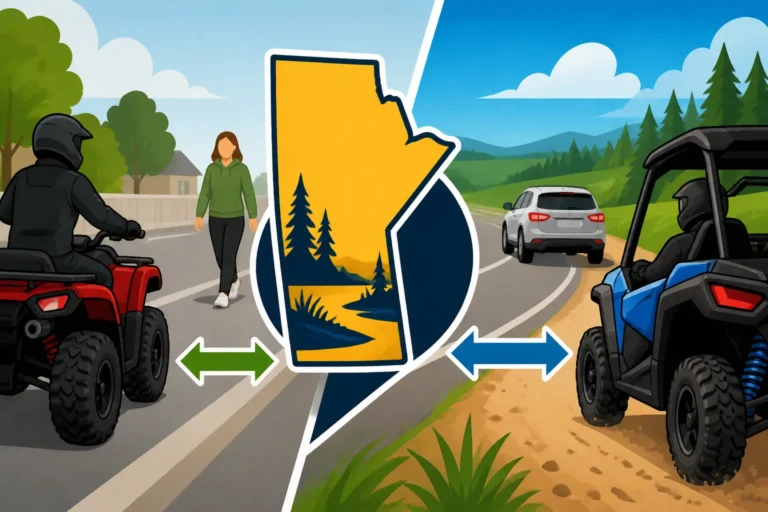
The rule explicitly states that if you are operating an ORV in a ditch adjacent to a highway, you must travel in the ditch on the right-hand side of the roadway in the same direction as the nearest lane of traffic. This alignment with traffic flow is a critical safety measure. Imagine the chaos and danger if ORVs were allowed to travel against the flow of traffic in ditches; it would create head-on collision risks and unexpected encounters for both ORV riders and drivers on the main roadway. By mirroring the traffic flow, riders become more predictable elements in the broader transportation environment, reducing the likelihood of accidents. This applies whether you're on a major provincial highway or a quieter municipal road; the principle remains consistent: stay with the flow. [Manitoba Ditch Travel With Traffic] details this further.
This rule is often overlooked or misunderstood by new riders, who might assume that ditches are entirely separate from the road and thus exempt from directional rules. However, because ditches are part of the road allowance, they are intrinsically linked to the adjacent roadway's operations. Think of it as an extension of the road, even if it's unpaved and wilder. This consistent directionality helps all road users anticipate movements, fostering a safer environment for everyone. Always be aware of the traffic direction on the paved road beside you, and orient your machine accordingly.
Why Only One Ditch Is Legal
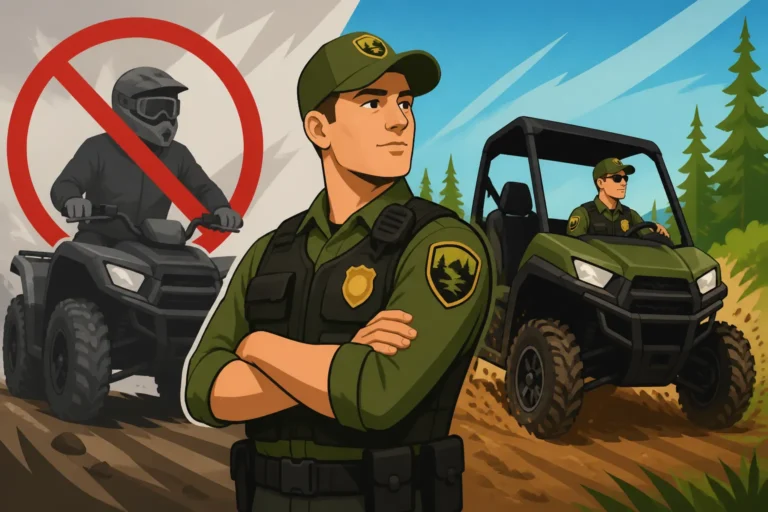
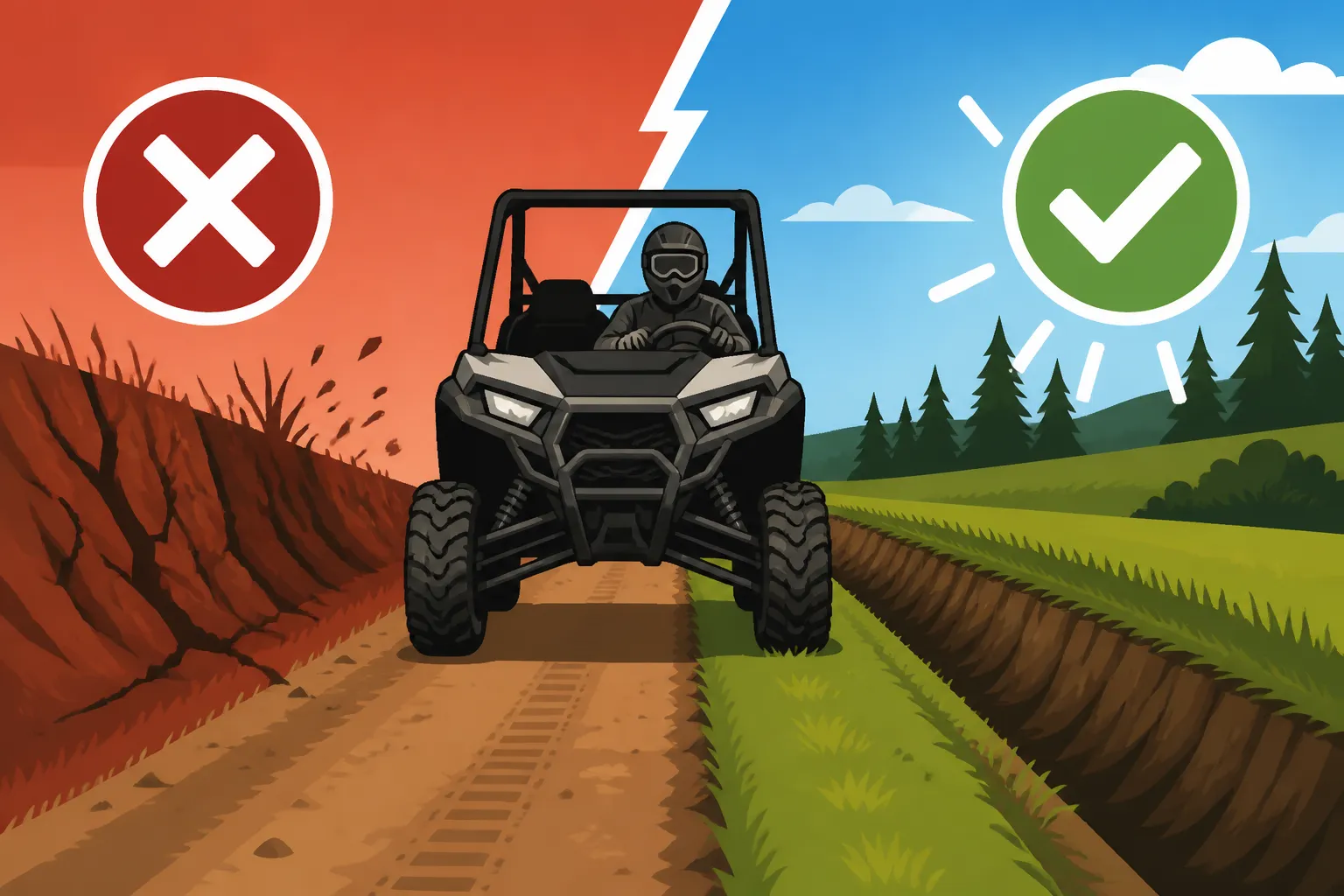
The restriction to only the right-hand ditch isn't arbitrary; it's a direct consequence of the requirement to travel with the flow of traffic. If you were in the left-hand ditch, you would inherently be travelling against oncoming traffic, creating a hazardous situation. This rule simplifies decision-making for riders: if you're going one way, there's only one legal ditch to be in. This clear delineation helps enforce safety standards and reduces ambiguity. It's a fundamental part of [The Only Legal Ditch Is on Your Right].
Consider a scenario where you need to cross a highway to access a trail on the opposite side. While the act of crossing is permitted under specific conditions, you cannot simply ride down the left-hand ditch to get to your crossing point or to continue your journey. You must perform the crossing and then, once on the other side, if ditch riding is still an option and you continue alongside the road, you would again be in the right-hand ditch relative to your new direction of travel. This underscores the fact that the "right-hand ditch" is always relative to your intended direction and the flow of traffic on the adjacent road.
| Ditch Riding Scenario | Legal Ditch Side (Relative to Direction of Travel) | Allowed? | Key Consideration |
|---|---|---|---|
| Traveling North | East Ditch (Right) | Yes, if rules met | Must travel north (with traffic) |
| Traveling South | West Ditch (Right) | Yes, if rules met | Must travel south (with traffic) |
| Traveling North in West Ditch | West Ditch (Wrong) | No | Traveling against traffic (head-on risk) |
| Crossing a Roadway | None (Briefly traverse) | Yes, with rules | Must cross safely, not ride along in the ditch on opposite side |
| Median Ditch | None (Always) | No | Medians are completely off-limits to ORVs |
Exceptions and Limitations to Ditch Riding
While the general rule of "right-hand ditch, with traffic" is central, Manitoba's ORV regulations also lay out specific situations where ditch riding is either prohibited, conditionally allowed, or restricted based on the type of machine or location. These exceptions and limitations are just as important to understand as the main rule itself, as they often address safety concerns, land use, and the unique challenges of different environments.
Crossing Roadways and Intersections
Riders often need to cross roadways to connect trails, reach destinations, or simply continue their journey. The province permits crossing, but it's far from a free-for-all. There are strict conditions designed to minimize risk to ORV operators and other motorists. You must come to a complete stop before entering the roadway, yield to all traffic, and cross at a right angle (90 degrees) to the road, using the shortest possible path. Furthermore, there are rules about proximity: you generally cannot cross within 5 metres of an intersection, unless that's your only safe route, and you should always be at least 3 kilometres from another marked crossing point if you have a choice. This ensures you're crossing in a spot where drivers on the road have ample time to see you and react. [Manitoba Crossings Need a Driver's Licence] even states that you need a valid driver's license to perform these crossings.
It's also crucial to understand that "crossing" means just that – traversing the road quickly and directly. It does not mean riding on the roadway itself, even for a short distance, to reach a more convenient crossing spot. The intention is to get from one side of the ditch or trail to the other as efficiently and safely as possible. Always be on high alert, make eye contact with drivers if possible, and signal your intentions clearly.
Proximity to Dwellings and Playgrounds
The Off-Road Vehicles Act places restrictions on how close ORVs can operate to dwellings and playgrounds, especially during certain hours. This is primarily to address noise complaints and ensure public peace and safety. Generally, you cannot operate an ORV within 30 metres of a dwelling between midnight and 7 a.m. This rule extends to playgrounds at all times. The rationale here is to prevent noise disturbance for residents, particularly during sleeping hours, and to ensure the safety of children who might be playing in unsupervised areas.
This means that even if a ditch is otherwise legal for riding, if it runs directly alongside a residential area or a park with a playground, you might find yourself needing to choose an alternative route or avoid those areas during restricted times. It's a reminder that responsible riding extends beyond just following traffic rules; it also involves being a good neighbour and respecting community spaces. Ignoring these rules can lead to complaints and bylaw enforcement.
Agricultural Shoulder Exception
While the general rule for ditch riding is quite strict, there's a practical exception carved out for agricultural operations. Farmers often need to use their ORVs to access fields, check livestock, or transport equipment, and sometimes the most direct route involves using the shoulder of a provincial road. Under the Act, an ORV that is a four-wheel-drive machine (like many utility ATVs or side-by-sides) may operate on the shoulder of a provincial highway for the purpose of farming, provided specific conditions are met. This is a pragmatic allowance for the agricultural sector, recognizing their reliance on these machines for their livelihoods. [Manitoba's Agricultural Shoulder Exception] exists for this reason.
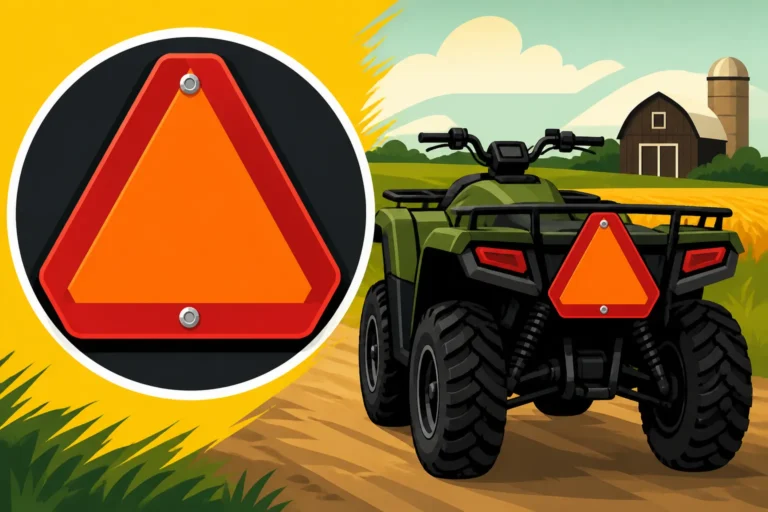
However, this isn't a blanket permission for any four-wheel-drive ORV to cruise down the shoulder. The machine must be directly involved in a farming operation, and the operator must usually display a slow-moving vehicle sign and adhere to a reduced speed limit, often no more than 40 km/h. This exception highlights the Act's flexibility in accommodating essential activities while still trying to mitigate risks associated with ORV use on or near public roadways. It's a narrow exception, not a loophole for recreational riders.
Why Four-Wheel-Drives Are Barred From Ditches (Not What You Think!)
This is where the terminology can get a bit tricky and lead to confusion. When the Manitoba ORV Act refers to "four-wheel-drives barred from ditches," it's not talking about your typical ATV or side-by-side that happens to have four-wheel drive. Instead, it's referring to larger, conventional four-wheel-drive trucks, SUVs, or Jeeps that might attempt to use ditches as off-road shortcuts. These vehicles, despite having four-wheel drive, are not classified as "off-road vehicles" under the Act in the same way ATVs, UTVs, or snowmobiles are. [Manitoba Four-Wheel-Drives Barred From Ditches] clarifies this.
The rules for ditches are specifically designed for machines that are off-road vehicles. Regular highway-licensed vehicles, even those with significant off-road capability, are generally restricted to the paved or gravelled portion of the roadway and are explicitly prohibited from operating in ditches. This distinction is crucial: a side-by-side with four-wheel drive is an ORV and subject to ORV ditch rules, whereas a 4×4 pickup truck is a highway vehicle and is not permitted in ditches at all, except under very specific and limited circumstances (like emergency services or authorized maintenance). This prevents unintended and potentially dangerous use of ditches by vehicles not designed or legislated for such operation.
Safety and Responsibility While Ditch Riding
Riding an off-road vehicle in a ditch, even when legal, demands a heightened sense of awareness and responsibility. Unlike dedicated trails, ditches are often unpredictable environments, with hidden hazards, uneven terrain, and close proximity to active traffic. Simply knowing the rules isn't enough; you need to embrace a safety-first mindset and equip yourself and your machine appropriately.
Maintaining Visibility and Awareness
One of the biggest challenges of ditch riding is maintaining adequate visibility, both for yourself and for other drivers. Ditches can be narrow, overgrown with tall grasses or shrubs, or dip significantly below the road grade, making you harder to spot. This necessitates proactive measures. Always ensure your headlights and taillights are functioning, and consider adding aftermarket lighting for increased visibility, especially during dawn, dusk, or overcast conditions. Reflective gear on yourself and your machine is also a wise investment. Furthermore, you must constantly scan your surroundings – not just the ditch ahead, but also the roadway alongside, looking for vehicles, and checking your mirrors frequently. Expect the unexpected, as objects like discarded debris, old fence posts, or hidden culverts can pose immediate hazards.
It's also vital to be aware of how your presence might affect others. If you see a vehicle approaching on the roadway, especially if it's slowing or seems uncertain, make yourself as visible as possible and be prepared to yield. The goal is to be seen and understood, reducing any potential for conflict or alarm. Riding defensively is key, assuming that drivers on the road might not see you, even if you feel you're highly visible.
Appropriate Speed and Control
The 40 km/h limit on many shoulders and the inherently unpredictable nature of ditches mean that speed control is paramount. While your ORV might be capable of high speeds, ditches are not the place for them. Excessive speed significantly reduces your reaction time, increases stopping distances, and amplifies the impact of any unexpected obstacle or terrain change. Many accidents in ditches happen because riders are going too fast for the conditions. [Manitoba's 40 km/h Shoulder Limit] is a good guideline, even for ditches not formally designated as shoulders.
Maintain a speed that allows you to comfortably react to sudden dips, ruts, standing water, or emerging wildlife. Your machine should always feel under control, not like it's pulling you. This also means understanding your machine's capabilities and limitations in varying terrain. If the ditch is particularly rough, narrow, or steep, slow down even further. It's better to arrive safely than to risk an accident due to impatience. Practicing smooth throttle and brake control will also help you navigate uneven terrain more effectively.
Essential Equipment and Machine Readiness
Before you even think about hitting the ditches, your ORV needs to be in top condition and equipped for the task. This includes basic maintenance like checking tire pressure, fluid levels, and brakes. Beyond that, certain equipment is not just recommended but often legally required or highly advisable.
Here's a quick checklist:
- Helmet: A legally approved helmet is mandatory for all ORV operators and passengers in Manitoba, with very few exceptions. [Manitoba Helmet Law and Its Exemptions] covers this in detail.
- Registration and Plate: Your machine must be properly registered with MPI, and the single plate must be clearly displayed as per provincial rules, usually on the rear for ATVs and side-by-sides. [Manitoba Issues One Plate, Not Two] and [Manitoba Plates on the Rear of a Quad] are good references.
- Insurance: Basic third-party liability insurance is included with registration, but consider additional coverage for collision, comprehensive, and accident benefits. [Manitoba ATV Insurance Requirements] is a great resource.
- Spark Arrester: A functioning spark arrester is legally required year-round to prevent wildfires. [Manitoba Spark Arrester Requirements] is critical, especially when riding in dry vegetation.
- Lights: As mentioned, working headlights and taillights are essential for visibility, even in daylight. Consider LED upgrades for brighter output and lower power draw.
- Winch: A winch can be a lifesaver in ditches, where mud, soft ground, or steep banks can easily get you stuck. Investing in a reliable winch, perhaps from a brand like SuperATV, can save you hours of frustration and potentially costly recovery fees.
- Skid Plates and A-Arm Guards: Ditches often hide rocks, stumps, and debris that can seriously damage your machine's underside or suspension components. Aftermarket protection like heavy-duty skid plates and A-arm guards are a smart investment, and many quality options are available, including those from SuperATV, to shield vital components.
- First Aid Kit and Tools: Always carry a basic first aid kit, a small tool kit for minor repairs, and a cell phone (though service can be spotty in rural areas).
- Tires: Ensure your tires are in good condition and suitable for off-road use. Aggressive tread patterns provide better traction in mud and loose soil commonly found in ditches.
Being prepared not only keeps you compliant but significantly enhances your safety and enjoyment of the ride.
Consequences of Ignoring Ditch Rules
Ignoring Manitoba's ORV rules, particularly those concerning ditch riding, isn't just a minor infraction; it carries significant legal, financial, and personal consequences. Riders often underestimate the seriousness of these violations, believing they're unlikely to be caught or that the penalties will be trivial. This couldn't be further from the truth.
Fines and Tickets for Violations
The most immediate consequence of illegal ditch riding is a fine. Officers from local law enforcement, RCMP, and conservation services are authorized to enforce the Off-Road Vehicles Act. These fines can range from moderate to substantial, depending on the specific violation and whether it's a first offense or a repeat. For example, operating an ORV in a prohibited area, operating against traffic flow, or failing to have proper registration or a visible plate can all result in tickets. These aren't just minor inconveniences; they can quickly add up, especially if you're issued multiple tickets during a single stop. [Manitoba Ticket Costs for Riders] can give you an idea of the financial impact.
Furthermore, some violations, such as operating without a helmet or impaired riding, carry even steeper penalties. These fines are often non-negotiable and must be paid, potentially impacting your driving record or future insurance rates, even though they relate to an ORV. It's a costly lesson to learn when simply following the rules could have prevented the entire situation.
Impaired Riding Penalties
Just like operating a car, operating an ORV while impaired by alcohol or drugs is strictly prohibited and carries severe penalties. The same laws that apply to impaired driving on public roads generally extend to impaired riding of off-road vehicles. This means you could face criminal charges, significant fines, driver's licence suspension (for your road vehicle as well), vehicle impoundment, and even jail time. [Manitoba Impaired Riding Penalties] are no joke.
The ditch, despite its off-road nature, is not a safe or legal place to operate under the influence. The risks are amplified due to the challenging terrain, proximity to traffic, and the potential for serious accidents. An impaired rider not only endangers themselves but also innocent bystanders, other riders, and motorists. The consequences for impaired riding are among the most severe under the Act, underscoring the province's commitment to road and trail safety.
Insurance Implications and Liability
While basic third-party liability insurance is included with your ORV registration through MPI, this coverage can be voided or significantly impacted if you are found to be operating your machine illegally. For example, if you are involved in an accident while riding in a prohibited ditch, against traffic, or while impaired, your insurance provider could deny your claim. This would leave you personally responsible for any damages to your machine, medical costs for injuries (which base coverage doesn't typically cover anyway), and damages or injuries to other parties. [Manitoba Insurance Included With Registration] outlines the base coverage, but it's important to understand its limitations.
Consider a scenario where you're riding illegally in a ditch, and you swerve to avoid an obstacle, inadvertently veering onto the roadway and causing an accident with a car. If your insurance is voided due to your illegal operation, you could be on the hook for tens or even hundreds of thousands of dollars in damages and medical bills. This financial liability alone is a compelling reason to always adhere to the rules. It also emphasizes the importance of understanding your [Manitoba ATV Insurance Options] beyond the basic mandated coverage, especially if you plan to ride frequently. Even small aftermarket upgrades or specific components from brands like SuperATV could be at risk if you're not properly insured and riding legally.
Planning a Safe and Legal Ditch Ride
So, you've got the rules straight, your machine is ready, and you're committed to riding safely and legally. Great! Now, let's talk about how to plan your ditch riding adventures in Manitoba to ensure they're enjoyable and free from unnecessary stress or legal issues. A little preparation goes a long way in turning a potentially confusing situation into a smooth, rewarding ride.
Researching Local Bylaws
The provincial rules provide the foundational framework for ORV operation, but many municipalities and Local Government Districts (LGDs) in Manitoba have the authority to enact their own bylaws that can further restrict or, in rare cases, permit ORV use within their specific boundaries. This is especially true for ditch riding in or near populated areas. A ditch that's legal provincially might be off-limits under a local bylaw. [Manitoba Municipal By-Law Powers] grants them this authority.
Before you haul your machine to a new area, make it a habit to check with the local municipal office or LGD. A quick phone call or a visit to their website can often clarify any specific local rules for ditch riding, road crossings, or access to certain areas. Ignoring these local bylaws, even unknowingly, is no defense against a ticket. Being proactive in your research helps you avoid unpleasant surprises and ensures you're a responsible visitor in any community you choose to ride in.
Mapping Your Route and Identifying Safe Crossings
Good navigation isn't just about finding the most scenic path; it's about finding the legal and safest path. Before you head out, consult maps that show roadways, intersections, and potential ORV access points. Identify stretches of ditch that appear to meet the provincial "right-hand, with traffic" rule. More importantly, scout out legal and safe crossing points for any roadways you might need to traverse. Look for areas with clear sightlines in both directions, away from blind corners or crests, and well outside the 5-meter intersection rule.
Modern GPS units and smartphone apps can be incredibly helpful for this, allowing you to mark potential hazards or legal crossing points in advance. Always have a backup, like a paper map, especially in remote areas where cell service might be nonexistent. Knowing your route, including where you'll be in ditches and where you'll need to cross, drastically reduces the chances of making an illegal or dangerous maneuver on the fly.
What an Officer Can Ask to See
If you're stopped by an enforcement officer while ditch riding, it's crucial to be polite, cooperative, and prepared to provide the necessary documentation. Officers are well within their rights to conduct equipment checks and ask for proof of compliance with the Act. Generally, they will ask for:
- Your Driver's Licence: Even for ditch riding, you need a valid driver's licence to perform any road crossings.
- Proof of ORV Registration: This is your registration certificate issued by MPI. [Manitoba Registration Cards Carried at All Times] is a key rule.
- Proof of Insurance: Your registration certificate also serves as proof of your basic third-party liability insurance.
- Proof of Age: Especially for younger riders, officers may ask for ID to verify age compliance with the ORV Act. [Manitoba Registration Age of 16] outlines minimum age requirements for operating certain machines.
Having these documents readily accessible and in a waterproof holder on your machine will make the stop much smoother. An officer may also perform an [Manitoba Equipment Checks by Officers] to ensure your machine has working lights, a spark arrester, and that your plate is properly mounted. Being prepared demonstrates responsibility and respect for the law, which can often lead to a more positive interaction.
Disclaimer
This article is for general informational purposes only and does not constitute professional advice. Laws, prices and regulations vary by location and change over time. Consult a qualified professional for guidance on your specific situation.