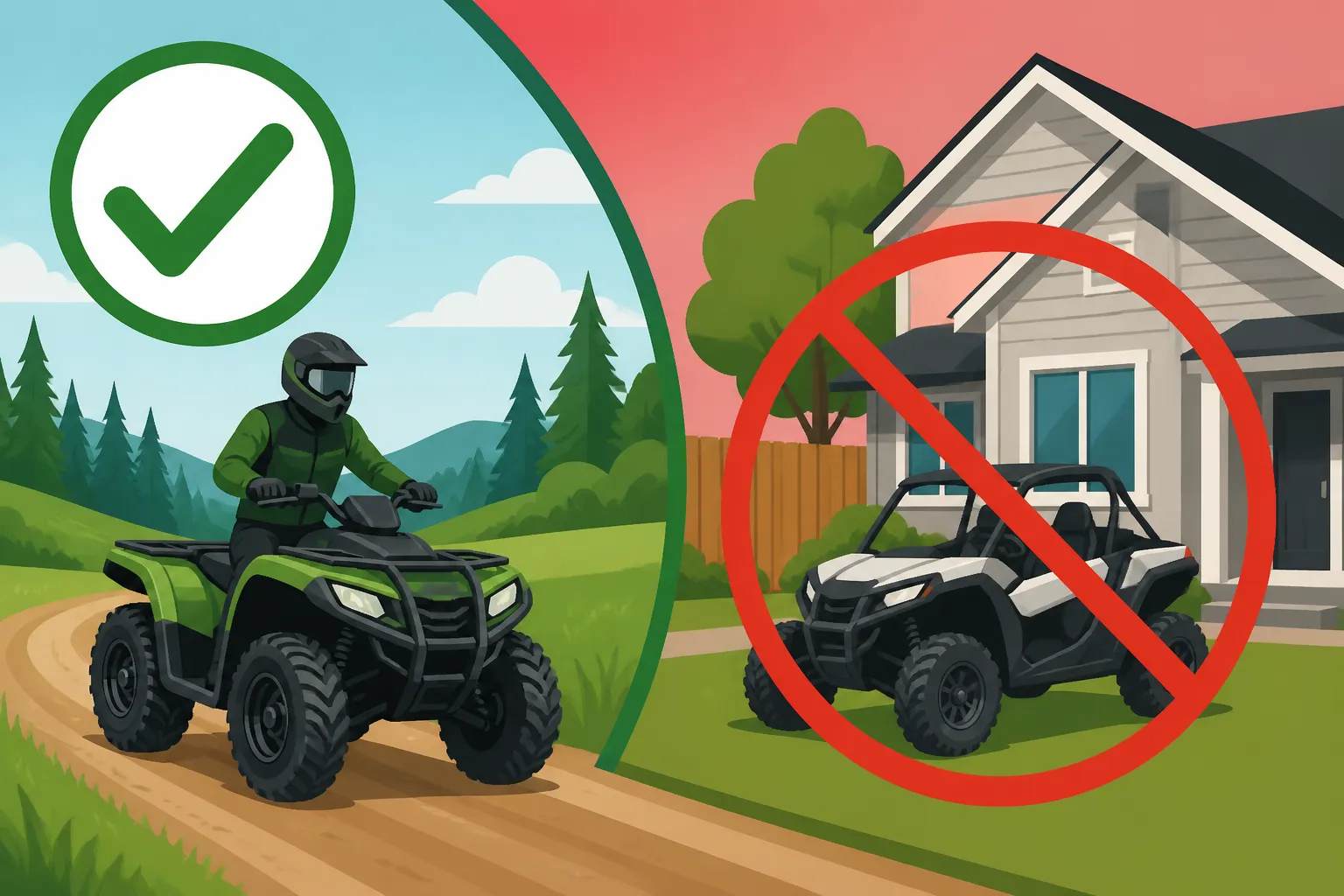
Manitoba Rules for Riding Near a Dwelling
Picture this: you've just loaded up your ATV or UTV, full of excitement for a day on Manitoba's incredible trails. As you leave your driveway or stage your machine, you might start to wonder, "How close is too close to my neighbour's house?" or "Can I ride past those cottages at this hour?" It's a common concern, and navigating the rules around riding off-road vehicles near dwellings can feel a bit like tiptoeing through a minefield. This guide is here to clear the air, breaking down Manitoba's specific regulations and offering practical advice so you can enjoy your ride responsibly, without disturbing anyone or running afoul of the law.
Understanding Manitoba's 30-Metre Dwelling Rule
Manitoba has specific regulations designed to ensure that the enjoyment of off-road vehicles (ORVs) like ATVs and UTVs doesn't come at the expense of residents' peace and quiet. At the heart of this is what's commonly known as the "30-metre dwelling rule." This isn't just a suggestion; it's a critical part of The Off-Road Vehicles Act, and understanding it is key to being a responsible rider.
The Core Regulation and Its Intent
The provincial law explicitly states that you cannot operate an off-road vehicle within 30 metres of a dwelling between the hours of midnight and 7:00 a.m. Now, 30 metres might not sound like much, but it's roughly the length of two school buses end-to-end. It's further than many people intuitively realize, especially when visibility is low or you're unfamiliar with an area. The intent behind this rule is crystal clear: to minimize noise pollution and disturbance to people in their homes, particularly during hours when most people are trying to sleep or enjoy a quiet start to their day.
Imagine you're trying to get a good night's rest after a long week, or perhaps you have young children who are finally asleep. The sudden roar of an engine, even for a short time, can be incredibly jarring and disruptive. This rule is a proactive measure to prevent such disturbances, fostering a better relationship between ORV enthusiasts and the communities they ride near. It's about respecting privacy and ensuring that everyone can enjoy their property without undue noise or intrusion. Even if you're just starting your machine to warm it up before a dawn ride, or pulling back into your yard late after an evening outing, that 30-metre buffer around a neighbour's home is a non-negotiable zone during those specific hours. For more on this, you might find [Manitoba's 30-Metre Dwelling Rule] helpful.
Specifics of the Time Restriction
The "midnight to 7:00 a.m." window is absolutely crucial to this rule. It's during these seven hours that the 30-metre restriction is legally enforced. This means that while it's always good practice to be considerate of noise levels at any time of day, the specific legal prohibition against operating within 30 metres of a dwelling only applies during this nighttime to early morning period.
This time frame often catches riders off guard, especially those who like to hit the trails at first light or return home after dark. If you're planning an early morning fishing trip and need to ride your quad out of a rural property before 7:00 a.m., you need to be acutely aware of any dwellings within that 30-metre radius. The same goes for returning late after a successful hunting trip. Even if your machine isn't excessively loud, the law is about proximity and time, not just decibel levels. It creates a clear boundary, ensuring a baseline level of quiet for residents when they most need it. Beyond 7:00 a.m. and before midnight, while the 30-metre rule isn't legally in effect, common courtesy and local by-laws still encourage respectful operation.
What Constitutes a Dwelling and How to Identify It
Understanding the legal definition of a "dwelling" is just as important as knowing the 30-metre distance and time restrictions. It's not always as straightforward as just looking for a main house, especially in diverse rural landscapes.
Defining "Dwelling" in Manitoba ORV Law
When the law refers to a "dwelling," it's not exclusively talking about a year-round, permanently occupied family home with a white picket fence. The definition is broader and encompasses any structure used for habitation. This includes:
- Permanent Residences: Your typical house, farmhouses, etc.
- Seasonal Dwellings: Cottages, cabins, and other recreational properties, even if they're only occupied during certain times of the year. If someone could be living there, or if it's set up for habitation, it typically counts.
- Mobile Homes or Trailers: If they are fixed in place and being used as a residence.
What typically doesn't count as a dwelling in this context are structures like sheds, detached garages, barns, workshops, or other outbuildings that are clearly not designed or used for people to live in. The key is whether the structure serves as a place where someone resides, even temporarily. This distinction is vital because a rider might mistakenly assume a remote cabin is unoccupied, only to find themselves facing a fine because someone was indeed staying there. Being sure about what falls under this definition in any given area is crucial for compliance.
Navigating Populated Areas and Avoiding Infractions
Successfully avoiding the 30-metre dwelling zone, especially during the restricted hours, requires a combination of awareness and planning. Gauging 30 metres visually, particularly in varied terrain or low light, can be surprisingly difficult. It's easy to underestimate the distance, thinking you're further away than you actually are. For instance, what looks like a clear path might still bring you too close to a hidden cabin or a house obscured by trees.
This is where pre-ride planning becomes invaluable. Utilizing digital mapping tools on your phone or a dedicated GPS unit can help you identify structures along your planned route. While SuperATV is known for its rugged aftermarket parts that enhance durability and performance, having a sturdy phone mount or a dedicated GPS like some riders often pair with their SuperATV accessories can be a game-changer for navigation and identifying potential dwelling areas. Beyond technology, simply scouting a new route during daylight hours can provide invaluable perspective on where homes are situated. Remember that in many areas, [Manitoba Municipal By-Law Powers] can impose additional, even stricter, restrictions on ORV operation, so always check local regulations in the area you plan to ride. It's not just about avoiding a ticket; it's about being a considerate member of the community and ensuring you don't inadvertently disturb someone's peace.
Consequences of Non-Compliance and Best Practices
Ignoring the 30-metre dwelling rule, whether intentionally or out of ignorance, can lead to more than just an awkward encounter with a neighbour. There are tangible legal consequences that can put a serious damper on your riding enjoyment.
Penalties for Violating the Rule
Manitoba's Off-Road Vehicles Act outlines a range of penalties for various infractions, and violating the 30-metre dwelling rule is no exception. While specific fine amounts can change, you can expect a significant financial penalty if caught. Conservation officers, RCMP, and even local law enforcement are empowered to enforce these regulations. It's not uncommon for concerned citizens to report noisy or inconsiderate ORV operators, leading to patrols in specific problem areas.
The typical scenario often involves an officer responding to a complaint, locating the rider, and issuing a ticket. These aren't minor parking tickets; they can run into hundreds of dollars. Beyond the immediate financial hit, repeated infractions can lead to more severe consequences, potentially impacting your ability to register or operate an ORV. It's a stark reminder that ignorance of the law is generally not accepted as an excuse. Understanding where you can and cannot ride is your responsibility as an operator. For context on other legal issues, you can review topics like [Manitoba Careless Operation Penalties] or [Manitoba Ticket Costs for Riders]. These types of penalties underscore the importance of adherence to all ORV regulations, not just those concerning dwellings.
Being a Good Neighbour and Responsible Rider
Beyond the legal ramifications, there's a broader ethical consideration: being a good neighbour. The reputation of the entire ORV community often rests on the actions of individual riders. When a few individuals are inconsiderate, it can sour public opinion, leading to calls for stricter regulations or even outright bans on ORV use in certain areas. Noise pollution, dust, and perceived safety risks are genuine concerns for residents, especially those living in rural areas where ORVs are more prevalent.
To mitigate your impact, consider these best practices:
- Mind Your Speed: Even if you're outside the restricted hours, slow down when passing near homes. It reduces noise and dust.
- Avoid Unnecessary Revving: Idling and revving engines contribute significantly to noise complaints. Keep engine noise to a minimum near residences.
- Invest in Quieter Equipment: Some aftermarket exhaust systems are designed to reduce noise while maintaining performance. If you're looking to modify your machine, research options that prioritize quiet operation without sacrificing power. Checking for proper muffler packing, often available through aftermarket suppliers like SuperATV for various models, can also make a world of difference in reducing noise.
- Plan Your Routes: Try to choose routes that naturally keep you away from dwellings. If you must pass close, do so swiftly and quietly during unrestricted hours.
- Be Aware of Your Surroundings: Look for signs of life, children playing, or pets that might be startled by your presence.
- Engage Positively: If you encounter a resident, a friendly wave and a respectful attitude can go a long way.
Adhering to these principles not only helps you avoid legal trouble but also fosters a more positive relationship with non-riding community members. This is vital for the long-term health and accessibility of ORV riding in Manitoba, helping to reduce [Manitoba Noise Complaints About Quads] and improve the public image of our sport.
Broader Context: Community Relations and Trail Access
The 30-metre dwelling rule is just one piece of a larger puzzle when it comes to responsible ORV riding. How we behave as riders, particularly in proximity to communities, has significant ripple effects on the availability and future of trail access.
The Impact on Public Perception and Trail Development
Every time an ORV rider causes a disturbance near a home, it creates a negative impression. These isolated incidents, unfortunately, often get amplified and contribute to a broader, negative public perception of all off-road enthusiasts. This isn't just about a grumpy neighbour; it can have profound implications for trail development and access. When community leaders, landowners, or local councils hear constant complaints about noise, trespass, or property damage from ORVs, their natural inclination is to restrict access, close trails, or enact more stringent by-laws.
Think about the hard work that goes into developing and maintaining designated [Manitoba ATV Trails: Club Ground and Crown Land]. ATV clubs and volunteer groups spend countless hours negotiating access, clearing routes, and building relationships. A few instances of riders being inconsiderate near dwellings can undermine years of this goodwill, making it harder to secure new trail agreements or even retain existing ones. Responsible operation, including strict adherence to rules like the 30-metre dwelling guideline, directly contributes to a positive image that supports the expansion and preservation of riding opportunities for everyone. It's about demonstrating that ORV riders are respectful, responsible citizens who care about their impact on the environment and their communities.
Planning Your Rides to Avoid Dwelling-Rich Areas
Proactive ride planning is your best friend when it comes to avoiding issues with dwellings. Before you even load your machine, take some time to review your intended route. Many communities have specific ORV maps or designated trail systems that are designed to steer riders away from residential zones.
Here's how to integrate this into your routine:
- Utilize Trail Maps and Apps: Digital resources like [Manitoba Trail Apps and Maps] are invaluable. Look for routes that are clearly marked as official trails, which typically navigate around populated areas. Study satellite views to identify isolated dwellings you might not see from a ground-level map.
- Choose Designated Staging Areas: Whenever possible, start and end your rides at official trailheads or designated staging areas that are intentionally located away from homes. This minimizes the time you spend operating your machine in residential zones.
- Know Local By-Laws: Beyond provincial law, municipalities and Local Government Districts can have their own specific rules regarding ORV use within their boundaries. A quick check with the local authority before riding in an unfamiliar area can prevent a lot of headaches.
- Communicate with Your Riding Group: If you're riding with others, ensure everyone in the group understands the dwelling rule and the importance of being considerate. A coordinated effort is always more effective.
- Consider Quiet Hours: Even outside the legal restriction, try to avoid early morning or late evening rides near homes. Respectful timing goes a long way.
By putting in a little effort to plan your routes and be aware of your surroundings, you contribute to a better riding experience for yourself and for everyone else. Whether you're exploring deep bush trails with heavy-duty protection from SuperATV or just enjoying a casual ride, always keep the 30-metre rule in mind, especially when approaching any residential areas or cabins. Remember, [Manitoba Roadways Are Closed to Every Off-Road Machine], so ditch riding rules and off-road trail etiquette are your primary guides for where you can legally and respectfully operate your machine. Taking these steps demonstrates [Manitoba Trail Etiquette Locals Expect] and helps ensure that the places we love to ride remain open and accessible for years to come.
Summary of Manitoba's 30-Metre Dwelling Rule
For a quick reference, here's a summary of the key aspects of Manitoba's 30-metre dwelling rule:
| Aspect | Detail |
|---|---|
| The Rule | Prohibits the operation of an Off-Road Vehicle (ORV) within 30 metres (approximately 100 feet or the length of two school buses) of any dwelling. |
| Time Restriction | This specific 30-metre distance prohibition applies only between midnight (12:00 AM) and 7:00 AM. Outside of these hours, while general courtesy and local by-laws still encourage respectful operation, the provincial 30-metre legal restriction does not apply. |
| "Dwelling" Defined | Encompasses any structure used for habitation, including permanent homes, seasonal cottages, cabins, and mobile homes used as residences. It generally does not include barns, sheds, or other outbuildings not used for living. |
| Exemptions | You are generally exempt from this rule if you are traveling directly to or from your own dwelling (e.g., pulling into or out of your driveway). However, riding around casually within 30 metres of a neighbour's dwelling during restricted hours is still prohibited. |
| Consequences | Violations can result in significant fines under The Off-Road Vehicles Act. Law enforcement (RCMP, Conservation Officers) are authorized to enforce this rule. |
| Best Practice | Always aim to be a considerate rider. Plan routes that avoid dwellings, especially during quiet hours. Reduce speed and noise when near any occupied structures. Being aware of [Manitoba Machines Used Only on Your Own Land] can clarify when you're truly exempt on private property versus public access points. |
Disclaimer
This article is for general informational purposes only and does not constitute professional advice. Laws, prices and regulations vary by location and change over time. Consult a qualified professional for guidance on your specific situation.