Manitoba Rules for Riding Private Land
Riding an ATV or UTV on private land in Manitoba might seem like a straightforward affair – after all, it's private property, right? You might think the rules fly out the window as soon as you cross that fence line, but the reality is often far more complex, leading to frustrating misunderstandings, potential fines, and strained neighbourly relations. This guide is here to untangle the intricacies of off-road vehicle use on private land in Manitoba, helping you ride confidently and responsibly, whether it's your own backyard or a friend's acreage.
The Foundation of Private Land Riding: Consent Is Key
When it comes to off-road vehicles and private property, the single most important word to remember is "consent." Without it, even the most well-intentioned ride can land you in hot water.
Why Consent Matters More Than You Think
It's a common misconception to assume that if land looks unused, or if there isn't a "No Trespassing" sign every five feet, it's fair game for a quick rip on your quad. However, in Manitoba, just like everywhere else, entering private land without permission is trespassing, full stop. This isn't just about avoiding a cranky landowner; it has real legal ramifications. Trespass charges can lead to fines, and if any damage occurs while you're there, you could be held liable for the costs. Imagine accidentally tearing up a sensitive part of a field or startling livestock – these aren't minor issues, and they can quickly escalate into expensive problems.
Beyond the legal aspect, there's the community impact. A landowner who finds an unregistered, unauthorized machine tearing across their property is less likely to grant permission in the future, not just to you, but potentially to other responsible riders. This creates a negative perception of the entire off-road community, making it harder for everyone to find legal and enjoyable places to ride. The principle of [Manitoba Trespass Law for Riders] applies whether you're on a vast stretch of Crown land or a neighbour's small parcel.
How to Get Permission and Keep It
So, how do you go about getting that all-important consent? It starts with respect and clear communication. Don't just show up with your machine running. Approach the landowner in person, if possible, or make a polite call. Explain who you are, what kind of machine you have, and exactly where and when you'd like to ride. Be specific. Are you just looking to cross a field to get to another area? Do you want to ride a specific trail on their property?
It's often a good idea to put the agreement in writing, even if it's just a simple note signed by both parties. This protects everyone involved. Discuss things like gates – will you leave them as you found them? Are there any sensitive areas to avoid, like young crops, livestock, or wildlife habitats? Offering to help with a task or two on the property can also go a long way in building trust. Remember, this isn't just a one-time transaction; it's about building a relationship. Keep lines of communication open, be grateful, and always respect the property as if it were your own. If you're granted permission, adhere strictly to any conditions discussed. This ensures that the door remains open for future rides and for other riders who might seek access.
What About Crown Leases?
Here's where it can get a little tricky. In Manitoba, much of the landscape is made up of Crown land, but a significant portion of that Crown land is leased out to private individuals or businesses, often for agriculture or ranching. While it might look like open Crown land, these areas are, for all intents and purposes, considered private land when it comes to access. This means you absolutely need permission from the leaseholder before riding on a Crown lease.
Many riders mistakenly assume that because it's "Crown land," they have an inherent right to access it. This is not the case for leased parcels. The leaseholder has the right to control access to their leased land to protect their operations, livestock, or crops. Approaching a Crown lease holder for permission is very similar to asking any other private landowner. Be respectful, explain your intentions, and be prepared for them to say no if it interferes with their business. Understanding [Manitoba Crown Lease Access Rules] is vital before you venture out, as ignorance of this distinction is a common reason for conflicts.
Understanding Manitoba's ORV Act on Private Land
Just because you're on private property doesn't mean you're in an unregulated free-for-all. Manitoba's Off-Road Vehicles Act still applies to varying degrees, especially when it comes to safety and responsible operation.
Age Restrictions and Supervision Still Apply
This is a big one that often surprises people. The age restrictions set out in the provincial ORV Act do not simply vanish when you're on private land, even your own. For instance, if you have a child who is 12 years old, they still generally require direct supervision by an adult on any off-road vehicle, regardless of where they are riding. The specific rules for [Manitoba Rules for a 12-Year-Old Rider] are there for their safety, and for the safety of others.
The province has tiers for young riders, and these are in place to ensure that operators have the necessary skills and maturity to handle a machine safely. While the strict enforcement might be different on private land compared to public trails or roads, the underlying safety principles remain. Ignoring these age and supervision rules, even on private property, could still lead to serious accidents, and in the event of an incident, could complicate insurance claims or even lead to liability issues for the supervising adult. It's always best to err on the side of caution and follow the age guidelines.
Helmet Laws and Roll-Over Protection
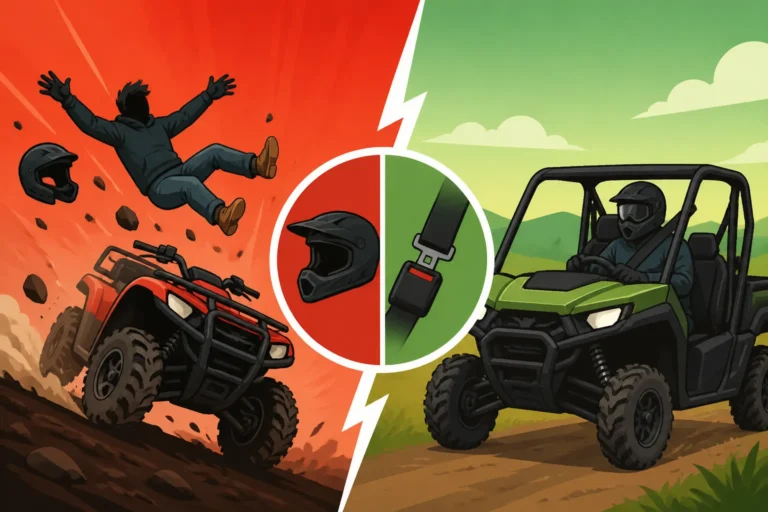
Manitoba has specific helmet laws for off-road vehicles, and these generally apply unless a specific exemption is met. On private land, there are some exemptions for machines equipped with roll-over protective structures (ROPS) and seat belts. For example, if you're operating a side-by-side or UTV that came factory-equipped with a roll cage and you're wearing the seatbelt, you might be exempt from the helmet requirement, even though you still need to exercise caution.
However, if you're on an ATV, a dirt bike, or any machine without a factory-installed ROPS, a helmet is typically required, even on private land. This is for your own protection. Accidents can happen anywhere, and head injuries are among the most severe. Always ensure your helmet meets accepted safety standards. While a robust roll cage from a brand like SuperATV can provide substantial protection, always double-check the specific provincial regulations regarding helmet exemptions based on your machine's safety features. [Manitoba Helmet Law and Its Exemptions] details these specifics, and it's always wise to review them before you ride.
Equipment Requirements That Don't Go Away
Even on private land, certain basic equipment requirements for your off-road vehicle are generally still a good idea, and sometimes legally required depending on the exact circumstances of your ride. For instance, a properly functioning spark arrester is crucial. This isn't just a regulatory formality; it's a vital safety feature that prevents stray sparks from your exhaust system from igniting dry grass or brush, which could lead to a devastating wildfire. [Manitoba Spark Arrester Requirements] are in place year-round, not just during fire season. A wildfire caused by a faulty machine on private land could lead to massive liability.
Furthermore, if you plan to ride anywhere near dawn, dusk, or at night, your machine must have functional headlights and taillights. This isn't just about being visible to others; it's about seeing where you're going and avoiding obstacles or hazards. While you might feel like you know every inch of your property, shadows and changing conditions can quickly make familiar terrain hazardous. Even if you're mostly riding during the day, it's good practice to ensure all your lights are in working order. Brands like SuperATV offer a range of lighting solutions that can significantly improve visibility and safety.
The Nuances of Riding "Your Own" Land
Riding on land you own or lease offers the most freedom, but it's not entirely without rules or considerations. There are still important provincial regulations and responsibilities to keep in mind.
The "Own-Property" Registration Exemption
This is one of the most significant exemptions in Manitoba's ORV Act. Generally, an off-road vehicle used exclusively on land owned or leased by the owner of the vehicle is exempt from registration. This means if your quad or side-by-side never leaves your property, you technically don't need to register it with MPI. This is a huge relief for farmers, acreage owners, or those with large recreational properties who use their machines solely for work or leisure within their own boundaries.
However, the key word here is "exclusively." The moment that machine leaves your property – even to cross a road to another parcel of land you own, or to ride a short distance down a ditch to a neighbour's field – it typically loses this exemption and needs to be registered. [Manitoba Own-Property Registration Exemption] clarifies the strict conditions for this. Many riders get caught out when they briefly leave their property, assuming the exemption still applies. It's a risk not worth taking, as operating an unregistered vehicle can lead to fines.
Still Responsible for Responsible Operation
Even on your own land, the general principles of responsible operation still apply. While you might not face the same immediate scrutiny from law enforcement for how you ride, you are still accountable for your actions. This includes avoiding reckless behaviour that could endanger yourself or others on your property, and being mindful of noise and environmental impact. For instance, repeatedly tearing up wetlands or creating excessive erosion, even on your own land, could potentially draw the attention of environmental agencies, especially if it impacts neighbouring properties or public waterways.
Furthermore, if you have guests riding on your property, you have a responsibility to ensure they operate safely. This means informing them of any hazards, supervising younger or inexperienced riders, and ensuring they have appropriate safety gear. Equipping your machine with durable, high-performance parts like those from SuperATV can help ensure your vehicle can handle the demands of hard work or challenging terrain, contributing to safer operation overall.
Considering Liability and Insurance
This is a critical, often overlooked aspect of riding on private land. While your machine might be exempt from registration if used solely on your own property, that doesn't mean it's exempt from the need for insurance. Your standard home insurance policy typically does not cover liability arising from the operation of an unregistered off-road vehicle on your property. If someone gets hurt while riding your machine on your land, or if you accidentally cause damage to a neighbour's property, you could be personally liable for significant costs.
Therefore, it's highly advisable to obtain specific off-road vehicle liability insurance, even if your machine isn't registered. This coverage protects you financially in case of an accident involving injury to others or damage to property. MPI offers various levels of coverage, and while the basic registration often includes some liability, a separate policy can provide more comprehensive protection. Discussing your specific needs with an insurance broker is crucial. You might also want to look into additional coverage for theft or damage to your machine itself, as the basic [Manitoba Insurance Included With Registration] often has limitations.
Avoiding Conflicts and Being a Good Neighbour
Riding on private land, whether it's your own or someone else's, comes with a responsibility to be a good neighbour and a respectful land user. Ignoring these considerations can lead to strained relationships and unwanted attention.
Noise, Dust, and the 30-Metre Rule
Even on private land, your actions can impact those around you. Excessive noise from your machine, especially late at night or early in the morning, can be a major nuisance to neighbours. Similarly, kicking up excessive dust can affect air quality and visibility. While there's no specific "dust law" for private land, these issues can lead to complaints and by-law enforcement.
Manitoba's ORV Act includes a specific "30-metre rule" that prohibits operating an off-road vehicle within 30 metres of a dwelling, school, or playground between midnight and 7 a.m. This rule does apply on private land, even your own. So, while you might be having a late-night ride across your back forty, if you come too close to a neighbour's house during those hours, you could be in violation. This rule is designed to ensure peace and quiet for residents. You can read more about [Manitoba's 30-Metre Dwelling Rule] to understand its nuances.
Environmental Impact and Responsible Riding
Regardless of land ownership, we all share a responsibility to protect the environment. Riding irresponsibly on private land can lead to significant environmental damage, such as soil erosion, disruption of wildlife habitats, and pollution of waterways. This is particularly true in sensitive areas like wetlands, riparian zones near rivers or lakes, or areas with fragile ecosystems.
Even on your own property, consider the long-term impact of your riding. Are you creating new ruts that will turn into erosion channels? Are you disturbing nesting birds or other wildlife? By choosing appropriate routes, riding at sensible speeds, and respecting natural features, you can minimize your environmental footprint. Maintaining your machine properly, including using appropriate fluids and ensuring no leaks, also contributes to environmental protection.
Local By-Laws Can Still Apply
Here's another layer of complexity: municipalities and local government districts in Manitoba have the power to create their own by-laws regarding off-road vehicle use within their boundaries. This means that even if you're riding on private land that you own, a local by-law might still impose restrictions on things like hours of operation, noise levels, or even specific areas where ORVs are prohibited.
For example, a rural municipality might have a by-law that prohibits loud engines after a certain hour, or restricts ORV use to specific zones, even on private property within that zone. These by-laws are created by local councils to address specific community concerns. It's always a good idea to check with your local municipal office or LGD for any specific by-laws that might affect ORV use on private land in your area. [Manitoba Municipal By-Law Powers] grants them this authority, so it's not something to overlook.
Private Land Riding Rules Overview
| Aspect | On Your Own Registered Land (or exempt under specific conditions) | On Other Private Land (with consent) |
|---|---|---|
| Consent Required? | No (it's yours) | Yes, always |
| ORV Registration? | Exempt if exclusively on your own land | Required |
| Age & Supervision? | Yes, provincial rules apply | Yes, provincial rules apply |
| Helmet Law? | Yes, unless ROPS/seatbelt exemption applies | Yes, unless ROPS/seatbelt exemption applies |
| Spark Arrester? | Highly recommended, often legally required | Highly recommended, often legally required |
| Lights (night)? | Highly recommended, often legally required | Highly recommended, often legally required |
| 30-Metre Rule (midnight-7am)? | Yes, applies to neighbouring dwellings | Yes, applies to any dwelling |
| Liability Insurance? | Essential (home insurance usually doesn't cover) | Essential (basic ORV registration includes some) |
| Local By-Laws? | Can still apply | Can still apply |
| Environmental Impact? | Your responsibility | Your responsibility |
Understanding these distinctions and requirements will help ensure your private land riding experiences are safe, legal, and respectful of both the land and your neighbours.
Disclaimer
This article is for general informational purposes only and does not constitute professional advice. Laws, prices and regulations vary by location and change over time. Consult a qualified professional for guidance on your specific situation.