Bug Spray in a Manitoba June
A June ATV ride in Manitoba can start pleasantly and turn miserable as soon as you stop in a damp clearing or slow down beneath the trees. Mosquitoes and black flies can make it hard to focus, eat, or enjoy the trail. This guide explains how to choose and use repellent, protect exposed skin, and plan around bugs without letting them dictate the whole ride.
Why June rides can bring so many bugs
Expect different bugs in different places
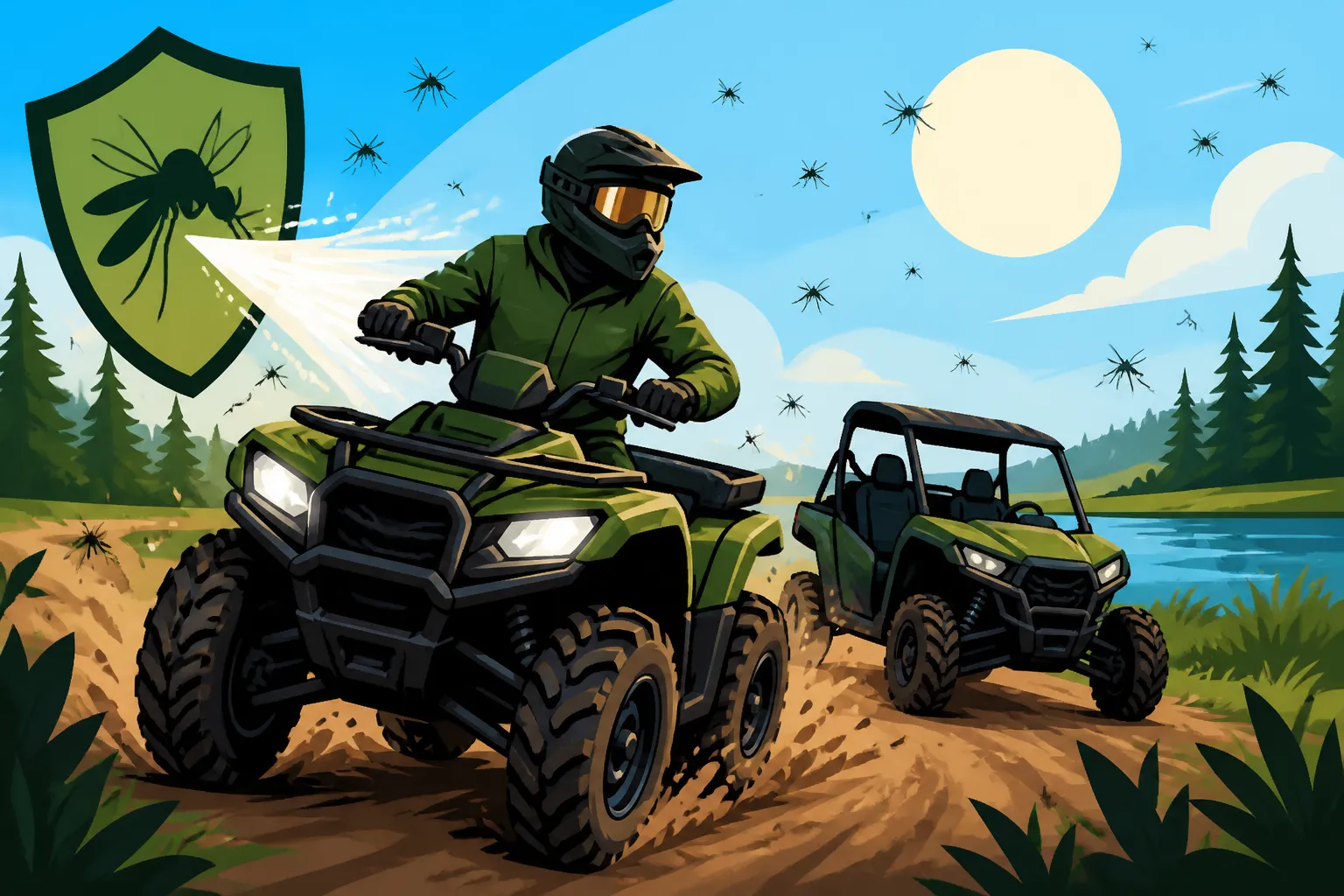
Mosquitoes and black flies are familiar nuisances across Manitoba, but conditions can feel very different from one ride to the next. A breezy, open stretch may be comfortable, while a shaded, wet patch of bush can bring a sudden cloud of insects. Low ground, standing water, and slow-moving or stopped sections often make bugs feel more noticeable because you’re exposed for longer.
Trail areas around the Eastman region can include wooded and damp stretches where riders appreciate having repellent ready before unloading. If you’re planning a route, read Black Flies on an Eastman Trail alongside local trail information. The experience can vary with weather and the specific conditions on the day; a route that felt fine last weekend may be irritating after a spell of warm, wet weather.
Riding speed can create a misleading sense of protection. Moving air may make bugs less obvious while you’re travelling, but the problem can return when you stop to check a map, help someone with a machine, or eat lunch. Keep repellent accessible, not buried under cargo, and think ahead about where you’ll stop. A shaded roadside pullout or wet trail edge may be less comfortable for a long break than a breezier, open spot.
Plan for breaks, not just the ride
The moments off the machine are often when bites become most frustrating. You might be comfortable while riding, then discover that the mosquitoes are relentless when you take off your gloves to open a snack. Build bug protection into your routine before the first stop: apply repellent according to its label, wear clothing that covers more skin, and keep a small bottle or other suitable product where you can reach it safely.
Weather and trail conditions matter, too. Rain can leave wet areas that make a ride feel buggy, while heat and humidity may make heavier clothing uncomfortable. Check the trail and weather outlook before hauling, and use Manitoba Trail Conditions Before You Haul as part of your planning. For advice on riding after wet weather, Manitoba Riding After Heavy Rain can help you consider conditions beyond the insects, including muddy or soft ground.
It helps to be realistic about what repellent can do. It can reduce exposure when used properly, but it won’t make every trail stop completely bug-free. If your group includes someone who gets especially bothered by bites, plan a shorter first outing or choose a route with easier places to pause. A little flexibility can prevent a promising ride from becoming an uncomfortable endurance test.
Choosing and using bug protection
Match the product to the way you ride
Repellents come in different formulations, and the best fit depends on the person using it, the outing, and the product label. Products containing DEET or picaridin are common options for personal skin protection; follow the label for application, age guidance, reapplication, and precautions. Don’t assume a product is suitable for every rider just because it worked for someone else.
Some riders prefer a spray, while others find a lotion or wipe easier to control around the face and hands. A spray can be convenient when you’re dressing at the trailhead, but avoid applying it carelessly near other people, food, or equipment. If the product is an aerosol or carries a flammability warning, follow its instructions and keep it away from ignition sources, hot components, and open flames. Read the label before you pack it.
A product such as onX Offroad can help with route planning, but it does not replace bug preparation or local trail checks. Keep your repellent choice based on its intended use, and don’t use a skin product on clothing or gear unless the label specifically allows it. For clothing treatments, use products made for that purpose and follow their instructions closely.
Apply carefully, especially around gear
Apply repellent according to the product directions, and avoid spraying directly into your face. When facial protection is needed, follow the label’s guidance for applying the product to your hands first and then carefully spreading it on exposed skin, keeping it away from your eyes and mouth. Wash your hands when appropriate, particularly before eating or handling food.
Take care around helmets, goggles, visors, plastics, and machine surfaces. Some repellents can affect certain materials, so check both the repellent label and the equipment care instructions. When possible, apply before putting on riding gear and allow the product to dry as directed. Avoid getting it on grips, controls, or surfaces where it could make handling slippery.
If you’re also using sunscreen, follow the instructions on both products. A common approach is to apply sunscreen first and repellent afterward, but the product labels should guide you. Don’t apply more often than directed simply because bugs are annoying. If a rider develops irritation or another concerning reaction, stop using the product and seek appropriate medical guidance.
| Protection option | Where it is used | Helpful riding consideration |
|---|---|---|
| Skin repellent | Exposed skin, as directed by the label | Check age guidance, application instructions, and reapplication directions |
| Long sleeves and trousers | Skin coverage | Choose breathable layers that still work with protective riding gear |
| Clothing treatment | Clothing only when the product is labelled for it | Follow treatment instructions and keep it away from skin unless the label says otherwise |
| Head net | Worn over the head, where suitable | Check that it works with your helmet and does not interfere with vision or fit |
| Breezy break spot | Rest stops | Choose a safe place to park away from traffic, soft ground, and trail hazards |
Make protection work with helmets and riding clothing
Repellent is only one part of a useful setup. Lightweight long sleeves, full-length trousers, gloves, and socks can reduce exposed skin, though every layer needs to work with the machine and the weather. Avoid loose clothing that could catch on controls or equipment, and don’t compromise the fit or function of a helmet, eye protection, or other protective gear for the sake of blocking insects.
A head net may be helpful during a stationary break, especially if bugs are gathering around your face. It should not interfere with your helmet, vision, or ability to operate the machine. If you can’t wear it safely while riding, keep it for stops instead. For a cooler early start, Packing for a Cold Manitoba Morning offers a useful reminder that layered clothing can serve more than one purpose on a long outing.
Make sure every person in the group has a practical option. A child’s product choice and use should follow the specific label directions, including age restrictions and application instructions. Don’t assume an adult product can be used on a child in the same way. Bring a spare layer or head net if you know someone is particularly sensitive to bites, and keep personal care products in a closed container so they don’t leak onto gear.
Building a bug-aware trail routine
Pack a small, reachable kit
A dedicated bug kit saves you from rummaging through a packed machine while insects are already biting. Keep it in a secure, easy-to-reach bag or compartment, separate from food and any items that could be damaged by a leak. A basic kit might include repellent suitable for the people on the ride, a head net, an extra light layer, and a small bag for waste.
Before leaving home, check that the product is still in usable condition and that its label is readable. If you’re carrying sunscreen as well, store both so you can identify them without guessing. Never leave an aerosol or other product in a place where its label warns against heat exposure. Avoid storing any container where it could roll under controls, spill onto a hot part, or become difficult to retrieve safely.
For a longer route, tell your group where the kit is packed and agree on a convenient place to stop if someone needs to reapply or cover up. A navigation tool such as onX Offroad may help you follow a planned route, but your group should still know the route plan and have a way to navigate if a device or connection isn’t available. A paper backup can also be useful in areas with limited service; see Manitoba ATV Trail Map Downloads and First Aid on a Long Manitoba Loop when preparing for a longer day.
Choose stops that make the break easier
Stopping in a damp, sheltered spot may leave everyone swatting at bugs while trying to eat or make a repair. When it’s safe and permitted, look for a stable, open place with some airflow. Keep machines parked securely, avoid blocking the trail, and make sure the group is visible to other users. Don’t ride into an area or leave a designated route just to find a more comfortable place to stop.
A route map can help you anticipate where you might pause, but it can’t guarantee that a particular spot will be dry, open, or comfortable. Check posted signs and local access information, and respect land restrictions. If your route passes through wet or sensitive ground, stay on the established trail rather than widening the track to dodge insects or mud. Manitoba Muskeg and Machines is a helpful topic to review when thinking about the impact of soft ground and machine travel.
Keep breaks purposeful. If one rider needs to reapply repellent, make sure the machine is safely stopped and the product is used away from hot components, food, and other riders. Give the product time to dry as directed before handling gear again. On a group ride, a few minutes spent getting comfortable is often better than pushing on while someone is distracted by bites.
Common mistakes and a practical checklist
Don’t rely on speed or one quick application
A common mistake is applying repellent once at home and assuming it will last for the entire outing. How long protection lasts and when to reapply depend on the product and its directions, so check the label rather than guessing. Sweat, rain, and time outdoors can affect how comfortable you feel, but they are not a reason to ignore the product’s stated instructions.
Another mistake is focusing only on exposed skin. Bugs may still bother you around the head, ankles, or wrists if clothing gaps are left open. At the same time, adding more layers isn’t always the answer if they cause overheating or interfere with safe riding. Balance coverage with comfort, use suitable gear, and take a break if heat or discomfort becomes a concern.
Finally, don’t treat an app or map as a substitute for checking the conditions around you. onX Offroad can be one part of a route-planning routine, but confirm access and closures through appropriate local information and posted notices. Keep to permitted trails and practice considerate riding; Manitoba Trail Etiquette Locals Expect covers the shared-use habits that help keep a day pleasant for everyone.
Use this before-you-go checklist
Before heading out, take a few minutes to make sure the group is prepared:
- Check the product label for intended use, age guidance, application instructions, and reapplication directions.
- Pack enough repellent for the outing, plus a breathable extra layer or head net if useful.
- Make sure protective clothing, helmets, and eye protection fit and function properly.
- Store products securely and away from food, hot machine parts, and any ignition source identified on the label.
- Plan safe stopping places and check trail access, posted notices, and local conditions.
- Tell your riding group where the kit is packed and agree to stop if someone needs to adjust their protection.
- Bring water and take breaks when needed; don’t let bug discomfort distract you from safe operation.
The goal isn’t to make a Manitoba June ride perfectly insect-free. It’s to avoid the predictable frustrations: realizing the repellent is buried in a trailer, discovering a product isn’t suitable for one rider, or having no comfortable way to stop. A simple kit, careful product use, suitable clothing, and a flexible route plan can make the difference between an irritating day and one you’re glad you spent on the trail.
Disclaimer
This article is for general informational purposes only and does not constitute professional advice. Laws, prices and regulations vary by location and change over time. Consult a qualified professional for guidance on your specific situation.