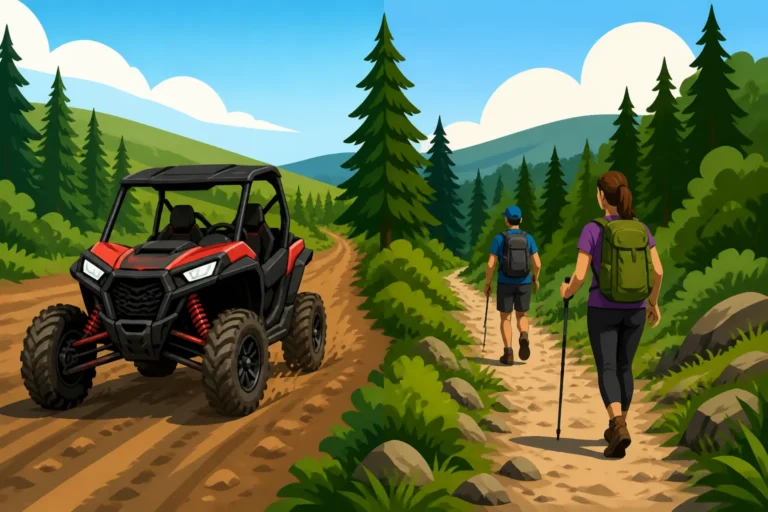
Manitoba Riding After Heavy Rain
A Manitoba trail can look rideable from the truck and still turn into deep, greasy mud a few kilometres in. Heavy rain softens soil, hides ruts and makes recovery harder—especially in muskeg, low spots and shaded bush. This guide explains when to wait, how to assess a route, and what to do if rain catches you already out riding.
Why Heavy Rain Changes Manitoba Trails
Rain doesn’t affect every route in the same way. A sandy track may drain quickly while a nearby low section stays saturated for days. Soil, slope, tree cover, drainage and recent weather all matter, so a trail that handled yesterday’s shower may be a poor choice after a night of steady rain.
Sand, clay and muskeg behave differently
In sandy areas, including parts of the Sandilands and other Eastman riding country, water may drain more readily than it does in clay-heavy ground. That doesn’t mean a sandy trail is automatically safe after rain: water can still collect in ruts, wash across slopes or expose soft shoulders. Sand can also become churned and loose when riders repeatedly spin their tires.
Clay-rich ground often becomes slick under a thin layer of water. A machine may lose steering control before the surface looks particularly muddy. On a slope, a rut can pull a tire sideways or direct runoff down the trail, deepening damage with every pass.
Muskeg and other wet, organic ground deserve special caution. What looks like a shallow puddle may cover soft ground with little support underneath. A heavy ATV or UTV can sink, break through the surface or widen a narrow route while trying to get around one soft patch. For more on why this terrain can be hard on both riders and machines, see Manitoba Muskeg and Machines.
Small low spots can become trail-wide problems
A trail may be firm near its entrance and wet farther in, where the ground dips or water drains slowly. Shaded sections can also remain damp after open ground has dried. These changes are easy to miss when you’re following someone else’s tire tracks or concentrating on keeping the machine upright.
Repeated passes can turn a minor wet patch into a deeper rut. Once riders start steering around it, the route can spread into the brush, damage vegetation and create several new soft tracks. If a section looks saturated or is already badly rutted, turning around is usually a better choice than trying to find a way around it.
Wet ground raises the cost of a mistake
Mud adds drag and can hide rocks, branches, holes and sudden changes in depth. A machine that loses momentum may be difficult to extract, and a winch recovery can place extra strain on the equipment and the people helping. A UTV carrying passengers or gear may be especially challenging to recover in a confined, wet section.
Visibility and comfort matter too. Rain can reduce sightlines through a helmet visor, make gloves harder to grip and leave riders cold once they stop moving. Before setting out, consider the whole outing—not just whether the machine can make it through one muddy patch.
How to Decide Whether to Ride
There is no single wait time that fits every Manitoba trail after rain. Conditions can vary over short distances, and a posted route or map does not tell you whether the ground is firm today. Use local information, recent weather and what you can see on arrival to make a conservative call.
Check conditions before loading the trailer
Look for trail or area updates from the club or organization responsible for the route, and check for closures or restrictions before driving out. A trailhead sign may also provide important information once you arrive. If a route is closed, respect the closure rather than treating it as a suggestion.
A map can help you understand where a route goes and plan alternatives. Tools such as onX Offroad may be useful for organizing a ride and reviewing mapped routes, but a map does not establish that a trail is open, that you have permission to use it, or that its surface is currently safe. Check the source responsible for access and current conditions as well. Manitoba Trail Conditions Before You Haul offers more on checking before making the drive.
A practical pre-ride check can include:
- Review recent weather, including whether rain fell overnight or over several days.
- Check local trail updates and any closure notices.
- Confirm access and permission for the route you plan to use.
- Ask a local club or land manager about known wet sections if information is available.
- Choose a shorter route with easy turnarounds if conditions are uncertain.
- Tell someone where you’re going and when you expect to be back.
When using onX Offroad or another mapping tool, save the route information you need before leaving areas with reliable cell service. Treat it as navigation support, not a substitute for current trail reports, signage or access permission.
Use a conservative go-or-no-go check
At the trailhead, pay attention to more than the first few metres. Look for standing water, fresh washouts, deep tire marks, soft shoulders and signs that riders have been making new tracks around wet ground. If the entrance is already breaking up, conditions farther in may be worse.
| What you notice | Safer response |
|---|---|
| A firm, well-drained surface with no visible damage | Proceed cautiously and reassess as conditions change |
| Water covering the trail and hiding its depth | Do not enter unless you can confirm it is safe and passable |
| Deep ruts, soft edges or a widening muddy section | Turn around rather than creating a bypass |
| A closure notice or an instruction to keep out | Do not ride the route |
| Unclear conditions and no reliable local update | Choose a different activity or postpone the ride |
A route that seems manageable on a light machine may not be suitable for a heavier UTV, a loaded machine or a group with limited recovery gear. Be honest about the least experienced rider in your party and the capabilities of the vehicle with the least ground clearance. If the group would struggle to turn around or recover one machine, don’t commit to an uncertain section.
Give the trail time to recover
The ground may need longer to firm up than the surface suggests. A sunny afternoon can dry exposed soil while shaded depressions and wetland edges remain soft. Instead of relying on a fixed number of hours or days, look for condition-based signs: standing water has drained, the surface supports tires without deep impressions, and there is no need to make a new line around a muddy patch.
Even a rideable trail may be better left alone if the first vehicles are already cutting deep ruts. Waiting helps protect the route for other riders and can spare you a slow, frustrating recovery. For more on avoiding fragile ground, see Manitoba Sensitive Areas to Avoid.
Riding More Carefully If You Go
Sometimes rain begins after you have unloaded, or you discover a wet section after travelling some distance. The aim then is not to prove the machine can make it through. It is to reduce damage, keep the group together and choose a safe way back.
Slow down and keep your line
Reduce speed before entering a wet or slippery section. Smooth throttle and steering inputs help you stay in control; sudden acceleration can spin tires and dig into the surface. Leave enough space between machines to avoid being pushed into a rut by the rider ahead.
Follow the established trail where it is safe and permitted to do so. If the route becomes impassable, don’t create a new path through brush or along a soft shoulder simply to avoid turning around. Backtracking may feel inconvenient, but widening the route can damage more ground and make the problem worse for later riders.
Use a spotter only when it can be done safely, with clear communication and space away from the machine’s path. Keep people clear of recovery lines and moving vehicles. If a crossing or mud hole hides its depth, don’t send a person walking into it without a safe way to assess the ground.
Know when to turn back
Turn around when you can no longer see a safe line, when the trail is breaking apart under tires, or when a machine is beginning to sink or lose control. Repeated attempts to power through can turn a simple retreat into a recovery job. If the group cannot reverse or turn around without damaging the trail, stop and reassess rather than pressing farther in.
Agree on a regrouping point before entering a challenging section. In a larger group, avoid bunching up in a narrow muddy stretch; one stuck machine can block everyone behind it. A rider who gets separated should not assume that the rest of the group has continued along the route. Pause in a safe place and follow the group’s plan for checking in.
Mobile service can be unreliable in some riding areas, particularly farther from communities. Plan accordingly: carry the essentials for the route, let someone outside the group know your plan and avoid riding beyond your group’s recovery capability. A downloaded map in onX Offroad can help with orientation where a connection drops, but it can’t call for help or confirm that an alternate track is open.
Respect access and local instructions
A visible track on a map—or an old set of tire marks—is not proof that the route is open for riding. Access can depend on land ownership, permission, local rules and temporary restrictions. This matters especially when a wet trail tempts riders to detour around a difficult section. Stay within the permitted route and check the relevant guidance before travelling on Crown land or other managed land. See Manitoba Crown Land Riding Explained.
Follow posted signs and local club guidance even if conditions look better than expected. If a local group asks riders to stay off a route after rain, that advice may reflect damage or drainage issues that aren’t obvious at the trailhead. Good riding etiquette includes leaving a soft trail for another day; Manitoba Trail Etiquette Locals Expect covers more ways to share riding areas responsibly.
What to Do After a Wet Ride
Mud and water can affect more than the trail. A quick check before putting the machine away can catch problems while they are still easy to address. It also helps prevent mud from drying around moving parts or hiding damage.
Inspect the machine before washing
Once parked safely, look over the tires, brakes, steering, suspension and underside for packed mud, branches or obvious damage. Check that lights and controls work and watch for unusual noises or leaks. If the machine has been through deep water, follow the manufacturer’s guidance for inspection and servicing rather than assuming everything is fine because it starts.
Be careful around hot components, moving parts and pressurized washing equipment. Avoid directing high-pressure water into seals, bearings, electrical connectors or other sensitive areas. If you’re unsure how to clean a particular component, use the owner’s manual or ask a qualified service professional. For practical cleaning considerations, see Washing Mud Off a Manitoba Machine.
Leave the route in better shape than you found it
Don’t use a washout or muddy trail as a place to spin tires for fun. Keep to the established route, pack out anything you brought in and avoid leaving the trailhead muddy or cluttered. If you notice a damaged section, report it to the relevant club or land manager with a clear location and description. A short report can help the people responsible for the route assess what needs attention.
If a club trail is shared with hikers, horses or other users, ride slowly and give them room. Mud can make passing and stopping less predictable, so be ready to pause rather than forcing a pass. Sharing a route respectfully is especially important when poor conditions have already made travel harder for everyone.
Plan the next trip around what you learned
Make a note of which areas stayed wet and where the trail began to rut. That memory is useful when planning the next outing, but don’t assume the same location will be equally wet or dry after different weather. Recheck conditions each time, and use updated route information alongside your own observations.
If your group found that the planned ride was too ambitious, adjust the next one: choose a shorter loop, add a turnaround point or leave the loaded trailer at home until conditions improve. onX Offroad can help you keep a route plan handy, while local trail updates and signs remain essential for deciding whether to ride it. You can also review Manitoba Trail Closures After a Storm before heading out.
Disclaimer
This article is for general informational purposes only and does not constitute professional advice. Laws, prices and regulations vary by location and change over time. Consult a qualified professional for guidance on your specific situation.