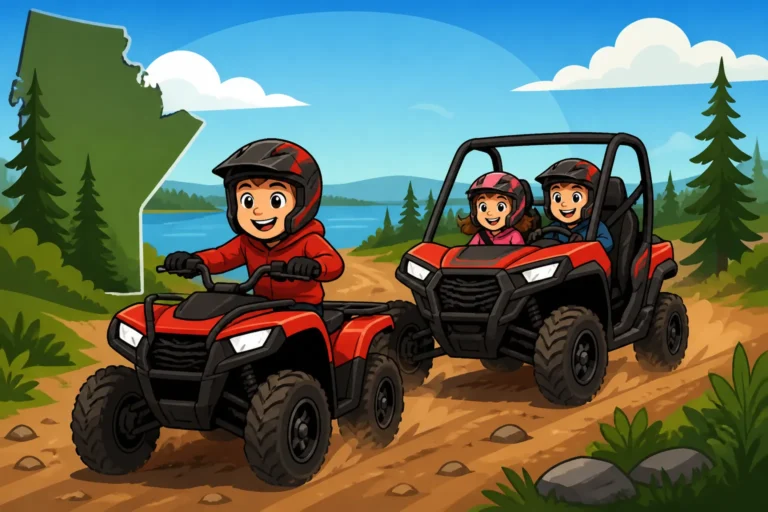
Manitoba Belair Forest Riding
Belair Forest is close enough to Winnipeg to make a tempting day trip, but arriving with a trailer does not guarantee you can ride every track you see. This guide explains how to plan a responsible ATV or UTV outing, check access and conditions, avoid sensitive ground, and prepare for the forest’s changing terrain without mistaking a visible trail for permission to use it.
Planning an ATV or UTV ride in Belair Forest
Know what area you are heading into
Belair Forest is in Manitoba’s Eastman region, east of Winnipeg and near communities around the south basin of Lake Winnipeg. The forest’s mix of bush, sandy ground, low-lying areas and recreational development can make it appealing for off-road riding. It can also make trip planning less straightforward than following a single, clearly marked route.
“Belair Forest” is a useful local destination name, not a promise that every road, path or clearing in the surrounding area is open to ATVs and UTVs. Nearby land may have different ownership, management rules or access conditions. A route shown on a consumer map might cross private property, a lease, a protected area or a road where off-road vehicles are not permitted.
Before you leave, identify the actual riding area you intend to use and check who manages it. Look for current directions or notices from the relevant trail club, land manager, municipality or provincial authority. If the information is unclear, call and ask rather than relying on a dropped pin or a trail line that looks inviting. The broader regional context is covered in [Manitoba Eastman Riding Areas].
Treat maps as planning tools, not permission
A navigation app can help you understand where you are, keep track of a route and orient yourself when several tracks look similar. Riders may use onX Offroad alongside other mapping tools to prepare a route, but a mapped line is not the same thing as authorization to ride. Map layers can differ in date and detail, and a track may not show a closure, a private boundary or a temporary restriction.
Before your trip, compare the route you have in mind with information from the organization responsible for the riding area. If you use onX Offroad, download or save the map information you need before leaving reliable service, then check whether the route has been confirmed as open by the appropriate local source. Do not assume that a route displayed in an app is an official trail.
It also helps to have a paper map or a second offline option. Cell coverage can become unreliable once you leave busier roads or enter denser bush. [Manitoba Trail Apps and Maps] offers broader guidance on preparing maps for a ride, while [Manitoba Crown Land Riding Explained] helps explain why public land access still depends on the rules that apply to a particular location.
Confirm access before unloading
The most frustrating start to a riding day is hauling a machine all the way out from Winnipeg, then finding that the intended trailhead is closed, the access road is unsuitable for the trailer, or the route crosses land you cannot use. A short check before departure can prevent a long, disappointing detour.
Confirm the trailhead location, parking arrangements and any local conditions that might affect your plan. Ask whether the route is open to both ATVs and UTVs, whether there are seasonal restrictions, and whether any portion of the route crosses private land or a Crown lease. If you are using a commercial campground, cottage area or other private facility as a staging point, ask the operator directly about vehicle access and parking.
Do not treat an informal shoulder, forestry entrance or wide pull-off as a designated staging area. A place where a truck and trailer physically fit may still obstruct traffic, block a gate or interfere with forestry and emergency access. For more on what to check before towing, see [Manitoba Trailheads With Trailer Parking] and [Manitoba Trail Conditions Before You Haul].
What the terrain and riding day can involve
Expect changing ground rather than one uniform trail
The area’s riding conditions can vary from firm, established surfaces to soft sand, rougher tracks, wet ground or narrow passages through bush. Even within one outing, conditions may change with rainfall, season, traffic and maintenance. A route that felt manageable on a dry afternoon may be tiring or difficult after a storm or during a wet stretch.
That variety affects machine choice and pace. A utility ATV carrying tools or a small load may feel different from a lighter sport quad on loose ground. A UTV can offer more room for passengers and gear, but its width may be a drawback on a narrow or overgrown track. Make sure the machine’s dimensions suit the route you have confirmed, rather than assuming a route used by smaller ATVs will accommodate every side-by-side.
Ride within your own ability and your machine’s limits. If a section is too soft, rutted or unclear, stop somewhere safe and reassess instead of following deeper tracks simply because someone else went through. [Manitoba Muskeg and Machines] explains why wet, soft ground can create particular challenges for both riders and equipment.
Plan around weather and recent use
Weather can change how a forest route rides in a short time. Rain may soften sandy or low-lying sections, fill ruts, hide holes and make a familiar turn difficult to recognize. Dry conditions can bring dust, which can reduce visibility between machines and make it harder for riders to see oncoming traffic on a shared track.
Check for recent notices and local reports before you load the trailer. If heavy rain has fallen, ask whether the intended route is open and in reasonable condition. Avoid riding through standing water when you cannot see what is underneath. A puddle can conceal a deep rut, a washout or a soft shoulder that pulls a machine off its line. The practical guidance in [Manitoba Riding After Heavy Rain] is useful for deciding when to change plans.
A good trip plan includes a fallback. If the planned route is closed or too wet, do not improvise by turning onto an unverified track. Choose another confirmed riding option, enjoy a shorter outing on an approved route, or head home and try again under better conditions. That may feel frustrating after the drive, but it is safer and more considerate than leaving fresh damage behind.
Match the route to your group
A relaxed outing with experienced riders is different from a first ride with children, new operators or a mixed group of ATVs and UTVs. Before choosing a route, consider the slowest rider, the least experienced operator, passenger needs and how far the group can travel comfortably. A route that looks short on a map may take much longer if it includes stops, navigation decisions or difficult ground.
Agree on a simple group plan before starting. Choose a lead rider and a sweep rider, set a pace everyone can maintain, and decide where the group will wait if it becomes separated. At a junction, stop in a safe spot and make sure the last rider has reached the turn before moving on. Do not let faster riders disappear around a bend and assume that everyone else knows which track to take.
Bring enough water, food, warm or rain layers, a basic first-aid kit and the tools needed for ordinary problems such as a flat tire or loose equipment. The essentials will vary with the route and weather, so plan for a longer day than the map estimate suggests. For additional preparation ideas, see [Manitoba Group Ride Planning].
| Planning question | Why it matters | What to do |
|---|---|---|
| Is this route confirmed open? | A mapped track may cross restricted or private land | Check with the land manager, club or relevant local authority |
| Can my machine fit? | UTVs may be too wide for some narrow routes | Confirm access for your vehicle type before unloading |
| Is the ground suitable today? | Rain and seasonal conditions can change trail difficulty | Check recent notices and avoid uncertain wet sections |
| Where can I park? | An informal pull-off may block a gate or road | Use a confirmed staging area and follow parking directions |
| Will we have navigation without service? | Cell reception may be unreliable away from main roads | Save offline maps and carry a backup navigation option |
| Does everyone know the plan? | Groups can become separated at turns or difficult sections | Assign lead and sweep riders and agree on regrouping points |
Ride legally and protect the forest
Confirm land status and permission
The word “forest” does not mean every track within the area is open for recreational motorized use. Land may be publicly managed, privately owned, leased or subject to special restrictions. Even on public land, the route, season and permitted uses can differ by location.
If your intended route crosses a Crown lease, do not treat the land as automatically available for riding. Access can depend on the leaseholder’s rights and consent. The same practical caution applies to private land: obtain permission before entering, and respect gates, signs and requests to stay out. If you cannot establish who controls a route or whether riding is allowed, choose a different route you can verify.
Keep these checks separate from machine registration and insurance. Having valid paperwork for your ATV or UTV does not grant access to land or make an otherwise prohibited trail legal. The guides [Manitoba Crown Lease Access Rules] and [Manitoba Private Land Permission] explain those access questions in more detail.
Stay on the route and avoid sensitive ground
Riding around a muddy spot, puddle or fallen branch can look like a harmless shortcut. Repeated detours, though, can widen a trail and damage vegetation or wet ground. Follow the established route and any posted markers. If an obstacle makes the route unsafe, turn around or report it to the group or organization responsible for the trail rather than creating a new path beside it.
Give wetlands, shorelines, creek edges, steep banks and other fragile ground a wide berth. These places may be especially vulnerable to tire damage, and a machine can get stuck quickly when the surface is softer than it looks. Do not enter planted areas, gated property or land where access is uncertain. [Manitoba Sensitive Areas to Avoid] provides broader examples of places riders should steer clear of.
A winch or recovery strap can help you get a machine out of trouble, but it should not be an invitation to attempt a questionable crossing. Before moving a stuck vehicle, make sure the recovery setup is appropriate, the anchor point is suitable and everyone stands clear of tensioned equipment. Avoid dragging a machine across vegetation or widening the damaged area while trying to recover it.
Respect shared use and nearby residents
A forest route may be used by other riders, hikers, horse users, hunters, workers or people visiting nearby recreation areas. Slow down when visibility is limited, approach blind corners cautiously and leave room for others to pass safely. Dust, noise and fast approaches can make a shared route unpleasant or intimidating even when a rider believes there is plenty of space.
Keep noise down near homes, cottages, campgrounds and parking areas. Avoid unnecessary revving, especially early in the morning or later in the evening. Pack out food wrappers, broken straps, cans and any other rubbish. If you stop, choose a location that does not block the trail or access for other visitors.
Good etiquette is not just about avoiding complaints. It helps protect continued access by showing that riders can share the area responsibly. For more practical detail, read [Manitoba Trail Etiquette Locals Expect].
Prepare for weather, fire conditions and mechanical problems
Check for closures and fire restrictions
Wildfire conditions can affect where people may travel and what activities are allowed. Restrictions may apply to an area or route even when the trail itself appears open and dry. Before leaving, check the relevant official notices and fire information for the area, and follow posted closure instructions.
Do not assume a familiar route is available simply because you rode it before. A temporary closure can be issued to protect public safety, reduce fire risk or allow response crews to work. If you encounter a closure sign, do not ride around it or continue on a nearby track to bypass the restriction. Choose an alternative that has been confirmed as open.
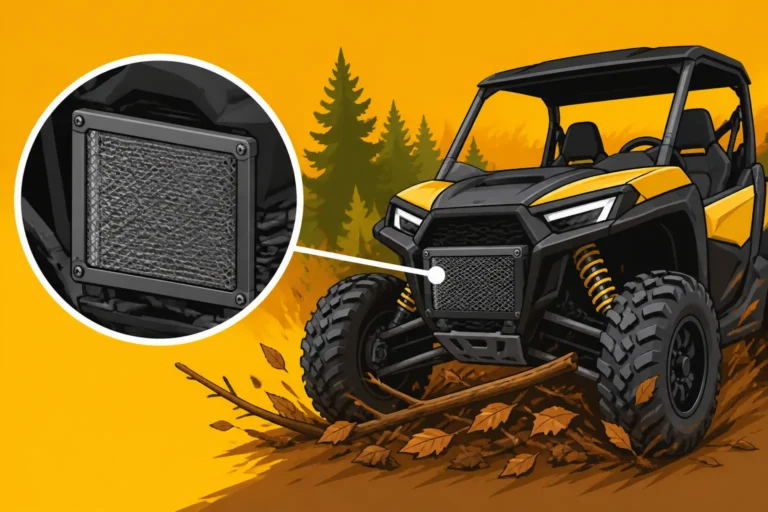
Carry and use equipment responsibly. Follow requirements that apply to your machine, including spark-arrester rules where relevant, and avoid actions that could create a source of ignition. For a fuller checklist, see [Manitoba Wildfire Season Rules for Riders].
Take a practical repair and recovery kit
A small amount of preparation can turn a minor problem into a manageable stop rather than a stranded group. The exact kit depends on the machine and route, but consider bringing a tire repair option suitable for your tires, a pump or inflator, basic tools, a spare belt if appropriate, a tow strap, a first-aid kit, and a charged phone or other communication device. Keep equipment secured so it cannot shift or fall off on rough ground.
Tell someone who is not riding where you plan to go and when you expect to return. If your plans change substantially, let them know when you can. In areas where cell service is uncertain, do not make a phone the only way to navigate or communicate. A paper map and a clear group plan are simple backups.
Use onX Offroad or another offline-capable mapping option only as one part of your preparation. Save the information before departure, make sure you know how to use it without a signal, and bring a backup. A downloaded map can help you keep your bearings, but it cannot confirm that a trail is open, replace permission or tell you whether a route is safe after a storm.
Know when to turn back
Turning around is sometimes the best decision of the day. Do so if the route becomes unexpectedly flooded, the ground is breaking under the machine, visibility is poor, a closure is posted, or the group is running short on daylight or supplies. Continuing just because the trail looked easy at the start can turn a recreational outing into a difficult recovery.
Pay attention to signs of fatigue. Riders who are cold, hungry, dehydrated or focused on keeping up are more likely to miss turns and misjudge obstacles. Take breaks before the group is exhausted, and keep the pace appropriate for the least experienced person.
If a machine becomes disabled, move the group to a safe location away from other traffic, assess the problem and avoid risky recovery attempts. A short delay or a call for help is preferable to injuring someone or damaging the trail further. Build a margin into the day so that a mechanical stop does not force the group to rush back in fading light.
A simple checklist before you go
Before loading the trailer
Confirm the route is open and appropriate for your ATV or UTV. Verify permission where land ownership or access is unclear, and check whether the staging area can accommodate your truck and trailer. Review recent weather, trail notices and fire restrictions, then save offline navigation information and choose a backup route.
Inspect the machine before the trip. Check tires, brakes, lights, fluids, controls and any cargo restraints. Make sure required registration and insurance documents are in order and that riders understand the operating rules that apply to the machine and location.
Before setting off on the trail
Tell your group the route and expected return time. Identify the lead and sweep riders, agree on regrouping points, and confirm everyone has water, suitable clothing and basic emergency supplies. Keep the first section easy enough for the group to settle into the ride and confirm that the route matches expectations.
At the trail entrance, read signs and check for barriers or new instructions. If the route differs from what you planned, stop and reassess before continuing. Take care to park without blocking gates, roads or emergency access.
After the ride
Remove rubbish, check the machine for damage and note any hazards or trail damage you encountered. Report problems to the appropriate club or land manager when possible, with a clear description of the location. Do not create a new detour to avoid an obstacle or leave equipment behind.
A thoughtful ride in Belair Forest starts well before the engine does. Confirm the route, respect land access, prepare for changing conditions and be willing to turn back when something does not feel right. Those habits help protect the riding experience for local riders and visitors alike.
Disclaimer
This article is for general informational purposes only and does not constitute professional advice. Laws, prices and regulations vary by location and change over time. Consult a qualified professional for guidance on your specific situation.