Three Campsites on Remote Lakes
Remote-lake camping in Manitoba can look simple on a map, then get complicated when you factor in ATV access, campground rules, trail conditions and where you’re actually allowed to ride. This guide compares three Duck Mountain lake-area camping options, explains how to plan a legal ride between them, and covers the practical details that help keep a remote weekend safe and enjoyable.
Three lake-area campsites to consider near Duck Mountain
Duck Mountain Provincial Park is a natural place to start if you want to pair riding with a lakeside stay. The area has established campgrounds, forest trails and a more remote feel than a roadside overnight stop. Still, a lake on a map does not automatically mean there is a legal campsite beside it—or that an ATV route reaches the campground.
The three options below are established campground areas to investigate, not a promise that every site is secluded, directly on the water or accessible by ATV from every trail. Check the park’s current campsite information and vehicle-use map before booking or unloading your machine.
Wellman Lake Campground
Wellman Lake is a useful option if you want a lakeside base with developed campground facilities. That can make it a comfortable choice for a first riding-and-camping trip, a family group or anyone who would rather not rely on an informal backcountry site. A developed campground also gives you a clearer starting point for checking what facilities, access rules and reservations apply.
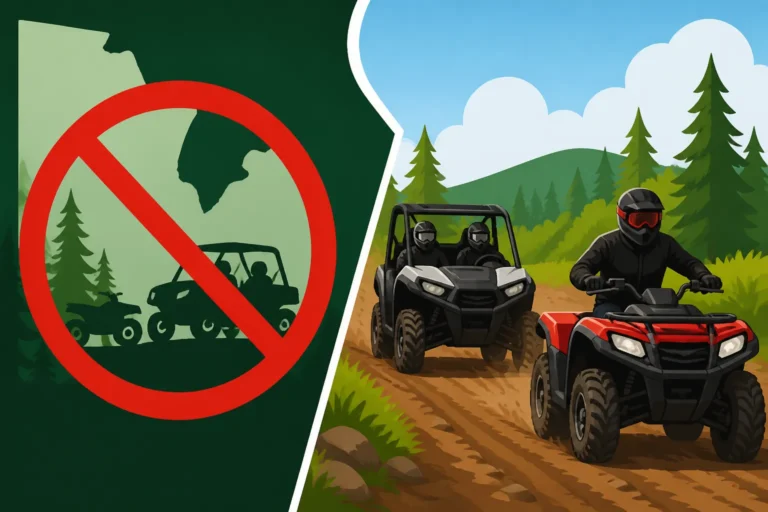
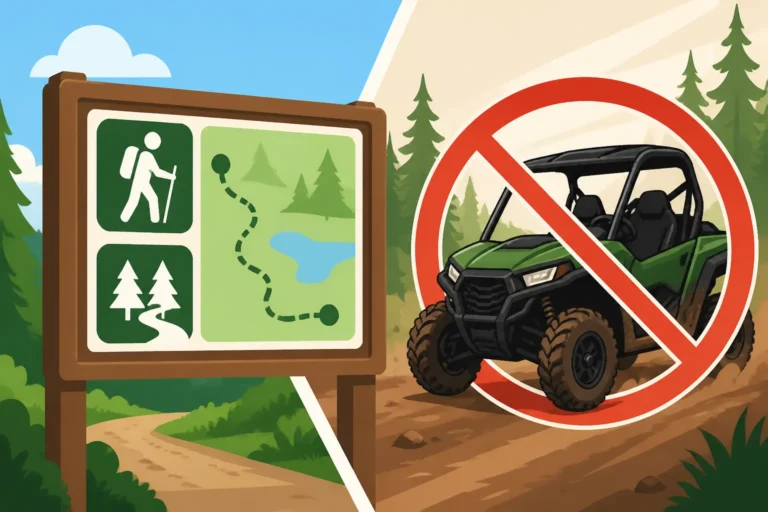
Before you plan a ride from camp, confirm whether the route you intend to use is open to your machine and permitted for that purpose. A campground road, park road and designated off-road trail are not interchangeable. Manitoba parks generally restrict machines to designated routes, so use the park’s map and instructions rather than assuming that a nearby trail connects legally to your campsite. For the broader rule, see [Manitoba Parks Allow Machines on Designated Routes Only].
Childs Lake Campground
Childs Lake is another Duck Mountain area to consider when you want a campground close to a lake and riding opportunities in the wider region. It may suit a group that wants a settled base for swimming, fishing or relaxing between rides, rather than a ride-in campsite deep in the bush.
Treat the campground and the riding route as two separate planning questions. Confirm how you can get your ATV or UTV to the campground, where it may be parked, and which trails or roads—if any—are open to your machine. If you are trailering in, look into trailer parking and unloading arrangements before you leave home. [Manitoba Trailheads With Trailer Parking] can help you think through the logistics, but the campground’s own directions should guide your final plan.
Blue Lakes and other nearby campground options
Blue Lakes is another Duck Mountain campground area worth checking when comparing lake-focused stays. Rather than picking solely by a name or a photo, compare the practical details that matter to your group: campsite availability, access, facilities, proximity to your planned riding area and whether you can keep your vehicle and trailer where they need to be.
If your idea of a remote campsite means a quiet shoreline without nearby services, an established campground may not match that expectation. On the other hand, it can offer a more predictable place to sleep and a safer fallback if weather, trail damage or a mechanical problem changes your plans. For truly remote or backcountry camping, confirm that the exact site is permitted and that you understand the park’s camping rules. The guide to [Manitoba Backcountry Campsites on a Park Trail] is a useful companion when you are weighing a designated campsite against a more isolated overnight plan.
| Campground area | Best fit for | What to confirm before you go |
|---|---|---|
| Wellman Lake | A developed lakeside base and a first camping-and-riding trip | Current facilities, reservation details, machine access and permitted routes |
| Childs Lake | A lake-area stay with recreation between rides | Parking, trailer arrangements, campground access and nearby legal routes |
| Blue Lakes | A different Duck Mountain base to compare for your group | Site availability, access conditions, facilities and distance to planned riding |
Plan the riding route separately from the campsite
A remote-feeling lake stay does not give riders permission to use every nearby track, road or cutline. The route itself needs to be legal, open and appropriate for the machine. That distinction is especially important in a provincial park, where riding is typically limited to designated routes.
Check that the route is open to your machine
Start with the park’s map and trail information, then confirm the details for the specific route you want to ride. Look for restrictions on vehicle type, seasonal closures, construction or storm damage. A line on a general mapping app can be useful for orientation, but it does not prove that a route is open to an ATV or UTV.
The [Duck Mountain's Mossberry Trail in Manitoba] is one route riders may research when planning in the area. Check its current access information and confirm how it fits with your campground plan. Do not assume that a trailhead, campsite and lake are connected by a legal riding route just because they appear close together on a screen.
Mapping tools such as onX Offroad can help you organize waypoints and compare route options, but use them as planning aids rather than substitutes for official park rules. Download any useful maps before leaving reliable service, and compare what your app shows with the park’s current information.
Check conditions before hauling
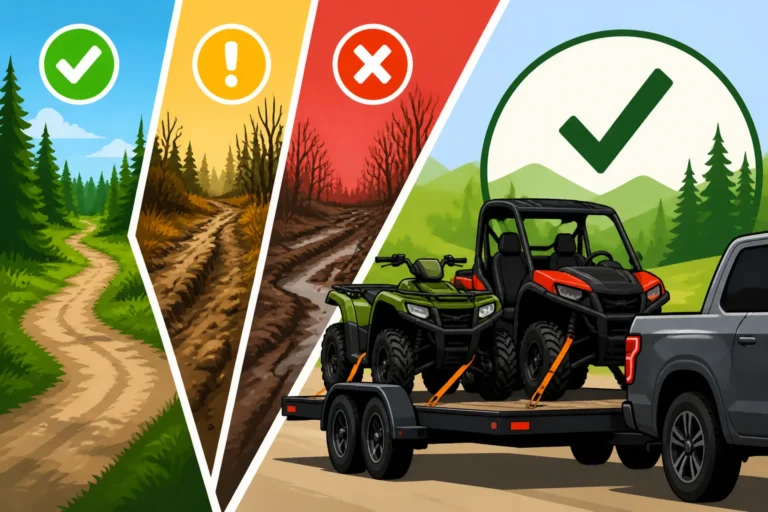
A trail that was passable on a previous visit may be muddy, washed out or closed after heavy rain or other damage. That can matter even more when you have a trailer, a group of riders or a fixed campsite booking. Check for trail notices before you load up, and have a backup route or a non-riding plan if conditions change.
The [Manitoba Trail Conditions Before You Haul] guide offers a useful checklist for this stage. Park trail-condition information is also important: [Manitoba Park Trail Conditions Pages] explains why it is worth checking current park details rather than relying only on old trip reports or social media posts. For longer rides, save a paper map or offline copy as well as your digital route.
Prepare for a remote lakeside stay
A campsite near the bush can feel peaceful and spacious, but it also means you should be prepared to handle small problems without assuming help is nearby. A flat tire, sudden storm or dead phone battery is much more stressful when your group has not planned for it.
Pack for weather, navigation and basic repairs
Manitoba weather can shift during a ride, and a warm afternoon does not guarantee a comfortable evening. Pack layers, rain protection, sturdy footwear, drinking water and a first-aid kit. For the machine, bring basic tools and the repair items appropriate to your model and riding plans. If you are travelling with a group, agree on who carries shared supplies so everyone does not assume somebody else packed them.
Cell coverage may be inconsistent in wooded or remote areas. Save maps for offline use and carry a backup that does not depend on your phone’s battery. [Packing a Paper Map in the Manitoba Bush] covers why a paper map can still be useful when digital navigation becomes unreliable. onX Offroad or another mapping app can help you mark your campsite and route, but make sure you know how to use the saved map before you lose service.
Protect the lake, campsite and other trail users
Keep your machine on the permitted route and avoid riding across shorelines, wetlands or sensitive ground. A shoreline can look like a convenient shortcut, but it may be fragile and could be off-limits. Stay within the campsite boundaries, pack out what you bring in, and follow the campground’s rules about fires, noise and waste.
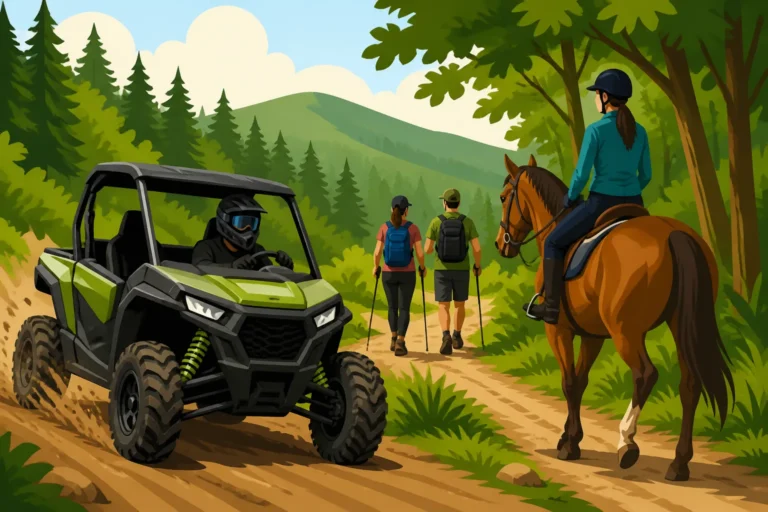
Be considerate around hikers, other campers and wildlife. Slow down where sightlines are short, give people room, and avoid revving or accelerating near campsites. [Manitoba Trail Etiquette Locals Expect] offers more on sharing trails respectfully. If your plans take you beyond a designated trail, read [Manitoba Crown Land Riding Explained] and confirm the land status and applicable access rules first; “remote” does not mean unrestricted.
A practical checklist before you leave
The easiest way to avoid a frustrating arrival is to settle the small logistical questions before the machine is in the trailer. Confirm the campground, route, parking and current conditions in one planning session, then share the plan with everyone travelling.
- Choose a specific campground. Check whether Wellman Lake, Childs Lake, Blue Lakes or another option suits your group and confirm the site’s booking and facility details.
- Verify the campsite’s access rules. Ask where the ATV or UTV may be unloaded, parked and operated. Confirm whether a trailer can remain at the campground or needs a separate parking area.
- Select a legal route. Use park information to confirm which designated routes are open to your machine. Do not use an informal track simply because it appears on a map.
- Check trail and park notices. Look for closures, poor conditions and restrictions that could affect the ride or the campsite.
- Save navigation information offline. Mark the campground, trailhead, planned route and a reasonable turnaround point. Carry a backup map and make sure another person in the group can navigate.
- Share the plan. Tell someone at home where you are staying, when you expect to return and whom to contact if you do not check in.
- Pack for a changed plan. Bring enough water, food, warm clothing and basic repair supplies to handle a delay or an early return.
The key is to treat the lake stay and the ride as related but separate parts of the trip. Confirm the campground first, verify that your machine can be there under the applicable rules, and then build a route around the designated trails and current conditions. That extra planning helps preserve the quiet, remote feel you came for without turning a weekend ride into a preventable access or safety problem.
Disclaimer
This article is for general informational purposes only and does not constitute professional advice. Laws, prices and regulations vary by location and change over time. Consult a qualified professional for guidance on your specific situation.