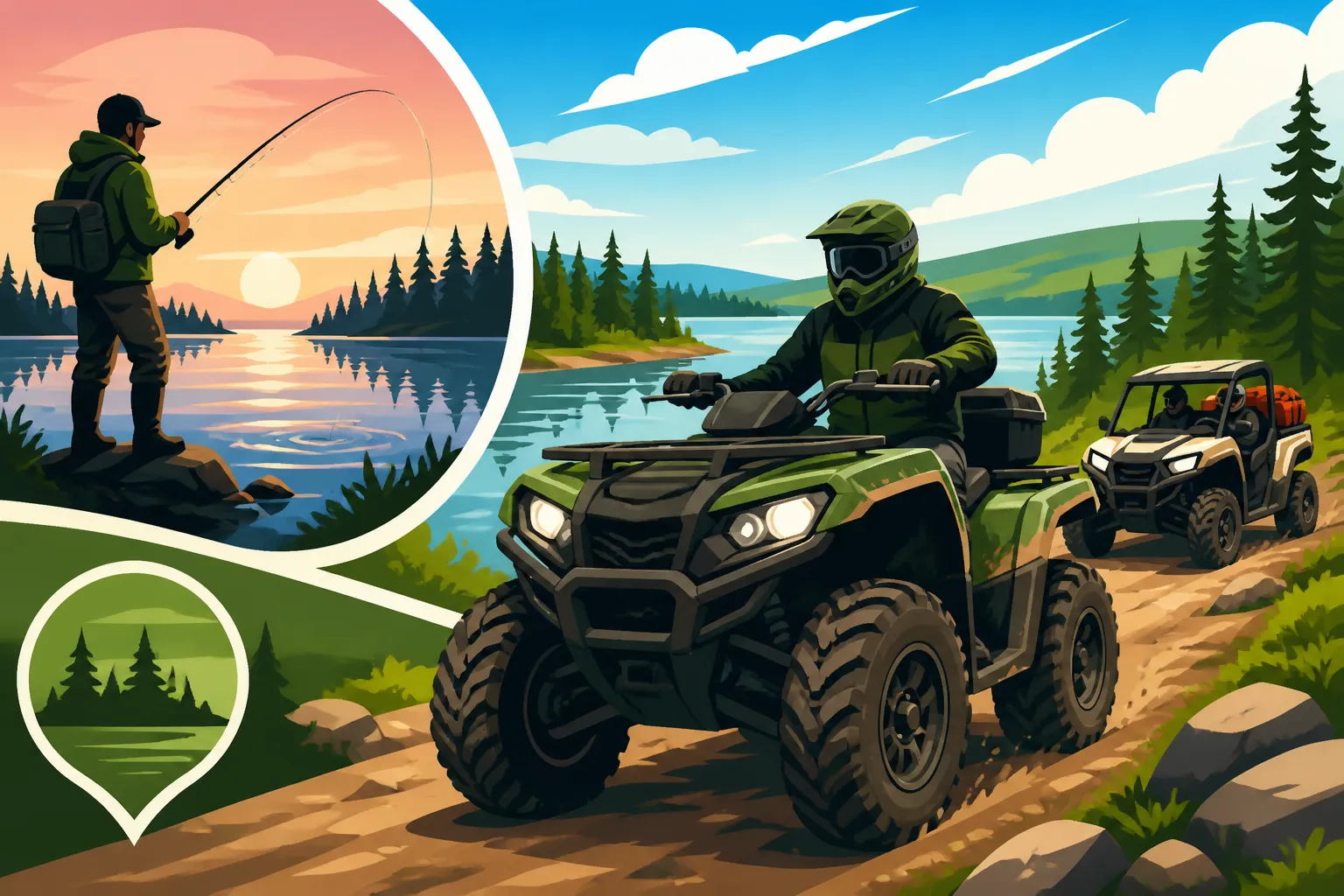
A Multi-Day Mossberry Ride With Fishing Stops
A multi-day ride on Manitoba’s Mossberry Trail sounds like the perfect mix of bush riding, quiet lakes and fishing time, until you start wondering where you can camp, whether your machine can reach the site and what to pack for a remote route. This guide helps you plan a safe, realistic Duck Mountain trip without assuming every trail, campsite or shoreline is open to off-road vehicles.
Plan the Mossberry Trail ride around the route
Set expectations for a short trail with a slower pace
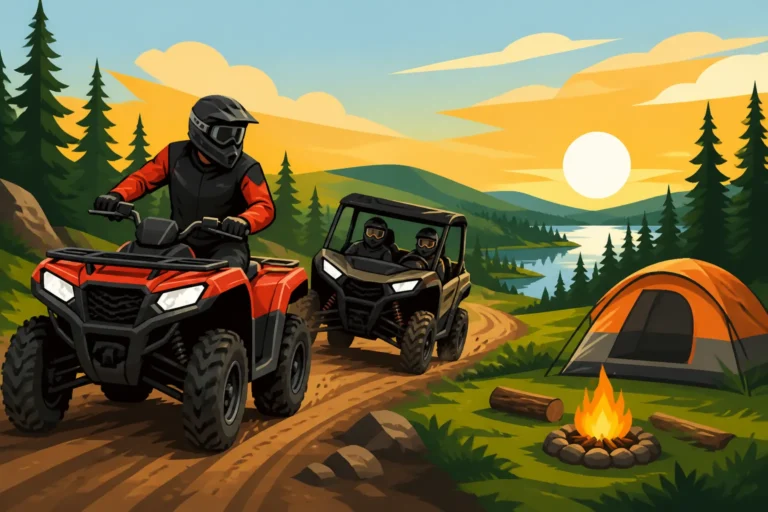
The Mossberry Trail is often described as a roughly 30-kilometre route in Duck Mountain Provincial Park. That distance can sound modest when you are used to planning a full day around a much longer trail network. But a multi-day trip here does not need to mean covering more ground. A relaxed pace leaves room for fishing, camp chores, wildlife watching and the kind of stops that turn a ride into a proper getaway.
Think of the mileage as one part of the experience rather than a daily target. A group might ride a section, pause for lunch, spend time fishing where access is permitted, then settle in for the evening. The next day could be an easy return or another short outing, depending on what the park allows and how the trail is connected. Do not assume that the trail forms a loop or that every campsite is directly beside a legal riding route. Confirm the route and campsite access before you build your itinerary around them.
The trail shares its surroundings with other visitors, including hikers and horseback riders. That matters when you are planning a ride: a narrow section, a blind corner or a busy trailhead is not the place to charge ahead because the machine feels capable. Read [Mossberry Trail Shares Ground With Horses and Hikers] before you go, and plan to slow down, give other users room and follow posted directions.
Verify access before choosing a campsite
A map may show a lake, trail and campsite close together without proving that an ATV or UTV can legally travel between them. Park routes, campsite access roads and shoreline areas can have different rules. Before leaving home, confirm which routes are designated for off-road machines, where you can unload or park a trailer, and how campers are expected to reach each site.
Duck Mountain is not a place to treat a blank patch on a map as permission to ride. Stay on routes open to your machine, and do not cut across bush, wetlands, beaches or shoreline to shorten the distance to a fishing spot. The park guidance in [Manitoba Parks Allow Machines on Designated Routes Only] is a useful reminder: permission to ride in a park is not blanket permission to explore anywhere within its boundaries.
Build flexibility into the plan. If a campsite is full, a route is closed or the park confirms that a connection is not open to ORVs, you need a legal alternative rather than an improvised shortcut. Check [Manitoba Park Trail Conditions Pages] and contact the appropriate park office when details are unclear. A quick check before loading can save a long drive with a trailer and an awkward conversation at the trailhead.
Organize the overnight and fishing parts of the trip
Treat the campsites as a limited resource
The Mossberry area is associated with three remote lakeside campsites, but that should not be read as a guarantee of availability, machine access or a particular type of reservation. Confirm the current camping arrangements directly before planning around a specific site. Ask whether you need to book, how you are expected to arrive, what facilities are available and whether the route to the site is open to your vehicle.
Remote camping also means being more self-sufficient than you might be at a serviced campground. You may have limited access to potable water, washrooms, power or cell service. Bring the water and food you need, plan how you will store them safely, and avoid relying on a phone signal to solve a problem once you are deep in the bush. The guide to [Manitoba Backcountry Campsites on a Park Trail] can help you think through the practical questions to settle before you go.
Do not choose a campsite solely because it appears closest to a lake on a digital map. A mapped shoreline can include sensitive ground, private or restricted areas, or terrain that is not a legal approach for a machine. Ask where riders may park, unload gear and walk to the water. Keep machines on the permitted route and established parking areas rather than driving onto a beach or making a new track through vegetation.
Plan fishing as a separate activity
Fishing can make a short trail ride feel like a full weekend, but the right fishing plan depends on more than finding water. Check the applicable Manitoba fishing regulations before the trip, including licensing requirements, seasons, limits and any water-specific restrictions. Rules can differ by species and location, so do not rely on what someone remembers from a previous season or another lake.
It also helps to decide how you will carry fishing gear without making the machine unsafe. Keep rods secured so they cannot snag brush or interfere with steering, braking or a passenger. Store hooks and tackle in closed containers, and keep food, bait and waste organized at camp. If you are riding with a group, agree on where everyone will stop and how you will regroup before anyone heads toward the water.
Think through how you will get from a legal parking point to the fishing area. A campsite beside a lake does not automatically mean you can ride down to the shore. Park where permitted, then walk if access is allowed. If the route, landing or shoreline conditions are unclear, ask the park staff rather than testing the boundary. The point is to enjoy the fishing stop without damaging the site or creating an access problem for the next visitor.
| Trip detail | What to confirm before leaving | Why it matters |
|---|---|---|
| Trail access | Which Mossberry sections are open to your machine | Avoids relying on an outdated route or an informal track |
| Campsite | Availability, reservation rules and permitted access | A nearby site may not be open or reachable by ORV |
| Fishing | Licence, season, limits and local restrictions | Rules can vary by species and waterbody |
| Parking | Where to unload, park and leave a trailer | Prevents blocking a trailhead or using an unauthorized area |
| Fire | Current restrictions and approved fire arrangements | Fire rules can change with conditions |
| Communications | Expected cell coverage and backup plan | Remote areas may have dead zones |
Prepare your machine and group for a remote ride
Pack for the conditions, not just the forecast
Duck Mountain weather can make a comfortable morning feel very different by afternoon. Pack layers, rain gear and warm clothing even if the forecast looks friendly. A cold, wet rider is more likely to rush, make poor decisions or cut a trip short. Bring drinking water, food, basic first aid supplies and a repair kit suited to your machine.
For a multi-day outing, make a short checklist before packing:
- Inspect the machine, including tires, brakes, lights, battery and fluid levels.
- Bring tools and basic repair items that match your machine, such as a tire repair kit and a spare drive belt if appropriate.
- Secure cargo so it cannot shift on rough ground or hang into the trail.
- Carry a map that remains useful if your phone battery dies or you lose reception.
- Tell someone who is not riding with you where you plan to go and when you expect to check in.
- Keep essential documents and emergency items accessible rather than buried under camping gear.
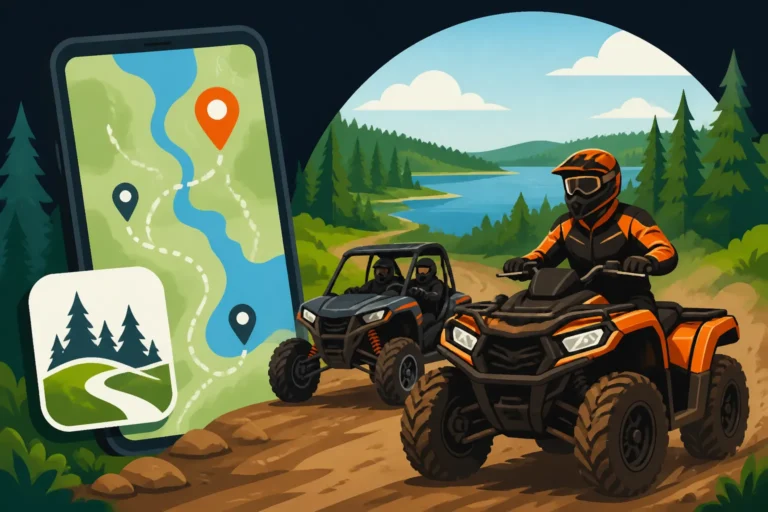
A digital map can help with trip preparation, but it should be a navigation aid, not proof that a route is legal or open. Some riders use onX Offroad to review route information and organize saved map areas before heading out. If you use it, download what you need in advance and compare the route with current park information and signs on the ground. onX Offroad cannot replace a posted closure notice or permission from the land manager.
Make the group plan work for mixed experience levels
A group ride is only as comfortable as its least-prepared rider. Before you start, agree on the route, the turnaround point, the pace and how you will handle a mechanical problem. Keep the group together at junctions and stop where everyone can pull safely off the trail. Avoid assuming that the strongest rider should simply go ahead and wait somewhere later; in unfamiliar bush, that can leave people unsure which turn to take.
If young riders or passengers are joining, check that each person and machine meet the applicable requirements. Manitoba’s operating rules, age requirements and supervision expectations are separate from a park’s route rules. Review [Manitoba ATV Age Requirements] and [Manitoba Rules for Riding a Frozen Lake] if those topics apply to your group or planned activities. A lake that looks solid is not an invitation to ride onto it, and winter conditions bring their own hazards and restrictions.
Use a navigation tool such as onX Offroad to help the group follow a planned track, but set a simple procedure for when riders lose sight of each other. Choose clear regrouping points, keep a paper or offline backup map and make sure everyone knows how to return to the trailhead. onX Offroad can be useful for preparing and sharing a route, but do not let a phone screen distract the operator while the machine is moving.
Ride responsibly and leave room for a backup plan
Share the trail and protect the lakeside setting
Mossberry’s appeal is its quiet setting, so considerate riding is part of preserving the experience. Reduce speed when approaching other trail users, blind bends and busy areas. Give hikers and horseback riders plenty of space, and follow any directions they give if a horse needs time to pass. Keep noise down near campsites and cottages, and avoid revving or riding around simply because there is room.
Stay on the established route. Wet ground, muskeg, stream edges and lakeshores can be especially vulnerable to damage from repeated tire tracks. A machine that gets through once may still leave a rut that channels water or makes the area harder for others to use. If a section looks saturated or damaged, do not widen it by steering around the problem. Turn back or ask about an approved alternative.
Check fire restrictions before you travel and again if conditions change. Do not assume that a fire permitted at a regular campground is permitted at a remote site. Follow posted rules, use only approved fire areas and fully extinguish any permitted fire. For a broader look at seasonal restrictions, see [Manitoba Wildfire Season Rules for Riders]. Pack out your food scraps, fishing line, packaging and any other waste; leave the campsite ready for the next group.
Know when to change the plan
A good itinerary has a sensible fallback. Heavy rain can make a route unpleasant or vulnerable to damage, a storm can affect tree cover, and a closure can change what is accessible. A fishing stop may also take longer than expected, or a mechanical issue may mean the group needs to return early. Decide in advance what conditions will make you shorten the ride or turn around.
Keep your schedule loose enough that you are not forced to ride quickly near dusk. Check the day’s light, give yourself time to pack camp, and make sure your machine is equipped for the conditions you expect. If you are not sure whether a trail segment or campsite connection is open, do not use a map app’s line as permission to proceed. Confirm with park staff and obey signs and barriers.
Finally, carry the paperwork and equipment you are expected to have for your ride. Registration, insurance, helmet and other operating requirements can apply even when the trip is recreational or the machine is used only on a trail. Review [Carrying Your Registration Card on Every Ride] and check the rules that apply to your specific machine and riders before setting out. A little preparation makes it easier to spend the weekend thinking about the trail, the lake and the next cast instead of wondering whether a basic detail was missed.
Disclaimer
This article is for general informational purposes only and does not constitute professional advice. Laws, prices and regulations vary by location and change over time. Consult a qualified professional for guidance on your specific situation.