Manitoba Poker Runs and Club Rides
A Manitoba poker run can sound like a simple day out: meet at a trailhead, ride with a group, collect cards at checkpoints, and head back for a prize draw. The details that cause headaches are usually less exciting: unclear routes, mismatched machine paperwork, changing trail access, and riders who arrive without the right gear. This guide explains how to prepare and ride responsibly.
What to expect at a Manitoba poker run or club ride
How a poker run usually works
A poker run is generally a group ride with several checkpoints. At each stop, participants collect a playing card or another marker; the hand assembled by the end may determine a prize or simply add a bit of friendly competition. The format is set by the organizer, so check the event instructions rather than assuming every poker run uses the same rules.
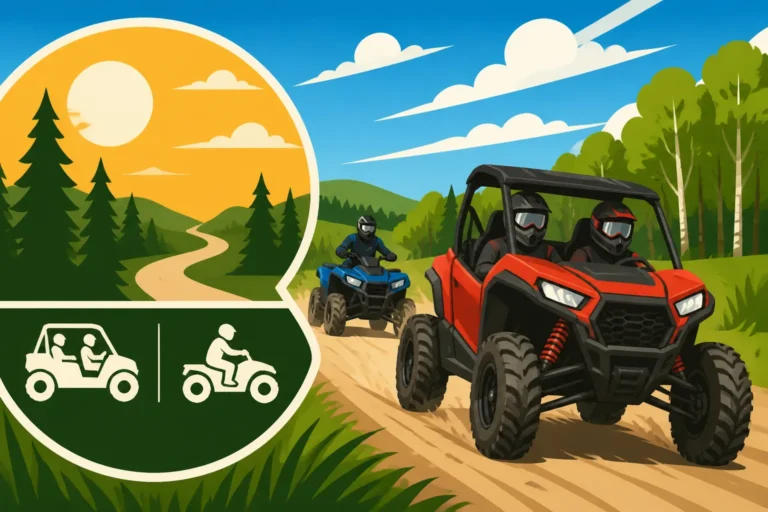
The ride itself may be guided, self-guided, or split into groups based on pace or machine type. Some events keep everyone on a planned loop, while others provide a route and let participants travel between checkpoints independently. Confirm where and when the ride starts, whether there is a required return time, and what to do if you become separated from your group.
A poker run is not automatically a race. Unless the organizer clearly describes a timed competition, treat it as a social ride, not a reason to push your speed. A fast start can create dust, crowd the first turn, or leave newer riders behind before the group has settled into a safe rhythm.
What a club ride may look like
A club ride can be less structured than a poker run. It might be a casual outing for members, a planned day ride, a seasonal event, or a chance to explore a club’s trail network together. The route and pace may reflect the terrain, group size, weather, and experience of the riders who sign up.
Ask whether the ride is suitable for your machine and experience level. A route that feels straightforward on a dry, familiar trail can become tiring when it includes deep ruts, standing water, loose sand, or a long stretch through the bush. If you are new to the area, say so when you register. A good ride leader can explain whether the planned outing is a comfortable fit or suggest a shorter option.
Events around regions such as Eastman, the Interlake, Westman, and the area near Duck Mountain can involve very different riding conditions. A club ride near Lac du Bonnet is not necessarily like a day out near Brandon or The Pas. Check the specific route details, and review [Manitoba Group Ride Planning] before you haul your machine.
| Event detail | What to confirm before leaving home |
|---|---|
| Route | Where it goes, how it is marked, and whether a map or navigation tool is provided |
| Pace | Whether riders are grouped by speed or experience |
| Machine suitability | Whether the route accommodates your ATV or UTV and its setup |
| Checkpoints | How to find them and what to do if you miss one |
| Required documents | Registration, insurance proof, identification, or event forms |
| Trail access | Whether the route crosses club, private, Crown, or park land |
| Weather plan | Whether the event changes or is cancelled for rain, fire restrictions, or unsafe conditions |
| Support | Who to contact if you get lost, break down, or need to leave early |
Get your machine and paperwork ready
Check registration, insurance, and documents
Before joining a ride, confirm that your machine’s registration and insurance arrangements meet Manitoba requirements and any event rules. A club invitation is not a substitute for checking your own paperwork. If you are unsure what documents to carry, read [The Certificate Manitoba Riders Must Carry at All Times] and [Manitoba Insurance Proof on the Trail].
Put essential papers somewhere they will not turn into a damp, muddy bundle. A secure pouch or protective sleeve can make a real difference during a wet day. It is also sensible to keep an emergency contact’s details accessible, especially if your phone may lose service on a remote route.
If you are visiting from outside Manitoba, do not assume that the event’s registration process covers your machine. Review [Manitoba Visitors Registered at Home] and check that your home registration and insurance meet the requirements for riding in the province. Visitors still need to follow local operating rules and the event organizer’s directions.
Inspect the machine and pack for the route
A quick check before loading can prevent a long day from becoming a frustrating one. Look over tires, brakes, steering, lights, battery connections, and visible fluid leaks. If you expect mud, sand, or long distances, check that the machine’s belt, cooling system, and recovery gear are in suitable condition. Bring any machine-specific tools or spares you already know you may need.
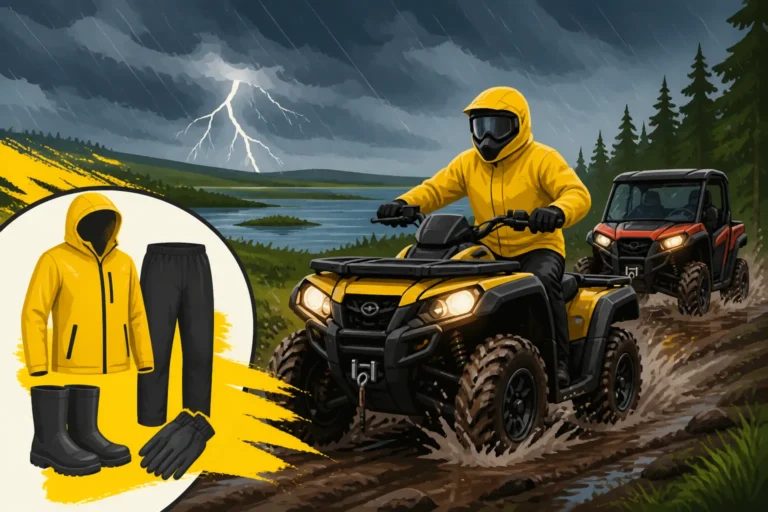
Pack for the day rather than for the parking lot. A comfortable group ride can stretch longer than expected because of a checkpoint delay, a minor repair, or a route adjustment. Useful items may include water, food, weather layers, gloves, eye protection, a first-aid kit, a flashlight, and a charged phone. For remote riding, consider carrying a paper map as a backup. Cell service can be unreliable in parts of northern Manitoba and away from larger communities.
Navigation apps such as onX Offroad can help you review a route and keep track of where you are, but do not treat a digital map as proof that you have permission to ride every line it displays. Access may depend on a club route, landowner consent, Crown land restrictions, a lease holder’s permission, or a temporary closure. Confirm the event’s approved route before the ride.
Follow the route and respect local access
Understand trail access before you unload
A route that looks open on a map is not automatically open to off-road machines. Event organizers should explain where the ride goes and what access permissions apply, but riders should still pay attention to signs, gates, and instructions at the trailhead. Do not assume that a nearby road, fire guard, or visible track is part of the event route.
If an event uses provincial park land, ask whether a park vehicle permit is needed for the machine or vehicle you are bringing. Park rules can differ by location, and machines may be restricted to designated routes rather than allowed throughout a park. For help checking the distinction, see [Manitoba Parks Allow Machines on Designated Routes Only] and [Manitoba Crown Land Riding Explained].
Ask about cancellations and reroutes, too. Fire restrictions, trail damage, high water, or a land-access issue can change a plan. Manitoba’s fire-season rules and area closures may affect where a group can travel. Check the latest event communication and read [Manitoba Wildfire Season Rules for Riders] before setting out, especially for a ride planned in dry conditions.
Ride in a way that works for the group
A group ride is easier when riders leave enough space, stay alert, and avoid sudden changes in speed. Keep a pace that matches the conditions rather than the most powerful machine in the group. If dust reduces visibility, increase following distance. On a narrow trail, slow down when meeting another group and follow the ride leader’s instructions about passing or pulling over.
Do not pressure a less experienced rider to keep up. If the group has a sweep rider at the back, understand who that person is and how the group handles a mechanical problem or an early exit. If you need to stop, move to a safe place where you are visible and will not block the trail. Let the appropriate ride leader know rather than assuming someone will notice you are missing.
Shared trails require courtesy beyond the event group. Yield where appropriate, control speed near homes and cottages, and give hikers, horseback riders, and other trail users space. Keep noise and dust in mind near communities and campsites. For more on local trail expectations, review [Manitoba Trail Etiquette Locals Expect].
Plan the day with a practical checklist
Questions to ask the organizer
A few clear questions before the event can prevent confusion at the staging area. Ask for the meeting point, start procedure, route length or expected riding time, and whether the route is appropriate for your machine. Find out whether riders must register in advance, what happens if you arrive late, and how the organizer will share changes or cancellations.
It is also worth asking whether you need to bring anything specific, such as proof of registration, a radio, a tool kit, or a recovery strap. If you are riding a UTV, confirm that the route accommodates its width and turning needs. A trail that works well for a smaller ATV may be a poor fit for a wider side-by-side.
If you are attending with children, discuss supervision and passenger arrangements with the organizer before the ride. Do not assume a family event means every route is appropriate for every young rider. Check Manitoba’s age, equipment, and passenger requirements, and choose a group pace that is genuinely safe for the least experienced person in your party.
A simple pre-ride routine
Use this routine the evening before or the morning of the event:
- Confirm the event is still going ahead and check for route updates.
- Review the meeting location, arrival instructions, and contact information.
- Check your machine, fuel, tires, lights, and essential recovery equipment.
- Pack water, food, weather-appropriate layers, first aid, and a navigation backup.
- Put registration and insurance documents somewhere dry and accessible.
- Tell someone who is not riding where you are going and when you expect to return.
- At the staging area, listen to the safety briefing and ask about anything unclear.
A navigation app such as onX Offroad can be useful for reviewing your planned route before departure and orienting yourself during the ride. Still, follow the organizer’s route and use the app as a tool, not as permission to explore side trails. If the group changes course, get confirmation from the ride leader before following an unfamiliar track.
After the ride, take a moment to check your machine for damage and remove mud or debris that could hide a problem. Report a blocked or damaged trail to the organizer or relevant club rather than creating a new route around it. That small bit of follow-up helps clubs maintain access and gives the next group a better chance of finding the trail in good condition.
Whether it is your first poker run or a regular club outing, the best preparation is simple: know the route, bring the right documents and gear, and ride at a pace that lets everyone get home safely. onX Offroad may help with route awareness, but local permission, organizer instructions, and posted restrictions always matter more than what appears on a screen.
Disclaimer
This article is for general informational purposes only and does not constitute professional advice. Laws, prices and regulations vary by location and change over time. Consult a qualified professional for guidance on your specific situation.