First Aid on a Long Manitoba Loop
A long Manitoba ATV loop can turn a minor cut, a mechanical delay, or a sudden change in weather into a serious problem when the trailhead is hours behind you. This guide explains how to prepare a practical first-aid kit, respond to common riding injuries, and plan for communication and evacuation before you leave.
Plan for the ride you are actually taking
Match your first-aid kit to your route and group
A short ride near a town and a full-day loop through bush or remote forest are not the same first-aid problem. Think about how long it could take to reach help, how many people are riding, and what conditions you expect. A small kit for a quick spin may be fine for a minor scrape, but it may not have what you need to manage bleeding, a sprain, or a cold, wet rider while the group organizes help.
Build a kit around the people coming with you. Include each person’s essential medication, such as a prescribed epinephrine auto-injector or inhaler, and make sure the person who needs it knows where it is. For a group with children, consider their individual needs rather than assuming adult-sized supplies will work. Check expiry dates and replace anything that has been used, opened, or damaged.
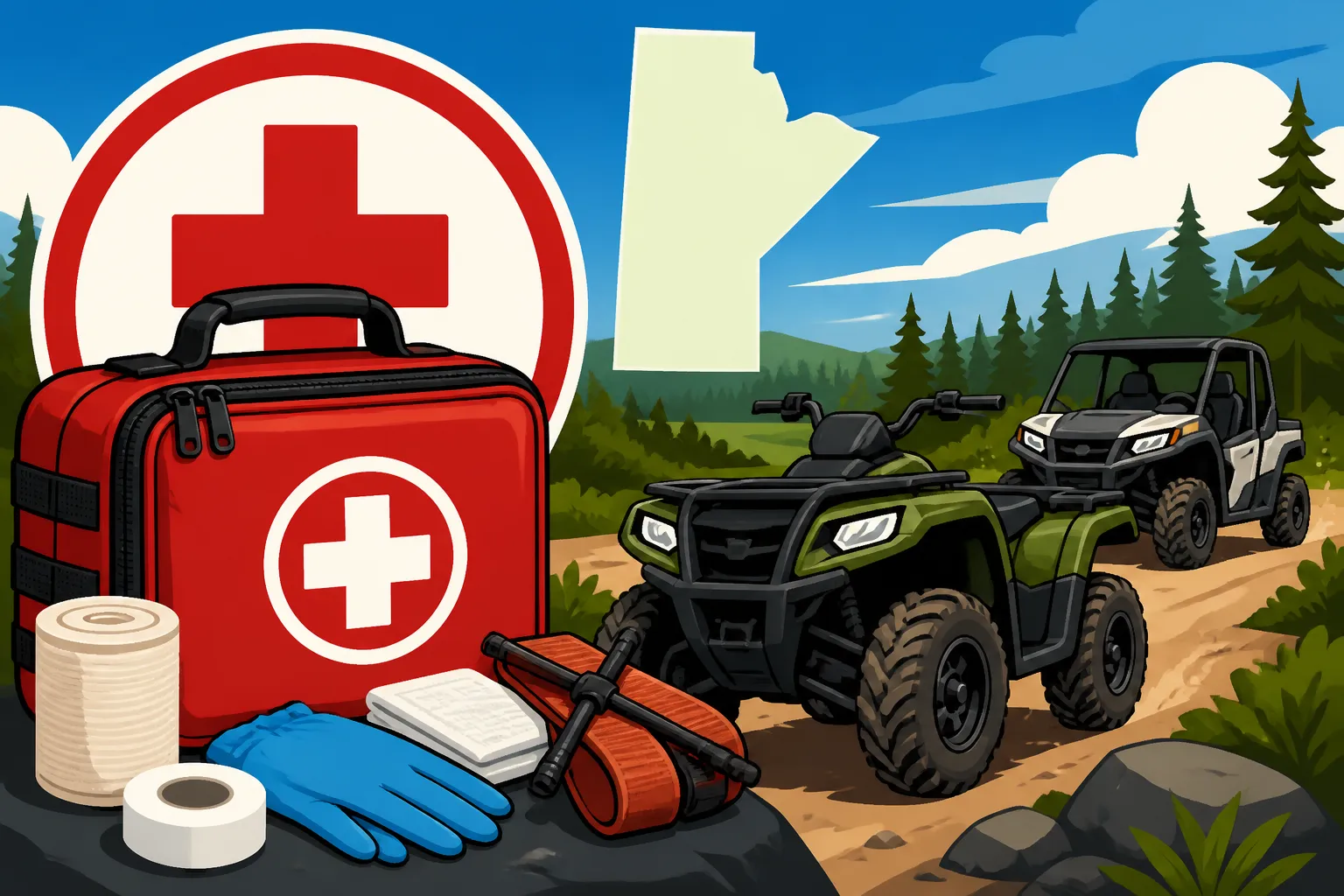
For a longer Manitoba loop, keep supplies together in a waterproof pouch or hard-sided container secured to the machine or carried by a rider. A kit that is buried under tools, lunch, and spare clothing is less useful when somebody is hurt. Tell the group where it is before you set out, and consider carrying a smaller personal kit as well.
| Situation | Useful preparation | Why it matters |
|---|---|---|
| Cuts and scrapes | Gloves, gauze, dressings, tape, antiseptic wipes | Lets you clean and cover minor wounds |
| Heavy bleeding | Several gauze pads and a commercial tourniquet if someone is trained to use one | Allows the group to respond quickly while help is arranged |
| Sprains or suspected fractures | Elastic wrap, triangular bandage, and a simple splinting option | Helps support an injured area without forcing movement |
| Cold or wet conditions | Dry insulating layer, emergency blanket, and spare gloves | Helps limit heat loss while a rider waits |
| Heat and dehydration | Drinking water, electrolyte drink or tablets, and shade planning | Makes it easier to stop, cool down, and rehydrate |
| Communication trouble | Charged phone, backup power, and a satellite communicator where appropriate | Provides another way to seek help beyond cell coverage |
Use supplies you understand. If nobody in the group has practised applying a tourniquet or using a splint, a kit alone will not provide that training. A first-aid course can help riders feel less frozen when an injury happens, and hands-on practice is especially useful for groups that ride far from roads.
Check the route, weather, and escape options
Before unloading, make sure the group agrees on the route, the planned turnaround time, and the point at which you will head back even if you have not reached your intended destination. Manitoba trails can pass through forest, wet ground, and areas where cell service is unreliable. A route that looks simple on a screen may take longer because of mud, fallen trees, a machine problem, or a slower rider.
Check local trail information and conditions before you leave, and carry a map you can use without a mobile connection. Tools such as onX Offroad may help you review route information and save navigation details for offline use, but do not treat a phone app as your only navigation plan. Keep a paper map or another independent backup, and make sure at least one other rider knows how to use it.
Identify more than one way to leave the area. A trailhead may be the obvious exit, but the safest option after an injury could be a nearby access road or a place where emergency responders can meet the group. When you are riding in a designated area, read the signs and check any closures or local restrictions before setting out. Manitoba Trail Conditions Before You Haul and Manitoba Trail Apps and Maps can help you think through those planning steps.
Share your plan with someone who is not riding. Give them the route or general riding area, the names of the riders, your expected return time, and instructions on when to contact emergency services if you do not check in. A vague message such as “we’re going north for a while” is not much help if the group is overdue.
Respond safely when someone is hurt
Start with the scene and the person
A rollover, collision, or breakdown can leave hazards around the injured rider. Before approaching, check for moving machines, unstable equipment, fire, traffic, or other immediate dangers. Ask another rider to secure the machines and manage the group so the first-aid response is not crowded or interrupted. If the scene is unsafe, move people away from the danger if you can do so without creating another risk.
Check whether the person responds and is breathing normally. If they are unresponsive, have difficulty breathing, or appear to have a life-threatening injury, call emergency services as soon as possible. If you are in an area without reliable cell service, use the communication method you planned for, such as a satellite communicator, or send a capable rider to a known location with service while another person stays with the injured rider.
Get consent before providing care if the person is conscious and able to respond. Use disposable gloves when available, and avoid direct contact with blood. Keep the person still and warm, and monitor their condition while the group arranges help. If there is a serious concern about a head, neck, or back injury, avoid moving them unless staying in place presents an immediate danger.
Assign specific tasks rather than asking the whole group to “help.” One rider can call or message for assistance, another can gather the first-aid kit, and someone else can guide responders or watch the route. This keeps the response organized and reduces the chance that everyone assumes somebody else has made the call.
Manage bleeding, suspected fractures, and shock
For a cut that is bleeding, apply steady pressure with clean gauze or cloth. If blood soaks through, add more material without pulling away the first layer. A severe or uncontrolled bleed needs urgent emergency help. A commercial tourniquet may be appropriate for life-threatening bleeding from an arm or leg when the person applying it knows how to use it; follow its instructions and do not loosen it after application.
If an injury looks like a fracture or a serious sprain, do not try to straighten the limb or test how much it can move. Support it in the position found, using padding or a simple splint only if you can do so without causing more pain or delaying evacuation. Remove rings or tight items from an injured hand early if possible, since swelling can make them difficult to remove later.
Pale, clammy skin, weakness, confusion, or faintness can be signs of a serious problem. Have the rider lie still if that is safe, protect them from cold or heat, and keep monitoring their breathing and responsiveness. Do not give food or drink to someone who is confused, vomiting, or not fully alert. These measures do not replace professional medical care; they are steps to support the person while help is being arranged.
For head injuries, treat unusual sleepiness, confusion, repeated vomiting, worsening headache, seizure, or loss of consciousness as urgent warning signs. A rider who seems “mostly fine” after a hard impact may still need medical assessment. Do not let them ride themselves out or operate a machine simply because they want to keep the group moving.
Handle Manitoba’s changing conditions
Prevent cold stress and heat illness
Manitoba weather can shift during a ride, and a wet rider can become chilled even when the day began comfortably. Wind from riding, sweat, rain, and waiting beside an injured person can all increase heat loss. Pack a dry insulating layer and gloves where they can be reached quickly, not under cargo that takes ten minutes to unload. If someone becomes cold, get them out of wet clothing when practical, add dry layers, and shelter them from wind.
Watch for shivering, clumsiness, unusual fatigue, or confusion. These symptoms can affect judgement and coordination, which is particularly dangerous around machines. Stop riding and warm the person gradually. If they are confused, very drowsy, or getting worse, treat the situation as urgent and seek emergency help. Do not assume a rider can safely continue just because they insist they are okay.
Heat can also become a problem on an exposed trail, during strenuous recovery work, or when someone is wearing heavy protective gear. Headache, nausea, dizziness, weakness, and unusual irritability are reasons to stop, move into shade, loosen unnecessary layers, and cool down. Offer small amounts of water to someone who is alert and able to drink. Confusion, collapse, or a very high level of distress requires urgent help.
Plan water and rest stops for the slowest rider, not just the person who feels strongest. A group that carries enough water for the expected ride but no reserve can be caught short if a machine becomes stuck or the route takes longer than planned. Packing for a Cold Manitoba Morning and First Aid on a Long Manitoba Loop are useful reminders that comfort and emergency preparation are part of the same trip plan.
Avoid making an injury worse during evacuation
Getting an injured person out is not always as simple as putting them on another machine. A rider with a possible head, neck, back, or serious leg injury may be harmed by an improvised ride over rough ground. Contact emergency services for guidance when possible, explain the location and nature of the injury, and follow their instructions. If you cannot communicate, use your best judgement, avoid unnecessary movement, and prioritize an immediate threat such as fire or another danger.
Before moving a rider, consider whether the route itself is safe for them and for the people helping. Mud, steep ground, low visibility, and unstable footing can lead to a second injury. Use enough people to assist, move slowly, and stop if the person’s condition worsens. Do not lift someone by an injured arm or leg or pull them by their clothing.
A rider who can walk may still need support and assessment. Let them decide whether movement hurts, but do not pressure them to prove they can continue. If they are unsteady, confused, or weak, keep them seated or lying down in a safe place while the group arranges help. The priority is not getting back to the trailer quickly; it is avoiding a preventable second injury.
Before travelling, know how to describe your location. Save useful map information offline, note nearby trail names or intersections, and keep track of landmarks as you ride. onX Offroad can be one part of that navigation plan if you have prepared the relevant map information in advance, but carry a backup in case a phone is damaged, loses power, or cannot locate you. Cell Dead Zones in Northern Manitoba and Carrying a Paper Map in the Manitoba Bush cover two practical risks that are easy to overlook until a group needs help.
Make the group ready before the first incident
Agree on roles and a check-in plan
A short conversation before the ride can prevent confusion when someone gets hurt. Decide who carries the main kit, who has the communication device, and who will lead the group if riders need to split up. Agree that nobody leaves an injured person alone unless there is no safer option, and that the group will not ride away without clearly telling the person staying behind what is happening.
Set a check-in time with someone at home and explain what they should do if the group is late. If you change your route, update the person tracking your plan when practical. Include a realistic buffer for delays rather than promising to be back at the exact moment you expect to reach the trailhead.
Make sure everyone knows the basics of the communication equipment. A satellite device is not useful if it is switched off in a pack or nobody knows how to send an alert. Keep phones charged, carry backup power, and protect electronics from water and impact. onX Offroad or another offline navigation tool can help with route awareness, but your emergency communication plan should not depend on having data service.
For group rides, include a simple headcount at important stops and before leaving a trail area. This is especially helpful when riders have different experience levels or machines. A little structure may feel overly cautious on a familiar route, but it becomes valuable when a rider is behind the group or a machine has to turn around.
Review the ride after you return
Once everyone is safe, replace anything used from the kit and make a note of what was missing or hard to reach. If a dressing was buried at the bottom of the bag or a phone battery ran low, fix that before the next ride. Check that navigation maps and emergency contacts are still accessible, and review whether the actual route matched the plan.
If an incident occurred, write down key details while they are fresh: where it happened, what changed, who was contacted, and how long help or evacuation took. This is not about assigning blame. It helps the group make better decisions next time, such as carrying another layer, choosing an earlier turnaround, or using a different check-in point.
Finally, choose routes that match the group’s ability and preparation. A long loop can be rewarding, but it should not depend on perfect weather, flawless machines, and uninterrupted cell service. Review trail etiquette and group expectations before heading out with Manitoba Group Ride Planning and Manitoba Trail Etiquette Locals Expect. A sound plan leaves room for the slowest rider, an unexpected stop, and a safe return.
Disclaimer
This article is for general informational purposes only and does not constitute professional advice. Laws, prices and regulations vary by location and change over time. Consult a qualified professional for guidance on your specific situation.