The Warning Sign Required for Shoulder Riding
We've all been there: you're trying to move your ATV or UTV from one field to another, or maybe just get to a different section of your property, and suddenly you're faced with a stretch of road. The rules for off-road vehicles on Manitoba roadways can feel like a confusing maze, especially when it comes to the shoulder. This guide will cut through the confusion and specifically explain when and how you absolutely need that bright orange warning sign for legal shoulder riding, so you can ride with confidence and stay on the right side of the law.
Understanding Manitoba's Rules for Shoulder Riding
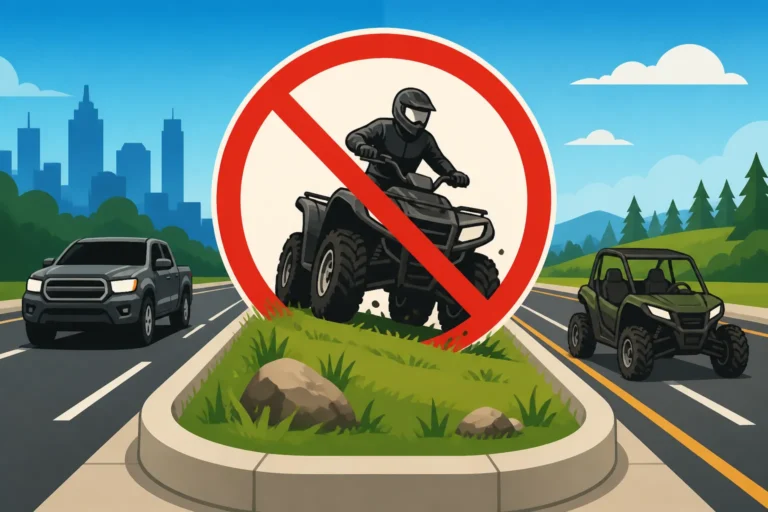
It often feels like ORVs are just generally banned from anything resembling a public road, and for the most part, that gut feeling is pretty accurate. Manitoba has a clear stance: off-road vehicles are primarily for off-road use. This means main roadways, highway medians, and sidewalks are typically off-limits. However, life in rural Manitoba, especially for those involved in agriculture, requires some practical exceptions. That's where the concept of shoulder riding, under very specific conditions, comes into play. It’s not a free-for-all, but rather a tightly regulated allowance to ensure safety for everyone sharing, or in this case, bordering, the road.
When is Shoulder Riding Even Allowed?
The provincial rules make a crucial distinction: shoulder riding isn't for recreational jaunts or simply cutting across town for fun. It's almost exclusively permitted for "agricultural purposes" or other specific work-related tasks, like moving equipment between fields or accessing a remote work site. Imagine you've finished planting one section of your land and the next field is just across the provincial road, a short distance away. Instead of loading your quad onto a trailer for such a short hop, the law provides a narrow window for you to use the shoulder. This exemption is designed to facilitate necessary work, not casual travel.
It's vital to understand that "agricultural purposes" isn't a vague term. It generally refers to activities directly related to farming, ranching, or other agricultural operations. If you're using your side-by-side to check fences, transport feed, or move implements for planting or harvesting, you might fall under this umbrella. However, if you're just heading out for a Sunday afternoon ride and decide to cut across a road's shoulder to get to a different trail system, you're likely violating the intent of the law. The spirit of the rule is about necessity, not convenience for recreational use. Always consider your purpose very carefully before venturing onto a road shoulder.
The Importance of Visibility and Safety
Mixing slow-moving off-road vehicles with high-speed road traffic is inherently risky. Standard cars, trucks, and even semi-trailers move at significantly faster speeds than most ATVs or UTVs, especially when they are restricted to 40 km/h on a shoulder. This speed differential creates a major safety hazard, where drivers might not register your presence until it's too late. The law, therefore, mandates specific measures to enhance your visibility and mitigate these risks. This isn't just about avoiding a ticket; it’s about preventing serious accidents.
Think about a dreary, overcast day, or dusk just beginning to settle in. A regular-coloured ATV or UTV can blend into the roadside environment, making it incredibly hard for a driver approaching from behind to see you. The visual cue of a distinct, standardized warning sign becomes paramount in these situations. It instantly communicates to other motorists that there's a slow-moving, potentially unexpected vehicle ahead, giving them precious extra seconds to react, slow down, and adjust their driving. This is why simply having your headlights on isn't enough; the sign serves a unique and critical purpose in ensuring you're seen and understood.
The Specifics of the Slow-Moving Vehicle Sign
Alright, let's get down to brass tacks: what exactly is this warning sign, and why is it so important? This isn't just any old reflective sticker you slap on your machine. The "Slow-Moving Vehicle" (SMV) sign is a specific, standardized device designed to convey a precise message to other drivers. Its distinctive shape, colour, and reflective properties are all part of a universally recognized safety standard. Ignoring the specifications or using a makeshift sign won't cut it, and could land you in hot water with law enforcement.
What Exactly is a Slow-Moving Vehicle SMV Sign?
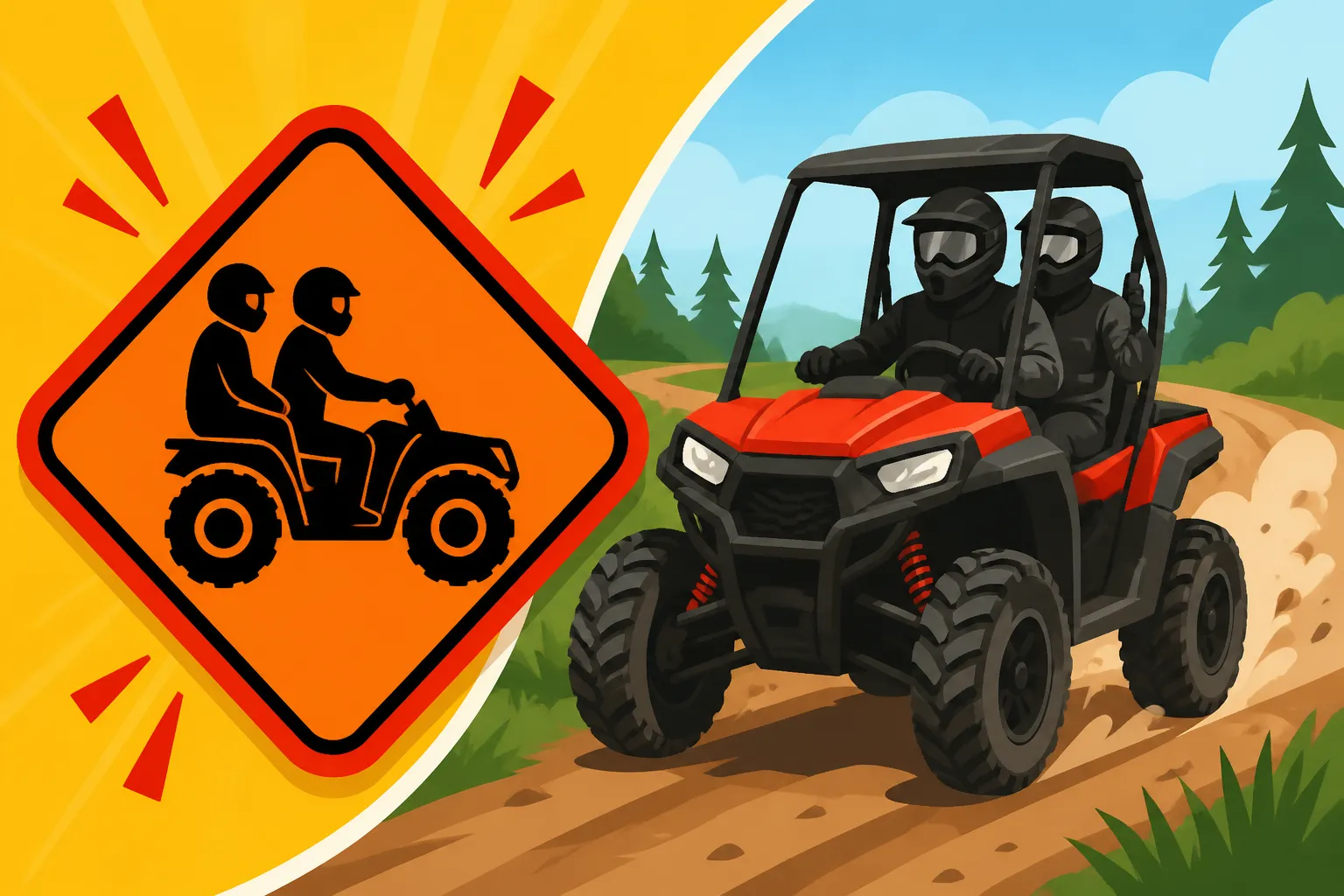
A Slow-Moving Vehicle (SMV) sign is instantly recognizable. It's an equilateral triangle, meaning all three sides are equal, with a fluorescent orange-red center and a red reflective border. This unique combination of fluorescent material (for daytime visibility) and reflective material (for nighttime visibility) ensures that it stands out in various lighting conditions. The specific design adheres to a Canadian Standards Association (CSA) standard, which dictates its size, materials, and visibility requirements. This isn't something you can just pick up at any general store; it needs to be an actual, compliant SMV sign.
The sole purpose of this sign is to signal to other drivers that the vehicle displaying it is designed to travel, or is currently traveling, at speeds of 40 kilometres per hour or less. When you see that orange-red triangle on the back of a tractor, a piece of farm equipment, or in our case, an ATV or UTV, it's an immediate visual cue that you need to slow down and exercise caution. Products from companies like SuperATV often include these signs as part of their safety accessory range or offer them individually, ensuring they meet the necessary standards for visibility and durability, which is especially important for off-road vehicles that might encounter rougher conditions.
Where and How to Mount the Sign
Proper placement of your SMV sign isn't just a suggestion; it's a legal requirement. The sign must be mounted on the rear of your ATV or UTV, centered as much as possible, and entirely visible from a distance of at least 150 metres to any vehicle approaching from behind. This means no part of your cargo, rack, or any other attachment should obstruct the view of the sign. Imagine a driver coming up behind you, and their view of the sign is blocked by a cooler or a fuel can – that defeats the entire safety purpose.
Beyond being unobstructed, there are also height requirements to consider. The bottom edge of the sign should be mounted between 0.6 metres (approximately 2 feet) and 2.0 metres (approximately 6.5 feet) above the ground. This specific height range ensures that the sign is within the typical line of sight for most vehicle drivers, whether they're in a compact car or a large truck. For ATVs, you might need a sturdy bracket mounted to the rear rack, while UTVs often have a flat surface on the tailgate or a designated spot on the roll cage structure where the sign can be securely attached. If you're looking for sturdy, trail-tested mounting solutions, companies like SuperATV offer a range of accessories that can help you properly secure your SMV sign in a way that stands up to the rigours of off-road use while remaining compliant. Always double-check that the sign is firmly attached and won't flap around or detach during travel, as a lost sign is just as bad as no sign at all.
The 40 km/h Speed Limit for Shoulder Riding
This is a critical point that often gets overlooked: the SMV sign and the ability to ride on a shoulder are inextricably linked to a maximum speed limit of 40 kilometres per hour. The sign signals a slow-moving vehicle, and the law mandates that if you're using an ORV on a road shoulder for an allowed purpose, you cannot exceed that speed. This isn't just about displaying the sign; it's about adhering to the speed limit that the sign represents. Exceeding 40 km/h while on the shoulder, even if you have the sign, is a violation of the rules.
Consider the implications: if you're flying down the shoulder at 60 km/h, the SMV sign on your machine is giving a false impression to other drivers. They expect a vehicle moving at 40 km/h or less, and your higher speed could catch them off guard, creating a dangerous situation. Conversely, if you're riding on the shoulder for an agricultural purpose and neglect to display the sign, but are traveling under 40 km/h, you are also in violation because you haven't given other motorists the required warning. The sign and the speed limit are a package deal, designed to work together to maintain safety on the fringes of Manitoba's roadways. Always be mindful of your speedometer when you're on that shoulder.
Beyond the Sign: Other Requirements for Legal Shoulder Riding
While the Slow-Moving Vehicle sign is non-negotiable for shoulder riding, it's just one piece of a larger puzzle. Operating an off-road vehicle in any proximity to a public roadway in Manitoba involves a suite of other rules and regulations that you absolutely must follow. Think of the SMV sign as your flashing beacon, but you also need to make sure your vessel is seaworthy and you have the right captain's license. Neglecting any of these other requirements, even if your SMV sign is perfectly displayed, can still lead to fines, penalties, or worse, an accident.
Licence, Age, and Other Operator Requirements
First and foremost, if you're planning to operate your ATV or UTV on a road shoulder, you need to possess a valid driver's licence. This isn't like riding on private land where a licence might not be a direct requirement. The moment you're interacting with public road infrastructure, even just the shoulder, the province requires you to be a licensed driver. This applies even if you're just [Manitoba Crossings Need a Driver's Licence] for a short distance.
Age restrictions also come heavily into play when operating near roads. While younger riders might be allowed on certain trails or private property under supervision, the rules tighten significantly for areas adjacent to roadways. Generally, riders need to be 16 years old and possess a valid licence to operate an ORV on a shoulder. [Manitoba Riders 14 and Over in Ditches] are subject to strict supervision requirements, and only [Manitoba Riders 16 With a Full Licence] can operate independently in these contexts. And, of course, the [Manitoba Helmet Law and Its Exemptions] usually applies; don't think that because you're on the shoulder, you can skip wearing your approved helmet.
Machine-Specific Requirements
Just as important as the operator's qualifications are the requirements for the machine itself. Your ATV or UTV must be properly prepared and equipped to be legally ridden on a road shoulder. This starts with proper registration. Every off-road vehicle operating in Manitoba, with very few exceptions, must be registered with MPI. You can find more details on this process in articles like [Manitoba ORV Registration Through MPI]. Without a current registration, you're not legally permitted to ride, sign or no sign.
Beyond registration, insurance is another critical component. While basic registration comes with some liability coverage, it's crucial to understand your responsibilities. [Manitoba's Liability Coverage Requirement] ensures that you have a minimum level of protection in case of an accident. Always verify your insurance coverage before heading out. Furthermore, your machine needs to be in good working order, including proper [Manitoba Lighting Requirements on a Machine] for visibility, especially during dawn, dusk, or night, and a functioning [Manitoba Spark Arrester Requirements] to prevent wildfires. If you're towing anything, be mindful of [Manitoba Towing Rules for a Sled] or other attachments, as these also have their own regulations.
Understanding Local By-Laws and Prohibitions
Here's where things can get a little tricky, and it's perhaps the most important caveat for any ORV rider in Manitoba: always check local by-laws. While the province sets the overarching rules, individual municipalities, local government districts, and even community councils have the power to enact their own by-laws that can further restrict or, in rare cases, specify areas where ORVs are permitted. [Manitoba Municipal By-Law Powers] mean that a shoulder you think is legal for agricultural purposes might actually be prohibited by a specific town or rural municipality.
What might be perfectly acceptable in one rural area could be strictly prohibited just a few kilometres down the road in a different jurisdiction. This is particularly relevant for shoulder riding, as many municipalities have strong feelings about ORV traffic within their boundaries, even on the shoulder. Never assume. A quick call to the local municipal office or a check of their website before you plan your route can save you a lot of grief – and potential fines. This step is crucial for safe and legal riding, preventing you from inadvertently breaking local rules.
Here's a quick comparison of key requirements when considering shoulder versus ditch riding in Manitoba:
| Feature | Shoulder Riding (Agricultural Purpose) | Ditch Riding (General) |
|---|---|---|
| Slow Moving Vehicle Sign | Required (if 40 km/h or less) | Not Required |
| Driver's Licence | Required | Required (for crossings, age 16+ for ditches) |
| Speed Limit | 40 km/h Max | Unspecified, but reasonable and safe |
| Purpose | Primarily Agricultural/Work Use | General Recreational Riding (Ditches Only) |
| Machine Type | Generally all ORVs | [Manitoba Four-Wheel-Drives Barred From Ditches] (e.g., Jeeps) |
| Direction of Travel | Same direction as adjacent traffic | Same direction as adjacent traffic |
| Municipal By-Laws | Can Restrict/Prohibit | Can Restrict/Prohibit |
Disclaimer
This article is for general informational purposes only and does not constitute professional advice. Laws, prices and regulations vary by location and change over time. Consult a qualified professional for guidance on your specific situation.