Manitoba Rules Riders Get Wrong
It's incredibly frustrating when you're out enjoying Manitoba's incredible scenery on your ATV or UTV, only to realize you might be breaking a rule you didn't even know existed. Many riders, with the best intentions, often misunderstand or overlook certain regulations, leading to potential fines, safety risks, or even a loss of trail access. This guide is here to clear up some of the most common misconceptions about off-road vehicle rules in Manitoba, helping you ride confidently and legally.
The Roadway Revelation: Why Your Off-Road Machine Isn't a Car
One of the biggest areas of confusion for many riders revolves around where they can, and absolutely cannot, operate their off-road vehicles. It’s easy to look at a wide-open road or a seemingly harmless ditch and think, "Why not?" But the laws are very specific for a reason, primarily safety and maintaining the integrity of our infrastructure.
No, You Can't Just Drive Down the Street
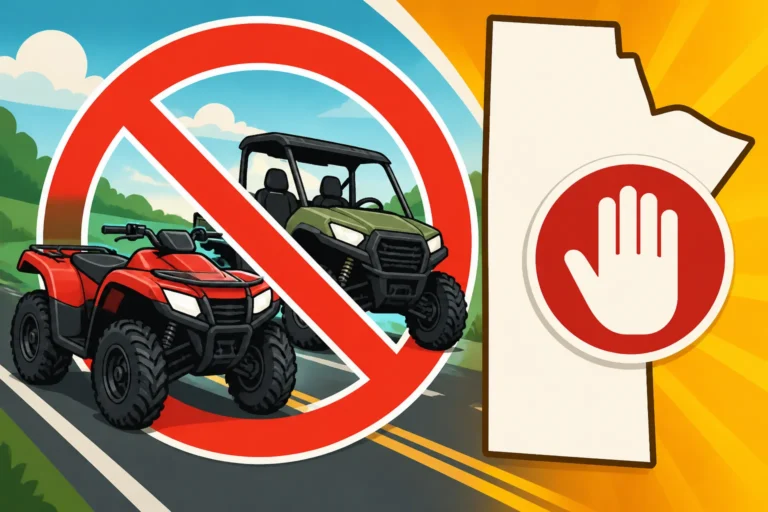
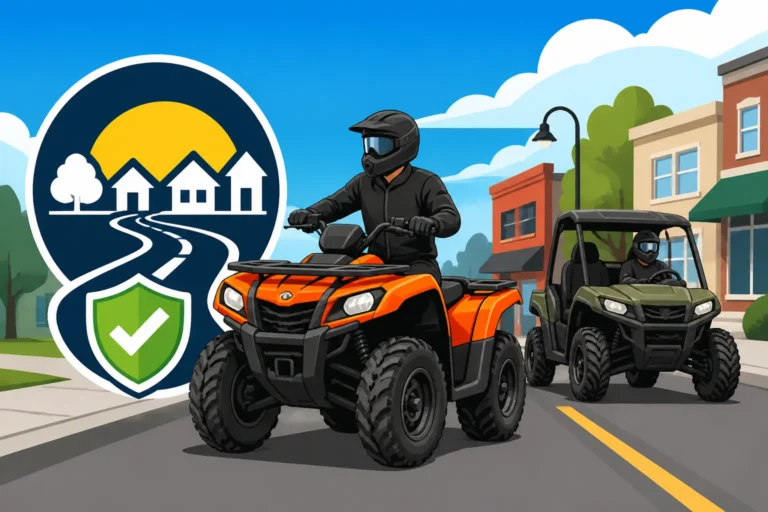
Let's get this one crystal clear right off the bat: you cannot legally operate your ATV or UTV on a public roadway in Manitoba. This isn't just a suggestion; it's a fundamental rule laid out in the Off-Road Vehicles Act. Your machine, by its very design and legal classification, is an off-road vehicle, not a street-legal car, truck, or motorcycle. This means no cruising down Main Street, no taking the highway exit to get to the gas station, and no short cuts on paved roads, no matter how convenient it might seem.
The frustration here is totally understandable. You might live just a few blocks from a great trail access point, or maybe the only way to get from your cabin to the local store is a short stretch of pavement. But the law doesn't make exceptions for convenience. Off-road machines lack many of the safety features required for road vehicles, such as turn signals, specific lighting configurations, and impact protection, not to mention the different handling characteristics. [Roadways Are Closed to Every Off-Road Machine] for a reason – mixing slow-moving, less visible off-roaders with high-speed road traffic is a recipe for disaster. It's a tough pill to swallow when you just want to get somewhere quickly, but the risks are simply too high for everyone involved.
Medians, Interchanges, and Sidewalks: No-Go Zones
Beyond the main thoroughfare, specific parts of the road network are also strictly off-limits, and these are areas where riders sometimes mistakenly believe they have a pass. We're talking about medians, interchanges, and sidewalks. While they might not seem like "roadways" in the traditional sense, they are very much considered part of the prohibited public highway infrastructure for ORVs.
Imagine trying to navigate the median of a divided highway. This strip of land is there to separate opposing traffic, not to serve as an impromptu trail. Attempting to ride there is not only illegal but incredibly dangerous, as you're in close proximity to fast-moving vehicles on both sides. Similarly, interchanges – those complex systems of ramps and bridges that connect major highways – are also forbidden. These are high-traffic, high-speed zones designed exclusively for motor vehicles, and an off-road machine simply doesn't belong there. [The Median of a Divided Highway Is Closed], and [Why an Interchange Right-of-Way Is Off Limits] are critical rules to remember. And sidewalks? They are for pedestrians. Period. [Why Sidewalks Are Closed to Quads] comes down to pedestrian safety; you absolutely cannot zip along them, even if they seem clear. These aren't minor infractions; violating these rules can lead to significant fines and put yourself and others in serious jeopardy.
Ditch Riding Deception: Understanding the Nuances of the Shoulder
Ditch riding is a distinctly Manitoban experience, but even here, there are layers of rules that many riders misunderstand. It's not a free-for-all; there are very specific conditions under which you can operate in a ditch, and knowing these details can save you from a ticket and ensure your safety.
Not Every Ditch Is Your Friend: The "Right Side" Rule
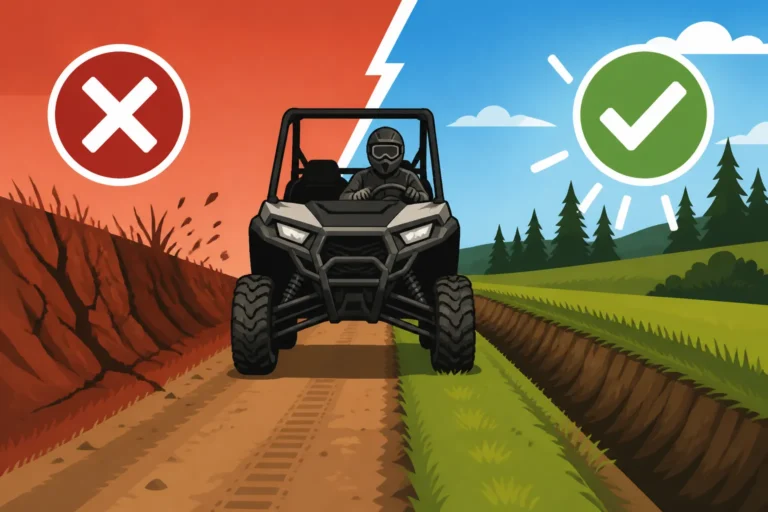
This is a big one, and it causes a lot of confusion. In Manitoba, if you're riding in a ditch alongside a roadway, you must travel in the right-hand ditch, and you must do so in the same direction as the traffic flow on the adjacent road. It sounds simple, but I've seen countless riders hugging the left ditch or going against traffic, thinking a ditch is a ditch. This is absolutely not the case. [Only One Ditch of the Two Is Legal], and it’s always the one on your right, moving with traffic.
Why is this rule so strict? It's all about predictability and visibility. If you're going against traffic, drivers pulling out from side roads or driveways might not see you approaching from an unexpected direction. You also become a head-on collision risk if you veer out of the ditch for any reason. [Travelling the Same Way as Traffic] makes you a more predictable presence for other road users and ensures you're facing forward, able to see what's ahead. Trying to sneak along the "other" ditch is a surefire way to invite an officer's attention and a hefty fine. Always remember: right ditch, with traffic.
Crossing the Highway: It's More Complicated Than It Looks
Even if you can't ride on the highway, you'll inevitably need to cross one to get to different trail sections or access points. This isn't a simple dash across the asphalt. Manitoba has very precise rules for highway crossings, and you need to know them cold. First, you must hold a valid driver's license to cross any highway. A learner's permit for a car won't cut it. [Manitoba Crossings Need a Driver's Licence] is a non-negotiable requirement.
When you cross, it must be done at a right angle to the highway, not diagonally, and only when the crossing can be made safely with a clear view of approaching traffic. You also have to cross one machine at a time if you're in a group; no convoy crossings. [Manitoba Crossings One Machine at a Time] and [Manitoba Crossings Need a Clear View] are there to minimize your time in harm's way. Furthermore, there are specific distance requirements: you must cross within 5 metres of an intersection or, if no intersection is nearby, at least 3 kilometres from the nearest intersection. These distances are designed to reduce interference with intersection traffic and ensure you're not crossing in a spot that might surprise drivers. [5 Metres From an Intersection] and [3 Kilometres From the Nearest One] might seem arbitrary, but they're important for safety planning.
The Agricultural Shoulder Exception: Not for Everyone
Here's another specific rule that often gets misapplied by recreational riders: the agricultural shoulder exception. You might see a farmer on a side-by-side or a large ATV operating on the shoulder of a road and think, "Aha! I can do that too!" Not so fast. This exception is very narrow and applies only to four-wheel drive off-road vehicles (often UTVs or large utility ATVs) being used for agricultural purposes, and only on specified provincial roads. [Manitoba Shoulder Riding for Farming Only] is a key phrase here.
Even then, there are strict conditions. The machine must be equipped with a slow-moving vehicle sign, clearly visible from the rear, and cannot exceed 40 km/h. This isn't a blanket permission for any recreational ATV or UTV to use the shoulder as a bypass. It's a functional allowance for farmers moving between fields or accessing farm equipment, not for joyriding. Many aftermarket accessories, like heavy-duty cargo beds or specialized tires from companies like SuperATV, are designed to enhance the utility of these agricultural machines, but they don't magically grant you permission to ride on the shoulder if you're not engaged in farming. So, if you're not moving livestock or crops, keep your recreational machine out of the shoulder. [The Slow-Moving Vehicle Sign a Farm Quad Needs] and [40 km/h at Most] are non-negotiable conditions for this specific exemption.
Age, Helmets, and Passengers: Common Misinterpretations
Beyond where you can ride, how you ride, and who can ride with you, are also subject to specific regulations that often catch people off guard. These rules are primarily about ensuring rider safety, particularly for younger operators and passengers.
Age Restrictions: It's Not Just About Your Size
Manitoba has clear age tiers for operating off-road vehicles, and they're not just suggestions based on a manufacturer's sticker. These are legal requirements that dictate who can ride what and under what supervision. If you're under 14, you must be under the direct supervision of an adult (18+) who is also operating an ORV and remains in clear view. [Manitoba Riders Under 14 Need Supervision] is a critical rule for parents and guardians to understand.
Between 14 and 15 and a half, you can operate an ORV unsupervised in certain areas, primarily ditches, but you cannot cross a highway without a driver's license. [Manitoba Riders 14 and Over in Ditches] allows for more independence, but still within limits. Once you hit 15 and a half, you can get a learner's stage driver's license, which still comes with restrictions. Only at 16, with a full Class 5 driver's license, do most of the ORV operating age restrictions lift, allowing you to ride unsupervised in all permitted areas and cross highways. [Manitoba Learner Stage Riders at 15 and a Half] and [Manitoba Riders 16 With a Full Licence] clarify this progression. It's not about how big or skilled a young rider is; it's about the law.
Helmet Law Headaches: When It Applies (and When It Doesn't)
Manitoba's helmet law for ORV operators and passengers is comprehensive, but it does come with specific exemptions that sometimes lead to confusion. Generally, if you're riding an ATV or UTV, you and any passengers must wear an approved helmet. This is for your head's safety, plain and simple. [Manitoba Helmet Law and Its Exemptions] details the specific scenarios where a helmet isn't legally required.
The most common exemptions include:
- Agricultural, Hunting, Trapping, and Commercial Fishing Use: If you're using your ORV primarily for these activities, you might be exempt from the helmet law. However, this is for the purpose of the ride, not just because you own a farm.
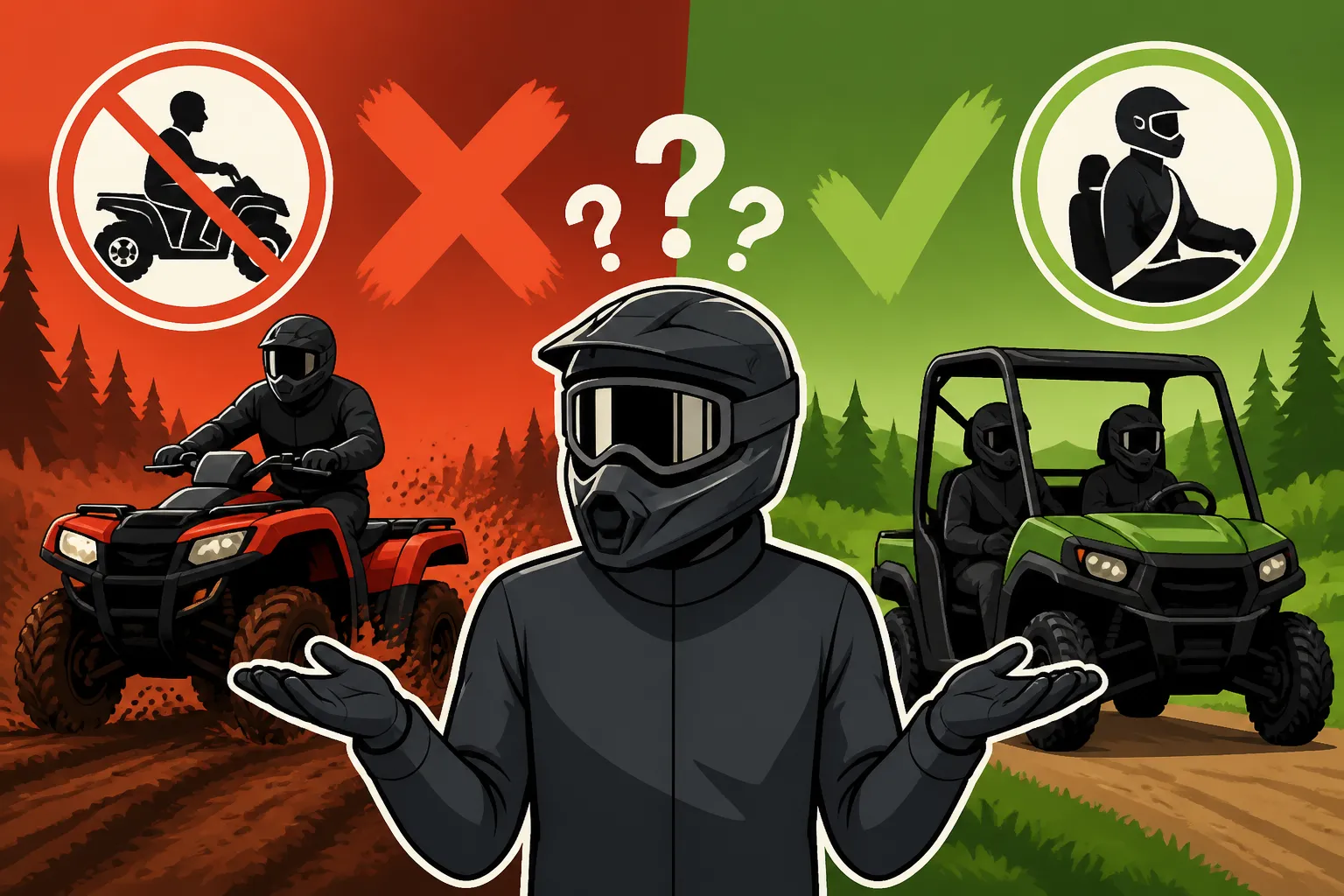
- Machines with Roll-Over Protective Structures (ROPS) and Seatbelts: This is a big one for UTV owners. If your UTV has a factory-installed roll cage (ROPS) and you and your passengers are properly secured with seatbelts, you are typically exempt from wearing helmets. This acknowledges that the ROPS provides significant protection in a rollover event. Aftermarket cages, roofs, and windshields from brands like SuperATV can enhance the utility and safety features of your UTV, but the core exemption hinges on the factory-installed ROPS and the use of seatbelts. [How a Roll Cage Excuses the Helmet Rule] is a rule many UTV owners appreciate.
- Northern Communities and Hydro Crews: Specific exemptions exist for residents of remote northern communities and Manitoba Hydro crews operating above the 53rd parallel during certain times of the year, due to unique operational circumstances.
It's crucial to understand these exemptions precisely. Just because your friend doesn't wear a helmet while hunting doesn't mean you can skip yours on a recreational trail ride. And remember, [Passengers Must Wear a Helmet Just Like Operators] unless an exemption, like a ROPS, applies to them too.
Passenger Rules: Don't Cram 'Em In
Another common mistake is carrying more passengers than your machine was designed for. While it might seem harmless to squeeze an extra person onto an ATV or pile more friends into a UTV, it's not just illegal, it's incredibly dangerous. Every off-road vehicle is designed with a specific operator and passenger capacity, clearly outlined by the manufacturer.
For ATVs, most are designed for a single rider. Some two-up models exist, but they are specifically engineered with a longer seat and often passenger handholds. You cannot legally or safely carry a passenger on a single-rider ATV. For UTVs, the rule is equally strict: [Passengers Only as Designed]. If your UTV has two seats and two seatbelts, that's its capacity. If it has four seats, it can carry four people. Adding an extra person who isn't properly seated and belted compromises the machine's balance, handling, and safety systems, significantly increasing the risk of an accident and severe injury. Even with robust aftermarket seating solutions, like those found through SuperATV, you must always adhere to the vehicle's original manufacturer-designed passenger capacity to remain legal and safe. [Seat Belts and Passenger Limits on a Manitoba UTV] are critical safety features that must be used as intended for every occupant.
Here's a quick reference for some of the common misconceptions:
| Scenario | Common Misconception | Actual Manitoba Rule |
|---|---|---|
| Riding on Public Roads | "It's just a short distance." | Illegal. Off-road vehicles are prohibited on public roadways. |
| Ditch Riding Direction | "Either ditch is fine, or against traffic." | Right-hand ditch only, traveling with the flow of traffic. |
| Highway Crossings | "Anyone can cross if it's clear." | Requires a valid driver's license, clear view, at right angles, one at a time. |
| Agricultural Shoulder Use | "I can use the shoulder too." | Only for specific agricultural machines (4-wheel drive) with a slow-moving sign, under 40 km/h, for farming purposes. |
| Helmet Use | "I'm a good rider, I don't need one." | Required for operators and passengers, unless a specific exemption (like ROPS + seatbelt in UTVs, or certain occupational uses) applies. |
| Passenger Capacity | "We can fit one more!" | Strictly limited to the manufacturer's design capacity (number of seats/seatbelts). |
Understanding and following these rules isn't about stifling your fun; it's about ensuring everyone's safety, protecting our trails, and keeping the privilege of riding alive in Manitoba. By being informed, you contribute to a safer and more enjoyable environment for all off-road enthusiasts.
Disclaimer
This article is for general informational purposes only and does not constitute professional advice. Laws, prices and regulations vary by location and change over time. Consult a qualified professional for guidance on your specific situation.