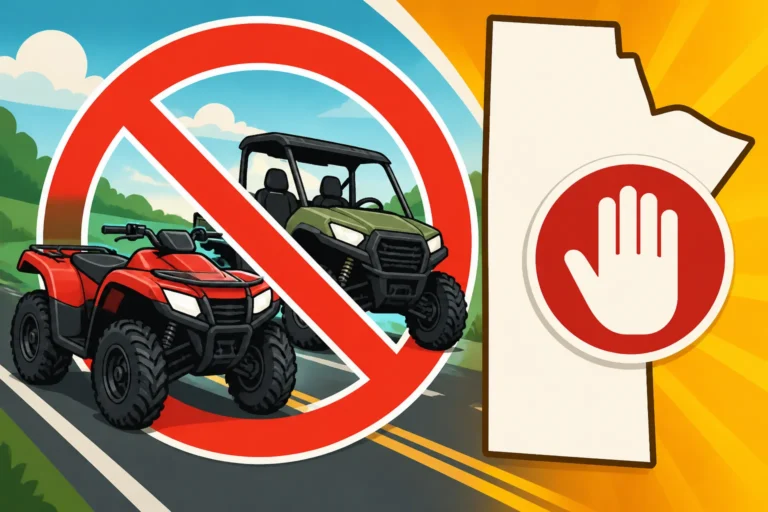
Roadways Are Closed to Every Off-Road Machine
It's a frustrating reality for many off-road vehicle enthusiasts in Manitoba: you've got your trusty ATV or UTV, you're ready to hit the trails, but you constantly wonder if you can just zip down the road to get to the next section, or even just cross the street. The truth is, that convenience is often a mirage, and navigating what's legal and what isn't when it comes to roadways can feel like a minefield. This guide is here to clear up the confusion and help you understand the strict rules around off-road machines and public roads in Manitoba.
The Clear Line in the Sand: Why Roadways Are Off-Limits
Let's cut right to the chase: with very few, highly specific exceptions, off-road vehicles like ATVs and UTVs are simply not allowed to be operated on public roadways in Manitoba. This isn't just a suggestion or a guideline; it's a fundamental tenet of the province's off-road vehicle legislation. Many riders express frustration, asking why their powerful, capable machine, perhaps even kitted out with top-tier aftermarket parts from a company like SuperATV, can't handle a paved road when it can conquer the most brutal bush trails. The answer boils down to safety and the distinct operational differences between off-road machines and street-legal vehicles.
The Letter of the Law: What the Act Says
The Off-Road Vehicles Act in Manitoba clearly defines what an ORV is and where it can be operated. A "roadway" is essentially any part of a highway intended for vehicles. The Act is quite explicit that ORVs are generally prohibited from these areas. This isn't arbitrary; it's a legislative decision aimed at maintaining order and safety on roads primarily designed for cars, trucks, and other traditional road-going vehicles. Imagine the chaos if every off-road machine, from dirt bikes to large side-by-sides, was freely mixing with traffic designed for higher speeds and different handling characteristics. It would quickly become a dangerous situation for everyone involved.
The core reason for this blanket prohibition is the fundamental difference in design. Off-road machines are built for traction, agility, and durability in rough terrain, not for sustained high-speed travel, predictable handling, or the braking demands of paved roads. Their suspension, tire compounds, and steering geometry are optimized for dirt, mud, and rocks, not asphalt. This distinction is paramount in the eyes of the law, which prioritizes the safety of all road users.
Safety Implications for Riders and Other Traffic
The safety concerns are multifaceted. For the ORV rider, an off-road machine on a paved road can be unstable, especially at higher speeds, and its tires may not offer adequate grip for emergency braking or sharp turns on hard surfaces. The lack of typical automotive safety features like crumple zones, airbags, or even enclosed cabs on many ATVs means riders are far more exposed in a collision. Even a minor incident at road speeds can lead to serious injury.
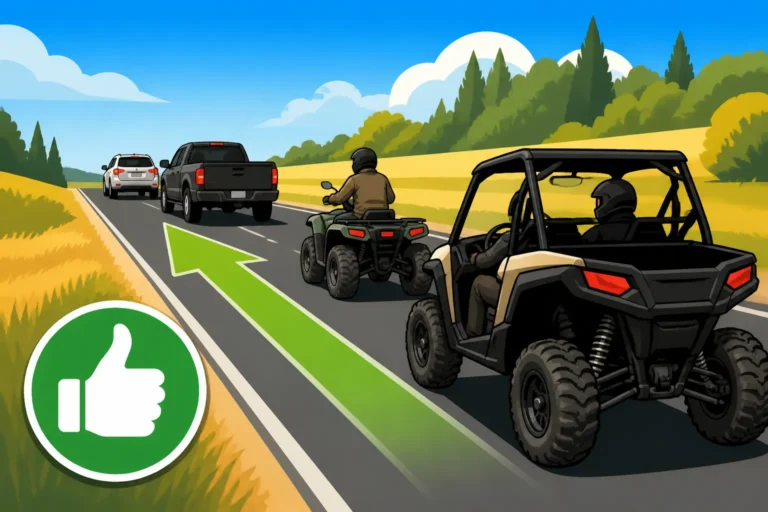
From the perspective of other motorists, ATVs and UTVs can be difficult to see, especially smaller models or those not equipped with full lighting kits designed for road use. Their slower speeds can create traffic hazards, leading to frustrated drivers attempting dangerous overtakes. The combination of unpredictable handling, lower visibility, and different operating characteristics makes the integration of ORVs onto roadways a significant safety risk, which the legislation aims to mitigate by keeping them separate. It's a tough pill to swallow when you're just trying to get from Point A to Point B, but the regulations are there to prevent serious accidents.
Understanding "Roadway" and Other Key Terms
To truly grasp the rules, it's vital to understand what the Manitoba Off-Road Vehicles Act means by "roadway" and how it distinguishes this from other areas like ditches or private land. Many riders mistakenly believe that if they're just "on the side" of the road, they're fine. Unfortunately, the definitions are often much stricter than people assume. The legal landscape around [Manitoba Bans Riding on Roadways] is quite precise, and misunderstanding it can lead to trouble.
Defining Different Road Types and Their Restrictions
In Manitoba, a "roadway" refers to the part of a highway that is improved, designed, or ordinarily used for vehicular traffic. This includes the main driving lanes of provincial highways, municipal roads, and even rural roads that are maintained for vehicles. It's important to remember that this applies to both paved and gravel roads. Just because a road is unpaved doesn't automatically make it a free-for-all for ATVs and UTVs. If it's intended for public vehicular traffic, it's generally considered a roadway.
This definition often catches riders off guard, especially in rural areas where gravel roads might feel like an extension of a trail. However, if that gravel road is part of the public highway network, ATVs and UTVs are typically prohibited from operating on it. The rationale remains consistent: these roads are part of the broader transportation system, and ORVs are not designed for safe integration into that system.
What About Shoulders, Medians, and Sidewalks?
While not strictly the "roadway" itself, areas adjacent to the main driving lanes are also generally off-limits for ORVs.
- Shoulders: The shoulder is part of the highway right-of-way, designed for emergency stops or specific uses like bicycles. While there are very narrow exceptions for agricultural use in specific contexts (which we'll cover shortly), for general riding, shoulders are treated much like the roadway itself: no ORVs allowed. Trying to sneak along the shoulder to avoid the main traffic lane is still a violation.
- Medians: These are the strips of land separating opposing lanes of traffic on divided highways. Medians are unequivocally off-limits for ORVs. They are not intended for any kind of vehicular traffic and present significant hazards due to uneven terrain, vegetation, and proximity to high-speed traffic. [The Median of a Divided Highway Is Closed] to off-road machines for good reason.
- Sidewalks: Much like medians, sidewalks are designed for pedestrian traffic and are strictly prohibited for ORV use. Operating an ATV or UTV on a sidewalk poses a direct danger to pedestrians and is a clear violation of the law. You can face significant fines for riding on a sidewalk.
The intent of the law is clear: keep off-road machines out of areas designated for conventional vehicular or pedestrian traffic. This strict separation is key to maintaining safety for everyone.
The Narrow Path: Exceptions and Specific Scenarios
While the general rule is "no ORVs on roadways," Manitoba's Off-Road Vehicles Act does provide for a few highly specific circumstances where an ORV might legally operate near or temporarily on a roadway. These aren't loopholes for general travel, but rather narrowly defined allowances for specific, often safety-driven or essential, purposes. Understanding these nuances is crucial for avoiding infractions.
Ditch Riding Rules: A Common Misconception
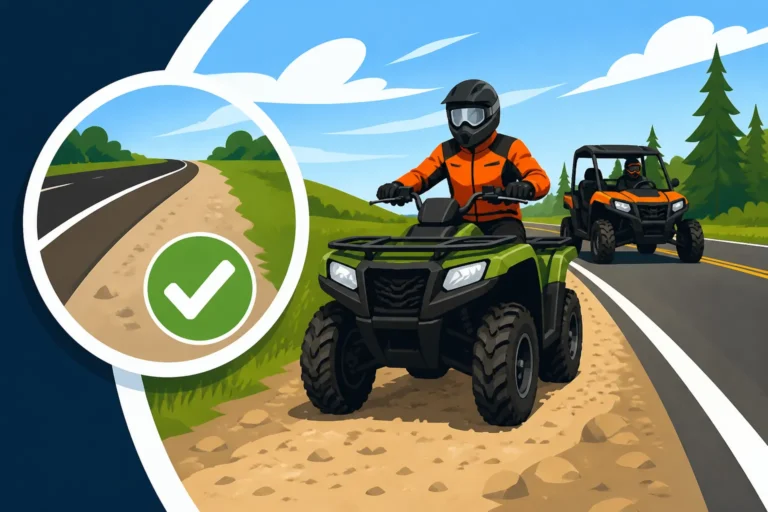
One of the most frequently misunderstood areas is ditch riding. Many riders believe that if they're in the ditch, they're automatically legal. This is only partially true and comes with significant caveats. In Manitoba, riding in the ditch can be legal, but it's not a free pass. Crucially, the ditch must be immediately adjacent to the right-hand side of the roadway in the direction of travel, and there are specific conditions that must be met. You must also yield to pedestrians and other ditch users. [Manitoba Ditch Riding Rules] are detailed and strict, often surprising riders who thought any ditch would do.
What's more, not all ditches are created equal. Ditches adjacent to divided highways or certain provincial roads might still be off-limits. The purpose of these allowances is typically for short-distance travel to access private property or connect between legitimate off-road areas, not for extended joyrides parallel to major thoroughfares. Before you venture into a ditch, ensure you understand the exact local regulations and the provincial Act's requirements, as ignoring them can quickly lead to a ticket. For instance, [The Only Legal Ditch Is on Your Right] is a critical rule to remember.
Crossing a Highway Safely and Legally
Another scenario where an ORV might briefly enter a roadway is to cross a highway. This is perhaps the most common and necessary "on-road" activity for riders navigating a trail network or moving between properties. However, these crossings are heavily regulated for safety. An ORV operator must possess a valid driver's license (not just a learner's permit), come to a complete stop, yield to all traffic, and ensure a clear view of the roadway in both directions. There are also rules about how far you can travel along the roadway to make a crossing and distances from intersections. For example, [Manitoba Crossing Rules at 5 Metres and 3 Kilometres] specify that you can cross within 5 metres of an intersection only if it's the shortest route and doesn't impede traffic, or if no intersection is within 3 kilometres, you can cross at the safest point.
These rules are designed to minimize the time an ORV spends on the roadway and to ensure maximum visibility and safety during this vulnerable maneuver. Ignoring these steps can lead to dangerous situations and fines. It's a moment of heightened risk for riders, even with the best visibility provided by a lifted machine or one equipped with bright LEDs from a company like SuperATV, so extreme caution is always warranted.
Agricultural and Commercial Exemptions
Manitoba's Off-Road Vehicles Act also includes specific exemptions for machines used in agricultural operations or certain commercial activities. For example, a farmer might be permitted to operate an ORV on the shoulder of a roadway for a short distance to access agricultural land, provided the machine is properly marked with a slow-moving vehicle sign and travels at a reduced speed. This is a very specific allowance and not a general permit for anyone to use the shoulder. [Manitoba's Agricultural Shoulder Exception] is narrowly tailored to the needs of the farming community.
Similarly, certain commercial or government operations, such as utility workers or conservation officers, may have specific permissions to operate ORVs on or near roadways when performing their duties. These are not exemptions that apply to the average recreational rider. It's critical not to confuse these very narrow, purpose-driven exemptions with a general right to operate an ORV on public roads. Always assume the general prohibition applies unless you can clearly identify your specific situation within a documented legal exemption.
| Scenario | Allowed on Roadway? | Key Conditions/Restrictions | Relevant Internal Link Example |
|---|---|---|---|
| Main Driving Lanes (Roadway) | No | Generally prohibited for all recreational ORVs. Designed for conventional traffic. | [Roadways Are Closed to Every Off-Road Machine] |
| Shoulder | No (Generally) | Prohibited for recreational ORVs. Limited exceptions for specific agricultural use with proper marking (e.g., [Manitoba's Agricultural Shoulder Exception]). | [Manitoba Shoulder Riding for Farming Only] |
| Median | No | Absolutely prohibited. Dangerous and not intended for any traffic. | [The Median of a Divided Highway Is Closed] |
| Sidewalk | No | Absolutely prohibited. Designed for pedestrians only. | [Why Sidewalks Are Closed to Quads] |
| Ditch (Right Side) | Yes (Conditional) | Must be immediately adjacent to the right-hand side, travel with traffic, yield to pedestrians, specific provincial & local rules apply. Not allowed for trucks/Jeeps. | [Manitoba Ditch Riding Rules], [The Only Legal Ditch Is on Your Right] |
| Highway Crossing | Yes (Conditional) | Must have valid driver's licence, stop, yield, clear view, specific distances from intersections (e.g., [Manitoba Crossing Rules at 5 Metres and 3 Kilometres]). One machine at a time. | [Manitoba Crossings Need a Driver's Licence] |
Facing the Consequences: Penalties and Enforcement
Ignoring Manitoba's ORV road rules can lead to more than just a stern talking-to. Law enforcement takes these regulations seriously, primarily because of the significant safety risks involved. Riders caught operating their ATVs or UTVs unlawfully on roadways can face a range of penalties, from fines to more severe consequences, depending on the nature and severity of the infraction. It's not just about what your machine, even one with a robust chassis and powerful engine from a brand like SuperATV, is capable of doing; it's about what the law permits.
Potential Fines and Charges
The Off-Road Vehicles Act in Manitoba outlines specific penalties for various offenses. Operating an ORV on a prohibited roadway is a straightforward violation and can result in significant fines. These aren't trivial amounts; they can quickly add up, making that quick hop down the road a very expensive decision. An officer can issue a ticket for operating an ORV on a highway, or for careless operation if your actions create a danger. [Manitoba Ticket Costs for Riders] can be substantial, and these are often just the starting point.
Beyond basic fines, repeat offenses or egregious behavior can lead to more serious charges. If your actions are deemed reckless or create a significant public hazard, you could be charged with "careless operation," which carries even higher fines and potential court costs. [Manitoba Careless Operation Penalties] are designed to deter dangerous behavior, and they can sting. It's a stark reminder that while the off-road experience is about freedom, it comes with responsibilities.
Consequences for Your Driver's Licence and Insurance
Beyond monetary penalties, operating an ORV unlawfully on a roadway can also have repercussions for your conventional driver's licence. While ORVs are not considered "motor vehicles" in the same way as cars for certain aspects of the Highway Traffic Act, violations of the Off-Road Vehicles Act can still impact your driving record and potentially lead to demerit points or even licence suspension in serious cases. This is particularly true if the infraction involves impaired driving. [Manitoba Impaired Riding Penalties] are severe, treating ORV impairment much like vehicle impairment, with all the associated consequences for your licence and insurance.
Your insurance coverage for your ORV might also be affected. If you're involved in an accident while operating your ORV illegally on a roadway, your insurance provider could deny coverage, leaving you personally liable for damages and injuries. Standard ORV insurance is designed for off-road use, and operating outside the legal parameters can void your policy's protection. This means not only paying for your own machine's damage but also for any damage to other vehicles or property, and even medical costs for injured parties. It's a risk simply not worth taking for the sake of convenience.
Ultimately, the best approach is to plan your rides carefully. Research designated trails, understand legal access points, and make sure you know where [Manitoba Rules for Riding a Town Street] or any other roadway restrictions apply. Utilizing legal trail networks and respecting the boundaries set by the law ensures a safer and more enjoyable experience for everyone.
Disclaimer
This article is for general informational purposes only and does not constitute professional advice. Laws, prices and regulations vary by location and change over time. Consult a qualified professional for guidance on your specific situation.