Why the Age Rules Stop Mattering at 16
Trying to figure out the maze of ATV and UTV age restrictions in Manitoba can feel like you need a law degree and a secret decoder ring. It's especially confusing when you've got a young rider who's hitting that pivotal age where things start to change, and the strict rules for little ones seem to loosen up. This guide is here to untangle the specifics, showing you exactly why the age rules in Manitoba start to look very different once a rider turns 16, and what new freedoms and responsibilities come with that birthday.
The Shifting Landscape of Age-Based Riding Rules in Manitoba
Navigating the rules for off-road vehicles (ORVs) in Manitoba, especially when it comes to age, can be a real head-scratcher. Parents often worry about what their kids can and can't do, and those rules seem to constantly evolve as the rider grows. It's not just a simple "yes or no" answer; there are distinct tiers that dictate who can ride what, where, and with whom. Understanding these foundational age categories is key to appreciating why turning 16 is such a significant milestone for a young Manitoban ORV enthusiast.
Understanding the Foundational Age Tiers
Before we dive into the significance of age 16, let's briefly touch on the earlier age categories that set the stage. For instance, children under the age of 14 face the most stringent rules. They are generally restricted to riding only on private property or designated areas, and even then, they must be under direct adult supervision. The machine itself also has limitations; typically, it needs to be of a size appropriate for their physical capabilities, often designated as a "youth model." As they get a bit older, into the 14 and 15 age bracket, a few more doors might open, but direct supervision remains a constant requirement for many situations, especially if they venture onto permitted public lands or cross roadways. The intent behind these rules is clearly about safety and ensuring that inexperienced riders are protected while they learn the ropes. Parents often find themselves trying to track all these nuances, making sure they're compliant while still fostering a love for the sport in their kids. For more on this, you can check out [Manitoba Rules for a 14-Year-Old Rider].
Then there's the learner stage, which typically begins at 15 and a half, similar to getting a Class 5 Learner's permit for a car. At this point, a young rider can begin to operate with a bit more independence, but still under the watchful eye of a licensed adult. This period is crucial for developing safe riding habits and understanding the nuances of operating an ORV in various conditions. It’s a time for practical, hands-on learning, but the legal framework still treats them as someone in training. They might be able to ride in ditches alongside a supervisor, for example, but their privileges are still tied to that supervision. Many parents use this period to instill strong safety principles, knowing that the next birthday will bring a whole new level of autonomy.
The Critical Threshold of Age 16
When a rider in Manitoba turns 16, it’s not just another birthday; it marks a significant shift in their legal ability to operate an off-road vehicle. This is the age where, generally speaking, the most restrictive age-based rules begin to recede. Why 16? It largely aligns with the age at which an individual can obtain a full Class 5 driver’s license for passenger vehicles. The provincial legislature views a 16-year-old with a full Class 5 license as having achieved a certain level of maturity and understanding of road rules and responsibilities, which then translates to broader privileges in the ORV world. This means that many of the previous requirements for direct adult supervision or strict limitations on where and when they can ride become less stringent.
This transition isn't just about newfound freedom; it's about the law recognizing a young person's increased capacity for independent judgment and responsible operation. It's a testament to the idea that with a proper license, a 16-year-old is deemed capable of understanding and adhering to the rules of the trail and the road allowances. While there are still specific operating rules that apply to everyone, regardless of age, the constant need for a parent or guardian to be physically present and overseeing every turn, which characterized the earlier age tiers, largely falls away. It's a big moment for many young riders who have been eagerly awaiting the chance to explore more independently.
What Changes at 16: New Freedoms and Responsibilities
Turning 16 often feels like a rite of passage for many young people, and in Manitoba's ORV community, it certainly carries significant weight. The provincial rules dramatically shift, granting 16-year-old riders with a valid Class 5 driver's license a much greater degree of independence than their younger counterparts. This isn't a free pass to ignore all rules, but it certainly opens up a lot of possibilities that were previously off-limits due to age. It’s a time when many riders finally feel like they can truly experience the freedom that off-roading offers, albeit with new, adult-level responsibilities.
Operating Without Direct Adult Supervision
One of the most impactful changes at age 16 is the ability to operate an ORV without direct adult supervision. For years, a younger rider might have had to stick to a parent's property or specific supervised trails, always with a watchful adult nearby. Once they hit 16 and hold a full Class 5 driver's license, this requirement generally disappears for most ORV activities. This means a 16-year-old can head out for a ride with their friends, embark on longer journeys on designated trails, or even use their machine for chores on a farm without needing an adult literally looking over their shoulder. This newfound independence is a huge draw for young riders, allowing them to explore more and gain valuable experience on their own terms. However, with this freedom comes the responsibility of making sound judgments and adhering to all operating rules, because there won't be an adult there to correct every mistake.
This shift empowers young riders to take full ownership of their riding experience. They can plan their own routes, manage their fuel and supplies, and respond to challenges as they arise, much like any adult rider. It encourages self-reliance and critical thinking in real-time situations. Of course, parents will likely still want to know where their child is riding and with whom, but legally, the immediate supervision requirement is lifted. This is a critical distinction that really highlights why [Why the Age Rules Stop Mattering at 16] is such a relevant topic for Manitoba riders and their families.
Expanded Operating Privileges (and Remaining Restrictions)
Beyond ditching the supervisor, 16-year-old riders with a Class 5 license gain access to expanded operating privileges. This includes the ability to operate their ORV in ditches adjacent to roadways, and crucially, to cross roadways under specific conditions. For younger riders, crossing a provincial road was often a strict "no-go" or required very specific, supervised circumstances. At 16, they can now undertake these manoeuvres themselves, provided they meet all the criteria for safe crossing, such as stopping, yielding, and ensuring a clear view. They can also generally travel further distances on approved trails and within designated areas without the previous geographical restrictions tied to supervision. This opens up entire networks of trails and access points that were previously out of reach. For a deeper dive into ditch riding, check out [Manitoba Ditch Riding Rules].
However, it's crucial to understand that "expanded privileges" doesn't mean "no rules." Many fundamental operating restrictions still apply, regardless of age. For example, riding on the main paved surface of a provincial roadway is still generally prohibited, with very limited agricultural exceptions. Speed limits, helmet laws, and rules against impaired operation are universal. Think of it this way: at 16, you gain the ability to do more, but you also fully inherit the responsibility to do it legally and safely. Ignoring these universal rules can lead to serious consequences, just as it would for any adult rider. Even with the best aftermarket accessories from a company like SuperATV on your machine, you still have to follow the rules of the road and trail.
No More Maker's Age Rating Worries
One common source of confusion for parents of younger riders is the manufacturer's age rating prominently displayed on many ATVs and UTVs. These ratings, often suggesting "16+" or "Adult," can be legally tricky. For riders under 16, these manufacturer recommendations often carry significant weight in the eyes of the law, especially when coupled with other age-based operating restrictions. A younger child riding a machine rated for a 16-year-old could potentially face penalties if caught.
However, once a rider actually turns 16 and has their full Class 5 license, the manufacturer's age rating tends to become less of a legal sticking point. The law essentially recognizes the 16-year-old as an adult operator for ORV purposes, and the provincial regulations take precedence over a manufacturer's guideline. This isn't to say that physical size and capability don't matter – a rider should always operate a machine they can safely control – but the legal hurdle of the manufacturer's age rating largely disappears. This gives 16-year-olds and their families more flexibility in machine choice, as long as it's appropriate for their skill level and stature. It means that the legal system prioritizes the rider's demonstrated competence through their driver's license over a general manufacturing recommendation.
The Importance of a Valid Driver's Licence for 16-Year-Old Riders
While turning 16 is a milestone, it's not the only key ingredient for unlocking full ORV privileges in Manitoba. The provincial government has deliberately linked many of these expanded freedoms to the attainment of a full Class 5 driver's license. This isn't just an arbitrary requirement; it's a foundational element that signifies a rider's understanding of general traffic laws, their ability to react responsibly, and their proven competence behind the wheel. Without this crucial piece of identification and qualification, even a 16-year-old will find themselves still subject to many of the restrictions that apply to younger, less experienced operators.
Bridging the Gap: How a Driver's Licence Connects to ORV Privileges
In Manitoba, your full Class 5 driver's license isn't just for cars and trucks; it acts as a critical bridge to expanded ORV privileges. The province views the process of obtaining this license—including passing written tests and practical driving exams—as evidence that an individual has a fundamental understanding of road safety, rules of the road, and responsible vehicle operation. This knowledge is considered transferable and essential for safely operating an ORV, particularly when it involves interacting with public roadways, such as crossing highways or riding in ditches. Without this demonstrated competence, the risks associated with independent ORV operation are deemed too high. Therefore, for a 16-year-old to truly benefit from the relaxed age rules, securing that full driver's license is paramount. It's the official stamp of approval that says, "Yes, you understand how to navigate public spaces safely." You can find more details about this connection in [Do You Need a Licence for an ATV in Manitoba?].
The connection between a Class 5 license and ORV privileges also simplifies enforcement and consistency in the law. Rather than creating entirely separate licensing systems for ORVs that might replicate much of the same knowledge, the province leverages an existing, robust system for driver qualification. This means that when a conservation officer or RCMP officer encounters a 16-year-old operating an ORV, checking for a valid Class 5 license is a straightforward way to confirm their legal standing for independent operation. This integrated approach ensures that riders are equipped with a comprehensive understanding of general road user responsibilities before they're given the freedom to operate ORVs in more public-facing scenarios.
What Happens if a 16-Year-Old Doesn't Have a Licence?
It’s entirely possible for a 16-year-old to not yet have their full Class 5 driver's license, perhaps they're still on their learner's permit (Class 5L) or haven't started the process at all. In such cases, the expanded privileges we've been discussing for 16-year-olds do not apply. A 16-year-old without a full Class 5 license would still be subject to many of the stricter rules governing younger riders. This means they would likely still require direct adult supervision to ride in many public areas, would be restricted in their ability to ride in ditches, and would generally not be permitted to cross highways independently. The specific operating rules for a 16-year-old with a learner's permit would more closely resemble those for a 14 or 15-year-old.
The absence of a full Class 5 license essentially means the legal system views that 16-year-old as still being in a "training" or "supervised" phase, even if they technically meet the age requirement. It underscores the fact that age alone is not the sole determinant for full ORV independence in Manitoba; the demonstration of driving competence through a provincial license is equally, if not more, important. So, if your 16-year-old is eager to take full advantage of their newfound ORV freedom, ensuring they obtain their full Class 5 driver's license should be a top priority. Without it, they'll find themselves still navigating the more restrictive waters that younger riders are accustomed to.
Helmet Laws and Other Enduring Rules for All Ages
While turning 16 and getting that Class 5 driver's license significantly expands a rider's freedoms in Manitoba, it's absolutely crucial to remember that not all rules magically disappear. There are fundamental safety regulations and operational requirements that apply to every single rider, regardless of their age or license status. These enduring rules are in place for universal safety and responsible recreation, and ignoring them can lead to serious consequences, from fines to injuries. Even with a powerful UTV from a brand like SuperATV, safety always comes first.
Helmet Requirements Remain Paramount
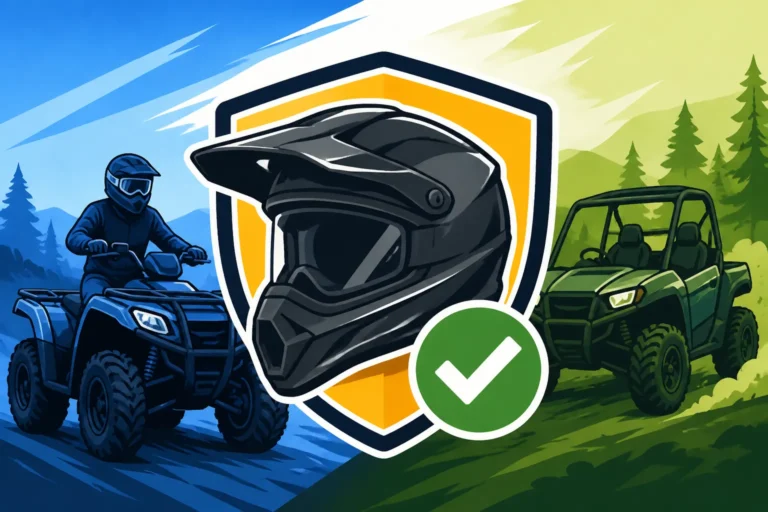
Perhaps one of the most critical enduring rules is the helmet law. In Manitoba, if you're operating or riding as a passenger on an off-road vehicle, you are generally required to wear an approved helmet. There are very specific, limited exemptions to this rule, such as for certain agricultural operations or when operating an ORV equipped with a roll-over protective structure (ROPS) and seat belts, where the seat belt is being worn. However, for the vast majority of recreational riders, especially those on ATVs or open-top UTVs, a helmet is not optional. This rule applies equally to a 10-year-old on a youth quad and a 60-year-old experienced rider. The rationale is simple: helmets save lives and prevent severe head injuries, regardless of the rider's age or perceived skill level. Getting your full Class 5 licence at 16 doesn't suddenly make your head impervious to impact!
Parents and new 16-year-old riders need to internalize this. It's not about being told what to do; it's about personal safety. Investing in a good quality, properly fitted helmet that meets recognized safety standards (like Snell or DOT) is one of the most important gear decisions you can make. The helmet law ensures a baseline of protection for everyone enjoying the trails and backcountry. For detailed information on what helmets are accepted, see [Manitoba Helmet Standards Accepted].
Universal Rules: Registration, Insurance, and Equipment
Beyond helmets, several other universal rules remain firmly in place for all ORV operators in Manitoba. First and foremost, nearly all ORVs operated on public land, designated trails, or in ditches must be registered with Manitoba Public Insurance (MPI). This includes a unique registration plate that must be properly affixed to the machine. Your 16th birthday does not exempt you from this fundamental requirement. Failing to register your machine can result in fines and impoundment. This is one of the first things an officer will check if they stop you on the trail. For specifics on how to get this done, check out [How to Register an ATV in Manitoba].
Furthermore, basic third-party liability insurance is included with your ORV registration. This is crucial as it provides a minimum level of financial protection if you cause damage to property or injury to another person while operating your machine. While the basic coverage might not protect your own machine from theft or damage, it's a legal requirement designed to ensure that victims of ORV-related incidents have some recourse. Even if you're riding a modified machine with heavy-duty components from SuperATV, you still need to be properly insured.
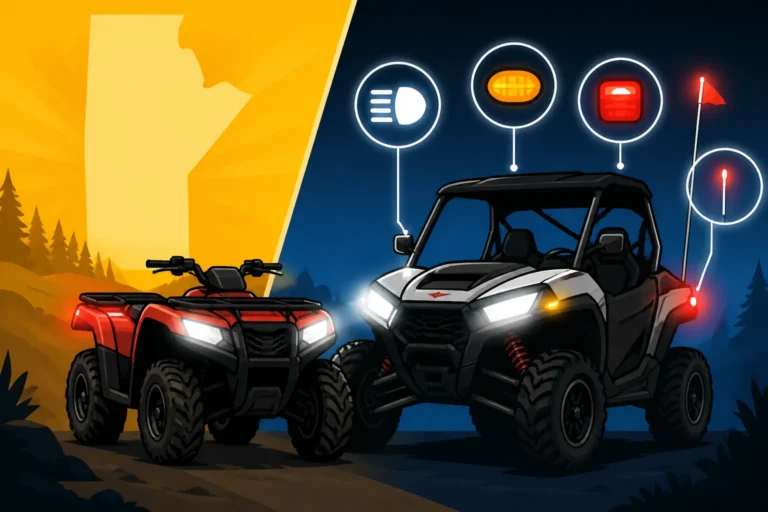
Finally, certain equipment requirements are universal. Your ORV must have working headlights and taillights for operation during specific hours, a spark arrester to prevent wildfires, and a muffler to keep noise levels reasonable. These aren't rules that change based on age; they are fundamental operational safety and environmental standards that apply to every ORV on Manitoba's trails and pathways. Understanding and adhering to these requirements is part of being a responsible ORV owner and operator, regardless of whether you're 16 or 60.
| Feature / Rule | Riders Under 16 (Typical) | Riders 16+ with Full Class 5 Licence |
|---|---|---|
| Direct Adult Supervision | Required for most public land/ditch riding/road crossings | Generally NOT required for independent operation |
| Ditch Riding | Limited, usually with supervision | Permitted (following all rules), no supervision needed |
| Road Crossings | Limited, usually with supervision | Permitted (following all rules), no supervision needed |
| Manufacturer Age Ratings | Legally significant, often dictates machine suitability | Less legally significant, provincial laws take precedence |
| Full Class 5 Licence | Not applicable | REQUIRED to unlock expanded privileges |
| Helmet Requirement | Universal (with few specific exceptions) | Universal (with few specific exceptions) |
| Registration | Universal | Universal |
| Insurance | Universal (basic liability with registration) | Universal (basic liability with registration) |
| Basic Equipment | Universal (lights, spark arrester, muffler) | Universal (lights, spark arrester, muffler) |
Turning 16 in Manitoba truly is a game-changer for ORV riders, marking a significant transition from supervised novice to independent operator, provided they hold that all-important full Class 5 driver's license. This shift brings with it not just newfound freedom to explore the province's vast riding areas but also a heightened sense of personal responsibility for safety and adherence to all enduring rules. So, as your young rider approaches this milestone, celebrate their growing independence, but also ensure they understand that with great freedom comes great responsibility on the trails.
Disclaimer
This article is for general informational purposes only and does not constitute professional advice. Laws, prices and regulations vary by location and change over time. Consult a qualified professional for guidance on your specific situation.