Snell and FMVSS Marks
There’s nothing quite like the feeling of hitting a Manitoba trail, whether it’s the quiet hum of a utility side-by-side or the thrill of a sport quad. But as much as we love the freedom, the topic of helmet safety often brings a lot of questions, especially when it comes to those cryptic "Snell" and "FMVSS" marks. This guide is here to cut through the confusion and explain exactly what these certifications mean for your head protection and your rides in Manitoba.
Understanding Helmet Safety Standards: Snell and FMVSS
When you're out there enjoying the vast beauty of Manitoba's backcountry, whether you're navigating bush trails or cruising along designated routes, protecting your head is absolutely paramount. It’s not just about avoiding a ticket; it's about safeguarding your most valuable asset. But walk into any gear shop, and you'll be bombarded with various acronyms and stickers on helmets – primarily Snell and FMVSS. It can feel like you need a degree in engineering just to pick a helmet, but really, these marks are your assurance that a helmet has met stringent safety criteria. They're not just arbitrary labels; they represent rigorous testing and a commitment to rider protection.
What is the FMVSS 218 Standard?
Let’s start with FMVSS 218. This stands for Federal Motor Vehicle Safety Standard 218, and it's essentially the baseline legal standard for motorcycle helmets (and by extension, many ATV and UTV helmets) in the United States. While Canada has its own safety standards, the FMVSS 218 certification is widely recognized and accepted, including right here in Manitoba. When a helmet carries the FMVSS 218 mark, often accompanied by "DOT" (Department of Transportation), it means the manufacturer certifies that the helmet meets the minimum performance requirements set by the U.S. government. This certification is crucial because it means the helmet has been tested for things like impact attenuation (how well it absorbs a hit), penetration resistance (how well it stops sharp objects), and retention system strength (how well the strap stays put). It's a self-certification process, meaning the manufacturer attests that their helmets meet the standard, though the DOT does perform random checks. For many riders, especially those just getting into the sport, a DOT-certified helmet is a common and accessible starting point. It's the bare minimum for legal street use in many places, and it signifies a foundational level of protection that you should never ride without.
What is the Snell Memorial Foundation Standard?
Now, let's talk about Snell. The Snell Memorial Foundation is an independent, non-profit organization that has been dedicated to helmet safety research and testing since 1957. Unlike FMVSS 218, which is a government-mandated minimum standard, Snell certification goes above and beyond. Think of Snell as the "gold standard" for helmet safety. They develop their own, often more rigorous, test protocols that exceed the legal minimums. Their testing procedures are updated every five years (e.g., Snell M2020, M2015, etc.) to incorporate the latest advancements in materials and injury prevention science. Snell tests for higher impact energies, multiple impacts in the same spot, and more severe penetration resistance. This means a Snell-certified helmet is designed to withstand a greater variety of forces and potential accident scenarios than a helmet that only meets the DOT standard. While Snell certification isn't legally required, many experienced riders, especially those involved in racing or high-performance riding, actively seek out Snell-approved helmets for the added peace of mind. Investing in a Snell-certified helmet is often seen as an investment in a higher level of protection, something that riders who push their machines, perhaps with aftermarket upgrades like a high-performance exhaust or suspension kit from a brand like SuperATV, would appreciate for their own safety.
Why Certification Matters for Manitoba Riders
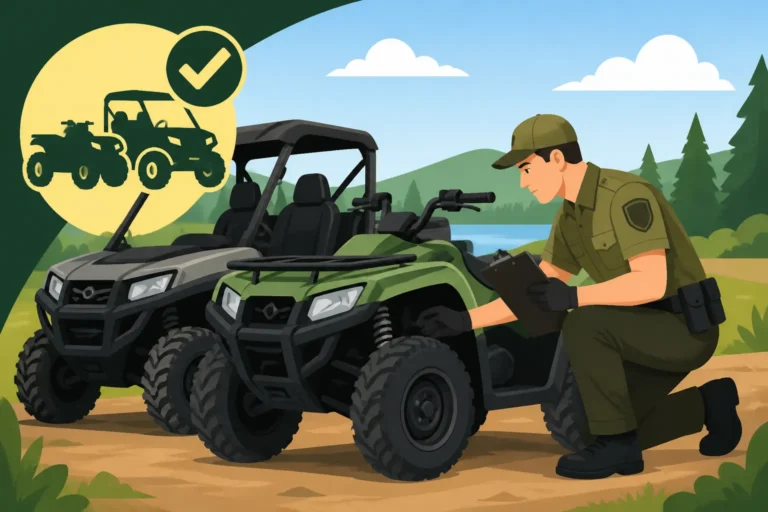
Navigating the rules for riding ATVs and UTVs in Manitoba can feel like a maze sometimes. From where you can legally ride, to registration, to what gear you need, there's a lot to keep straight. When it comes to helmets, it's not just about personal preference; it's about complying with the law and, more importantly, ensuring your safety. The certifications on your helmet aren't just fancy stickers; they're your proof that your helmet offers a certain level of protection, and they're what law enforcement looks for during a [Manitoba Equipment Checks by Officers].
Manitoba Helmet Law and Accepted Standards
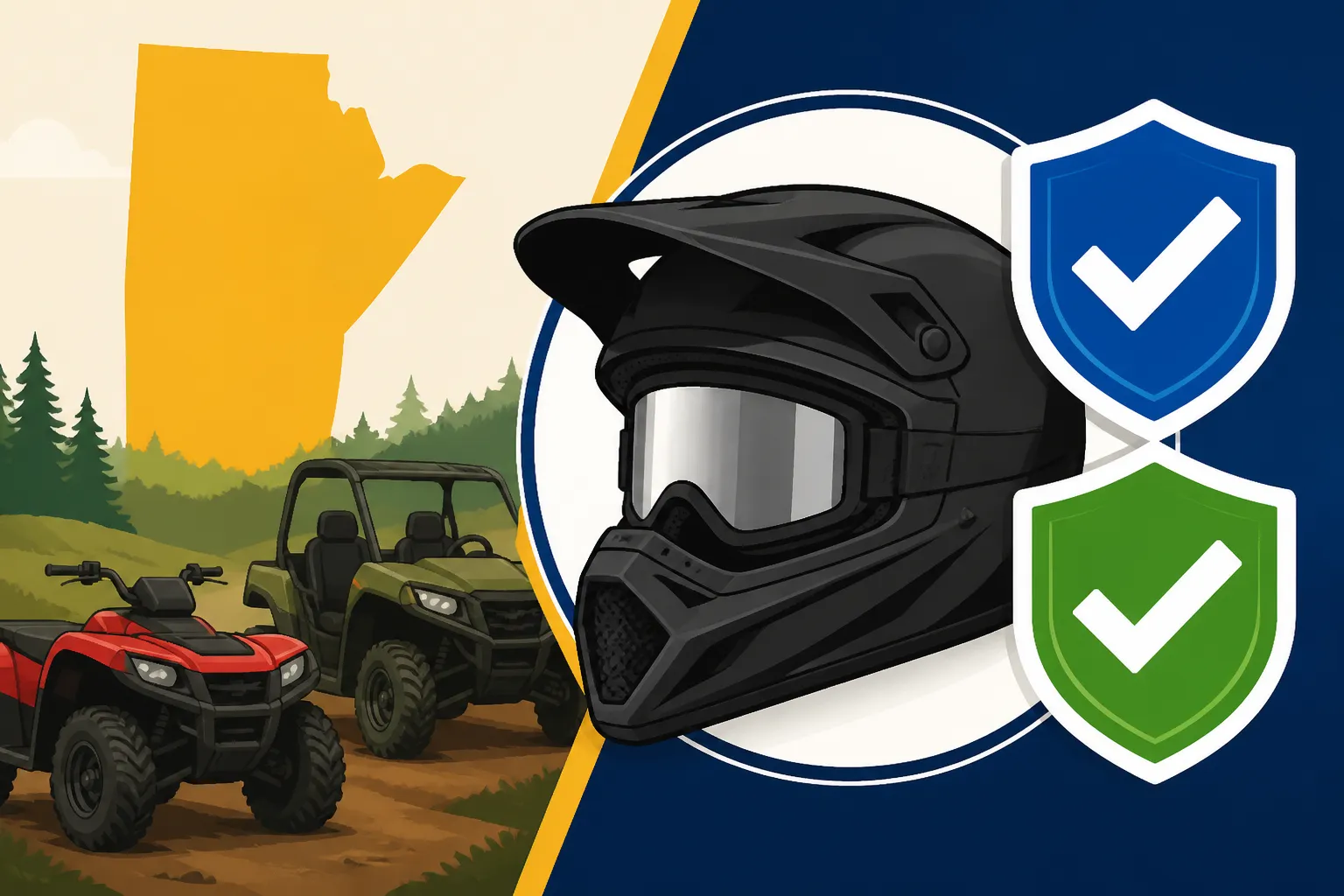
Manitoba has clear helmet laws for off-road vehicles. As a rider, you need to wear a helmet that meets an approved safety standard. The good news is that both the DOT (FMVSS 218) and Snell certifications are widely accepted under the [Manitoba Helmet Standards Accepted] section of the law. This means that if your helmet has either of these marks clearly visible, you're generally good to go from a legal standpoint. The law is designed to ensure that riders are using helmets that have undergone proper testing and can actually provide effective protection in the event of a crash. It's not just a suggestion; it's a mandatory requirement for anyone operating or riding as a passenger on an ORV. Imagine you're out on a ride near Lac du Bonnet, enjoying the trails, and an officer pulls you over. They're going to check for your registration, proof of insurance, and, yes, your helmet's certification. Being unprepared can lead to fines, which is a bummer when you’d rather be spending that money on fuel or perhaps some new SuperATV accessories for your rig.
The Importance of Valid Certification for Safety
Beyond legal compliance, the most critical reason these certifications matter is your personal safety. An off-road environment presents unique challenges: uneven terrain, unexpected obstacles, and the inherent risks of speed and powerful machinery. A helmet that meets DOT or Snell standards has been specifically designed and tested to manage the forces involved in an impact. This isn't just about preventing a skull fracture; it's also about mitigating concussions and other traumatic brain injuries that can have long-lasting effects. The impact absorption layers, the strength of the outer shell, and the integrity of the chin strap are all evaluated to ensure they perform when it counts. Without proper certification, you have no guarantee that a helmet offers any real protection. A cheap, uncertified helmet might look the part, but it could fail catastrophically in an accident, turning a minor spill into a life-altering event. Riders are always looking for ways to enhance their machines, maybe adding a new winch or a lift kit from SuperATV, but the most vital safety upgrade is always a properly certified helmet. Whether you're a seasoned rider or you're riding with a [Manitoba Rules for a Child Passenger], prioritizing a certified helmet is the smartest choice you can make.
| Certification Standard | Administered By | Focus | Rigor Level | Mandatory in US? | Common in Canada? |
|---|---|---|---|---|---|
| FMVSS 218 (DOT) | US Government | Minimum legal safety requirements | Baseline | Yes | Widely accepted |
| Snell | Snell Memorial Foundation (Non-profit) | Enhanced performance, exceeding minimums | Higher | No (Voluntary) | Highly respected |
How to Verify Helmet Certifications
Okay, so you understand why these certifications are important, but how do you actually check for them when you're looking at a helmet? It's not always as straightforward as you might think, especially with so many brands and models out there. Knowing what to look for, and where to look, can save you from accidentally buying a helmet that isn't up to Manitoba's standards or, worse, doesn't offer the protection you truly need. Don't be shy about inspecting a helmet thoroughly before you buy it.
Locating the DOT and Snell Marks
The good news is that both DOT and Snell require their marks to be clearly visible on the helmet. For DOT certification (FMVSS 218), you'll typically find a "DOT" sticker on the back exterior of the helmet. This sticker often includes "FMVSS No. 218" and may list other information like the manufacturer and model. For Snell certification, look for a Snell sticker or label, usually on the inside of the helmet, often under the comfort liner or on the chin strap. This sticker will indicate the specific Snell standard met, such as "Snell M2020" or "Snell M2015." It's essential to verify that these marks are present and legible. If a helmet doesn't have a DOT sticker on the outside, or a Snell sticker on the inside (if advertised as such), be very wary. Sometimes, unscrupulous sellers might try to pass off uncertified helmets as legitimate, or an older, unmaintained helmet might have lost its labels. Always double-check. When you bring your machine for [Manitoba ORV Registration Through MPI], nobody will be checking your helmet, but an officer on the trail certainly will.
Avoiding Counterfeit or Outdated Helmets
This is where things can get a bit tricky. Just because a helmet has a sticker doesn't automatically mean it's legitimate or still safe. Counterfeit helmets are a real concern, often sold online or through unofficial channels, sporting fake DOT stickers but offering zero actual protection. Always purchase helmets from reputable dealers or well-known retailers. Be suspicious of prices that seem too good to be true. Furthermore, helmet technology, like anything else, evolves. A Snell M2000 helmet, while certified at the time, is now significantly outdated compared to a Snell M2020. While [Manitoba Helmet Law and Its Exemptions] might accept older standards, the protective qualities degrade over time, even if the helmet hasn't been crashed. The foam liners compact, glues dry out, and plastics become brittle. Most manufacturers recommend replacing helmets every 5-7 years, regardless of crashes, and immediately after any significant impact. For youth riders, ensuring their helmet is not just certified but also fits correctly and is relatively new is especially important, particularly for those just starting to ride at ages covered by [Manitoba Age Tiers for Young Riders]. You wouldn't put cheap, uncertified tires on your UTV even after investing in heavy-duty axles from SuperATV, so why compromise on your head protection?
Beyond the Sticker: Other Critical Helmet Considerations
While the Snell and FMVSS marks are absolutely crucial for ensuring your helmet meets safety standards, there's more to helmet safety than just a sticker. A certified helmet is the foundation, but fit, maintenance, and knowing when to replace it are equally vital for maximizing its protective capabilities. Don't let your focus on certifications overshadow these other important aspects of helmet ownership. After all, the best-certified helmet in the world won't protect you if it doesn't fit properly or is compromised.
Proper Helmet Fit and Care
A helmet, no matter how highly rated by Snell or DOT, is only effective if it fits you correctly. A helmet that is too loose can shift during an impact, exposing vulnerable areas or simply not distributing impact forces as intended. One that's too tight can be uncomfortably restrictive, causing distractions or headaches. When trying on a helmet, it should feel snug all around your head, with no pressure points. Your cheeks should be slightly compressed, and the helmet shouldn't move independently when you shake your head. The chin strap should be securely fastened, allowing only enough room for one finger underneath. Always remember to fasten the chin strap tightly before every ride – it seems obvious, but it’s a surprisingly common oversight. Beyond fit, proper care extends the life of your helmet. Store it in a cool, dry place away from direct sunlight and harsh chemicals. Clean the exterior with mild soap and water, and the interior liners according to the manufacturer's instructions. A well-maintained helmet is a happy, safe helmet.
When to Replace Your Helmet
This is a question many riders ponder: "How long is my helmet good for?" There are two primary triggers for helmet replacement. First, and most crucially, if your helmet has sustained any impact, even if you can't see visible damage, it needs to be replaced immediately. Helmets are designed to absorb and dissipate energy by deforming the internal foam liner. Once that foam has done its job, it's compromised and won't offer the same level of protection again. It’s a one-and-done protective device. Think of it like a crumple zone in a car – once it's crumpled, it needs replacing. Even a drop onto a hard surface from a small height can be enough to damage the internal structure, making it unsafe. Secondly, as mentioned earlier, helmets have a lifespan even without impacts. Most manufacturers recommend replacing your helmet every five to seven years from the date of manufacture (often stamped inside the helmet). Over time, materials degrade due to UV exposure, sweat, environmental factors, and simply age. The EPS foam can dry out and lose its ability to absorb impact, and the outer shell can become brittle. While [Manitoba Helmet Standards Accepted] don't expire from a legal perspective, your helmet's protective capability certainly does. Keep track of your helmet's age, and be ready to invest in a new one when the time comes. This ensures you’re always getting the best possible protection when you’re out on the trails, whether you're riding a standard machine or one tricked out with all the latest gear from SuperATV.
Disclaimer
This article is for general informational purposes only and does not constitute professional advice. Laws, prices and regulations vary by location and change over time. Consult a qualified professional for guidance on your specific situation.