Manitoba Dealer Plate Exemption
Navigating the world of off-road vehicle (ORV) registration in Manitoba can feel a bit like trying to read a map printed in a blizzard. One particular area that causes a lot of head-scratching is how dealers handle registration for the machines sitting on their lots or being taken out for test drives. This guide is here to untangle the specifics of the Manitoba dealer plate exemption, making it clear how it works, what it covers, and what it definitely doesn't, so you can understand the process whether you're buying, selling, or just curious.
Understanding Dealer Plates in Manitoba
When you walk onto an ATV or UTV dealership lot, you'll see a collection of impressive machines ready for adventure. What you might not notice, however, is that these machines often don't have individual registration plates from Manitoba Public Insurance (MPI) like your personal quad would. This isn't an oversight; it's due to a specific exemption designed for the business of selling ORVs.
What Exactly is a Dealer Plate?
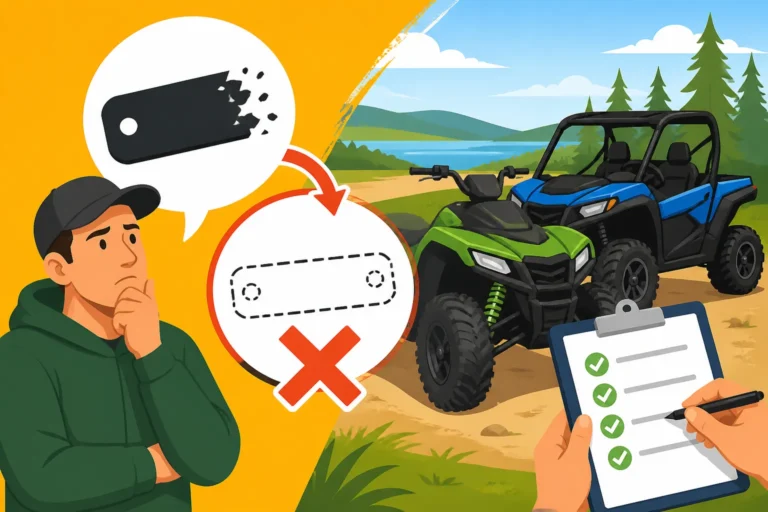
A dealer plate, sometimes called a "demonstrator plate" or "in-transit permit" in other contexts, is a special type of license plate issued to registered ORV dealerships by MPI. Unlike a standard registration plate that is tied to a specific vehicle and its owner, a dealer plate is tied to the dealership itself. It's meant to provide a temporary, flexible way for dealers to operate unregistered ORVs for specific business-related purposes without having to individually register every single machine on their lot. Think of it as a temporary tag that covers the dealer's stock, rather than a permanent identification for one particular machine. It's an administrative tool to facilitate commerce, not a permanent registration solution.
This system recognizes the impracticality of having hundreds of individual registration certificates for every quad or side-by-side that moves through a dealership's inventory in a given year. It simplifies the process considerably for businesses, allowing them to focus on sales and service rather than constant paperwork for machines that are only temporarily in their care.
Why Dealers Need Special Plates
The core reason dealers need special plates is purely logistical and economic. Imagine a bustling dealership that might move dozens, if not hundreds, of ATVs, UTVs, and snowmobiles in a year. If each one had to be fully registered, titled, and insured with a unique plate the moment it arrived on the lot, the administrative burden and cost would be astronomical. It would slow down sales, tie up capital, and make it incredibly difficult for dealerships to offer test drives or move inventory for events.
These special plates allow dealerships to maintain a rotating inventory of machines that are for sale without the full registration process. It means they can showcase a variety of models, move them between showrooms or storage facilities, and, crucially, allow prospective buyers to experience the machine firsthand through a test ride. Without this provision, the very nature of selling ORVs would be fundamentally different, likely leading to higher costs and fewer opportunities for customers to try before they buy. This system supports the sales cycle, enabling a smooth flow of inventory from manufacturer to buyer. You can find more details about how the overall process works at [Manitoba ORV Registration Through MPI].
The Scope of the Exemption
The Manitoba dealer plate exemption is powerful, but it’s not limitless. It exists to cover machines that are part of a dealer's inventory, primarily for sale, demonstration, or service purposes. It means that if a machine is sitting on the lot, waiting for a buyer, or being prepped for delivery, it typically doesn't need its own individual registration plate. This saves the dealer from paying registration fees and applying for plates for every single unit they stock.
However, it's vital to understand that this exemption is tied to the dealership's business operations. It doesn't mean the machine is simply "exempt" from all rules. It's exempt from individual registration while in the dealer's care for specific activities. Once a machine is sold, that exemption immediately ceases for the buyer, who then assumes the responsibility for proper registration. This is a crucial distinction that can sometimes confuse new ORV owners, so it's good to clarify early.
How the Dealer Plate Exemption Works
The dealer plate exemption isn't a blanket rule; it operates within specific parameters designed to facilitate legitimate business activities while still ensuring accountability. It's a carefully balanced system that allows for efficient commerce without compromising public safety or regulatory oversight.
Machines Covered by the Exemption
Generally, the exemption applies to most types of ORVs that a dealer would sell. This includes new and used ATVs (All-Terrain Vehicles), UTVs (Utility Terrain Vehicles), side-by-sides, and snowmobiles. Essentially, if it's an off-road vehicle intended for sale by a licensed dealer, it can typically be operated under the dealer plate exemption for approved purposes. The key is that the machine must be part of the dealer's inventory and not already sold to a customer.
This broad coverage allows dealers to manage their diverse stock without needing a different type of plate for each category of ORV. Whether it's a nimble sport quad, a heavy-duty utility side-by-side, or a touring snowmobile, the dealer plate provides the necessary legal temporary identification. Machines such as [Registering a Side-by-Side in Manitoba] fall under this, just as a standard ATV would. The rules are generally consistent across the board for typical ORV inventory.
Permitted Uses for Dealer-Plated ORVs
The primary uses for an ORV operating under a dealer plate are directly tied to the dealer's business. These include:
- Demonstration and Test Drives: This is perhaps the most common and important use. A dealer can allow a prospective buyer to take an ORV for a test drive, demonstrating its capabilities on approved routes. This is invaluable for customers to make informed purchasing decisions.
- Transport of Inventory: Moving machines between the dealership's main lot, satellite showrooms, storage facilities, or to a service centre. This ensures that inventory can be managed efficiently.
- Participation in Trade Shows or Events: Dealers often take ORVs to local fairs, expos, or community events for display and promotion. The dealer plate allows for the legal transport and limited operation of these machines at such venues.
- Service and Repair Runs: If a machine needs to be tested after service, or moved for diagnostics, the dealer plate covers this operational need.
- Delivery to a Customer (Temporary): In some cases, a dealer plate might be used for the immediate delivery of a newly purchased ORV to the customer, but only until the customer's own registration is finalized. This is usually a very short-term window.
Essentially, any activity that is a direct and necessary part of selling, servicing, or marketing an ORV by a licensed dealer falls under the umbrella of permitted uses. [How Dealer Plates Work on an Unsold Quad] delves deeper into these practical applications.
Restrictions on Dealer Plate Usage
While the dealer plate offers flexibility, it comes with strict limitations. It's not a free pass for dealers or their employees to use ORVs for personal enjoyment or non-business-related activities. Here are some key restrictions:
- No Personal Use: A dealer plate cannot be used for recreational riding by dealership staff, family, or friends. The ORV must be operated for a direct business purpose. Using a dealer-plated ORV to go hunting on the weekend, for example, is a clear violation.
- No Long-Term Customer Use: Once an ORV is sold, it is no longer covered by the dealer plate. The buyer must register the machine under their own name. There isn't an extended grace period where a new owner can keep using the dealer's plate.
- Operator Qualifications: Anyone operating an ORV with a dealer plate must still meet all general operating requirements, including age restrictions and any applicable licensing or training. The plate exempts the machine from individual registration, not the operator from skill or legal requirements.
- Adherence to ORV Act: All other provisions of Manitoba's Off-Road Vehicles Act still apply. This includes rules regarding helmets, safe operation, speed limits where applicable, and where ORVs can and cannot be operated. The exemption is very specific to registration, not a blanket waiver of all laws.
These restrictions are in place to prevent abuse of the system and ensure that the exemption serves its intended commercial purpose without creating loopholes for unregistered personal use.
The Dealer's Responsibilities and Requirements
Being a licensed ORV dealer in Manitoba comes with specific obligations related to these special plates. It's not just about having the plate; it's about properly managing and accounting for its use and ensuring compliance with all regulations.
Acquiring and Maintaining Dealer Plates
ORV dealerships must apply to MPI to receive dealer plates. This isn't an automatic process. Dealers need to demonstrate that they are legitimate businesses primarily engaged in the sale of ORVs. This often involves submitting business licenses, proof of physical location, and meeting certain criteria set by MPI. Once approved, the dealer is issued a set number of plates, which usually have a distinct appearance to differentiate them from standard ORV plates.
These plates are typically renewed annually, much like regular vehicle registrations. The dealership pays a fee for each plate, ensuring that MPI maintains a record of who holds them and for how long. It's an ongoing commitment that requires diligence from the dealer to keep their operations legally sound. Failure to maintain current dealer plates can result in fines and other penalties, disrupting their ability to conduct business.
Record Keeping for ORV Dealers
Proper record keeping is paramount for dealers using these special plates. They must maintain detailed logs of which ORV is being operated with a dealer plate, when, and for what purpose. This isn't just good business practice; it's often a legal requirement. These records serve as an audit trail, allowing authorities to verify that the dealer plate exemption is being used appropriately and not for unauthorized personal use.
These records might include:
- A list of all ORVs currently in inventory.
- Dates and times when a dealer plate was affixed to a specific machine.
- The name of the operator and the purpose of the operation (e.g., "customer test drive for Mr. Smith," "transport to service department," "delivery to trade show").
- Details of sales, including the date of sale and the buyer's information.
Accurate records protect the dealer in case of an incident or an audit, demonstrating that they are operating within the confines of the law. Using tools like LawDepot's business forms can help dealers ensure they have the necessary documentation for sales and operations, though specific dealer plate logs are generally internal.
Demonstrating Compliance to Authorities
Should a dealer-plated ORV be stopped by law enforcement or a conservation officer, the operator must be able to demonstrate that the machine's use falls within the permitted activities for a dealer plate. This means having the necessary documentation readily available. This could include:
- The dealer's registration certificate for the plate itself.
- Proof of employment with the dealership (if an employee is operating it).
- Documentation confirming the ORV is part of the dealer's inventory.
- Potentially, a written log of the specific trip being undertaken.
Officers have the authority to verify the legitimacy of the operation, and a lack of proper documentation or a clear business purpose can lead to fines for the dealer and operator. This is why thorough record-keeping and clear communication about appropriate use are so important within a dealership. [Manitoba Registration Cards Carried at All Times] is a good parallel, even though this is for a dealer plate, the principle of carrying documentation remains.
What This Means for Buyers and Sellers
Understanding the dealer plate exemption isn't just for dealers; it's also important for consumers. Knowing how it works helps buyers understand the process of purchasing a new ORV and ensures sellers are following proper procedures.
Test Driving a Machine with a Dealer Plate
One of the best parts about buying an ORV from a dealership is the opportunity for a test drive. When you take a new quad or side-by-side out for a spin, it will almost certainly be operating under a dealer plate. This is perfectly legal and exactly what the exemption is designed for. It allows you, the potential buyer, to experience the machine's performance, handling, and comfort in a real-world (or at least, designated test area) setting.
During a test drive, the dealer should ensure you are aware of all operating rules, including helmet requirements and any designated riding areas. You might be accompanied by a sales representative, or given clear instructions on where you can and cannot ride. The key takeaway here is that you're not riding an unregistered machine; you're riding a machine temporarily covered by the dealer's specific commercial registration.
Taking Delivery of Your New ORV
Once you've made your purchase and the deal is done, the dealer plate exemption for that specific machine ends. The dealer will handle the paperwork for your new registration. This typically happens right at the dealership, often through an Autopac agent who works on-site or is affiliated with the dealership. They will process the transfer of ownership, collect the necessary taxes, and issue your new ORV registration certificate and plate.
You should not leave the dealership with the dealer plate affixed to your newly purchased ORV, unless there's a specific, short-term arrangement for delivery that transitions immediately to your own registration. Your new plate should be affixed to your machine before you take it home to ride. This ensures you are fully compliant with Manitoba's registration laws from the moment you take possession. Check out [Manitoba Paperwork When You Buy at a Dealer] for more on the specific documents you'll receive.
Private Sales vs. Dealer Sales and Plates
The dealer plate exemption applies exclusively to licensed ORV dealerships. This is a crucial distinction. If you buy an ORV from a private seller, there is no dealer plate involved. In a private sale, the ORV must already be registered to the seller, and you, as the buyer, are responsible for transferring that registration into your name immediately after the purchase. You cannot use a dealer plate for a private transaction, nor can a private seller lend you a plate from another machine they own.
For private sales, you'll need a bill of sale, and the seller will sign over the transfer section of their existing registration certificate. Then, you'll take these documents to an Autopac agent to complete the transfer and get your own plate. This is outlined further in articles like [Manitoba Transfer of Ownership Rules]. The two processes—dealer purchase and private purchase—are fundamentally different in how registration is handled initially. LawDepot offers templates for bills of sale that can be very helpful in private sales, ensuring all necessary details are captured for the transfer.
Common Misconceptions About Dealer Plates
Dealer plates, while serving a clear purpose, often lead to misunderstandings among the general public and even some new dealership staff. Clearing up these misconceptions is vital for proper compliance and safe operation.
Not a Free Pass for Personal Use
One of the most common and dangerous misconceptions is that a dealer plate grants the dealer or their employees a "free pass" to use ORVs for personal recreation. This is absolutely incorrect. As mentioned earlier, the exemption is strictly for business purposes related to the sale, service, or demonstration of ORVs. An employee taking a dealer-plated quad to their cabin for the weekend, or using a side-by-side to run personal errands, is a misuse of the plate and is subject to penalties.
The intent of the law is to facilitate commerce, not to provide unregistered recreational vehicles for dealership personnel. Law enforcement officers are well aware of these rules and will not hesitate to issue fines if a dealer plate is found to be used outside its permitted scope. The plate is a tool for business, not a perk.
Exemption Does Not Mean No Rules
Another misunderstanding is that because an ORV is on a dealer plate, it's somehow exempt from other rules of the road or trail. This is false. While the machine might be exempt from individual registration, it is not exempt from the general provisions of the Off-Road Vehicles Act. This means:
- Helmet laws still apply. Operators and passengers must wear approved helmets.
- Age and supervision requirements still apply. Young riders must meet the age requirements for operation.
- Operating restrictions apply. You can't ride a dealer-plated ORV in prohibited areas, like certain roadways or private property without permission.
- Insurance is still a factor. While the dealer plate implies some level of basic liability coverage for authorized use, reckless operation can still lead to significant consequences.
Essentially, any ORV, regardless of how it's registered, must be operated safely and in accordance with all applicable laws and regulations. The dealer plate simply addresses the specific issue of individual vehicle registration for inventory purposes. This is consistent with [Manitoba Requires Registration in Any Location] – even a dealer-plated machine must adhere to location-specific rules.
The Exemption is Not for Anyone Else
Sometimes, individuals, particularly those involved in informal sales or temporary loans, might mistakenly believe they can "borrow" a dealer plate or operate an unregistered ORV under the guise of a "dealer transaction." This is a serious error. The dealer plate exemption is exclusive to licensed ORV dealerships. It cannot be transferred, loaned, or used by private individuals, even if they are involved in buying or selling.
If you purchase an ORV from a private seller, or if you're a mechanic temporarily working on an ORV, you cannot use a dealer plate to operate it. Each private owner or operator of a non-dealer-owned machine must ensure their ORV is properly registered with its own plate and certificate. Trying to circumvent this requirement can lead to fines, impoundment of the vehicle, and other legal troubles. If you're unsure about registration, always consult with an Autopac agent, as covered in [Manitoba Autopac Agents and ORV Registration].
Navigating the Purchase Process at a Dealership
Buying an ORV from a dealer should be a straightforward experience, and understanding the role of registration and dealer plates helps make it even smoother. Dealers are generally well-versed in these rules, but it's always good for you, the buyer, to be informed.
Understanding Your Paperwork
When you purchase a new or used ORV from a Manitoba dealer, you'll be presented with a stack of paperwork. This will include a bill of sale, potentially financing documents, and most importantly, the documents related to your ORV's registration. The dealer will typically initiate the registration process on your behalf with MPI. You'll receive a temporary registration permit, and your permanent registration card and plate will follow.
It's critical to review all documents carefully. Ensure the VIN (Vehicle Identification Number) on your bill of sale matches the VIN on the machine, and that your personal information is correct on the registration forms. Dealers often use systems that integrate with MPI, making the process efficient, but a quick check on your part can prevent future headaches. LawDepot also provides good general templates for vehicle sales agreements that can help you understand the components of such documents, though dealer-specific forms will be used.
Temporary Operation After Purchase
In some cases, there might be a very brief period where you operate your newly purchased ORV before your permanent plate arrives, using a temporary document provided by the dealer and MPI. This is usually a grace period for the administrative processing of your registration. It's not the same as using a dealer plate. The temporary document proves that your permanent registration is in process and you are authorized to operate the machine.
Always clarify with your dealer about any temporary operating permissions and how long they are valid. You must carry these temporary documents with you, just as you would your permanent registration card. Once your permanent plate arrives, you must affix it to your ORV as required by law. Rules for plate mounting vary by machine type; for instance, [Manitoba Plates on the Rear of a Quad] describes one common configuration.
What Happens When You Take It Home
The moment you drive or trailer your new ORV off the dealership lot, the responsibility for its proper registration, insurance, and safe operation shifts entirely to you. Any dealer plate used during the test drive or internal transport will have been removed, and your own registration plate should be securely mounted on the machine.
Ensure you have your new registration certificate, proof of insurance (which is usually basic liability included with registration, but you might have purchased additional coverage), and all other necessary documents with you when you first hit the trails or property. Don't assume anything is covered once you've left the dealer's premises; you are now the owner, and with that comes all the legal responsibilities. Always keep your registration card handy when riding, as detailed in [Carrying Your Registration Card on Every Ride].
Comparison of ORV Registration: Dealer vs. Private Owner
To help clarify the differences, here's a quick comparison of how registration works for a dealer's inventory versus a private owner's machine.
| Feature | ORV Under Dealer Plate Exemption | ORV Owned by Private Individual |
|---|---|---|
| Purpose | For sale, demonstration, transport, service, or delivery by a dealer. | For personal recreation, work, or other non-commercial use by owner. |
| Plate Issuance | Issued to the dealership, covers multiple inventory machines. | Issued to the individual owner, tied to a specific machine. |
| Registration Cost | Dealer pays an annual fee for the dealer plates. | Owner pays annual registration fee per machine, plus a trails fee. |
| Insurance | Basic liability coverage generally part of dealer plate registration. | Basic liability included with individual registration, optional extra. |
| Personal Use | Strictly prohibited. | Permitted, as per ORV Act and local bylaws. |
| Transfer of Title | Dealer handles transfer to buyer upon sale. | Buyer handles transfer from seller to themselves at Autopac. |
| Required Docs | Dealer plate certificate, business records (for dealer). | Individual registration card, proof of ownership. |
| Who Carries Docs | Dealer staff during authorized use. | Owner/operator on every ride. |
Disclaimer
This article is for general informational purposes only and does not constitute professional advice. Laws, prices and regulations vary by location and change over time. Consult a qualified professional for guidance on your specific situation.