Registering Your First Quad at Age 16
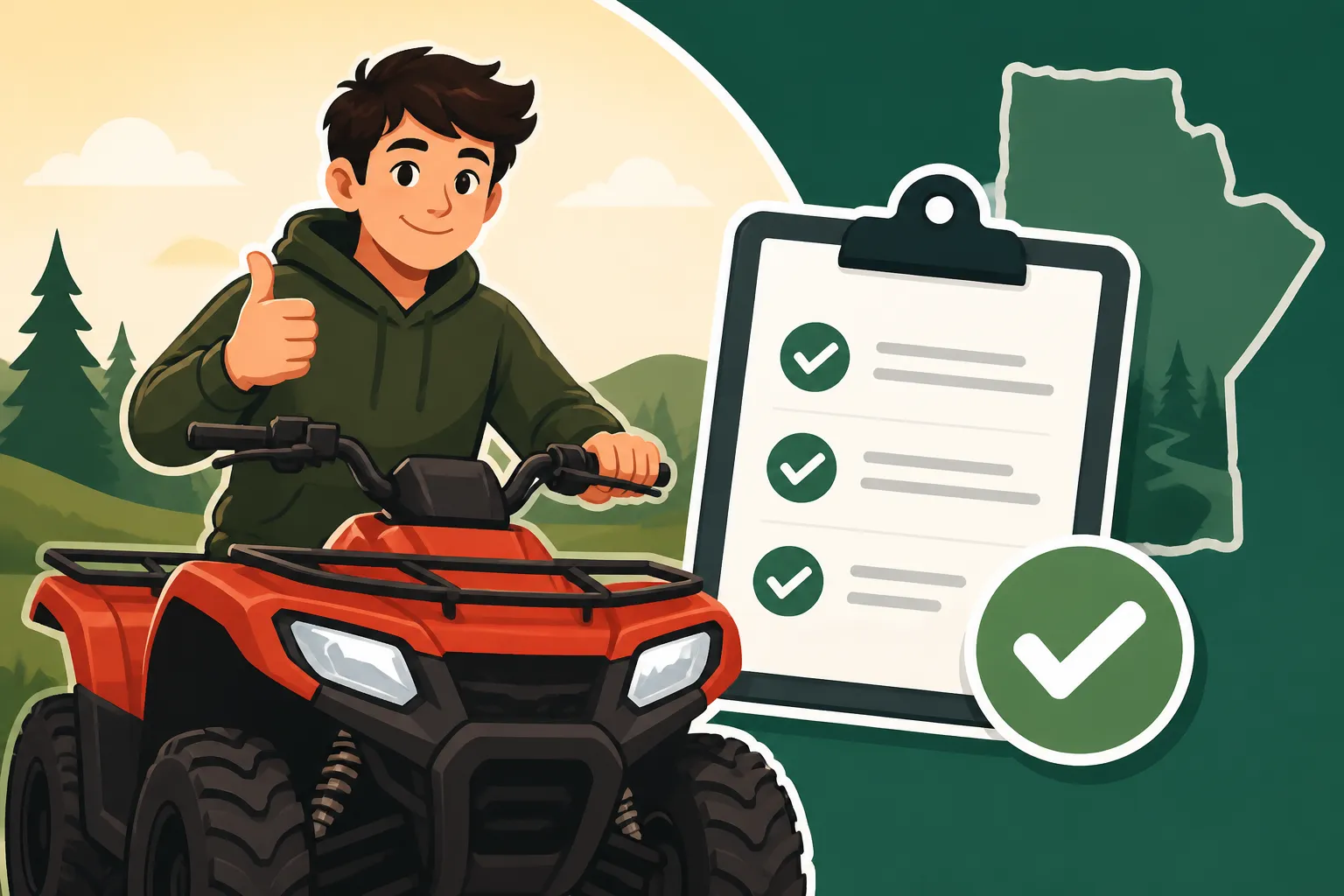
That moment you turn 16 and finally get your own quad or UTV – it's pure excitement! The thought of hitting the trails, exploring Manitoba's incredible backcountry, and feeling that freedom is exhilarating. But then you quickly realize there's a practical side to this adventure: registering your machine. It can feel a bit daunting, especially when you're under 18 and wondering how the rules apply to you. This guide will walk you through the entire process of registering your first off-road vehicle in Manitoba when you're 16, making sure you're ready to ride legally and confidently.
The Big Question: Why Age 16 Matters for Registration
You might be thinking, "It's my quad, why can't I just register it myself?" While 16 is a fantastic age for gaining independence, the law in Manitoba, like many places, still views you as a minor until you turn 18. This has a direct impact on how you interact with official processes, especially something as significant as registering a vehicle with Manitoba Public Insurance (MPI). It's not about preventing you from riding, but rather ensuring there's proper oversight and legal responsibility in place.
The Legal Standpoint of Being 16
At 16, you can operate an ORV, and even get your driver's license for a car, but when it comes to legal contracts and ownership, there's a difference. Registering an off-road vehicle means you're entering into an agreement with MPI for its registration and basic insurance. Since you're not yet 18, the province requires a parent or legal guardian to sign off on this. This isn't just a formality; it ensures that a responsible adult is aware and legally consents to you owning and registering the machine. Think of it as a safety net, both for you and for the province, acknowledging that while you're old enough to ride, the full legal responsibilities still need adult backing. This parental involvement helps bridge the gap between your youthful enthusiasm and the adult world of legal obligations.
Parental Consent: More Than Just a Signature
The requirement for parental consent is a cornerstone of registering an ORV for someone aged 16 or 17. Your parent or legal guardian isn't just signing a piece of paper; they are, in essence, co-signing your legal capacity to own and operate that machine in the eyes of the law. This means they are taking on a level of responsibility that might include financial obligations for fees and certain legal liabilities if something were to go awry. It's a significant commitment on their part, and it's why MPI takes this step so seriously. They'll want to see your parent or guardian present at the Autopac agent to provide that consent directly, and they might even ask for proof of their relationship to you. It's all about ensuring that the decision to register a machine under your name is a fully informed and legally sound one. For guidance on this, you might find information on [Manitoba Parental Consent From 16 to 18] helpful.
Gathering Your Documents: What a 16-Year-Old Needs to Bring
One of the biggest hurdles when dealing with any government agency is making sure you have all the right paperwork. For a 16-year-old registering their first quad, this is especially true. You'll need more than just the machine itself; you'll need documents proving your age, your identity, and the ownership of the ORV. It can feel like a lot to gather, but having everything in order before you head to an Autopac agent will save you a ton of time and frustration. Let's break down what you'll need.
Proof of Age and Identity
When you're 16, proving your age and identity is paramount. This isn't just a suggestion; it's a hard requirement from MPI to ensure you meet the minimum age for registration and to correctly identify you as the owner. A birth certificate is often the easiest and most universally accepted document for proving your age. It clearly states your date of birth, leaving no room for doubt. Along with that, you'll need something to confirm your identity, like a Manitoba driver's license (if you have one) or a Manitoba Identification Card. These documents link you to the name on the birth certificate and provide a photo for identification. Don't forget your Social Insurance Number (SIN) as well, as it's required for tax purposes related to the purchase. Having all these ready means one less thing to worry about at the counter. For more on this, check out [Manitoba Proof of Age at Registration].
Proof of Ownership for the ORV
This is perhaps the most critical set of documents after your personal identification. Whether you bought your quad new from a dealer or used from a private seller, you need to prove you legally own it.
For a New Machine from a Dealer
If you're lucky enough to be getting a brand-new quad or UTV, the dealer will typically provide you with all the necessary paperwork. This usually includes a New Vehicle Information Statement (NVIS) or a Manufacturer's Statement of Origin (MSO), which is basically the birth certificate for your machine. You'll also get a bill of sale or purchase agreement that shows the transaction details, including the price, your name as the buyer, and the Vehicle Identification Number (VIN) of the machine. Make sure all this paperwork is accurate and complete before you leave the dealership. The dealer's staff are usually very good at guiding you through this, but it's always good to double-check. Don't be afraid to ask questions; it's your first major purchase!
For a Used Machine from a Private Seller
Buying a used machine can be a great way to get into the sport, but it often requires a bit more legwork on your part regarding paperwork. The most important document here is a clear, signed bill of sale. This document needs to include the date of sale, the purchase price, the full names and addresses of both the buyer (you) and the seller, and crucially, the complete VIN of the off-road vehicle. Without a proper bill of sale, MPI may have trouble processing your registration, as it's the primary proof that ownership has transferred to you. Sometimes, having a template for a bill of sale can be incredibly helpful in these situations, and resources like LawDepot offer customizable forms that can ensure all the necessary information is included. You might also need the previous owner's registration certificate, which often has a section for transfer of ownership. Ensure that the VIN on the bill of sale matches the VIN on the machine exactly – even one digit off can cause headaches. If the machine was previously registered in Manitoba, the seller should sign over the transfer portion of their registration certificate to you. For a deeper dive, consider reading [Manitoba Transfer of Ownership Rules].
Your Parent or Legal Guardian's Information
Remember that parental consent we talked about? Your parent or legal guardian will need to be present at the Autopac agent, and they'll also need to bring their own identification. This usually means a valid driver's license or a Manitoba Identification Card. They'll be signing documents, so their identity needs to be confirmed just like yours. Also, be prepared for them to provide proof of their relationship to you if it's not immediately obvious (e.g., if you have different last names). A birth certificate showing you as their child is perfect for this. It’s always best to call ahead to your chosen Autopac agent to confirm exactly what they’ll need to see, as sometimes requirements can have slight variations.
The Registration Appointment: What to Expect at MPI
Okay, you've gathered all your documents, your parent is ready, and you're set to head to an Autopac agent. This is where the magic happens – where your machine officially becomes legally registered and ready for Manitoba's trails. Going in prepared, knowing what to expect, can make the process smooth and stress-free.
Visiting an Autopac Agent
Manitoba Public Insurance (MPI) handles all ORV registrations, and the actual transaction takes place at one of their many authorized Autopac agents across the province. These are typically insurance brokers who also handle vehicle registrations. When you arrive, you and your parent or guardian will present all your gathered documents to the agent. They will review everything, ensuring all the information is correct and that you meet all the requirements. This is the time to ask any last-minute questions you might have about your registration or even basic insurance coverage. Don't be shy; they're there to help! The agent will input your information into the system, officially linking you and your ORV to MPI. Many first-time riders find the process surprisingly straightforward, especially if all their documents are in order. [Manitoba Autopac Agents and ORV Registration] offers more details on where to go.
Understanding the Costs Involved
Registering your off-road vehicle isn't just about paperwork; there are fees involved. When you register, you'll pay the registration fee itself, which covers the administrative costs and basic liability insurance for your machine. Additionally, there's a mandatory trails fee. This fee contributes directly to the maintenance and development of off-road trails across Manitoba, so it's money well spent for the riding community. If you bought your machine privately, you'll also be assessed Provincial Sales Tax (PST) on the purchase price (or the machine's book value, whichever is higher, in some cases). The Autopac agent will calculate all these costs for you. It's a good idea to have an idea of the total cost before you go, so you're not caught off guard. While I can't give you exact figures, remember to check MPI's official resources for current pricing details. For an overview of expenses, see [Manitoba ORV Registration Cost] and [The $25 Trails Fee Added to Every Registration].
Example Cost Breakdown (Illustrative)
Here's a simplified table to give you a general idea of the costs you might encounter. Remember, exact amounts will vary and are subject to change, so always verify with an Autopac agent.
| Item | Description |
|---|---|
| Registration Fee | Covers basic registration and included liability insurance |
| Manitoba Trails Fee | Mandatory fee dedicated to ORV trail maintenance and development |
| Provincial Sales Tax (PST) | Applied to the purchase price of the ORV (if bought privately) |
| Licence Plate Fee | Cost for the physical licence plate issued |
This table helps illustrate the typical components of your initial registration cost. MPI will provide a precise breakdown at the time of your visit.
What Happens If Documents Are Missing or Incomplete?
Let's be realistic: sometimes, despite our best efforts, a document might be missing or there might be a small error. If this happens, the Autopac agent won't be able to complete your registration. They'll tell you exactly what's missing or what needs correction. This might mean a quick call to the seller if it's a bill of sale issue, or perhaps a trip home to grab a forgotten piece of ID. While it's a hassle, it's easily avoidable by being thorough beforehand. It's why it's so important to double-check everything on our list before you even leave the house. Having to make a second trip can be frustrating, especially when you're eager to get your new machine registered, so diligence pays off here.
Beyond Registration: Plates, Cards, and Responsibilities
Congratulations! Once you've successfully navigated the registration process, you're not just getting a piece of paper; you're getting a whole new set of responsibilities and privileges. Your off-road vehicle is now officially recognized by the province, meaning you can ride it legally in designated areas. But the journey doesn't end at the Autopac counter. There are a few more critical steps and ongoing duties to keep in mind.
Your New Licence Plate
After registration, you'll be issued a new licence plate for your ORV. In Manitoba, you'll receive one plate, not two, so there's no confusion about which one goes where. This plate is unique to your machine and must be displayed correctly. For quads and side-by-sides (SxS), the plate generally needs to be mounted on the rear of the machine, where it's clearly visible. For dirt bikes, it typically goes on the front. Snowmobiles have their own specific mounting requirements, usually on the left side. The key is visibility – law enforcement needs to be able to easily see and read your plate. Failing to display it properly can lead to fines, which is certainly not how you want to start your riding adventures. For specific mounting instructions, refer to [Manitoba Plates on the Rear of a Quad] or [Manitoba Plate Mounting on a Side-by-Side].
Your Registration Card: Carry It Always
Along with your plate, you'll receive a registration certificate (or card). This little piece of paper is incredibly important and acts as proof that your ORV is legally registered and insured. The law requires you to carry this document with you at all times when operating your off-road vehicle. This isn't something you can leave at home or in your truck. If a conservation officer or police officer stops you, they will ask to see it. It's best to keep it in a waterproof bag or container, perhaps in your ORV's storage compartment or in your riding gear, to protect it from the elements. Losing it or having it damaged can be a pain, so treat it carefully. For details, see [Carrying Your Registration Card on Every Ride].
Basic Insurance Coverage
A really important point that often gets overlooked by new riders is understanding what insurance comes with your basic registration. In Manitoba, your ORV registration with MPI includes a mandatory basic insurance package. This primarily provides third-party liability coverage, which protects you if you cause damage to someone else's property or injure another person while operating your machine. However, it's crucial to understand that this basic coverage does not typically cover damage to your own machine, nor does it cover personal injury to yourself in most circumstances. If you want protection against theft, fire, collision damage to your own ORV, or enhanced personal injury benefits, you will need to purchase additional, optional coverage through an Autopac agent. Many riders choose to add these optional coverages for peace of mind, especially on newer or more expensive machines. It's a discussion worth having with your parents and an Autopac agent to ensure you're adequately protected.
Ongoing Responsibilities as an ORV Owner
Being an ORV owner comes with ongoing responsibilities beyond just the initial registration. You'll need to renew your registration annually, just like with a car. This renewal typically happens with your Autopac policy. If you move, you need to update your address with MPI within 15 days. If you sell the machine, you need to properly transfer ownership to the new buyer. And, of course, there are all the operating rules: knowing where you can and cannot ride, adhering to helmet laws, age restrictions for certain types of riding, and respecting environmental regulations. Getting your first quad at 16 is a fantastic step towards independence, but it's an independence that comes hand-in-hand with responsibility. Take the time to learn the rules and ride safely, and you'll have years of amazing adventures in Manitoba's outdoors. You can learn more about renewal in [Manitoba ATV Registration Renewal].
Disclaimer
This article is for general informational purposes only and does not constitute professional advice. Laws, prices and regulations vary by location and change over time. Consult a qualified professional for guidance on your specific situation.