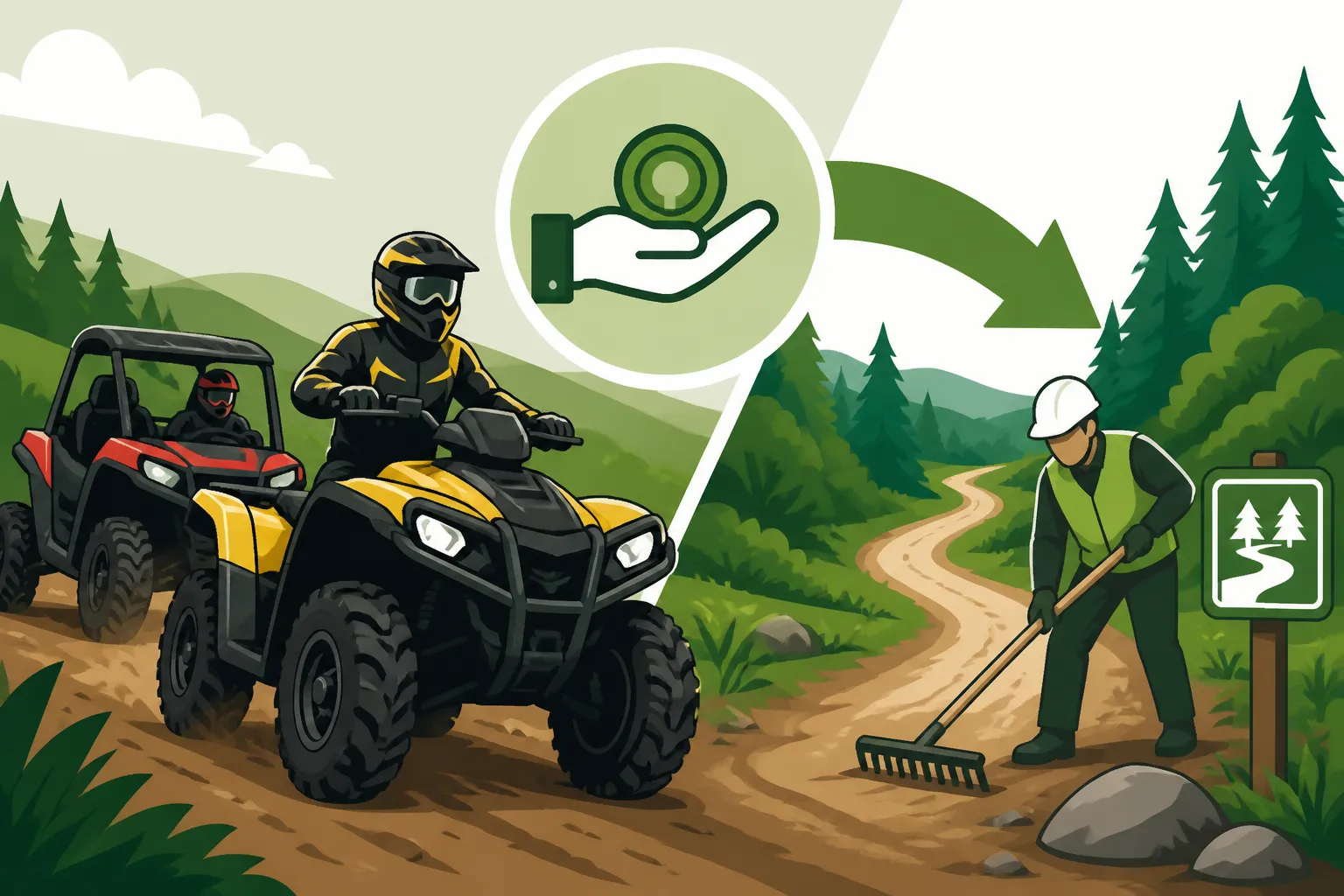
Trails Fee Money Spent on Trail Maintenance Grants
It's frustrating to pay an extra fee and not really understand where your hard-earned money is going. Many of us riders in Manitoba have seen that line item on our registration for the Off-Road Trails Fee and wondered, "What exactly is this for?" This guide is here to pull back the curtain, explaining precisely how that fee is collected, managed, and ultimately transformed into vital grants that improve and maintain the trails we all love to ride.
Demystifying the Manitoba Off-Road Trails Fee
When you register your ATV or UTV in Manitoba, you're not just paying for basic registration and the standard Autopac insurance. There’s a specific amount added on top for the Off-Road Trails Fee. This isn't a hidden charge; it's a dedicated contribution with a very specific purpose, one that directly impacts the quality and availability of our riding areas across the province. Many riders initially confuse it with a "trail pass," but the mechanism and intent are quite different.
What the Trails Fee Is and Why We Pay It
The Off-Road Trails Fee is a provincial initiative designed to create a sustainable funding source for the development, enhancement, and maintenance of Manitoba's extensive network of off-road vehicle trails. It was introduced to address the growing need for proper infrastructure, signage, and upkeep on trails that see heavy use from quads, side-by-sides, and other off-road machines. Think of it less as a one-time charge and more as an investment in the future of our sport, ensuring that those scenic routes and challenging paths remain open and enjoyable for years to come. The fee ensures that the trails don't just spring up out of nowhere or stay pristine by magic; they require continuous care and resources. This charge is collected when you go through the process of [Manitoba ORV Registration Through MPI].
The rationale behind this fee is pretty straightforward: those who use the trails should contribute to their upkeep. Without a dedicated fund, the burden of maintaining these vast trail systems would fall disproportionately on volunteers or simply not get done at all, leading to closures, dangerous conditions, or degradation of the natural environment. So, while it might feel like "just another fee" when you're at the counter, remember that it's a direct lifeline for the trails you plan to explore on your next ride. It's about collective responsibility to preserve our access and ensure safe, well-marked routes. This is one of the key reasons [Why Manitoba Adds $25 to Every ORV Registration].
How the Fee Differs from a Traditional Trail Pass
It's easy to assume the Off-Road Trails Fee is simply Manitoba's version of a traditional trail pass, like those seen in some other provinces or states for snowmobiles or specific ATV parks. However, there's a crucial distinction. A traditional trail pass often grants you access to a specific trail system or network, usually managed by a single club or entity, and you might buy it annually to ride those trails. The Manitoba Off-Road Trails Fee, on the other hand, is collected universally with your ORV registration and goes into a provincial fund.
This fund then disperses money through a grant program to various eligible organizations, including ATV clubs, snowmobile clubs (for shared-use trails), and other community groups, for projects across the province. This means you don't receive a physical "pass" that you display; rather, your contribution is part of a larger pool that benefits a wide array of trails, many of which are managed by different local groups. This centralized funding model ensures that smaller, less resourced clubs or communities also have a fair shot at receiving funds to improve their local riding areas, rather than relying solely on their own fundraising efforts. It means that [Manitoba Has No ATV Trail Pass] in the traditional sense, but a more integrated funding model.
The Path of Your Contribution: From Registration to Grant Fund
Understanding how your trails fee travels from your pocket to the actual trail is important for recognizing its value. It's not just tossed into a general provincial pot; it follows a clear path designed to ensure it directly supports off-road trail infrastructure. This structured approach ensures accountability and a direct link between rider contributions and tangible improvements on the ground.
Collection at the Autopac Counter
The journey of your trails fee begins when you register your off-road vehicle through an Autopac agent here in Manitoba. This fee is automatically included as part of your overall registration cost, right alongside your basic Autopac insurance. Whether you're registering a brand-new side-by-side or renewing your quad's plates for another year, that trails fee is a mandatory component. You'll see it listed clearly on your registration invoice, so there's no mystery about its inclusion.
This method of collection is incredibly efficient because it leverages an existing provincial system that every ORV owner must go through. It ensures that virtually every registered off-road vehicle in Manitoba contributes to the trail system, spreading the cost widely among all users. It also simplifies the process for riders, as you don't have to seek out a separate pass or make an additional payment to a different entity. It’s all handled in one visit, which is a convenience that many of us appreciate, even if we're not always thrilled about another fee. You can find more details on how it's handled when you read [Manitoba Autopac Agents and ORV Registration].
The Dedicated Fund for Trail Initiatives
Once collected, the trails fee money doesn't just disappear into general government revenue. Instead, it's channeled into a specific, dedicated fund managed by the provincial government. This fund is explicitly earmarked for off-road trail initiatives, meaning it cannot be diverted to other provincial programs or unrelated projects. This is a critical point for riders to understand, as it provides assurance that their contributions are indeed going directly towards the sport they love.
From this dedicated fund, money is then disbursed in the form of grants to eligible organizations across Manitoba. This grant program is the engine that drives trail development and maintenance. It means that the money you pay helps fund everything from signage and bridge repairs to new trail construction and environmental remediation. It's a proactive approach to ensure the sustainability and growth of our provincial trail network, rather than a reactive one that only fixes problems after they've become severe. The fact that it's a dedicated fund is a testament to the province's commitment to supporting the off-road riding community. This is why [Where Manitoba's Off-Road Trails Fee Actually Goes] is an important topic for every rider.
Fueling the Trails: How Grants Drive Maintenance and Development
The real magic happens when the money from the dedicated fund is transformed into actionable projects on the ground. This occurs through a grant program, where various organizations apply for funding to carry out specific trail-related work. It’s a competitive process that ensures funds are allocated effectively to projects that will provide the most benefit to riders and the environment.
Eligibility for Trail Maintenance Grants
Not just anyone can receive these grants. The provincial government sets clear eligibility criteria to ensure that funds are managed responsibly and projects are carried out to a high standard. Typically, eligible applicants are incorporated, non-profit organizations such as ATV clubs, snowmobile clubs, and other community or recreational groups that have a proven track record of trail development, maintenance, and responsible land stewardship. They often need to demonstrate organizational capacity, a clear project plan, and the ability to manage funds and report on their use.
These organizations are vital because they are often the boots on the ground, with local knowledge and volunteer networks. They know which bridge is failing, which section of trail needs grading, or where a new connector route would enhance the riding experience. Some clubs even go as far as using resources like LawDepot to ensure all their internal governance documents, land access agreements, and grant application materials are legally sound and professionally prepared, demonstrating their commitment and capacity for managing significant projects. This ensures that the grant money is put into capable hands that can truly make a difference. The more organized and robust these clubs are, the better positioned they are to secure these crucial funds. Many of these clubs also cover the costs of [Manitoba Club Affiliation Fees Explained].
The Application and Approval Process
Securing a grant is not as simple as asking for money; it involves a formal application process. Eligible organizations typically submit detailed proposals outlining their planned projects, including budgets, timelines, environmental considerations, and expected outcomes. They need to demonstrate how their project aligns with the objectives of the trails fund – which are generally focused on improving safety, expanding access, enhancing the rider experience, and ensuring environmental sustainability.
These applications are then reviewed by a provincial committee or department responsible for managing the trails fund. This committee evaluates each proposal based on its merit, feasibility, and alignment with overall provincial trail development strategies. The approval process can be rigorous, requiring clubs to provide detailed justifications and sometimes even adjust their plans based on feedback. Once approved, funds are disbursed, often in stages, and the recipient organization is usually required to provide regular progress reports and a final accounting of how the money was spent. This ensures accountability and that the funds are used for their intended purpose.
What Maintenance and Development Entail
The types of projects funded by these grants are incredibly diverse, reflecting the varied needs of our provincial trail system. "Maintenance" isn't just picking up litter; it involves significant work to keep trails safe and passable. This could include repairing eroded sections, clearing fallen trees, upgrading culverts and bridges, replacing worn-out signage, and improving drainage to prevent water damage. It's the ongoing, often unseen, work that prevents trails from falling into disrepair.
"Development," on the other hand, focuses on expanding and enhancing the network. This might involve building entirely new sections of trail to connect existing routes, creating staging areas with proper parking and facilities, installing interpretive signage, or designing new features that enhance the riding experience. Grants can also fund crucial environmental protection measures, such as reclaiming damaged areas or implementing strategies to minimize the ecological footprint of trails. Essentially, these grants are critical to both preserving what we have and building for the future, ensuring a vibrant and growing network for all riders. These funds are key for [Trails Fee Money Repairing Land Damaged by Riders].
The Tangible Impact: Seeing Your Dollars at Work
Ultimately, the purpose of the Off-Road Trails Fee and the grant program it fuels is to create a better, safer, and more extensive riding experience for everyone who enjoys off-road vehicles in Manitoba. Your contribution has a direct and measurable impact, even if you don't always see the provincial government's logo on every bridge or sign.
Benefits for Riders and the Community
The most direct benefit of these grants is, of course, for riders themselves. Well-maintained trails are safer, more enjoyable, and allow for greater access to Manitoba's beautiful backcountry. Clear signage prevents riders from getting lost or straying into sensitive areas, while proper trail grooming and repairs reduce the risk of accidents and damage to machines. Furthermore, the expansion of the trail network means more options for exploration, catering to different skill levels and preferences. This allows riders to plan longer trips, discover new areas, and enjoy the sport more fully. You might notice these improvements on trails managed by organizations like the Eastman ATV Association or other local groups mentioned in [Manitoba ATV Clubs Worth Joining].
Beyond the individual rider, these improved trails also benefit local communities. ORV tourism can bring significant economic benefits to rural areas, with riders stopping for fuel, food, lodging, and supplies. This supports local businesses and creates jobs. Enhanced trail systems can also contribute to a sense of community pride and offer healthy, outdoor recreational opportunities for residents. The trails also serve as important routes for other activities like hunting, trapping, and fishing, making them multi-functional assets for many Manitobans. The overall effect is a more robust outdoor recreation sector that contributes positively to the province's economy and lifestyle.
Transparency and Accountability of the Program
For any public fund, transparency and accountability are paramount. The Manitoba government and the organizations receiving these grants understand the importance of showing riders how their money is being used. While specific project details might be managed by individual clubs, the overall program aims for openness. Information about the grant program, its objectives, and sometimes even a list of awarded projects can often be found through provincial government channels or the websites of participating clubs and associations.
Organizations receiving grants are typically required to submit financial reports and project completion reports, detailing how the funds were spent and what was achieved. This oversight ensures that the money is used efficiently and effectively for its intended purpose. If you have questions about specific projects or how the funds are being managed, reaching out to your local ATV club or relevant provincial department can often provide the answers you're looking for. It's about building trust and demonstrating that every dollar from the trails fee is working hard to improve our shared riding experience. This helps to ensure [Trails Fee Money Funding Rider Education Programmes] and other worthy initiatives are supported.
What Your Trails Fee Supports
| Category | Purpose | Examples of Projects | Beneficiaries |
|---|---|---|---|
| Trail Maintenance | Repairing and preserving existing trail infrastructure to ensure safety and usability. | Filling potholes, clearing brush, repairing bridges/culverts, erosion control, signage replacement. | All ORV riders, local communities, environment. |
| Trail Development | Expanding the trail network and enhancing existing facilities. | Building new trail segments, creating staging areas, installing shelters, mapping, new signage. | ORV riders seeking new routes, tourism, local economy. |
| Environmental Protection | Mitigating environmental impacts of ORV use and restoring damaged areas. | Wetland protection, sensitive habitat restoration, designated crossing construction, waste management. | Environment, future generations of riders, wildlife. |
| Rider Education | Promoting safe and responsible riding practices. | Safety course subsidies, awareness campaigns, educational signage. | All riders (especially new/young), public safety. |
| Volunteer Support | Providing resources for clubs and volunteers who perform much of the hands-on work. | Equipment grants, training workshops, administrative support for clubs. | ATV clubs, snowmobile clubs, local volunteers. |
Disclaimer
This article is for general informational purposes only and does not constitute professional advice. Laws, prices and regulations vary by location and change over time. Consult a qualified professional for guidance on your specific situation.