Letting an Autopac Agent File Your Paperwork
Navigating the paperwork for registering your off-road vehicle in Manitoba can feel like trying to find a specific stone in a vast gravel pit – confusing, time-consuming, and often frustrating. Many riders just want to get their new quad or side-by-side out on the trails, not spend hours deciphering forms. This guide is here to simplify that process, showing you exactly how your local Autopac agent can be your best friend when it comes to getting your ATV or UTV registered, titled, and ready to ride in Manitoba.
Why Your Autopac Agent is the Easiest Path to ORV Registration
Let's be real, dealing with government paperwork isn't exactly most people's idea of a good time. When you’ve just bought a shiny new (or new-to-you) ATV or UTV, the last thing you want is to get bogged down in administrative tasks. This is where your trusty Autopac agent steps in. They're more than just insurance brokers; they are licensed professionals who handle all sorts of vehicle registration, including off-road vehicles (ORVs), for Manitoba Public Insurance (MPI). Think of them as your personal guides through the registration jungle.
They see countless registration scenarios every single day, from brand-new machines straight off the dealer lot to vintage quads being transferred between private sellers. This means they've encountered almost every unique situation and know exactly what questions to ask and what documents are needed. It’s their job to make sure everything is filled out correctly and submitted properly, saving you the headache of potential errors, forgotten forms, or multiple trips back and forth. For a lot of us, having that peace of mind that it's done right the first time is absolutely invaluable.
The convenience factor cannot be overstated. Instead of trying to navigate complex instructions online or making an appointment directly with an MPI service centre, you can usually just walk into your local Autopac agent's office during business hours. Many communities have several agents, making it easy to find one close to home or work. This accessibility means you can often get your registration handled quickly, allowing you to focus on planning your next adventure rather than stressing about the red tape. They also act as a crucial point of contact for any questions you might have about [Manitoba ORV Registration Through MPI] or even more specific queries like [Manitoba Registration for a New Resident].
Essential Paperwork to Bring to Your Autopac Agent
Okay, so you've decided to let the pros handle it – smart move! But before you head out the door, you need to gather some critical documents. Showing up unprepared is a common pitfall and can lead to wasted trips. Remember, the agent can only process your request if you provide all the necessary information and proof. So, let’s make a checklist to ensure you’re fully prepared.
First and foremost, you'll need proof of ownership. This is usually a Bill of Sale if you bought the machine from a private seller or an invoice/dealer sales agreement if purchased from a dealership. If you're buying privately, a well-drafted Bill of Sale is paramount. Websites like LawDepot can be a great resource for generating a professional and legally sound Bill of Sale, ensuring all the necessary details are captured. It should clearly state the buyer's name, seller's name, sale price, date, and most importantly, the vehicle identification number (VIN) of the ORV. Without a proper Bill of Sale, your agent might not be able to proceed, or you might be looking at special circumstances like [Manitoba Registration Without a Bill of Sale].
Next, you'll need personal identification. This typically means a valid Manitoba driver's license or another form of government-issued photo ID. The agent needs to verify who you are and that you’re legally able to register a vehicle. If you're a new resident to Manitoba, ensure your identification reflects your new address or bring supplementary proof of residency. For younger riders, especially those aged 16 to 18, there are specific requirements for [Manitoba Parental Consent From 16 to 18] which an agent can help navigate.
Don't forget the Vehicle Identification Number (VIN). This unique 17-character code is like your ORV's fingerprint. It’s crucial for identifying the machine and ensuring it hasn't been reported stolen. The VIN should be on your Bill of Sale, but it's always a good idea to physically locate it on the machine itself and double-check it against your paperwork. Sometimes older machines might have a less obvious VIN, or it could be worn, so be prepared to show its location or provide a clear photo if asked.
Finally, be ready to discuss payment for registration fees and taxes. In Manitoba, when you register an ORV, you're also likely paying provincial sales tax (RST) unless an exemption applies. The agent will calculate this based on the purchase price or the machine's book value, whichever is higher, and collect it along with the registration fee and the mandatory [The $25 Trails Fee Added to Every Registration]. They will also process your payment for the basic liability insurance that comes with your registration. You’ll want to be prepared for the [Manitoba Registration Cost].
To help you organize, here's a quick checklist of common documents needed:
| Document Type | Purpose | Notes |
|---|---|---|
| Proof of Ownership | Shows you legally own the ORV | Bill of Sale (private sale), Dealer Sales Agreement (dealership), or Manufacturer's Statement of Origin. |
| Personal ID | Verifies your identity and residency | Valid Manitoba Driver's License or other government-issued photo ID. |
| VIN | Unique identifier for the ORV | Found on the machine's frame, usually on the Bill of Sale/invoice. Essential for tracking. |
| Proof of Age | For riders under 18 | Birth Certificate or other document showing date of birth. Required for [Manitoba Proof of Age at Registration]. |
| Transfer of Ownership | If buying a previously registered machine | The signed transfer portion of the previous owner's registration certificate. |
| Lien Information | If the ORV is financed | Details of the financing company. Often handled directly by the dealer. |
What Happens at the Autopac Counter
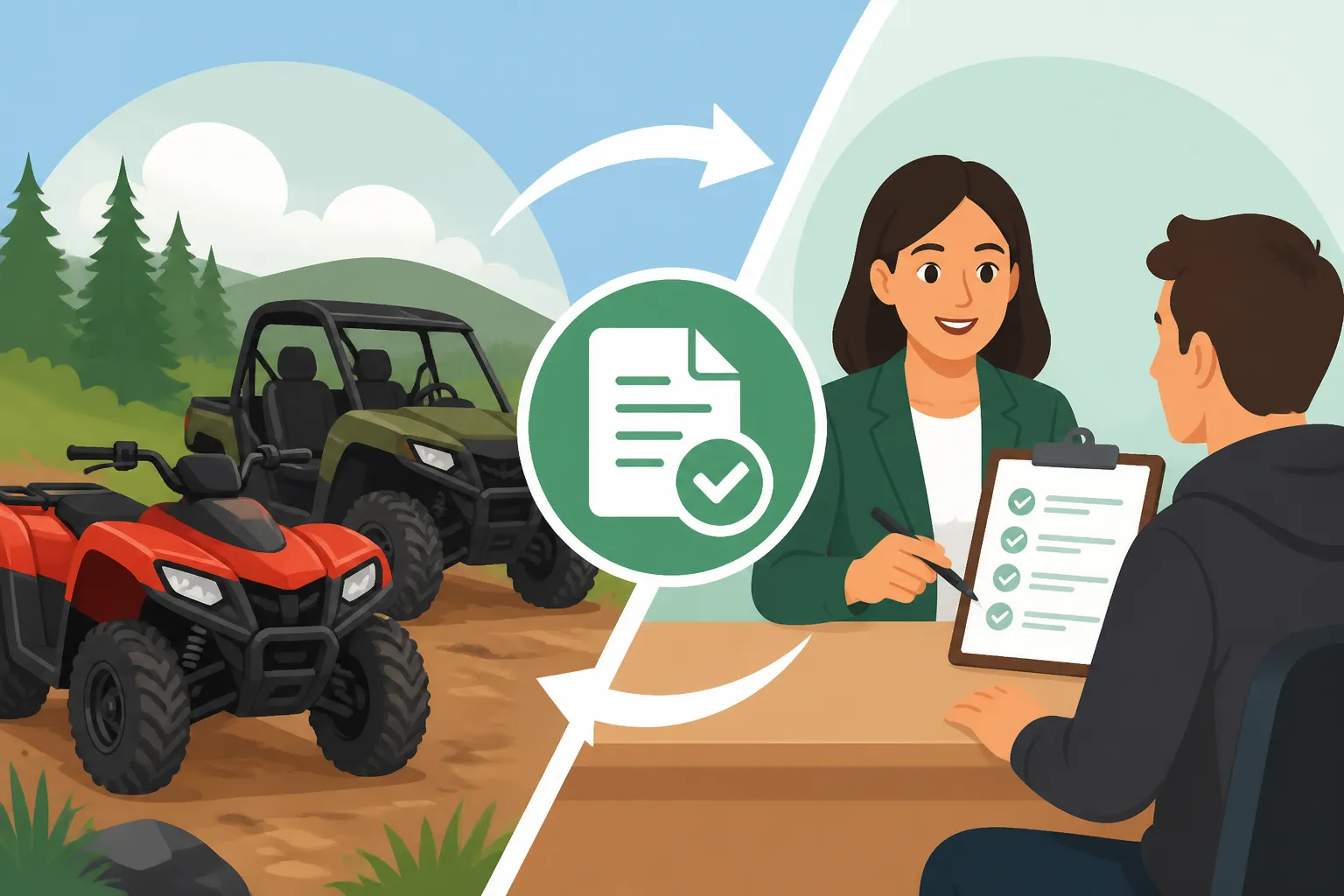
Once you’ve gathered all your documents and marched confidently into your Autopac agent’s office, what can you expect? The process is typically quite streamlined, largely thanks to the agent’s experience. You’ll be greeted by a friendly face who is ready to guide you.
First, the agent will review your documents. This is where they’ll check for accuracy, completeness, and any red flags. They’ll compare the VIN on your Bill of Sale to what you provide, verify your identity, and ensure all ownership details are correct. If you're unsure about any part of the paperwork, this is the perfect time to ask. They can clarify aspects of a Bill of Sale, especially if you've used a template from a service like LawDepot and want to ensure it meets Manitoba's specific requirements for ORV transfers. Their expertise is invaluable for identifying and correcting minor issues before they become major problems.
After verifying your documents, the agent will input all the information into MPI’s system. This includes your personal details, the ORV’s specifics (make, model, year, VIN), and the purchase price. They will then calculate the total fees due, which typically include the registration fee itself, the provincial sales tax (RST), and the dedicated Off-Road Trails Fee. This fee supports trail maintenance and development across the province, a small contribution that benefits all riders. It’s part of your [Manitoba ORV Registration Cost].
Once everything is entered and calculated, you'll pay the total amount. Autopac agents usually accept various payment methods, including debit, credit card, and sometimes cash or cheque. After successful payment, the agent will issue your ORV registration certificate and your physical license plate. Remember, [Manitoba Issues One Plate, Not Two] for ORVs, so you'll receive a single plate to affix to your machine. They’ll also explain the importance of [Carrying Your Registration Card on Every Ride] and advise on [Manitoba Plate Mounting by Machine Type]. It all usually happens in one efficient visit.
Before you leave, the agent will likely offer to review the new registration certificate with you, pointing out key details and answering any last-minute questions. They might also discuss options for additional insurance coverage beyond the basic liability included with registration, such as collision or comprehensive coverage, which are important considerations for protecting your investment. This is also a good opportunity to ask any remaining [Questions Worth Asking an Autopac Agent].
Common Pitfalls and How to Avoid Them When Registering Your ORV
Even with an Autopac agent’s help, a few common snags can crop up during the registration process. Knowing these ahead of time can help you avoid frustration and ensure a smooth experience.
One of the biggest hurdles is incomplete or incorrect paperwork. For instance, a Bill of Sale missing the VIN, the seller's signature, or an accurate sale date can cause delays. If you’re buying from a private seller, ensure they fill out their portion of the [Manitoba Transfer of Ownership Rules] on their existing registration certificate completely and sign it. If it's a multi-party transaction or an older machine, having a clear "chain of ownership" with each transfer documented is critical. If using a general Bill of Sale, make sure it’s comprehensive. LawDepot's templates are designed to cover all the bases, which helps prevent these types of errors. Always double-check everything before heading to the agent.
Another common issue is discrepancies in the VIN. Sometimes, the VIN on the paperwork doesn't exactly match the VIN on the machine. This can happen due to typos or confusion, especially with older or custom-built machines. The agent will need to reconcile any discrepancies, which might involve physically inspecting the machine or requiring additional verification. To avoid this, take a clear photo of the VIN on your ORV and compare it meticulously with all your documents.
Not understanding the tax implications can also be a surprise. Many riders are unaware that provincial sales tax (RST) is collected at the time of registration, often based on the government’s assessed book value, not necessarily your purchase price if it’s unusually low. Your Autopac agent will explain this, but it’s good to be mentally prepared for the cost. If you feel the valuation is incorrect, you may need to provide additional proof of the machine’s condition or a certified appraisal, though this is rare for standard ORV transactions. An agent handles [Manitoba RST Collected at Registration], making it simple.
Finally, don't overlook age requirements for registration. While you can register an ORV at any age, the operator must be at least 16 to register it in their name. For those aged 16 to 18, parental consent is required. If you're a parent registering a machine for a younger rider, ensure you understand the rules around [Manitoba ATV Age Requirements] and who needs to be present for the registration. The agent will walk you through these specifics, but it helps to know in advance.
By anticipating these common issues and preparing thoroughly, leveraging the expertise of your Autopac agent makes the ORV registration process in Manitoba straightforward and efficient. They are truly there to simplify what can otherwise be a daunting task, getting you from paperwork to trail in no time.
Disclaimer
This article is for general informational purposes only and does not constitute professional advice. Laws, prices and regulations vary by location and change over time. Consult a qualified professional for guidance on your specific situation.