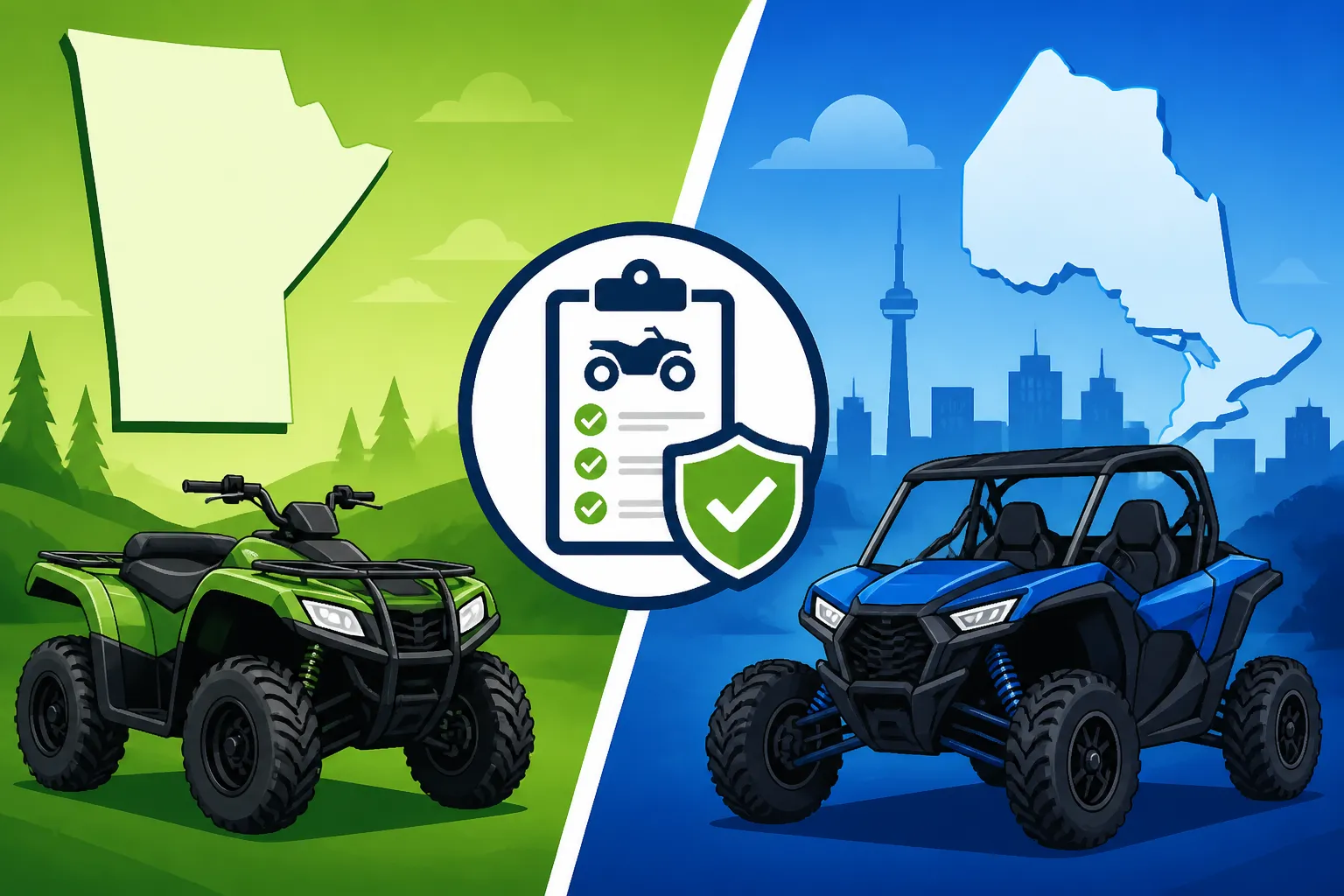
Manitoba Registration Compared to Ontario
It's incredibly frustrating, isn't it? You get your head around one set of rules for your ATV or UTV, only to find that just across the provincial border, everything changes. Whether you're moving, buying a machine from out of province, or just planning a riding trip, the differences in how Manitoba and Ontario handle off-road vehicle registration can feel like navigating a maze. This guide is here to untangle those complexities, giving you a clear comparison of what to expect in each province.
The Core Difference: How Registration Works (Manitoba vs. Ontario)
When you look at off-road vehicle (ORV) registration, Manitoba and Ontario take fundamentally different approaches. It's not just a matter of different forms; it's a completely different philosophy on how these machines are managed from a regulatory standpoint. Understanding this core distinction is the first step to avoiding headaches, no matter which side of the border you're on.
Manitoba's Integrated Approach with MPI
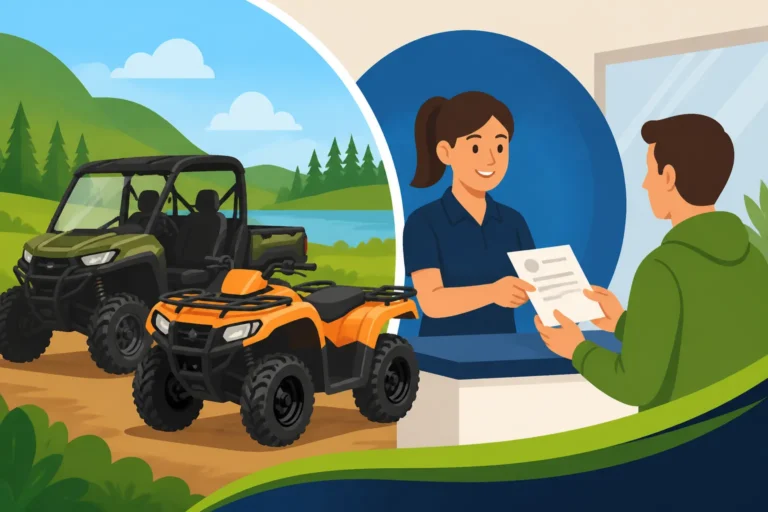
In Manitoba, the world of ORV registration is largely centralized through Manitoba Public Insurance (MPI), the province's crown corporation. Think of it as a one-stop shop for most of your ORV administrative needs. When you register your ATV or UTV in Manitoba, you're not just getting a plate; you're also automatically getting basic third-party liability insurance coverage and paying applicable provincial sales tax (RST), all in one go. This integrated system means you'll deal with an Autopac agent for nearly every step of the process, from initial registration to renewals.
This integrated approach aims for convenience. You bring your proof of ownership, your identification, and you walk out with a registration certificate, a license plate, and basic insurance coverage. It significantly streamlines the process, as you don't have to seek out a separate private insurer just to meet the minimum liability requirements. This also includes the mandatory trails fee, which is collected right along with your registration. Many riders appreciate this simplicity, as it means fewer agencies to deal with and a more cohesive administrative experience. For more on this, you can check out [Manitoba ORV Registration Through MPI] and [MPI Registers, Insures and Taxes in One Visit].
Ontario's Multi-Faceted System: MTO and Private Insurance
Ontario, on the other hand, operates with a more segmented system. Here, the Ministry of Transportation (MTO) handles the actual registration and plating of your ATV or UTV. This means you'll typically visit a ServiceOntario centre to obtain your vehicle permit and license plate. However, that's where MTO's direct involvement largely ends for ongoing administration.
Crucially, in Ontario, you are required to obtain separate private insurance for your ORV to meet the mandatory liability coverage requirements. This means after you've registered your machine with MTO, you then need to shop around with various private insurance companies to secure your policy. This often involves dealing with an insurance broker or directly with an insurer, adding an extra step to the process that Manitoba riders don't typically encounter. Furthermore, if you plan to ride on designated provincial trails in Ontario, you’ll likely need to purchase a separate trail pass from organizations like the Ontario Federation of Snowmobile Clubs (OFSC) for snowmobiles, or the various ATV clubs for ATVs. This trail pass is not included in your MTO registration or your private insurance policy.
Key Registration Requirements: A Side-by-Side Look
Beyond the fundamental differences in who handles registration, the actual requirements for getting your machine legally on the trails (or allowed areas) also vary significantly between Manitoba and Ontario. From proving you own the machine to understanding the insurance you need, it's essential to know these details.
Proof of Ownership and Identification
Both provinces require clear proof of ownership and personal identification, but the specifics can have slight variations that might trip you up.
In Manitoba, when you're registering a new or used ATV or UTV, you'll need a valid bill of sale that clearly identifies the machine by its Vehicle Identification Number (VIN) and details of the transaction. If you’re buying from a dealer, they'll typically handle much of this paperwork. For private sales, a properly executed bill of sale is paramount. MPI will also require your personal identification, often a driver's license, to confirm your identity and age. It's not uncommon for folks to wonder how to handle situations where a clear bill of sale isn't readily available, which is covered in [Manitoba Registration Without a Bill of Sale]. For private sales in either province, using a reputable platform like LawDepot to generate a comprehensive bill of sale can provide peace of mind and help prevent future disputes by ensuring all necessary details are included and legally sound.
Ontario also requires a clear bill of sale for proof of ownership, and for private sales of used vehicles, a Used Vehicle Information Package (UVIP) is usually mandatory. The UVIP provides crucial information about the vehicle, including its history, any liens, and the retail sale value for tax purposes. This document is a key difference from Manitoba's system for private sales. You'll also need valid personal identification, similar to Manitoba, when registering at a ServiceOntario centre. The goal in both provinces is to ensure the machine isn't stolen and that the legitimate owner is registering it.
Insurance Mandates
This is where the distinction between the two provinces becomes particularly clear, directly reflecting their different administrative structures.
In Manitoba, as mentioned, basic third-party liability insurance is included with your ORV registration through MPI. This means that when you pay your registration fee, a portion of that covers your fundamental liability requirements. This basic coverage protects you if you cause damage to property or injury to another person while operating your ORV. However, it's important to understand that this basic coverage doesn't typically cover damage to your own machine, theft, or medical expenses for yourself. Many riders opt to purchase additional coverage directly from MPI or through an Autopac agent to protect against these other risks. You can read more about what's included in [Manitoba Insurance Included With Registration] and explore your options in [Manitoba Third Party Liability Plus Options].
Conversely, in Ontario, insurance is an entirely separate matter from registration. You are legally required to obtain a private insurance policy that provides at least the minimum mandatory third-party liability coverage. This means you’ll need to contact an insurance provider or broker and purchase a policy before you can legally operate your registered ORV. While MTO registers the vehicle, they do not provide the insurance. Riders often find themselves comparing rates from different companies to get the best deal. This separation means you'll have two distinct bills – one for your MTO registration and another for your annual insurance premiums.
Age and Parental Consent
Both provinces have rules regarding the age at which individuals can register and operate ORVs, with special provisions for younger riders.
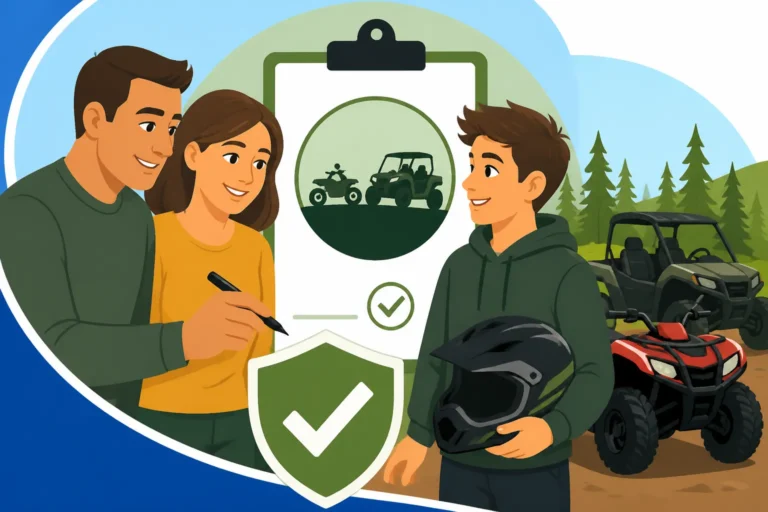
In Manitoba, you must be at least 16 years old to register an ORV in your own name. If you're between 16 and 18, you'll need parental or guardian consent to complete the registration. This ensures that a responsible adult is aware of and agrees to the youth's ownership and the responsibilities that come with it. These rules are in place to promote safe riding practices among younger operators. You can find more specific details on this in [Manitoba Registration Age of 16] and [Manitoba Parental Consent From 16 to 18].
Ontario has similar age-related rules, particularly concerning the operation of ORVs. While you might be able to register an ORV at 16 with parental consent, the rules for operating specific types of ORVs (like ATVs) can be tiered. Generally, operators under 16 often require supervision by an adult, and there are restrictions on where and what type of ORV they can ride. Both provinces prioritize safety and responsible ownership, especially when it comes to younger riders.
Plates, Permits, and Fees: What You'll Pay and Display
The financial aspect and the physical requirements for your ORV also present notable differences. It's not just about the cost, but what those costs entitle you to and how your machine needs to be marked.
Plates and Display Rules
The physical manifestation of your registration – the license plate – also comes with provincial variations.
Manitoba issues one license plate per ORV. This plate must be displayed in a clearly visible location on the machine, though the exact placement can vary slightly depending on the type of ORV. For example, a quad or side-by-side typically mounts the plate on the rear, while a dirt bike or a two-wheeled machine might have it on the front. Snowmobiles have specific requirements for placement on the left side. The key is that it must be visible and securely attached. You can get more details on [Manitoba Issues One Plate, Not Two] and [Manitoba Plate Mounting by Machine Type].
Ontario also typically issues one plate for off-road vehicles. Similar to Manitoba, this plate must be clearly visible and securely attached to the ORV. The specific location might also vary by machine type, but the underlying principle is consistent: law enforcement needs to be able to easily identify your machine. Both provinces emphasize the importance of maintaining the plate's legibility, ensuring it's not obscured by mud, snow, or accessories.
The "Trails Fee" vs. Trail Permits
This particular distinction often causes the most confusion for riders crossing provincial lines.
In Manitoba, every ORV registration includes a mandatory, non-refundable [The $25 Trails Fee Added to Every Registration]. This fee is collected automatically by MPI at the time of registration and is specifically earmarked for the development, maintenance, and promotion of ORV trails across the province, as well as for rider education and safety initiatives. It’s part of your all-in registration cost and is not a separate item you choose to buy. Importantly, while it contributes to trails, it is not a "trail pass" in the sense that it doesn't grant you specific access to a particular trail system like a club pass would. Manitoba, in fact, has [Manitoba Has No ATV Trail Pass] system where you pay a separate fee for individual trail access.
Ontario, on the other hand, does not include a "trails fee" as part of its MTO registration. Instead, if you plan to ride on the extensive network of organized provincial trails (such as those managed by ATV clubs or the OFSC for snowmobiles), you will need to purchase a separate trail permit or pass directly from the relevant club or organization. These permits are an additional cost, distinct from your MTO registration and private insurance. For example, an Ontario rider might purchase an annual OFSC permit for their snowmobile or an ATVCO permit for their ATV. This means a rider from Ontario might be surprised to find an automatic trails fee added to their registration if they move to Manitoba, and a Manitoba rider heading to Ontario might mistakenly believe their Manitoba registration covers Ontario trail access, only to find they need an additional permit.
Sales Tax Differences
The amount of sales tax you'll pay on your ORV purchase also varies between the two provinces, impacting the overall cost of ownership.
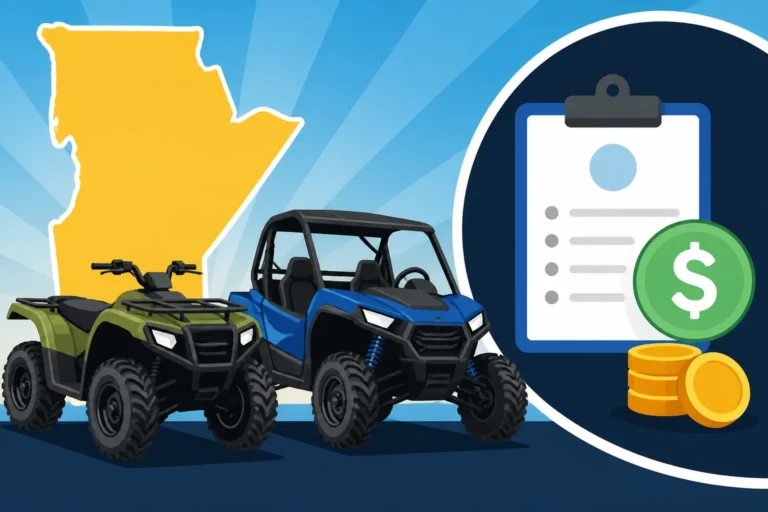
In Manitoba, when you purchase a new or used ORV, you will pay Provincial Sales Tax (RST) at a rate of 7%, in addition to the 5% Goods and Services Tax (GST). For new purchases from a dealer, both taxes are typically collected by the dealer. For private sales, the 7% RST is collected by MPI when you register the machine, along with the 5% GST on the purchase price (or an appraised value if the sale price is deemed too low). This combined 12% is a significant part of your initial cost of ownership, as detailed in [Manitoba RST Collected at Registration].
Ontario has a harmonized sales tax (HST) system, which combines the provincial sales tax (PST) and the federal GST into a single tax. The HST rate in Ontario is 13%. For new ORV purchases from a dealer, the 13% HST is collected by the dealer. For private sales of used ORVs, the 13% HST (which combines the 8% provincial portion and 5% federal portion) is generally collected by the MTO at the time of transfer and registration, usually based on the purchase price or the wholesale value of the vehicle, whichever is higher. So, while Manitoba has a 7%+5% structure, Ontario has a consolidated 13% HST rate.
Transferring Ownership and Out-of-Province Machines
Life happens! You might sell your machine, buy one from a neighbour, or even move to a new province. Understanding how these transitions are handled differently in Manitoba and Ontario is vital to keep your ORV legal and avoid fines.
Selling and Buying Secondhand
The process of transferring ownership when buying or selling a used ORV has distinct requirements in each province.
In Manitoba, when you sell a registered ORV, you and the buyer must complete the transfer section of the machine’s registration certificate. This document is crucial for the buyer to then register the machine in their name at an Autopac agent. It ensures a clear chain of ownership and allows MPI to update their records. If you're dealing with a private sale, ensuring all the paperwork is correctly filled out is key. This is another area where LawDepot can be a useful resource for creating a robust private sale agreement that protects both buyer and seller, covering all essential terms beyond just the basic transfer document. For more on this, consult [Manitoba Transfer of Ownership Rules].
Ontario's system for private sales of used vehicles includes a requirement for a Used Vehicle Information Package (UVIP). This package, purchased by the seller from ServiceOntario, provides the buyer with critical information about the vehicle, including its registration history, lien status, and applicable retail sales tax value. Both the seller and buyer complete sections of the UVIP, along with the bill of sale. The buyer then uses these documents to register the ORV at ServiceOntario. This UVIP adds an extra layer of transparency for private transactions that isn't mirrored in Manitoba's system.
Moving Between Provinces or Visiting
What happens when your ORV crosses provincial lines, either permanently or for a short visit?
If you're a new resident moving to Manitoba with an ORV, you'll need to register your machine with MPI within a certain timeframe after establishing residency. Even if it was registered in Ontario, that registration won't transfer directly. You'll go through the standard Manitoba registration process, including paying the trails fee and getting your basic MPI liability coverage. This is elaborated in [Manitoba Registration for a New Resident]. For visitors, however, the rules are different: generally, an ORV properly registered in another jurisdiction (like Ontario) can be operated in Manitoba as long as it complies with its home province's registration and insurance requirements, and the operator adheres to all of Manitoba's operating rules. This means you don't need to re-register your Ontario machine in Manitoba just for a visit, as discussed in [Do You Need to Register an ATV in Manitoba?].
Conversely, an Ontario resident bringing their ORV into Manitoba for a visit would follow the same principle: their Ontario registration and private insurance would be recognized, provided they follow all Manitoba's operating laws, such as helmet use, age restrictions, and where they can ride. If a Manitoba resident moves to Ontario with their ORV, they would need to register it with the MTO and obtain separate private insurance in Ontario. The rules are clear that you must comply with the laws of the province you are residing in or operating in. Understanding the nuances when comparing [Manitoba Registration Compared to Saskatchewan] or [Manitoba Registration Compared to Minnesota] further highlights these jurisdictional differences. For an Ontario rider, it’s about understanding [Ontario Riders Bringing a Quad Across the Border] and what that entails for permits and rules.
Here's a quick summary of the key differences:
| Feature | Manitoba (MPI) | Ontario (MTO & Private Insurers) |
|---|---|---|
| Registration Authority | Manitoba Public Insurance (MPI) | Ministry of Transportation (MTO) for registration |
| Insurance | Basic liability included with registration | Separate private insurance required |
| Trails Fee/Pass | Mandatory $25 Trails Fee included in registration | Separate trail permits (e.g., ATVCO, OFSC) required for designated trails |
| Sales Tax | 7% RST + 5% GST (12% total) collected by MPI/dealer | 13% HST collected by MTO/dealer |
| Proof of Ownership (Private Sale) | Bill of sale, transfer on registration certificate | Bill of sale, Used Vehicle Information Package (UVIP) |
| Plate Quantity | One plate per machine | One plate per machine |
| New Resident | Must register with MPI | Must register with MTO & get private insurance |
| Visiting Riders | Home province registration & insurance honoured (Manitoba operating rules apply) | Home province registration & insurance honoured (Ontario operating rules and trail pass requirements apply) |
Navigating the world of ORV registration across provincial lines doesn't have to be a bewildering experience. While Manitoba offers a highly integrated, single-point-of-contact system through MPI, Ontario employs a more segmented approach, requiring separate dealings with MTO for registration, private insurers for coverage, and trail organizations for access. The key takeaway is that anticipating these differences – particularly around insurance and trail access fees – will save you considerable time and frustration. Always verify the specific, current requirements for your situation, whether you're a new resident, a visitor, or simply buying a machine from another province.
Disclaimer
This article is for general informational purposes only and does not constitute professional advice. Laws, prices and regulations vary by location and change over time. Consult a qualified professional for guidance on your specific situation.