Asking a Local Government District About a Road
A road that looks quiet and close to home can still be off-limits to an ATV or UTV in Manitoba. The confusing part is that the answer may depend on who controls the road, what kind of travel you mean, and whether a by-law applies. This guide explains how to ask a Local Government District the right questions and check the answer before unloading your machine.
Start by identifying the road and the kind of travel
Pinpoint the road before you contact anyone
“Can I ride on the road near my cabin?” is understandable, but it may not give a Local Government District enough information to answer. Road rules and responsibility can change at a boundary, at an intersection, or where a local road meets a provincial highway. Start with the road’s name or number, the nearest intersection, and the exact section you want to use.
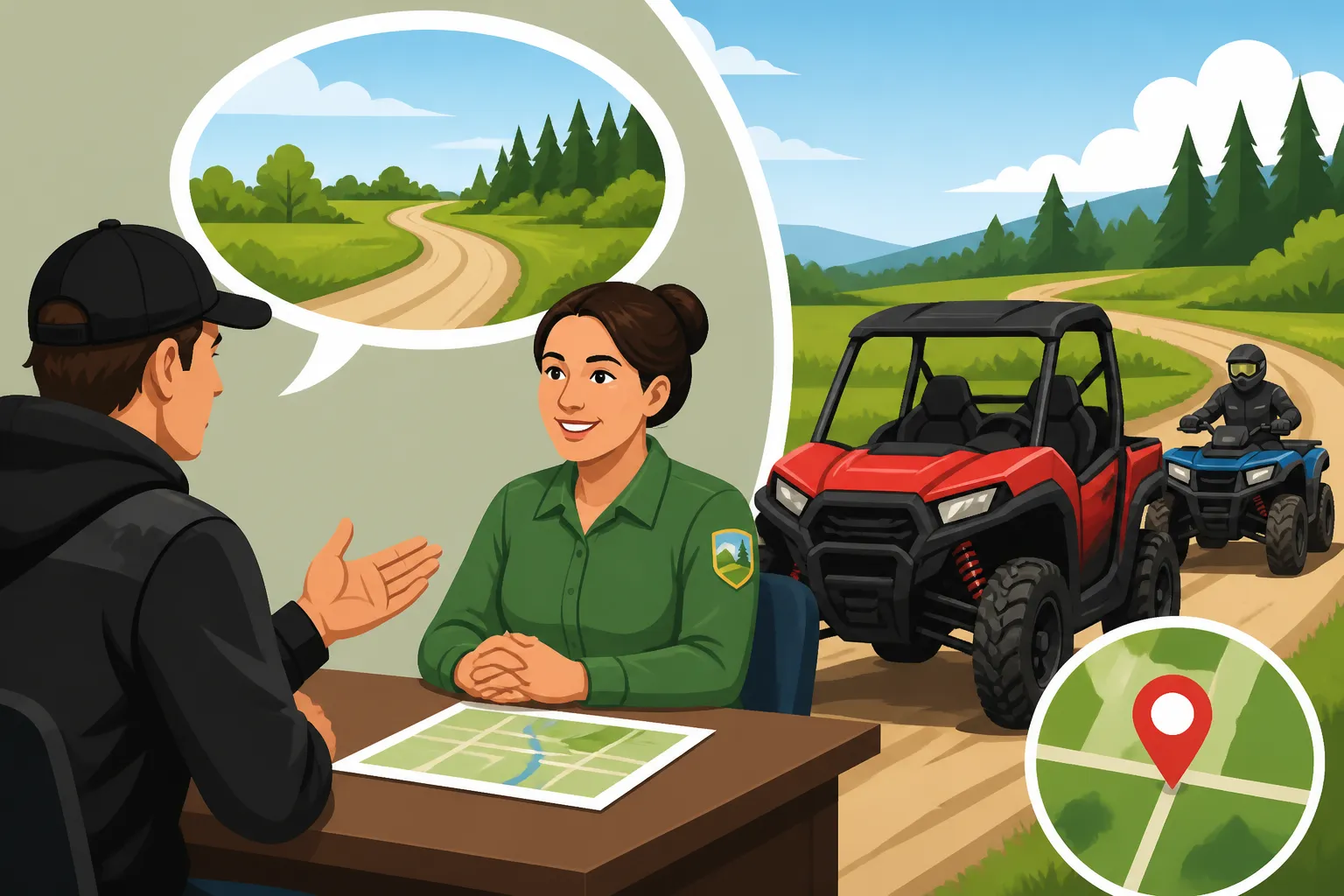
If you can, mark the proposed route on a map. Note where you would start and stop, whether you would travel along the road or cross it, and whether your route includes a shoulder or ditch. A stretch that appears to be one continuous road may include different road authorities or land types. Being specific helps the person handling your question identify what rules apply.
It also helps to describe the machine accurately. Say whether it is an ATV, side-by-side or another off-road vehicle, and whether you are asking about a single trip, regular local travel, or an organized ride. “Can my registered ATV travel along this municipal road to reach a trailhead?” is far more useful than “Are quads allowed around here?”
Find out who has authority over that stretch
An LGD may be the right place to start for a local road, but not every road in or near an LGD is necessarily under its control. A provincial highway, a road managed by another local government, or a private access road may need a different contact. If the LGD cannot confirm responsibility, ask which authority manages the specific section and how to reach them.
This distinction matters because a local answer is only useful if it comes from the authority responsible for the road and the relevant rules. A road’s location inside an LGD does not, by itself, tell you who controls it or whether an ATV or UTV may travel on it. The local government’s [Manitoba Municipal By-Law Powers] and the specific [Manitoba Local Government Districts and By-Laws] are useful starting points for understanding why the answer can vary by place.
Separate travelling along a road from crossing it
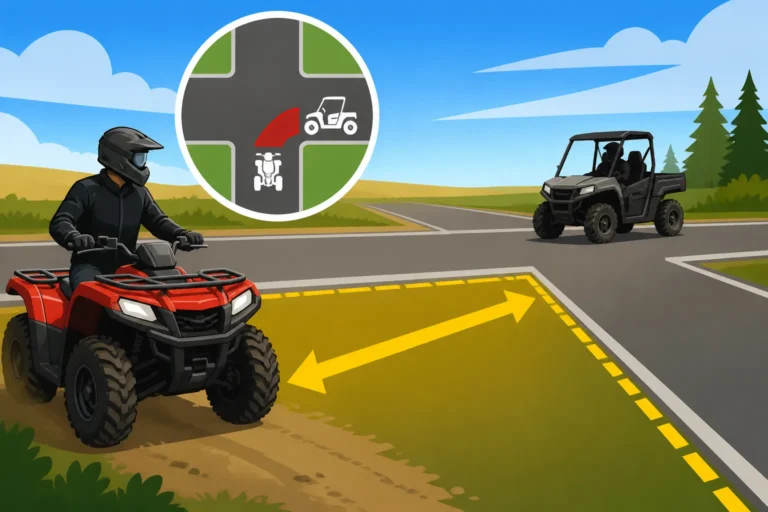
Riding along a roadway and crossing one are different situations. A short crossing to reach the other side of a route does not automatically mean you may ride along that road to reach your destination. Likewise, a permitted route on one local road does not necessarily allow you to continue onto a nearby highway.
When you contact the LGD, state which situation you mean. If you need to cross, ask specifically about the crossing point and the rules that apply there. Manitoba’s [Manitoba Rules for Crossing a Highway] and [Who Has the Final Say on a Crossing] address why a crossing should not be treated as general permission to travel on a roadway. For broader background, read [Manitoba ORV Road Rules Explained] and [Manitoba Bans Riding on Roadways].
Ask the LGD a clear, answerable question
Use the right contact channel
Look for the LGD’s official contact information and ask to be directed to the person responsible for roads, public works or by-law questions. Depending on the district, that may be an administrator, a public works contact or another staff member. If you speak by phone, write down the date, the person’s name and the main points of the conversation.
For a question that affects a trip you plan to make, a written reply is especially helpful. It gives you something concrete to refer back to and makes it easier to confirm that you understood the answer. Keep the exchange with your route notes, registration documents and other trip-planning information.
A verbal “people do it all the time” is not the same as confirmation that it is allowed. Be polite, but ask for the specific by-law, road designation or official guidance behind the answer. If the first person cannot confirm the rules, ask who can. You are not being difficult by wanting clarity before riding; you are trying to avoid an unpleasant surprise on the road.
Include the details that change the answer
A useful inquiry gives the LGD enough information to distinguish your situation from other kinds of riding. Include:
- The road name or number and the closest cross street or landmark.
- The start and end points of the section you want to use.
- Whether you plan to travel along the roadway, use a shoulder or ditch, or cross the road.
- The type of machine, such as an ATV or side-by-side.
- Whether the trip is occasional, repeated or part of an organized event.
- The date or season, if you are asking about a specific planned ride.
- Any connection to a trail, private property, community or provincial road.
You could write: “I’m planning to ride an ATV from the public trail entrance near [landmark] to [destination]. The route would follow [road name] for the section between [point A] and [point B]. Is this road open to this type of off-road vehicle, and if so, what by-law or conditions apply?”
That wording is deliberately narrow. If the answer is yes, follow up about the exact boundaries and any restrictions. If the answer is no, ask whether a designated crossing or different authorized route exists. Don’t widen a limited answer into permission for nearby roads.
Ask for the rule, not just a general impression
Try to get answers to these practical questions:
- Is this exact road under the LGD’s authority?
- Is travel along this road allowed for my type of machine?
- Does the permission cover the whole road or only a marked section?
- Are there seasonal, time-of-day, speed, direction or access restrictions?
- Does the permission apply to the roadway, shoulder, ditch or only a crossing?
- Is there a by-law or official notice I can read?
- Are there separate rules for provincial highways or connecting roads?
The point is not to make the conversation complicated. It is to avoid relying on a vague answer like “the back roads should be fine.” Local guidance can be specific, and the conditions may be just as important as the yes or no. The related guide [Checking a Municipal By-Law Before a Long Drive] offers another way to avoid planning a trip around an assumption.
Check what the answer does and does not allow
Treat local permission as route-specific
If the LGD confirms that a particular road is open to a particular type of off-road vehicle, keep the answer tied to that road and those conditions. It does not necessarily apply to a neighbouring road, another community, a provincial highway or a different machine. Ask whether the approval comes from a by-law or other formal authority, and read the relevant wording rather than relying on a summary.
A district may also distinguish between a road that is open year-round and one with seasonal or temporary restrictions. Construction, maintenance, fire-related closures or other local conditions may affect access. If your trip is weeks away, check again before leaving, particularly if the route passes through areas where conditions can change.
If staff tell you that another authority controls part of the route, contact that authority too. An LGD’s confirmation about a local road cannot answer a separate question about a provincial highway. When a route crosses jurisdictions, treat each section as its own permission check.
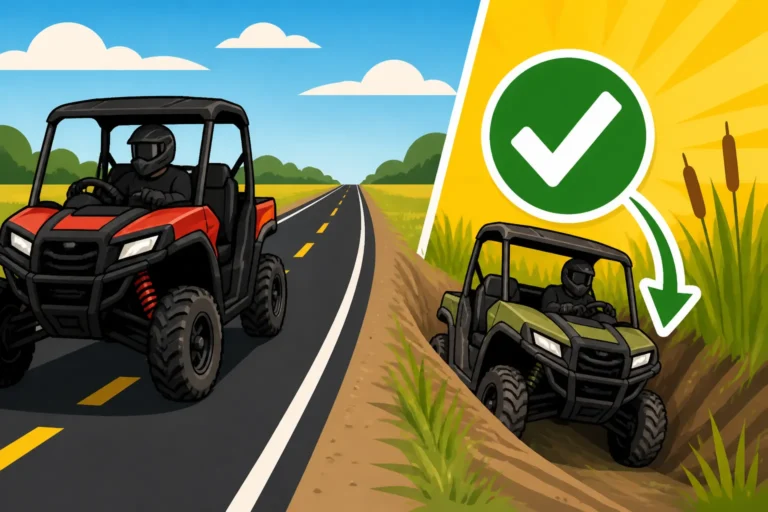
Don’t assume a ditch or shoulder is a workaround
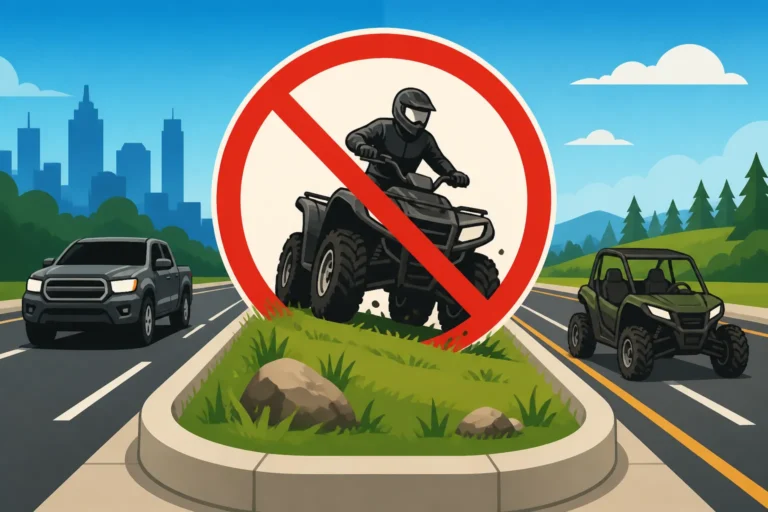
If riding along the roadway is not allowed, moving into the ditch or onto the shoulder does not automatically make the trip legal. Those areas have their own rules, and the rules may depend on the type of vehicle and the circumstances. Review [Manitoba Ditch Riding Rules] separately, and be careful not to interpret permission for one kind of travel as permission for another.
This is a common point of confusion because a ditch can look like a natural continuation of a local route. It may not be open to your machine, and some vehicle types have different restrictions. If your proposed path includes a ditch or shoulder, name that explicitly when you ask the LGD or the relevant road authority.
The same caution applies to town streets. A route permitted on one road may not extend into a built-up area or onto a street managed under a different local rule. Check [Manitoba Rules for Riding a Town Street] rather than assuming that a short connection through town is covered by permission for the rural section.
Remember that registration and equipment do not create road access
A registered machine is not automatically allowed on every road. Registration, insurance, a plate, lights or other equipment may be required for particular uses, but meeting an equipment requirement does not itself authorize travel where it is prohibited. Check [Manitoba ATV Insurance Requirements] alongside the road rules, and don’t treat one requirement as a substitute for another.
The same goes for aftermarket accessories. A windshield, mirrors or lighting upgrades can help with comfort or visibility, but they do not make a route legal. If you are considering a product from a brand such as SuperATV for a machine you use on authorized routes, check the product’s fit and specifications, then separately confirm the legal requirements for the route and machine. A SuperATV accessory should not be treated as proof that a vehicle is approved for road travel.
If local officials identify specific equipment conditions for an authorized road, ask them to explain the exact requirement and where it comes from. For example, don’t assume that adding a SuperATV windshield or other accessory satisfies a rule simply because it seems like a sensible safety improvement. Confirm what is required for your vehicle and the specific route.
Plan the ride around a confirmed answer
Keep a simple record of what you confirmed
Save the LGD’s written reply, a copy or reference to the applicable by-law, and a map showing the route discussed. Make a note of any conditions, such as the road section, permitted direction, dates or restrictions. If the answer was given by phone, send a brief follow-up email confirming your understanding and asking the contact to correct anything you have misinterpreted.
Before you ride, compare your planned route with the official answer. Check that the trail entrance and destination match the described endpoints and that you are not quietly adding a different road, shoulder or ditch. If your plan changes, ask again. A small detour can take you outside the section that was approved.
For an organized ride, don’t assume that one rider’s past experience settles the question for the whole group. Confirm the route and any event-specific requirements with the organizer and the relevant authority. Local practice can change, and a route that was used in a previous season may now have different conditions.
Check the rules again before travelling
Recheck local notices and closures before heading out, particularly when your route crosses multiple jurisdictions or passes through a park, trail network or community. If you are carrying a machine from outside Manitoba, keep the local operating rules separate from the machine’s home registration details; visitors still need to confirm what rules apply where they ride. See [Manitoba Rules for an Out-of-Province Machine] for that related issue.
If you are still unsure, pause rather than treating silence as permission. Ask the LGD to identify the correct authority, request the written by-law or guidance, and narrow your question to the exact stretch and type of travel. It may take a few calls, but that is much less frustrating than hauling your ATV or UTV to a road only to discover the route was never open to it.
| What you want to do | What to confirm |
|---|---|
| Travel along a local road | Whether that exact section is open to your machine and under what conditions |
| Cross a road | Where crossing is permitted and which crossing rules apply |
| Use a ditch or shoulder | Whether that area is permitted for your vehicle type and circumstances |
| Continue onto another road | Whether a different authority or by-law governs the next section |
| Join an organized ride | Whether the route and any event requirements have been confirmed |
| Use aftermarket equipment | Whether it meets the applicable requirements; accessories do not grant road access |
Disclaimer
This article is for general informational purposes only and does not constitute professional advice. Laws, prices and regulations vary by location and change over time. Consult a qualified professional for guidance on your specific situation.