Leaving a Manitoba Trailhead Tidy
A muddy ride, a full truck, and a busy trailhead can make cleanup feel like one more chore before the drive home. But a little care at the end of the day helps keep Manitoba riding areas welcoming, protects nearby land and water, and saves the next group from finding your rubbish or rut marks. Here’s a practical routine for leaving a trailhead tidy.
Make a quick plan before you unload
Check the trailhead rules and facilities
Trailheads aren’t all set up the same way. One may have marked parking, garbage bins, or a wash station; another may be a simple staging area with no services. Read the signs before unloading, and follow any instructions about parking, permitted routes, fires, waste, or closures. If there’s no bin, assume you’ll need to take your rubbish home.
A little advance planning can prevent a frustrating end to the ride. Pack a garbage bag, a smaller bag for food scraps, and a few paper towels before you leave home. If you expect mud, bring a stiff brush and a small tarp to catch loose debris while you load. Don’t count on finding a public garbage can or wash bay when you arrive.
Use a current trail map and local trail information to confirm where riding is allowed and where you can park. Apps such as onX Offroad may help you review a route and prepare offline maps, but an app shouldn’t replace trailhead signs, local guidance, or closure notices. Download the information you’ll need before heading into an area with unreliable cell service.
For a broader look at how riders can share club routes respectfully, see Manitoba Trail Etiquette Locals Expect and Riding Etiquette on a Manitoba Club Trail. Good trailhead habits are part of that same courtesy: the ride doesn’t end when the machines are loaded.
Set up your staging area carefully
Park within marked spaces and leave room for other trucks and trailers to turn, unload, and leave. At a tight staging area, a trailer parked across the natural turning path can make everyone’s departure harder. Keep ramps, coolers, tools, and riding gear close to your vehicle rather than spreading them across an access lane.
Choose a spot that won’t damage vegetation or block a gate. Don’t pull off into soft ground just because it looks like extra parking. A truck or trailer can leave ruts that collect water and become difficult for other users to get around. If the area is crowded, wait for a proper space or use another approved staging location instead of improvising.
Before unloading, look at what’s under your tires and where your machine will travel. Avoid dragging mud across the parking area or onto nearby roads when you can brush it off safely. At the same time, don’t create a dusty mess by racing a machine around the lot. Slow, deliberate loading is kinder to other riders and easier on the ground.
Take everything you brought back out
Check for rubbish, food, and small gear
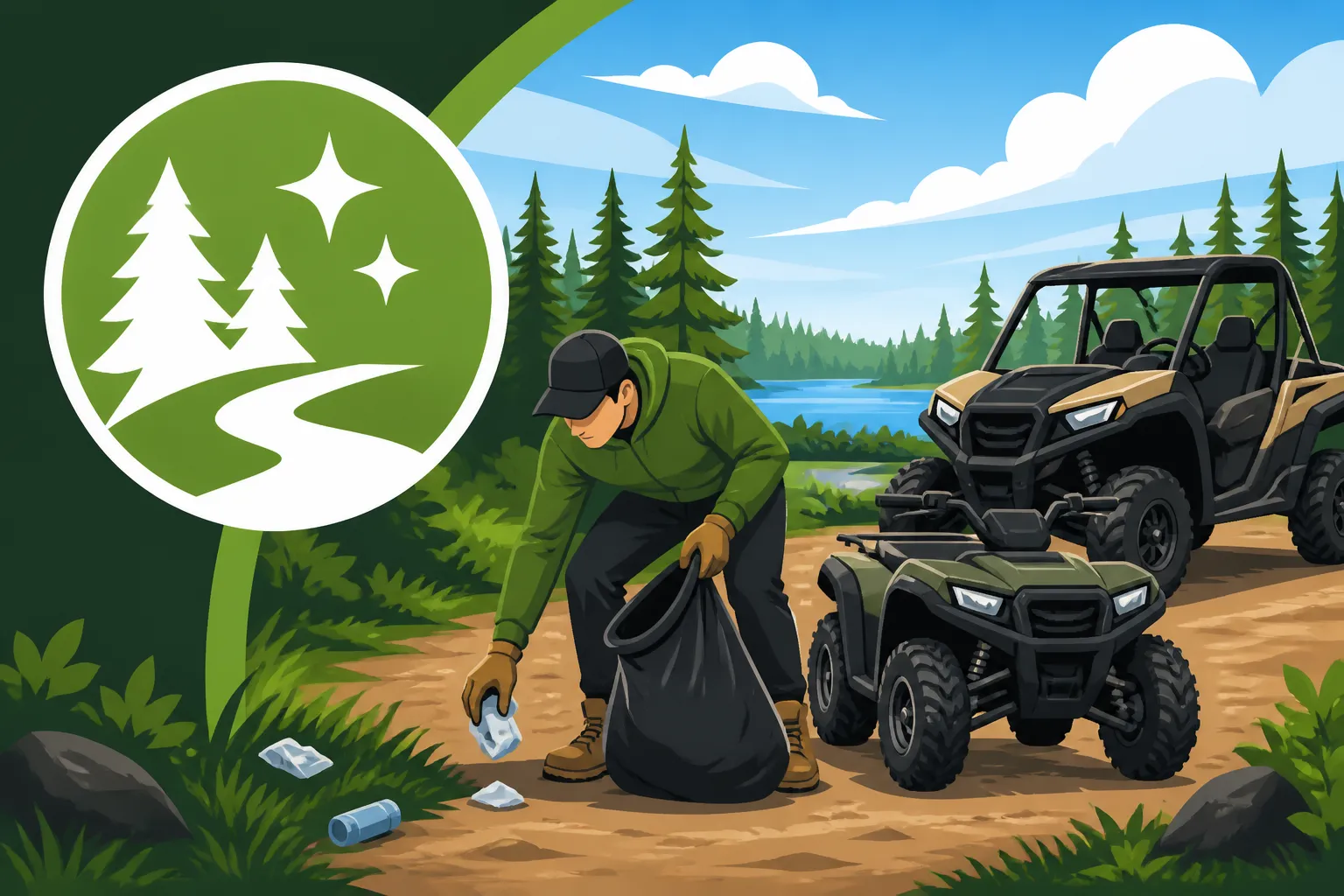
The most reliable rule is simple: if it arrived with your group, it should leave with your group. That includes cans, bottles, wrappers, zip ties, broken straps, used tissues, and the little bits of packaging that slip under a seat. Look around your parking space before pulling away, especially after several riders have unloaded in a hurry.
Food scraps count too. Tossing a fruit peel or a crust near the trailhead may seem harmless, but wildlife can be drawn toward places where people gather. That can create problems for animals and for the next visitors. Put food waste in a sealed bag and dispose of it properly after the trip.
Do one final check inside the truck and trailer. A loose glove, snack wrapper, or empty drink container often turns up after the group has already driven away. Ask everyone to take responsibility for their own gear rather than leaving cleanup to the person who owns the truck.
| What to check | What to do before leaving |
|---|---|
| Parking space | Pick up rubbish, food scraps, and small gear |
| Trailer and ramps | Secure loose straps and remove debris |
| ATV or UTV | Brush off loose mud where it is permitted and practical |
| Nearby access | Keep gates, lanes, and turning areas clear |
| Group supplies | Pack out anything brought for the ride |
| Signs and conditions | Note new closures or damage worth reporting |
Keep waste and spills away from water
Don’t dump grey water, fuel, oil, cleaning products, or other liquids onto the ground or into a ditch. A trailhead can be close to a wetland, creek, lake, or drainage area even when the water isn’t visible from the parking space. If a container leaks, contain the spill as best you can and take contaminated materials away for appropriate disposal.
For human waste, use facilities where they’re provided. Where there are no facilities, follow the area’s posted guidance and established backcountry practices rather than leaving toilet paper or waste exposed. Never assume that burying waste is suitable everywhere; local conditions and rules matter, particularly near water, campsites, and heavily used areas.
If your group is planning a longer route or a large outing, sorting out facilities and supplies ahead of time makes cleanup easier. Manitoba Group Ride Planning can help you think through shared responsibilities, while Manitoba Riding Areas With Wash Stations is useful when a designated place to clean equipment is part of your plan.
Handle mud and equipment without damaging the site
Brush off loose debris without making a bigger mess
Manitoba rides can leave machines coated in mud, grass, and plant material. Before loading, remove loose clumps that could fall off on the road or be carried to another riding area. A brush or scraper is often enough for the biggest chunks. If you brought a tarp, use it to contain the debris and then pack it out rather than leaving the material at the trailhead.
Be considerate of people parked nearby. Don’t spray mud onto another vehicle, kick up dust beside someone who is packing, or rev an engine to shake debris loose. If the area has a designated wash station, follow its instructions. If it doesn’t, don’t turn a roadside ditch, creek bank, or patch of vegetation into an improvised wash bay. Wash water can carry sediment and contaminants into places where they don’t belong.
Mud can also hide damage to your machine. Check tires, guards, and undercarriage areas for trapped vegetation or debris while you’re doing your post-ride walk-around. That quick check can save you from discovering a problem halfway home—and helps avoid dropping loose material along the road.
Avoid tracking trouble between riding areas
Seeds, soil, and plant fragments can travel in packed mud on tires and equipment. If you rode through a particularly muddy stretch, give the machine a closer look before moving on to another riding area. Clean it at home or at an appropriate wash facility when possible, and dispose of the removed material rather than tipping it beside the trailhead.
This is especially worth thinking about when a ride ends in one area and the next trip starts somewhere else. It’s easy to focus on the mud visible on the fenders and miss packed material in tire treads, footwells, or around guards. A quick inspection won’t make every machine spotless, but it can reduce the amount of debris you carry from one place to another.
If you’re using onX Offroad or another mapping tool to plan multiple stops, make the cleanup and transport plan part of the route—not an afterthought. Check the local information for each destination and don’t assume that a facility available at one trailhead will be available at the next.
For rides after rain, be particularly alert to soft ground and fresh ruts. If conditions look vulnerable, turn around rather than widening the damaged area to get through. Manitoba Riding After Heavy Rain and Manitoba Trail Closures After a Storm offer useful context for deciding when conditions may call for a change of plan.
Leave the place ready for the next group
Take a final look before driving away
Before hitching up or pulling out, walk a slow loop around your vehicle and trailer. Look under the trailer, beside the tires, and along the edge of your parking space. Check that ramps are secured, straps are stowed, rubbish is packed, and no one has left a phone, glove, water bottle, or tool behind.
It helps to give one person the final-check job, even if everyone is responsible for their own belongings. In a larger group, people may assume someone else has picked up the shared snack wrappers or moved a loose tool. A quick “parking spot clear?” check avoids that familiar discovery when you’re already miles down the road.
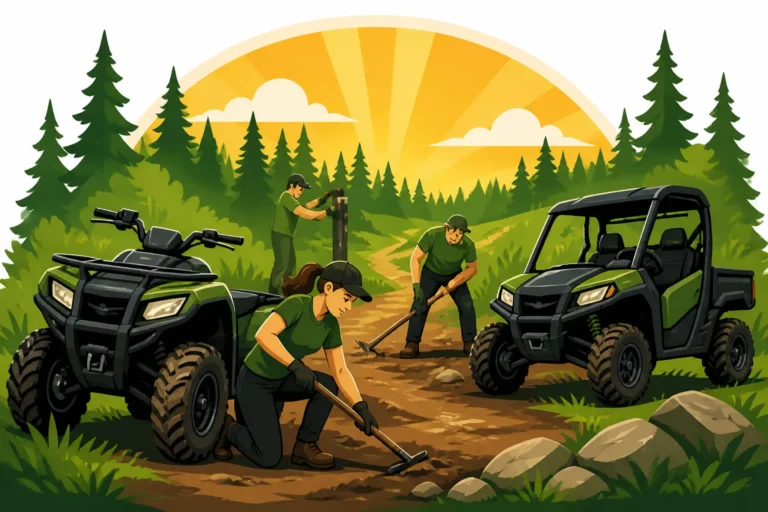
Notice the condition of the area as you leave. If you see a blocked gate, a damaged sign, a hazardous spill, or fresh trail damage, report it through an appropriate local contact, such as the managing club or relevant land manager. Don’t try to repair a sign or move a barrier unless you’ve been asked to do so. Manitoba Trail Volunteer Days can be a good way to support trail care when a cleanup or maintenance effort is organized.
Leave space, access, and good habits behind
A tidy trailhead is more than a clean patch of gravel. It means other users can park, turn around, and reach the trail safely. It means the gate is clear, signs remain visible, and nobody has created new ruts or left waste behind. Those small details matter at popular staging areas and at quiet access points alike.
If the area is busy, give incoming riders room to unload before you pull out, and avoid blocking the route while you finish packing. If someone else is still getting a machine onto a trailer, a little patience is usually easier than squeezing past. Courtesy also goes both ways: keep noise and dust down, and leave the space as you’d hope to find it after a long day.
When the group is ready to go, make sure the final person knows the plan and the parking area has been checked. It’s a simple routine, but it prevents the common end-of-ride leftovers: one forgotten wrapper, a loose strap, or a muddy patch that becomes somebody else’s problem. That’s how riders help keep Manitoba trailheads usable and welcoming for the next visit.
Disclaimer
This article is for general informational purposes only and does not constitute professional advice. Laws, prices and regulations vary by location and change over time. Consult a qualified professional for guidance on your specific situation.