Tires for Manitoba Muskeg
Soft muskeg can turn a promising Manitoba ride into a slow, muddy recovery, especially when tires spin instead of float. Choosing tires for Manitoba muskeg means balancing flotation, tread grip, machine weight, and the ground you’re allowed to ride on. This guide explains what to look for, how to avoid common setup mistakes, and how to ride carefully when the trail gets soft.
What makes Manitoba muskeg hard on ATV and UTV tires
Muskeg is not simply a patch of mud. It can be a mix of saturated organic soil, moss, roots, shallow water, and firmer ground that changes without warning. A tire that works well on dry gravel near Brandon may sink or churn the ground on a wet bush trail in the Interlake or Eastman region.
Flotation matters as much as aggressive tread
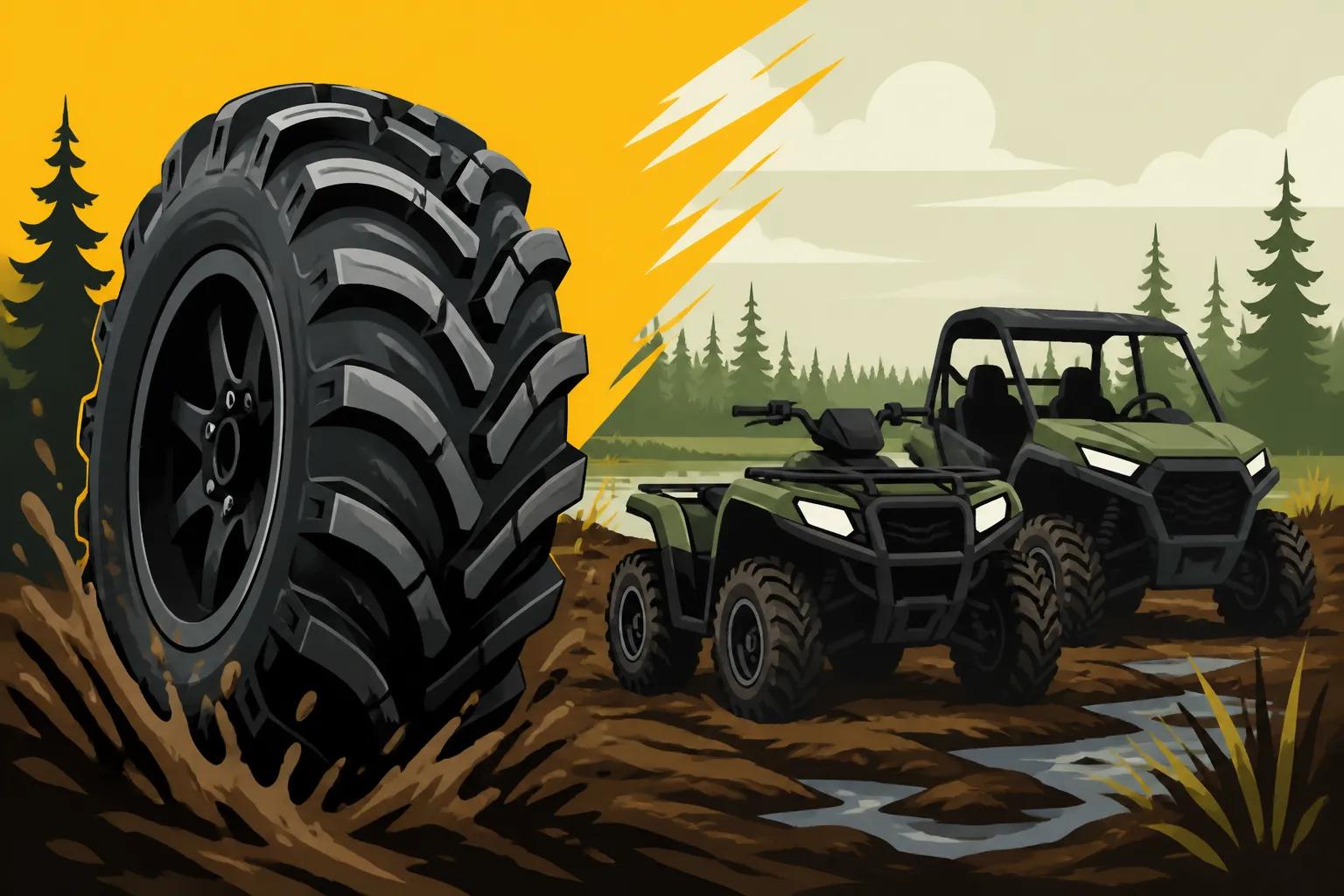
When a tire sinks, its tread may lose the chance to grip firmer ground beneath the soft surface. A wider tire can spread the machine’s weight across a larger footprint, helping it stay closer to the surface. That can matter more than choosing the most aggressive-looking tread.
But width is not a universal fix. A wider tire must fit the machine without rubbing suspension parts, bodywork, or other tires at full steering lock or suspension travel. It also changes how the machine feels and handles. Check the ATV or UTV manufacturer’s approved tire sizes, and consider how passengers, cargo, accessories, and towing affect total weight.
The weight difference between a solo ATV and a loaded four-seat UTV is substantial. A tire setup that floats well on a lightly equipped quad may not behave the same way once a UTV carries passengers, tools, and camping gear. Think about your real riding load, not just the machine’s appearance in the driveway.
Tread design affects grip and ground damage
Deep, widely spaced lugs can bite into soft ground and help clear mud from the tread. That grip can be useful when you need to climb out of a shallow rut or move slowly through a muddy section. Yet more aggressive tread can also dig in quickly if the wheels spin. On sensitive ground, that can turn a small patch of mud into a deeper rut and make the route harder for everyone behind you.
A less aggressive all-terrain tread may be a better choice for riders who mostly use firm club trails, gravel, and mixed terrain, with occasional wet sections. A dedicated mud tire may suit riders who regularly encounter soft conditions, but it can bring trade-offs in steering feel, noise, ride comfort, and stress on the drivetrain. The right choice depends on the ground and how the machine is used—not just on how deep the lugs look in a product photo.
| Tire characteristic | Potential advantage in soft terrain | Trade-off to consider |
|---|---|---|
| Wider footprint | Can help spread the machine’s weight | Must clear the machine and suit its approved fitment |
| Deep, open lugs | Can grip and shed mud | May dig into soft ground if the tires spin |
| Moderate all-terrain tread | Often more versatile on mixed routes | May provide less bite in deep, sticky mud |
| Larger overall diameter | May help clear some obstacles | Can affect gearing, handling, and machine compatibility |
| Heavy-duty construction | Can resist some trail hazards | Added weight may affect ride and machine response |
A tire’s label does not tell the whole story. Two tires described as mud tires may differ in carcass stiffness, lug spacing, shoulder design, and actual dimensions. Read the manufacturer’s specifications and compare them with the terrain you ride most often.
Match the tire to the machine and its job
A recreational ATV used for short outings has different needs from a work quad carrying equipment across wet ground. A UTV may be heavier and may carry more passengers, while its wider stance can make tight, uneven routes feel different. Look beyond the tire category and confirm that the proposed tire is suitable for your model and intended load.
If you are uncertain, compare the proposed setup with the machine’s original tire size and load requirements. Ask a knowledgeable tire dealer or service professional about fitment, clearance, and any effects on handling. Avoid assuming that a tire that fits a friend’s machine will fit yours simply because both vehicles are the same general type.
Choosing a tire setup for muskeg without creating new problems
The goal is not to build the most extreme setup possible. It is to choose equipment that suits the terrain while keeping the machine predictable and minimizing damage when conditions get soft.
Start with your usual routes and riding conditions
Think through the places you ride most often. Do you primarily use maintained club trails with occasional wet patches, or do you routinely encounter soft, waterlogged ground? Do you ride in spring conditions, after heavy rain, or later in the season when some routes have dried? A tire choice should reflect the conditions you actually face rather than a rare, dramatic recovery story.
Trail conditions can change quickly. A route that felt firm on a dry weekend may become vulnerable after rain or during seasonal thaw. Before trailering out, check Manitoba Trail Conditions Before You Haul and look for local notices about closures or unusually wet sections. For context on how wet ground affects machines and travel choices, see Manitoba Muskeg and Machines.
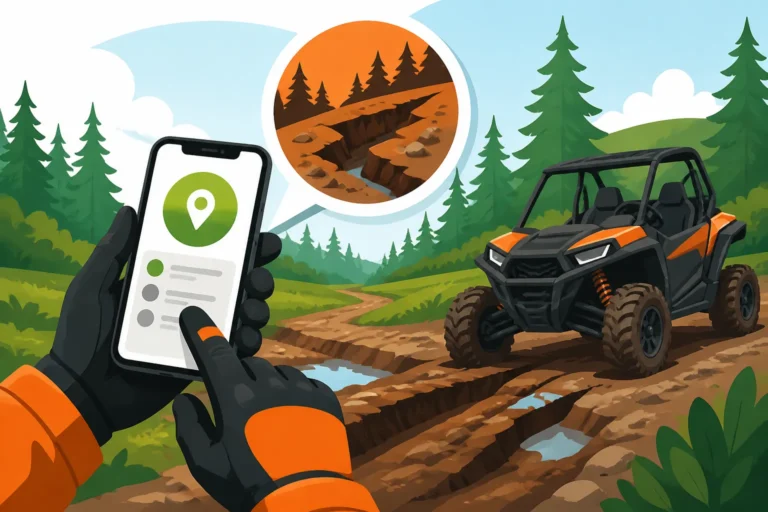
For route planning, onX Offroad can be one tool for reviewing a planned ride and keeping track of where you intend to travel. Treat any mapping app as a planning aid, not as proof that a route is open or that you have permission to cross it. Check club, park, land manager, and local information before riding. A map can help you think through the route, but it cannot make a sensitive wetland suitable for machine travel.
Be cautious about tire size and machine modifications
A tire with a larger diameter or wider profile may look like a simple upgrade, but fitment involves more than whether it can be mounted on the rim. At full steering lock, the tire needs clearance. Suspension movement can bring it closer to body panels or components, and the machine may respond differently when turning or travelling over uneven ground.
Changing tire size can also affect how the machine accelerates, brakes, and manages power. Larger or heavier tires may put additional demands on some parts of the drivetrain. If the machine is still under a manufacturer’s warranty, review the warranty terms and ask a qualified service professional about any concerns before changing from the approved setup.
Do not rely on a tire seller’s generic fitment statement alone if your ATV or UTV has a lift kit, spacers, altered suspension, or other modifications. The same tire may fit one configuration and rub on another. Test clearance carefully in a safe setting before heading out on a long route.
Treat tire pressure as a machine-specific setting
There is no single tire pressure that is right for every ATV, UTV, tire, and load. The appropriate pressure depends on the tire’s specifications, the machine maker’s guidance, the load, and the way the vehicle is used. Too little pressure can increase the risk of a tire coming off its bead or being damaged. Too much can make the ride harsher and reduce the footprint on uneven ground.
Use the pressure information provided for your machine and tire rather than copying a number from another rider’s setup. Check pressure with a reliable gauge before a ride, and remember that changes in temperature can affect readings. If you are considering an adjustment for soft terrain, confirm a safe operating range with the tire or machine manufacturer or a qualified service professional.
Avoid making a large pressure change at the trailhead just because the ground looks soft. A tire that behaves acceptably at low speed on one surface may feel unstable or become vulnerable to damage elsewhere. If pressure changes are permitted within the manufacturer’s guidance, make them cautiously and reassess the machine’s handling in a safe area before continuing.
Riding technique and recovery matter as much as the tires
Even a capable mud tire cannot compensate for poor line choice or excessive throttle. In muskeg, how you approach a soft section can determine whether the machine rolls through or digs itself in.
Read the ground before committing
Stop where it is safe and look for signs of a route that is becoming fragile: deep existing ruts, standing water over an unclear surface, broken vegetation, or tracks that disappear into soft ground. If you cannot tell whether the ground is firm enough to support the machine, do not assume that speed will solve the problem.
Pick a line that avoids deep ruts and vulnerable vegetation where possible. Keep enough distance from other riders to see how the surface behaves and to avoid following too closely into a deteriorating section. On a group ride, agree in advance that a rider can stop and reassess without pressure to push on. A few minutes spent choosing another route can prevent a long recovery and lasting damage.
If the route is wet enough that machines are cutting deep ruts, turn around where it is safe rather than widening the damage. Guidance on riding after wet weather is covered in Manitoba Riding After Heavy Rain. For broader advice on keeping a ride low-impact, review Manitoba Sensitive Areas to Avoid and Manitoba Trail Etiquette Locals Expect.
Use smooth, controlled throttle
When a wheel begins to spin, adding more throttle often makes the situation worse. Spinning lugs can excavate soft ground faster than the machine can move forward. Ease off, pause, and consider whether the wheels still have a usable line of travel. If the machine is stuck, continuing to spin can bury it deeper and increase the effort needed to recover it.
Approach a soft stretch steadily, at a pace that gives you control. Avoid abrupt steering inputs and sudden bursts of throttle. If the machine starts to lose momentum, assess the situation rather than automatically pressing harder. Sometimes backing out along the track you entered is safer than trying to power through.
If several machines are travelling together, send one rider through at a time where the route is narrow or soft. This gives the group a chance to judge conditions and reduces the chance of multiple vehicles becoming stuck in the same section. Do not follow another machine’s line without checking whether its passage has deepened or damaged the ground.
Prepare for a recovery before you need one
Carry recovery equipment that is appropriate for your machine and learn how to use it before an outing. A winch, suitable recovery strap, gloves, and basic repair supplies can be useful, but equipment should never be attached to an unsafe point or used in a way that puts people in the line of tension. Keep bystanders clear during a recovery and follow the equipment manufacturer’s instructions.
A winch is not permission to ride through any terrain. If a route is repeatedly trapping machines or requiring recovery, reconsider whether it is appropriate for the conditions. For practical preparation, see Winches for a Stuck Manitoba Machine. You may also want to review Skid Plates for Shield Rock if your usual route includes rocky sections as well as soft ground; a setup suited to one hazard does not automatically protect against another.
Do not assume that the nearest open-looking patch is a safe place to anchor a recovery line. Protect the surroundings and avoid damaging trees, vegetation, or trail infrastructure. If you cannot recover the machine safely, stop and seek help rather than improvising a risky pull.
Before you buy or ride tires for Manitoba muskeg
A little preparation can save money, reduce frustration, and help you avoid damaging a machine or a trail. The best tire decision is often a careful fitment check, a realistic assessment of your routes, and a willingness to turn around when conditions are unsuitable.
Use a simple tire-selection checklist
Before purchasing tires, gather the machine’s make, model, year, current tire size, and any modifications. Make a note of typical passengers and cargo, because load affects how the tire and vehicle behave. Then compare candidate tires against the manufacturer’s fitment guidance and ask questions about clearance, load capacity, and handling.
OnX Offroad may help you organize route ideas and review a planned trip, but confirm access and closures through the relevant local sources before setting out. This is especially important where club trails, provincial park routes, private land, and Crown land have different access conditions. See Manitoba Crown Land Riding Explained for more on why permission and restrictions matter.
A useful buying conversation is specific: “I ride mixed club trails and occasionally encounter wet, soft sections. Will this size fit my unmodified machine, and what load and pressure guidance applies?” That gives a dealer or service professional a clearer picture than simply asking for the best mud tire.
Inspect tires and equipment before each outing
Look for cuts, bulges, embedded stones, damaged lugs, and signs of uneven wear. Check that the wheels and valve stems are in good condition and confirm tire pressure using the appropriate guidance. If a tire has been repaired, make sure the repair is suitable for the planned ride and load.
Pack a pressure gauge and a repair kit suited to your tire type. Bring basic tools, water, and a communication plan appropriate for the route. In areas with weak or absent mobile coverage, do not rely on a phone app as your only navigation or emergency resource. Carrying a paper map and telling someone your route and expected return time can add a useful backup.
After riding through mud, clean the machine and inspect the tires, wheels, and undercarriage. Mud can conceal damage or remain packed around components. For cleaning and post-ride care, see Washing Mud Off a Manitoba Machine. Make a habit of noting where the tires performed well and where they struggled; that real experience is more useful for your next purchase than choosing by appearance alone.
Keep the whole riding plan in view
Tires are one part of a safe, responsible ride. Check the route, local access rules, weather, fire restrictions, and trail conditions. If a trail is closed or the ground is too wet, changing plans is the sensible choice—even if the machine has new tires and a winch.
Use tire upgrades to improve control on suitable routes, not to push into places that are fragile, restricted, or beyond the machine’s capability. A well-chosen setup, smooth riding, and a willingness to turn around can make a Manitoba ride more enjoyable while leaving the trail in better shape for the next person.
Disclaimer
This article is for general informational purposes only and does not constitute professional advice. Laws, prices and regulations vary by location and change over time. Consult a qualified professional for guidance on your specific situation.