Manitoba Lighting Requirements on a Machine
You’ve just spent good money on that shiny new (or new-to-you) ATV or UTV, and you’re itching to hit the trails or even just get some work done around your property. But before you fire it up, a common question often pops into a rider's mind: "What lights do I actually need to be legal and safe in Manitoba?" It can be confusing trying to decipher the rules, especially when you consider different times of day or specific riding conditions. This guide is here to untangle all those requirements and give you peace of mind, ensuring your machine is properly lit and ready for whatever adventure you have planned.
The Basics of Manitoba ORV Lighting
It might seem obvious, but proper lighting on your off-road vehicle isn't just about illuminating your path forward. It's a critical safety feature that ensures you’re seen by others, whether they’re fellow riders, pedestrians, or even other vehicles you might encounter when crossing a road or traversing a ditch. Manitoba has specific regulations in place to ensure a minimum standard of visibility for all off-road vehicles.
Why Lights Matter for Off-Roaders
Think about it: you're out on the trail, the sun starts to dip below the horizon, or perhaps a sudden downpour kicks up a lot of spray, reducing visibility. In these scenarios, your lights become your best friend. They transform you from a hard-to-spot silhouette into a clearly visible presence. The legal side is just as important; the law isn't just concerned with riding in complete darkness. [Manitoba Lighting Requirements on a Machine] are designed to cover all sorts of low-light situations, from that dreary, overcast afternoon to the dusty conditions of a well-used trail.
Beyond just avoiding a ticket, functioning lights are about preventing accidents. Imagine a situation where another rider comes around a blind corner, or a farmer is making their way down a field access road. If your lights aren't working, or aren't bright enough, you could be putting yourself and others at serious risk. It's a fundamental part of responsible riding.
Headlights: Illuminating Your Path Forward
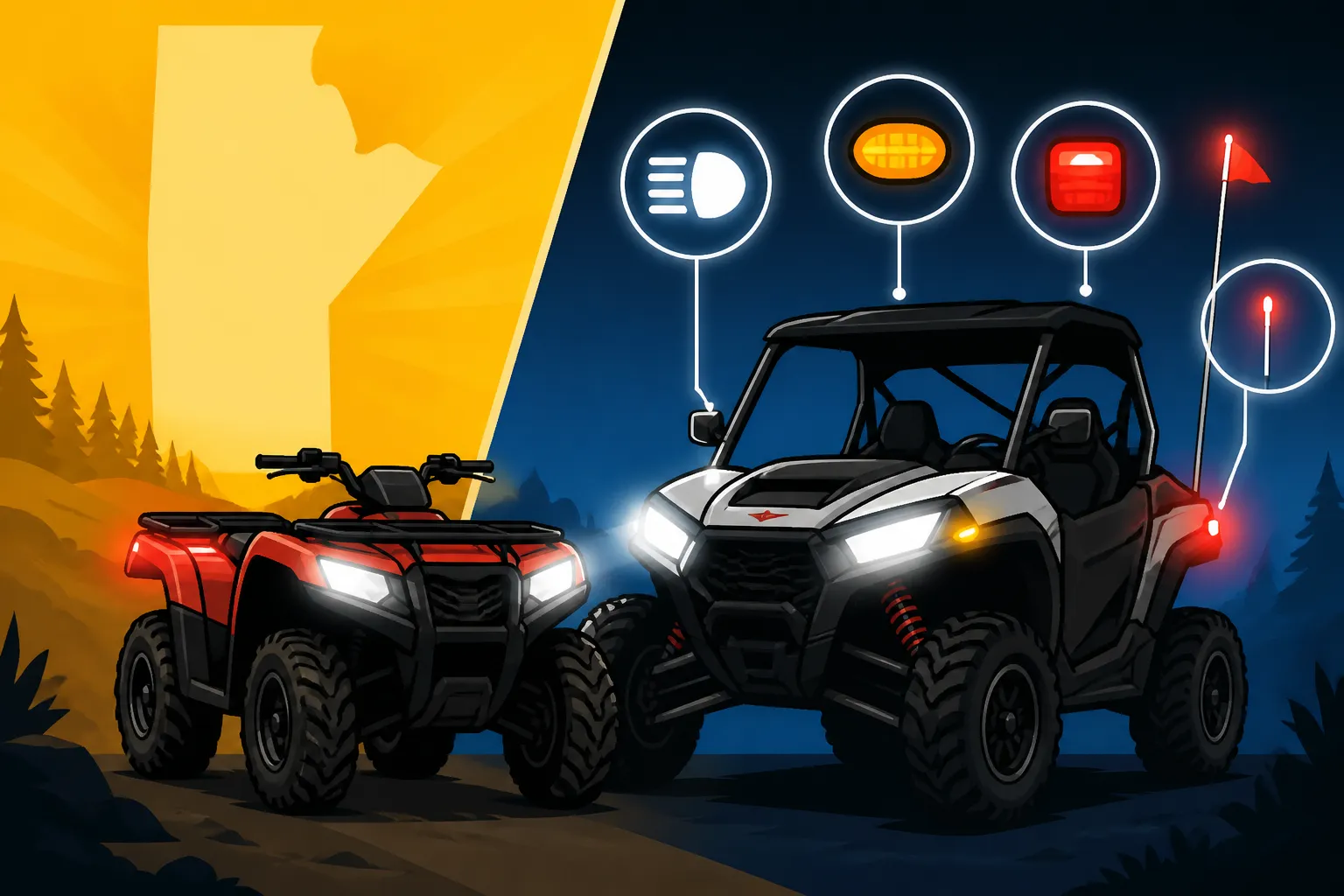
When it comes to your machine's front-facing illumination, Manitoba law is quite clear. Your ATV or UTV must be equipped with at least one white or amber headlamp that is visible from a distance of 60 metres. For most modern machines, the factory-installed headlights usually meet or exceed this requirement. However, if you're riding an older quad, or if your machine has seen a lot of trail abuse, it's always wise to double-check the intensity and reach of your current setup.
Proper aiming is also something to consider. While not always explicitly detailed in the same way as automotive headlight aiming, you want to ensure your lights are illuminating the path ahead without blinding oncoming traffic, especially if you ever find yourself on a shared-use trail or performing a controlled [Manitoba Crossing Rules at 5 Metres and 3 Kilometres]. If you find yourself in extremely dark conditions, or doing precision work in low light, you might consider auxiliary lighting. But for general legal compliance, your standard headlights should do the trick, provided they're bright and functional.
Taillights and Brake Lights: Being Seen from Behind
Just as important as seeing where you're going is ensuring that others can see you from behind. Manitoba law dictates that your ORV needs at least one red taillight, also visible from a distance of 60 metres. This taillight is crucial for anyone following you, giving them a clear indication of your presence on the trail or road shoulder.
Most modern machines integrate the brake light into the taillight assembly, meaning the red light simply gets brighter when you apply the brakes. This is an essential safety feature, as it clearly communicates your intention to slow down or stop to anyone behind you. After a muddy or dusty ride, it’s easy for these lights to become caked in grime, significantly reducing their effectiveness. Always make it a habit to wipe down your taillights and brake lights before heading out, ensuring they are clean and unobstructed. That peace of mind, knowing that you're clearly visible when you hit the brakes, is priceless.
Beyond the Basics: Additional Lighting for Safety and Compliance
While headlights and taillights form the core of Manitoba's lighting requirements, there are other considerations and accessories that can dramatically enhance your safety and even bring your machine into compliance for specific situations. It's about being prepared for all eventualities, not just the bare minimum.
Reflectors: Passive Visibility That Counts
Reflectors are often the unsung heroes of vehicle visibility. They don't emit light themselves, but they reflect light from other sources, making your machine more visible even when its powered lights aren't on, or if they fail. While the specifics can vary, many regulations require reflective material on the rear and sides of the machine. These are usually small, unobtrusive pieces of plastic or tape.
It’s surprising how many riders overlook their reflectors. They can get knocked off, damaged, or simply covered in dirt and grime, rendering them useless. Take a moment to check your machine for intact, clean reflectors, especially on the rear. A working reflector is a simple, effective, and low-maintenance way to boost your visibility and can often be a detail an officer looks for during [Manitoba Equipment Checks by Officers].
Turn Signals: Navigating Roadways (When Permitted)
Here's where things can get a little nuanced. For strictly off-road use, turn signals aren't always a mandatory requirement in the same way headlights and taillights are. However, if your riding plans ever involve using your machine on a roadway, even just for permitted [Manitoba Ditch Riding Rules] or to make a controlled highway crossing, turn signals become incredibly important. While hand signals are legally permissible, they can be awkward to execute on an ORV, especially a side-by-side, and might not be clearly visible in all conditions.
Adding aftermarket turn signals, particularly for UTVs, is a smart upgrade if you anticipate any road-legal activity. Companies like SuperATV offer fantastic integrated turn signal kits that can make your machine much safer and more compliant for those times when you're not strictly on the trail. They streamline the process of indicating your intentions, which is crucial when you're sharing space with other vehicles.
Auxiliary and Work Lights: When More is Better
Ah, the beloved light bar! For many off-road enthusiasts, the appeal of a powerful light bar or additional spot/flood lights is undeniable. They dramatically improve visibility in truly dark, remote areas, making night riding much safer and more enjoyable. They’re also incredibly useful for working after dark, whether you’re plowing snow or setting up a campsite.
However, it's vital to understand their limitations regarding road use. While these lights are fantastic for the trail, they are generally not legal for use on public roadways, even during brief crossings. Their intensity can blind other drivers, creating a significant hazard. The rule of thumb is: if you're on any public thoroughfare, stick to your standard, compliant headlights. Save those powerful auxiliary lights for when you're truly off the beaten path, where you need that extra punch of light. A sturdy SuperATV light bar can really make a difference when you're exploring the deep bush or need to light up a work site.
Ensuring Your Lights Are Always Ready to Go
Having the right lights installed is only half the battle. They need to be in good working order, properly maintained, and checked regularly to ensure they're doing their job effectively. Neglecting your lighting system can lead to unexpected breakdowns, fines, or, most importantly, dangerous situations.
Pre-Ride Checks: A Habit Worth Forming
Before every single ride, make it a non-negotiable habit to do a quick walk-around and check all your lights. This simple routine can save you a lot of grief. Turn on your machine, activate the headlights, cycle through your turn signals if you have them, and have someone stand behind you to confirm your taillights and brake lights are functioning. Look for any burnt-out bulbs, frayed wiring, or lenses that are cracked or obscured by mud and debris.
A quick visual inspection takes less than a minute but can prevent a roadside stop by an officer, an accident due to poor visibility, or even just an inconvenient breakdown in the dark. Remember, it's also important to carry your [Carrying Your Registration Card on Every Ride] with you, and keeping it dry and protected means it will be legible if an officer asks for it.
Maintenance and Upgrades: Keeping Your Machine Visible
Regular maintenance of your lighting system is key to its longevity and effectiveness. This means more than just replacing a bulb when it burns out. Regularly clean the lenses of all your lights – dust, mud, and water spots can significantly diminish their output. If you frequently ride in harsh conditions, consider upgrading to LED bulbs or full LED assemblies. LEDs offer superior brightness, consume less power, and tend to be far more durable than traditional incandescent bulbs, standing up better to vibrations and impacts.
When upgrading or adding auxiliary lights, ensure proper wiring. A poorly wired system can lead to electrical issues, battery drain, or even fire hazards. If you're not comfortable with electrical work, it's always best to have a qualified technician handle the installation. Investing in quality components, like those offered by SuperATV, ensures reliability and performance, especially when you're adding powerful light bars or work lights.
Understanding the "60 Metres Visibility" Rule
The law states your lights must be visible from "60 metres." But what does 60 metres actually look like in the real world? To put it into perspective, it's roughly the length of six full-sized school buses parked end-to-end, or a little more than half the length of a football field. That's a pretty significant distance, and it ensures that you have ample time to react if another vehicle or person is approaching.
To really test this, enlist a friend. Have them stand 60 metres away (or use a tape measure for accuracy) and check if your lights are clearly visible. Do this both at night and in various low-light conditions, like dusk or dawn. If you're unsure, it's always better to err on the side of caution and either clean, repair, or upgrade your lights. Failing to meet this visibility standard can lead to fines, as officers can issue [Manitoba Ticket Costs for Riders] for non-compliant equipment. The intent of the "60 metres of visibility" rule, especially when referring to [Lights From Half an Hour Before Sunset], is to ensure clear communication of your presence to others well in advance, giving everyone adequate reaction time.
| Light Type | Minimum Requirement (Manitoba) | Common Location | Importance | Recommended Upgrades |
|---|---|---|---|---|
| Headlight(s) | At least one white or amber, visible from 60m | Front of machine | Illumination of path, forward visibility for others | High-output LED bulbs/assemblies, auxiliary LED pod lights or light bars (for off-road use only) |
| Taillight(s) | At least one red, visible from 60m | Rear of machine | Rear visibility for others | LED taillight assemblies for brighter, more durable performance |
| Brake Light(s) | Red, must illuminate when brakes applied | Rear of machine | Indication of slowing/stopping to others | Integrated LED brake light kits |
| Reflectors | Often required on rear and sides | Rear/Sides of machine | Passive visibility, especially in low light or if powered lights fail | High-visibility reflective tape |
| Turn Signals | Not always mandatory off-road, critical for roads | Front & Rear sides | Indicating turns/lane changes (when permitted on roadways) | Aftermarket integrated LED turn signal kits (e.g., from SuperATV) for clear indication and increased safety when traversing roads or ditches. [Manitoba ORV Road Rules Explained] provides more context on where these become essential. |
| Auxiliary Lights | Not for on-road use | Front/Top of machine | Enhanced illumination for off-road trails, work tasks, camping | LED light bars, spot/flood lights (ensure proper wiring and switches) |
Disclaimer
This article is for general informational purposes only and does not constitute professional advice. Laws, prices and regulations vary by location and change over time. Consult a qualified professional for guidance on your specific situation.