Manitoba Rules for Riding Near a Playground
It can be incredibly frustrating when you're just trying to enjoy your ATV or UTV, but you're constantly worried about where you can and cannot ride, especially when there are sensitive areas like playgrounds nearby. The rules aren't always crystal clear, and the last thing any of us wants is to accidentally put someone at risk or face a hefty fine. This guide is here to untangle the specific rules governing off-road vehicle use near playgrounds in Manitoba, helping you ride confidently and responsibly.
Why Specific Rules Exist Around Playgrounds
Let's face it, off-road vehicles are powerful machines. They make noise, kick up dust, and require a certain level of skill to operate safely. When you combine these factors with an environment full of small, often unpredictable children, it's easy to see why specific regulations are put in place. It's not about singling out ORV riders; it's about protecting the most vulnerable members of our communities and maintaining peace and safety in shared public spaces.
Protecting Children's Safety
Children, particularly young ones, can be incredibly impulsive. They might dart out from behind equipment, not hear an approaching vehicle over their own play, or simply lack the awareness of potential hazards that adults possess. An ATV or UTV, even at low speeds, carries significant mass and momentum. A sudden stop or swerve might be impossible, leading to a dangerous situation. The rules around playgrounds are primarily designed as a preventative measure, creating a buffer zone to minimize the chance of any vehicle-child interaction. Imagine the terror of a parent if an ATV roared too close to their child on the swings; these rules aim to prevent that scenario entirely. It's about giving children the freedom to play without fear and parents the peace of mind that their kids are safe from vehicular hazards in designated play areas.
Minimizing Noise and Disturbance
Beyond the physical safety aspect, there's the issue of noise pollution. ATVs and UTVs, especially those with aftermarket performance parts, can be quite loud. While that rumble might be music to your ears out on the trail, it's definitely not what most parents want to hear while their kids are trying to enjoy a quiet afternoon at the park. The loud engines can startle children, interrupt games, and generally disrupt the serene atmosphere that playgrounds are meant to offer. Think about how annoying it is when someone cranks their stereo too loud in a quiet neighbourhood; the principle is similar here. Playgrounds are community hubs, and excessive noise from vehicles can make them less welcoming and less enjoyable for everyone. This includes not just the sound of the engine, but also the general commotion of a vehicle passing by, which can draw attention away from children and make parents anxious.
Preventing Property Damage and Nuisance
While perhaps less direct than safety concerns, preventing property damage and general nuisance is another reason for these restrictions. Riding an ORV, particularly on soft ground or manicured lawns often found near playgrounds, can tear up grass, create ruts, and spread mud or dust. These areas are maintained for public use and often funded by local taxes, so damaging them incurs costs and diminishes their quality for others. Furthermore, fumes from exhaust systems can be unpleasant, especially for those with sensitivities, and no one wants a cloud of exhaust hanging over a children's play area. These rules help ensure that public spaces remain clean, well-maintained, and pleasant for all users, not just those operating vehicles. It's about shared responsibility and respect for community resources.
The 30-Metre Rule: What It Means for Playgrounds
Manitoba's Off-Road Vehicles Act includes specific provisions to keep ORVs away from certain sensitive locations, and playgrounds definitely fall under this umbrella. While you might be familiar with the 30-metre rule in relation to dwellings, it's important to understand how this same principle applies to playgrounds and similar areas where children gather. It's a critical distance that dictates where you can and cannot operate your machine.
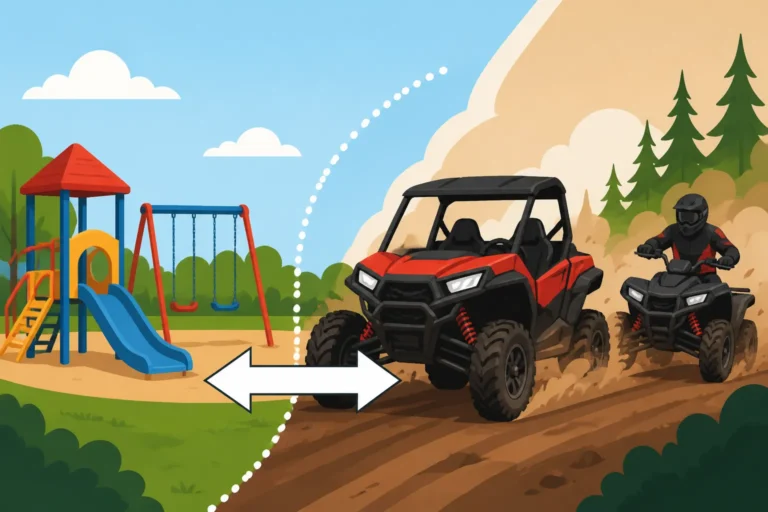
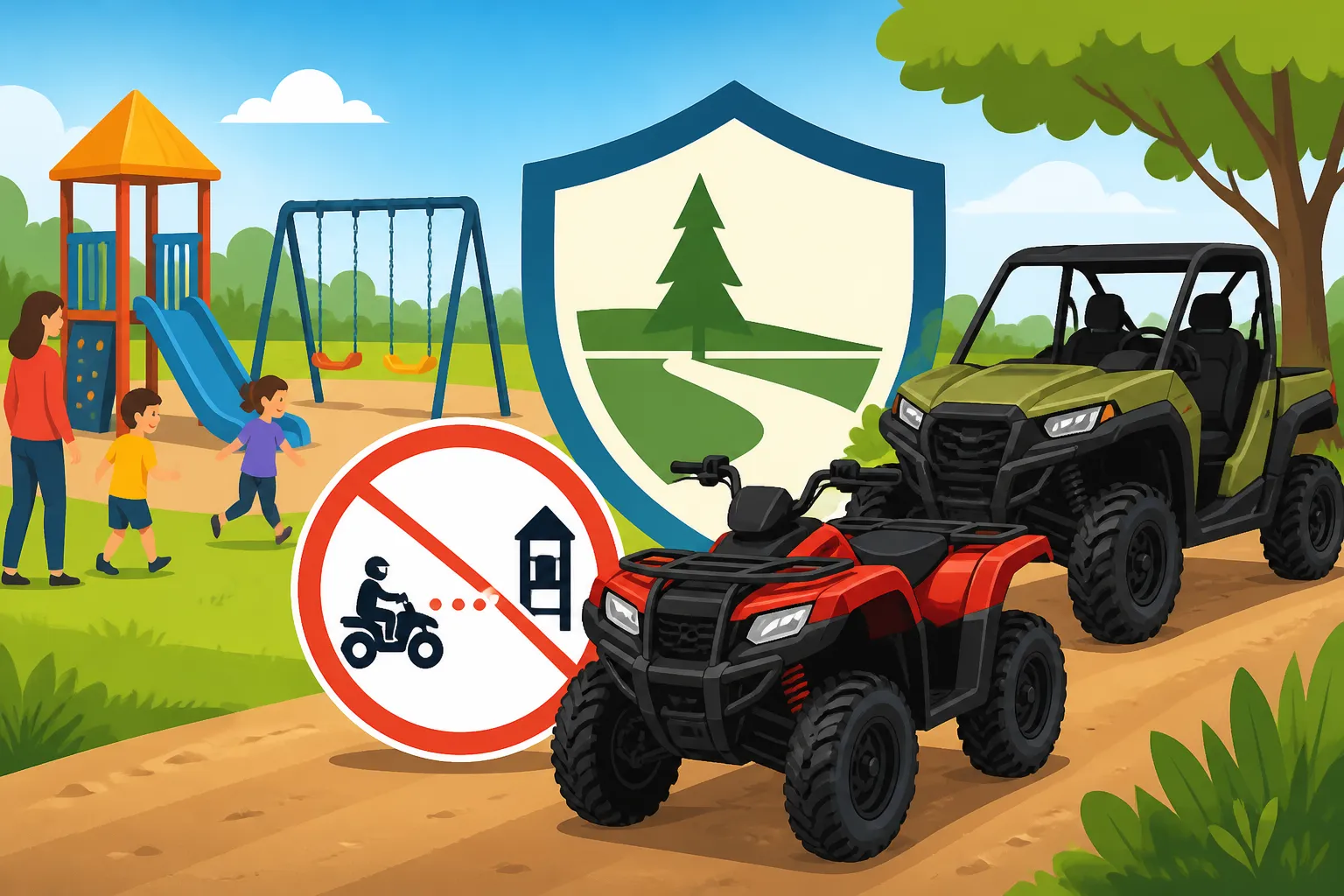
The rule states that you cannot operate an off-road vehicle within 30 metres of a dwelling, school, public building, playground, or recreational area between midnight and 7 a.m. However, while the specified hours are for certain locations, the spirit of the rule and general responsible riding dictate that you should always maintain a safe distance from playgrounds, regardless of the time of day, to ensure the safety and peace of those using it. Think of the 30-metre figure as a hard minimum for noise and disturbance outside of specific hours, but common sense and courtesy should always extend further. This specific rule also mirrors [Manitoba's 30-Metre Dwelling Rule], which applies to houses and other residential buildings during certain hours.
Understanding the Distance
So, what does 30 metres actually look like in the real world? It's roughly the length of three standard school buses parked end-to-end, or about 100 feet. When you're on your machine, especially if you're excited about your ride, distances can sometimes feel different. What might seem like a safe distance could, in reality, be well within that 30-metre exclusion zone. This means you need to be actively aware of your surroundings, constantly scanning for these sensitive areas. If you're ever in doubt, err on the side of caution and give the playground a wider berth. It's much better to go an extra block or loop around than to risk being too close. For instance, if you're riding through a residential area or near a park, keep an eye out for play structures, swings, or sandboxes. Sometimes, playgrounds are tucked away or not immediately obvious, especially if there's a lot of foliage. Knowing this distance can help you make a quick decision to reroute before you even get close.
Applying the Rule to Different Machines
Does the 30-metre rule apply differently if you're on a small youth quad versus a large side-by-side like a SuperATV Defender? The simple answer is no. The Off-Road Vehicles Act doesn't differentiate based on the size, type, or power of your ORV when it comes to these sensitive area restrictions. A child on a [Manitoba Rules for a Youth Quad] is still considered an ORV operator, and the same rules apply. Whether you're riding a nimble sport ATV, a utility quad, or a robust UTV equipped with SuperATV aftermarket accessories, the 30-metre boundary around a playground remains absolute. This blanket application ensures that the safety of children is prioritized above all else, regardless of the vehicle type. It removes any ambiguity and places the responsibility squarely on the operator to know and respect these boundaries. If you're riding a bigger, louder machine, you might even consider giving an even wider berth, simply out of courtesy and to minimize any perceived threat or disturbance.
Enforcement and Penalties
Breaking this rule isn't just a slap on the wrist. Manitoba law enforcement, including local RCMP and Conservation Officers, can enforce the Off-Road Vehicles Act. If you're caught operating your ORV too close to a playground, you could face significant fines. The general penalty for an infraction under the Act can be substantial, for instance, [The $2,000 General Penalty Under the ORV Act] is a real possibility, and repeat offenses can lead to even harsher consequences. Beyond the financial hit, there's also the potential for negative public perception. Incidents like these can fuel calls for stricter ORV regulations in general, making it harder for all riders to enjoy their sport. Officers might also conduct [Manitoba Equipment Checks by Officers] if they stop you, adding to the list of potential issues. It's always best to be a good ambassador for the sport, which includes adhering strictly to these safety rules.
Identifying a Playground in Manitoba
Sometimes, what constitutes a "playground" might seem obvious, but there can be grey areas. Is it only the brightly coloured structure in a public park, or does it include a small swing set in a communal residential complex? Understanding the scope of the definition is crucial for compliance. The goal is to ensure you recognize any area where children are likely to be at play, so you can adjust your route accordingly.
Official vs. Unofficial Play Areas
When the law refers to a "playground," it generally encompasses any area designed and maintained for children's recreational use. This absolutely includes those well-known public parks with elaborate play structures, slides, and swings, often managed by municipal governments. Schoolyards, especially outside of school hours, also fall into this category. However, the definition can extend to less formal areas. For example, a common green space within a residential complex that features a swing set or a sandbox, even if it's technically private property, could still be considered a playground in practice due to its dedicated use by children. It's about the function and primary use of the space. If you see equipment primarily used by children, or if it's an open area where kids frequently gather to play, treat it as a playground. When in doubt, it’s always safer to assume it's a playground and keep your distance. [Manitoba Municipal By-Law Powers] can also introduce local specifics, so what one municipality defines might be slightly different from another, reinforcing the need for caution.
Proximity to Other Facilities
Playgrounds are rarely isolated. They are often nestled within larger parks, adjacent to community centres, sports fields, or even residential streets and parking lots. When you're navigating your ORV, you need to consider the entire area. For instance, if a playground is part of a larger park that also has walking trails or picnic areas, the 30-metre rule should be applied from the perimeter of the playground equipment itself, not just the centre. Similarly, if a playground is next to a school, the area around the school is also a no-go zone. Be particularly mindful when riding on pathways or through [Manitoba Rules for Riding a Parking Lot] that might border these spaces. Children often travel through these adjacent areas to get to and from the playground. So, while you might technically be outside the 30-metre radius of the swings, if you're cutting through a path that children use to access those swings, you're still creating a safety hazard. Always consider the full context of the environment and the movement patterns of children and families.
Responsible Riding Practices Near Play Areas
Beyond just adhering to the letter of the law, responsible ORV operation involves a mindset of caution and respect for others, especially around areas frequented by children. It's about being a good neighbour and an ambassador for the sport. Taking a few extra precautions can make a world of difference in preventing accidents and maintaining positive community relations.
Planning Your Route
The best way to avoid issues with playgrounds is to plan your route to steer clear of them entirely. Before you head out, consult maps and familiarise yourself with the area you intend to ride. Look for parks, schools, and residential zones. Many mapping applications now show public green spaces and amenities. If your intended trail or path skirts close to such an area, identify alternative routes that keep you well away. Sometimes, taking a slightly longer detour is a small price to pay for peace of mind and safety. This proactive approach not only helps you avoid legal trouble but also ensures you're not inadvertently disturbing anyone or creating a hazard. When riding through unfamiliar towns or rural communities, always assume there might be a playground or residential area just around the bend, and be prepared to adjust your speed and direction.
Slowing Down and Being Visible
Even if you're outside the 30-metre zone, or if you're simply passing through an area near a playground, practicing extreme caution is paramount. Reduce your speed significantly. Not only does this give you more time to react if a child or pet suddenly appears, but it also reduces noise and dust. Make yourself as visible as possible; brightly coloured gear and ensuring your lights are on can help. A company like SuperATV offers great lighting options that can significantly increase your visibility, even during the day. Avoid any sudden accelerations or loud engine revs. The goal is to be as unobtrusive as possible. Children are naturally curious, and a noisy, fast-moving vehicle can be a huge distraction, drawing their attention away from safe play. Always yield to pedestrians, especially children and families, and give them ample space. If you see children playing in the distance, it’s always a good idea to slow right down, even stop, until they are aware of your presence or you have safely passed by.
Community Engagement and By-laws
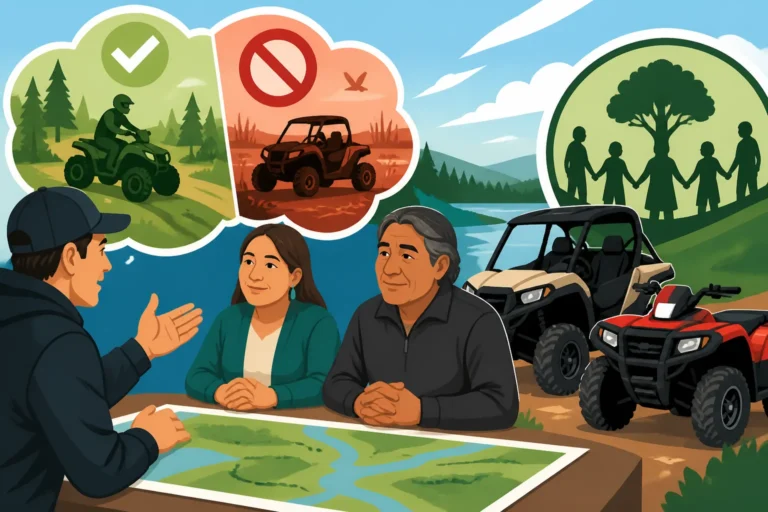
While provincial law sets the baseline, local municipalities in Manitoba have the power to enact their own by-laws regarding ORV use within their boundaries. This means that rules can vary from one town to the next, with some communities having stricter regulations, including around parks and playgrounds. It's a good idea to check with the local municipal office or their website for any specific ORV by-laws before riding in a new area. Being informed is your first line of defence against unwitting violations. Engaging with local communities can also be beneficial. If you're part of an ATV/UTV club, consider reaching out to local councils to understand their concerns and offer solutions. Promoting responsible riding and educating fellow riders about rules like these, and about issues like [Manitoba Noise Complaints About Quads], helps build a positive image for the ORV community. By showing respect for local residents and their concerns, we help preserve our access to riding areas and prevent blanket bans that could impact us all. Remember, [Manitoba Penalties for Riding a Closed Area] can be enforced by local authorities as well.
| Prohibited Area Type | Primary Concern | Example Scenario | Best Practice |
|---|---|---|---|
| Playgrounds | Child Safety, Noise | Riding near public park swings | Detour completely, or maintain >30m distance and minimal speed |
| Schools | Child Safety, Noise | Cutting through a school parking lot | Avoid school grounds entirely, especially during school hours |
| Dwellings | Noise, Privacy | Close to a residential backyard | Respect the 30-metre night-time rule, be mindful all hours |
| Recreational Areas | Public Enjoyment | Near a picnic area or sports field | Reduce speed, minimize noise, yield to all pedestrians |
| Sidewalks | Pedestrian Safety | Using a sidewalk as a shortcut | Never ride on sidewalks; they are for foot traffic |
Disclaimer
This article is for general informational purposes only and does not constitute professional advice. Laws, prices and regulations vary by location and change over time. Consult a qualified professional for guidance on your specific situation.