Manitoba Rules for Riding a Parking Lot
It can be incredibly confusing to figure out exactly where you can and cannot legally ride your ATV or UTV in Manitoba. Many riders, myself included, have looked at a wide-open parking lot—whether it's at a local store, a remote trailhead, or even a private business—and wondered if it's okay to just zip across it or use it as a staging area. The truth is, parking lots aren't always a simple open-and-shut case, and the rules around them can be surprisingly intricate, leading to fines or confrontations if you're not careful. This guide will help you understand the specific nuances of riding your off-road vehicle in various types of parking lots across Manitoba, shedding light on the common pitfalls and ensuring you stay on the right side of the law.
The Misconception of "Any Open Space"
One of the biggest misunderstandings riders often have is that if a piece of land isn't a designated trail or a public road, it's fair game. This "any open space" mentality, unfortunately, doesn't align with Manitoba's Off-Road Vehicles Act or various municipal bylaws. Parking lots, despite their appearance, are often carefully regulated areas, and your off-road machine isn't always welcome, even if they seem empty.
Think about it: a vast, empty lot might look like a perfect spot to turn around or even let a younger rider get some practice in a controlled environment. However, these spaces are designed for specific types of vehicles and specific uses. When you bring an ATV or UTV into the mix, you introduce different risks, noise levels, and potential for surface damage that the property owner, municipality, or even provincial law might not permit. It's a common frustration to see what appears to be an ideal, low-risk area and then discover it's off-limits, but understanding why helps us navigate these rules.
Public Parking Lots: Extensions of the Roadway System
Many public parking lots, especially those associated with businesses, government buildings, or public facilities, are often considered extensions of the public highway or street system, or they fall under specific municipal bylaws. This distinction is critical because the [Manitoba Bans Riding on Roadways] rule typically applies to off-road vehicles. While a parking lot isn't a highway in the traditional sense, its public accessibility means it's treated differently than a truly private field.
Consider the parking lot of a grocery store or a shopping mall. These are built for cars, trucks, and pedestrian traffic. Bringing your ATV or UTV into such an environment can create safety hazards for shoppers walking to their cars, children, and even other drivers who aren't expecting an off-road vehicle. Even if you're just cutting through to get to another street or a nearby trail, the act of operating your machine in that space can be seen as an infraction. Many municipalities have by-laws that explicitly prohibit the operation of off-road vehicles on any public property not specifically designated for them, and parking lots almost universally fall into this category.
Navigating Commercial Parking Lots
Commercial parking lots present a particular challenge. You might be heading out for a trail ride and need to pick up some last-minute supplies, or perhaps you're using a lot as a convenient meeting point with other riders. While it's tempting to simply ride your quad across the lot to park closer to the store entrance, this is generally not advisable. These lots are maintained for car traffic, and your knobby tires, especially if you're running aggressive treads like some SuperATV tires designed for mud or rock crawling, could potentially damage the asphalt or concrete.
Furthermore, these businesses have a responsibility to ensure the safety of their customers. An ATV or UTV, even operating slowly, can be perceived as a risk in a busy pedestrian area. Law enforcement can, and often will, issue tickets for operating off-road vehicles in areas not designated for them, including commercial parking lots. Even if the lot seems deserted, you're still on public-access private property, which means the general rules for public spaces usually apply. The best practice here is always to trailer your machine to the staging area or trailhead, avoiding any direct operation in these commercial spaces.
Public Parking for Trail Access
Sometimes, a public parking lot is the closest or only available space to unload your machine before hitting a trail. This scenario is different. If the parking lot is specifically designated as an ORV trailhead parking area, or it's implicitly understood and signed as a staging point for off-road access, then operating your machine minimally (e.g., from your trailer to a designated staging spot) is generally permissible. However, this is an exception, not the rule.
Always look for signs indicating "ORV Parking" or "Trail Access." Without such explicit designation, treat public parking lots as you would any other non-ORV-friendly public space. For instance, the parking lot at a provincial park might allow you to unload your ATV if there's an explicit trail entrance nearby, but driving laps around the parking lot is almost certainly prohibited. You need to verify if the area is meant for ORV staging, not just any public lot near a trail. The difference often comes down to clear signage or well-established local practice that's been sanctioned by the authorities.
Private Parking Lots: Permission and Limitations
When it comes to private parking lots, the situation becomes a bit more nuanced. If a parking lot is genuinely private – belonging to an individual, a private club, or a business that doesn't offer general public access – then the owner's permission is paramount. For example, a farmer might have a large gravel parking area on their property, or a private club might have a lot at their clubhouse. In these cases, with explicit permission from the landowner, you might be allowed to operate your ATV or UTV. However, even with permission, there are still important caveats.
The [Manitoba Trespass Law for Riders] still applies, meaning you absolutely need that permission to be there in the first place. But beyond trespass, provincial laws governing ORV operation, such as age restrictions, helmet laws, and careless operation rules, generally still apply, even on private land. Just because you have permission to be on the private property doesn't give you a free pass to ignore all other ORV regulations. You still need to operate your machine safely and responsibly.
Residential Private Parking Lots
If you're at a friend's house or on family property with a private driveway or a large parking area, and you have the owner's express consent, you can typically ride your ATV or UTV there. This often falls under the [Manitoba Rules for Riding Private Land]. This might be the most common scenario for quick test rides after maintenance, or for teaching a new rider. However, even here, common sense and courtesy are crucial.
Noise can be a major issue, especially if neighbours are close by. Operating an ORV, particularly one with an aftermarket exhaust, can quickly lead to complaints. Additionally, the [Manitoba's 30-Metre Dwelling Rule] states that you cannot operate an ORV within 30 metres of a dwelling between midnight and 7 a.m. This rule applies regardless of whether you are on public or private land. So, even if your friend says it's okay, you still need to be mindful of the time and proximity to homes. While you might have permission from one landowner, you don't have it from all the neighbours, and local bylaws might kick in if noise becomes a nuisance.
Commercial Private Parking Lots
For private commercial parking lots (e.g., a lot owned by a private business not generally open to the public, or perhaps a construction company's yard), explicit permission from the owner is essential. Without it, you are trespassing and liable to be charged. Even with permission, the business owner might have specific rules for your operation, such as speed limits, designated routes, or times of operation.
It's also worth noting that some private parking lots, especially those shared by multiple businesses or with very wide public access, can blur the lines between "private" and "public-access private property." When in doubt, it’s safer to assume the stricter rules apply. Don't just pull in and start riding because the gate is open. Always seek clear, explicit permission, and understand any limitations the owner places on your activity. A brief chat with the property manager or owner can save you a lot of grief.
When to Ride, When to Walk, and When to Trailer
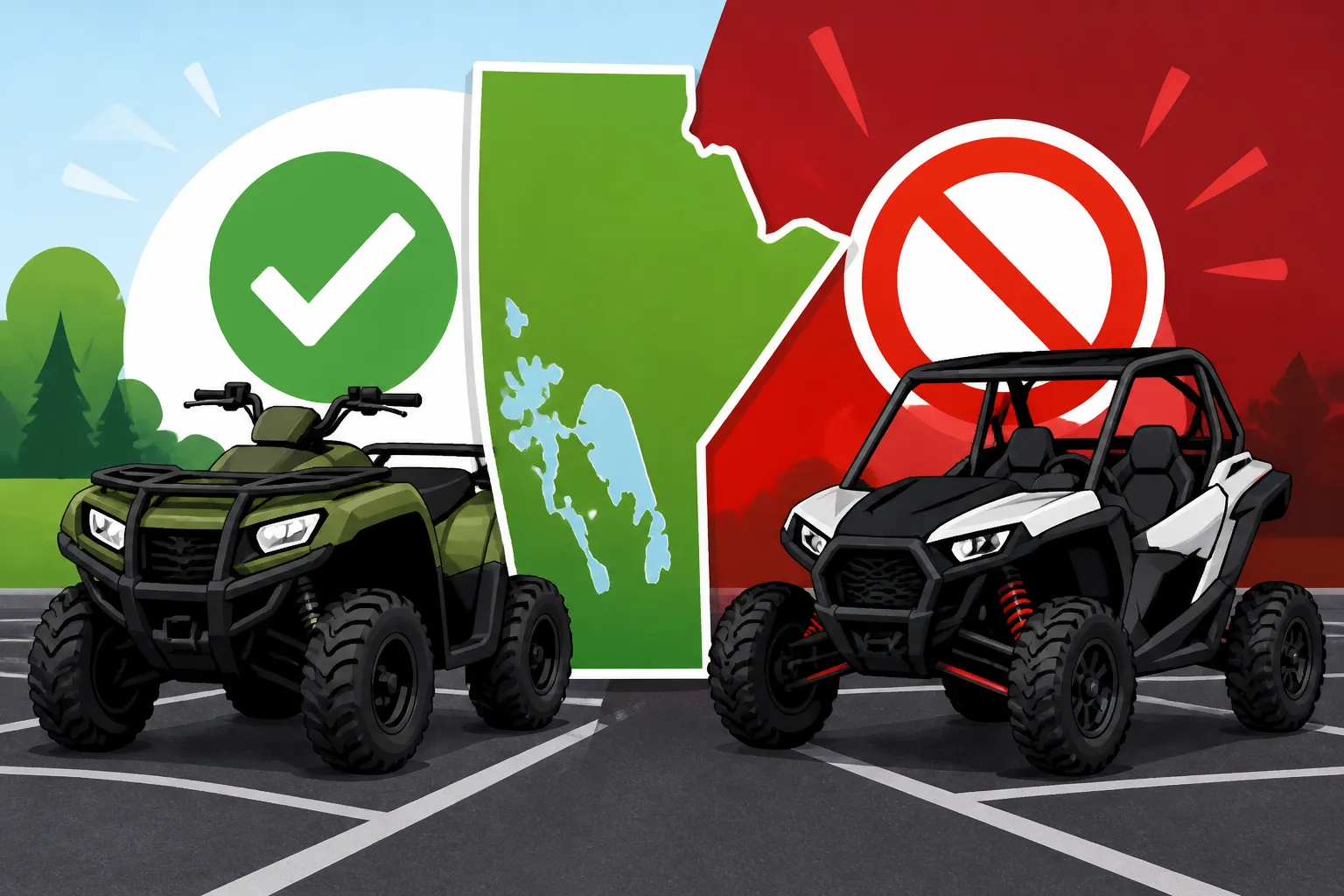
Understanding the various types of parking lots helps you make an informed decision, but it's always best to err on the side of caution. Here's a quick guide to help you decide.
| Type of Parking Lot | General Permissibility for ORV Riding | Key Considerations |
|---|---|---|
| Public Commercial (e.g., mall, grocery store) | Generally NOT permitted | Safety, noise, property damage, municipal bylaws, [Manitoba Bans Riding on Roadways] |
| Public Government/Facility (e.g., library, hospital) | Generally NOT permitted | Safety, noise, municipal bylaws, specific property rules |
| Public Designated ORV Staging (e.g., official trailhead parking) | Permitted for staging/unloading | Explicit signage, minimal operation, adherence to site-specific rules |
| Private Residential (e.g., friend's driveway) | Permitted with owner's consent | Noise, [Manitoba Rules for Riding Near a Dwelling] (30-metre rule), local bylaws |
| Private Commercial (limited access) | Permitted with owner's consent | Explicit permission, owner's rules, safety, potential liability |
This table serves as a general guide. Local bylaws can always add further restrictions, and it's your responsibility to know the rules in the area you're riding. A quick call to the local municipal office can often clarify specific parking lot rules.
Avoiding Trouble: Practical Tips
So, you're at a trailhead, and the parking lot isn't specifically marked for ORV staging, but it's the only practical place to unload. What do you do? The key is minimal, respectful operation. Get your machine off the trailer, turn it around, and head directly to the trail entrance. Avoid unnecessary idling, revving, or cruising around the lot. The goal is to be invisible, or at least unremarkable, and not attract attention that could lead to questions from authorities or property owners.
Many riders invest in practical accessories from companies like SuperATV, such as sturdy loading ramps and winches, not just for the trail but also for safer and more efficient loading and unloading in tricky spots. Having good equipment can make the entire process smoother, reducing the temptation to "just ride it off the trailer" in a non-designated area.
Another crucial point is to always have your [Manitoba Registration Cards Carried at All Times]. Even if you think you're on private land or in a grey area, an officer might still approach you. Being able to present your registration and proof of ownership can de-escalate a situation quickly, showing you are a responsible rider.
Consequences of Improper Parking Lot Riding
Ignoring the rules for riding in parking lots can lead to various negative consequences, ranging from minor inconveniences to significant legal and financial penalties. Understanding these potential repercussions can help reinforce the importance of riding responsibly.
Firstly, you could face a hefty ticket. [Manitoba Ticket Costs for Riders] can add up quickly, especially if you're cited for multiple infractions, such as operating an unregistered machine or careless operation. These fines aren't just an annoyance; they can put a real dent in your riding budget. Secondly, property damage is a real concern. Driving an ATV or UTV across a paved parking lot not designed for it can cause tire marks, churn up gravel, or even damage landscaping. You could be held liable for these damages, leading to repair costs.
Thirdly, there are safety implications. Parking lots are often bustling with pedestrians and other vehicles. An off-road vehicle, even at low speeds, can be a hazard, and any accident could lead to injuries. Your basic [Manitoba Insurance Included With Registration] generally covers third-party liability for property damage or injury you cause, but if you're operating outside of the legal parameters, your coverage might be complicated.
Finally, operating an ORV where it's not permitted can damage the reputation of the entire riding community. When a rider is seen making excessive noise or causing damage in a parking lot, it fuels negative stereotypes about off-road enthusiasts, making it harder to advocate for new trails or maintain existing access. By being mindful and respectful in all areas, including parking lots, we contribute to a more positive public perception of our sport. So, while it might seem like a small shortcut, the potential ramifications for you and the wider community are anything but trivial.
Disclaimer
This article is for general informational purposes only and does not constitute professional advice. Laws, prices and regulations vary by location and change over time. Consult a qualified professional for guidance on your specific situation.