Do You Need a Licence for an ATV in Manitoba?
One of the most common questions I hear from fellow riders, especially those new to Manitoba or getting their first off-road machine, is about whether you need a specific licence to operate an ATV or UTV. It’s a point of confusion for many because the rules aren't always what people assume, particularly when you compare them to how cars or trucks are licensed. This guide will cut through the uncertainty and clearly explain what kind of licence, if any, you need to ride your ATV or UTV legally and safely across our beautiful province.
The Short Answer: Do You Need a Licence to Operate an ATV in Manitoba?
Let's get right to it because I know you're eager for clarity. When it comes to operating an ATV or UTV in Manitoba, the answer to whether you need a "licence" isn't a simple yes or no. It really depends on where you're riding and how you're operating your machine. The key distinction often lies between private property and public lands or roadways.
Operating on Your Own Property vs. Public Land
Many folks assume that because an ATV is an "off-road vehicle," you can simply hop on it and go, especially if you're out in the country. And to a certain extent, if you are strictly operating your ATV or UTV on land you own, or on private land where you have explicit permission from the landowner, you generally don't need a driver's licence. This is what some might consider the "back forty" exemption. There's no specific "ATV licence" required just to tool around your own yard or farm field. The rules are much more relaxed when your wheels never touch public pathways or Crown land.
However, the moment your tires leave private property and enter areas like public trails, ditches alongside roads, or cross roadways, the game changes entirely. This is where the misconception often arises. People think "off-road" means "off-rules," but Manitoba's Off-Road Vehicles Act (ORVA) has very clear stipulations for public access. If you're planning on exploring the vast network of trails, using designated areas on Crown land, or even just crossing a municipal road to get to another section of trail, then various provincial regulations, including those concerning driver's licences, come into play. It's a critical difference that can lead to headaches, or even fines, if you're not aware of it.
The Importance of a Valid Driver's Licence
So, if there isn't a specific "ATV licence," what do you need? For certain operations on public land, what you need is a valid driver's licence – the same kind you use to drive your car or truck. That's right, there's no special "ORV endorsement" or separate permit you apply for just to operate an ATV or UTV. It’s about having a general Class 5 (or equivalent) driver's licence that proves you understand the rules of the road and can operate a motor vehicle safely.
This requirement primarily kicks in when you're engaging with the public road network. For instance, if you need to use the ditch alongside a provincial road or cross a highway, your valid driver's licence becomes absolutely essential. The province views these actions as interacting with the general public and traffic flow, and therefore, requires you to have the appropriate qualifications. Think of it this way: while you're not driving your ATV on the road in most cases, you're still operating it in a way that requires an understanding of traffic laws and safe driving practices. This is about ensuring public safety, not just your own. So, while you might not need a licence to ride in your backyard, don't head for the trails without one if your route involves any public road interaction.
Understanding Manitoba's Licence Requirements for Specific Scenarios
While the concept of needing a driver's licence for an ATV might seem counter-intuitive to some, it's firmly rooted in the safety regulations for how off-road vehicles interact with public infrastructure. Let's delve into the specific scenarios where your licence status becomes critical.
Road Crossings and Ditch Riding – Where a Licence Becomes Critical
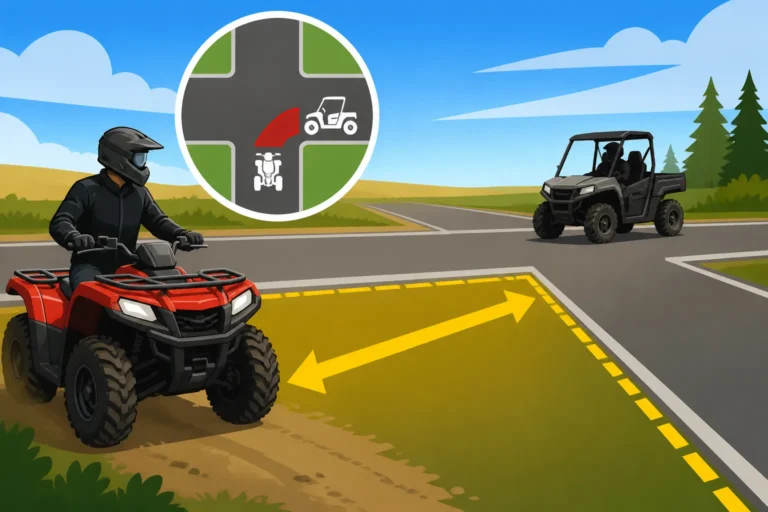
This is arguably the most common scenario where riders get into trouble because they didn't realize a driver's licence was required. In Manitoba, the Off-Road Vehicles Act (ORVA) is quite explicit: if you're going to cross a provincial highway or a municipal road, you absolutely need a valid driver's licence. This isn't just a suggestion; it's a legal requirement. When you pull up to that crossing, you need to stop, yield to traffic, and have a clear view, just as if you were in a car. All these actions require an understanding of traffic laws and road etiquette, which is precisely why a driver's licence is mandated. If you're caught crossing a road without one, you could face penalties. For a more detailed breakdown, check out [Manitoba Crossings Need a Driver's Licence].
Ditch riding is another area where your licence is paramount. While many rural areas allow ATVs and UTVs to operate in the ditch immediately adjacent to a roadway, this privilege comes with strict conditions, and having a valid driver's licence is chief among them. It's not just about having any licence, but specifically a Class 5 (or equivalent) licence that isn't restricted in a way that would prevent you from operating a motor vehicle. Riding in a ditch means you are still in close proximity to traffic and the rules are in place to ensure you can react appropriately to road conditions and other vehicles. For a comprehensive look at what's permitted, refer to [Manitoba Ditch Riding Rules]. It's crucial to understand that a provisional or learner's licence often has restrictions that might prevent you from legally performing these maneuvers.
Age and Supervision: When a Learner's or Provisional Licence Applies
The age of the operator is a significant factor in Manitoba's ORV rules, and it directly ties into licensing requirements. For riders under 16, a driver's licence isn't the primary concern; it's more about age, machine size, and direct supervision. However, once a rider turns 14, they enter a transitional period. A 14-year-old rider, for example, can operate an ATV on designated trails without direct supervision, but they still cannot perform certain actions like crossing roadways or riding in ditches because they don't yet have a full driver's licence. For specific rules applying to this age group, you might find [Manitoba Rules for a 14-Year-Old Rider] helpful.
When we move to riders who are 16 and older, the situation clarifies considerably. At 16, you are eligible for a Class 5 learner's permit, and soon after, a full Class 5 licence. A 16-year-old with a full Class 5 licence can meet the licence requirement for ditch riding and road crossings. However, if they only have a learner's permit (Class 5L), there are still significant restrictions. While a Class 5L allows you to drive a car with supervision, it does not permit you to cross a highway or ride in a ditch on an ATV or UTV. The ORVA specifically states that a learner's permit is generally insufficient for these actions. For more on the specifics for older teens, refer to [Manitoba Rules for a 16-Year-Old Rider]. It’s a common mistake, but [A Learner's Permit Will Not Let You Cross] is a key rule to remember. Parents signing for owners aged 16-18 also need to be aware of these limitations.
What About Registration and Insurance? Often Confused with Licensing!
It’s easy to conflate all the rules and regulations surrounding ATVs and UTVs into one big "paperwork" category. However, understanding that licensing, registration, and insurance are distinct requirements is crucial for compliance. While they all contribute to legal operation, they serve different purposes and have their own specific rules.
Mandatory Registration for Most ORVs in Manitoba
Separate from needing a driver's licence for specific operations, nearly all ATVs and UTVs used off private property in Manitoba must be registered with Manitoba Public Insurance (MPI). This is a blanket requirement designed to ensure that machines can be identified, tracked, and that a basic level of liability insurance is in place. It doesn't matter if you're riding on a provincial trail, a Crown land access route, or even just a dirt road in a local government district – if it's not on your own land, it likely needs registration. The process is handled through any Autopac agent, just like registering your car. For a complete guide on how this works, you'll want to read up on [Manitoba ORV Registration Through MPI].
Now, like many rules, there are some specific situations where registration might not be required. For instance, if you only use your machine on your own private property, or if you reside in certain remote communities that don't have all-weather road access, you might be exempt. Farmers also have specific exemptions for machines used solely for agricultural purposes. However, these exemptions are very specific and narrow, so it's always best to assume registration is required unless you've confirmed you fit one of the strict criteria. It’s far better to be over-prepared than to be caught without proper documentation. You can explore these specific scenarios in more detail by looking into [Manitoba Registration Exemptions Explained].
Basic Insurance and Additional Coverage
Here's another important distinction: while registration requires that you have a basic level of third-party liability insurance, it's vital to understand what that basic coverage actually entails. When you register your ATV or UTV with MPI, that registration automatically includes a base level of third-party liability coverage. This protects you if you cause damage to another person's property or injure someone else while operating your machine. It’s a fundamental safety net for others, but it doesn't do much for you or your machine in many common scenarios. For an overview of what's included, see [Manitoba Insurance Included With Registration].
The critical part to understand is that this basic coverage is often very limited. It typically does not cover your own injuries if you're in an accident. Nor does it cover damage to your own ATV or UTV, and it certainly doesn't cover theft. This is where many riders get a rude awakening after an incident. If you want protection for your machine against collision, fire, or theft, or if you want coverage for your own medical expenses beyond what your provincial health plan covers, you absolutely need to purchase additional, optional coverage. Many experienced riders recommend looking into comprehensive coverage, collision, and increased liability limits, especially if your machine is new or if you regularly ride in challenging conditions. The basic liability is a good start, but it's not a full solution. For instance, you might be surprised to learn that [Basic Manitoba ORV Coverage Skips Injuries] and [Basic Manitoba Registration Does Not Cover Theft]. Don't rely on the bare minimum and hope for the best; talk to an Autopac agent about your options.
Equipment and Safety: Beyond the Licence
Operating an ATV or UTV safely in Manitoba involves more than just having the right licence, registration, and insurance. It also means ensuring your machine is properly equipped and that you, as the operator, are wearing appropriate safety gear. These are not mere suggestions; they are often legal requirements designed to minimize risk on the trails and public access points.
Essential Gear and Machine Compliance
First and foremost, let's talk about helmets. In Manitoba, wearing an approved helmet is mandatory for almost all ATV and UTV operators and passengers. There are very few specific exemptions, mainly for certain agricultural, commercial fishing, or trapping activities, or for specific machines equipped with roll-over protection where seatbelts are worn. For the vast majority of recreational riders, a helmet is non-negotiable. This is a critical piece of safety equipment that can literally save your life. Make sure your helmet meets recognized safety standards. For the full details on who needs to wear one and when, you can review [Manitoba Helmet Law and Its Exemptions].
Beyond personal protective equipment, your ATV or UTV itself needs to meet certain standards. This includes having proper lighting, especially if you're riding during dusk, dawn, or at night. Visibility is key, both for you to see the path ahead and for others to see you. Machines also require a spark arrester, which is a device designed to prevent sparks from exiting the exhaust system and potentially igniting dry grass or brush. This is particularly important in Manitoba's forested areas, especially during dry seasons. Ensuring your machine is in good working order and has these basic safety components is part of responsible riding. Many aftermarket accessories, like those from SuperATV, can enhance your machine's safety and functionality, but always make sure any modifications still comply with provincial regulations regarding lighting, sound, and other equipment requirements. You can learn more about specific requirements by checking out [Manitoba Lighting Requirements on a Machine] and [Manitoba Spark Arrester Requirements].
Consequences of Non-Compliance
Ignoring any of these rules – whether it's riding without a valid licence where one is required, operating an unregistered machine, failing to have proper insurance, or skipping essential safety gear like a helmet – can lead to some pretty unwelcome consequences. Manitoba law enforcement, including RCMP, conservation officers, and local police, are authorized to enforce the Off-Road Vehicles Act. They regularly patrol trails, public access points, and common riding areas.
If you're caught breaking the rules, you could be facing fines, which can add up quickly. For instance, operating an unregistered machine, riding without a required licence, or failing to wear a helmet can each carry their own penalties. These aren't just minor slaps on the wrist; they can be significant financial hits. Beyond the immediate fine, repeated offenses or more serious infractions, such as careless operation, can lead to much higher penalties, including court costs and potential suspension of your driving privileges. [Manitoba Ticket Costs for Riders] gives you an idea of the financial implications. The goal of these regulations isn't just to punish riders, but primarily to ensure everyone's safety and to protect our shared natural environments. Understanding and adhering to these rules means you can enjoy your ride with peace of mind, knowing you're doing it legally and responsibly. For more on serious infractions, look at [Manitoba Careless Operation Penalties].
Summary of Key Requirements for Public ORV Use in Manitoba
To help you keep track of the different requirements, here's a quick overview of what you generally need when operating your ATV or UTV on public lands or interacting with public roadways in Manitoba.
| Requirement | Description | Applies When? |
|---|---|---|
| Driver's Licence | Valid Class 5 (or equivalent) driver's licence. Learner's permits have significant restrictions. | Operating in a ditch, crossing a roadway, or any interaction with public roads. Not needed on private property. |
| Registration | Machine must be registered with MPI, displaying a valid plate. | Any operation off private property (trails, Crown land, ditches). Limited exemptions apply (e.g., remote areas). |
| Basic Insurance | Third-party liability included with registration. Covers damage/injury to others. | Always, when registered. |
| Additional Insurance | Optional coverage for own injuries, machine damage, theft. | Highly recommended for personal and machine protection. |
| Helmet | Approved helmet for all operators and passengers. | Nearly all riding scenarios, with very specific exemptions (e.g., enclosed ROPS with seatbelts, certain occupations). |
| Machine Equipment | Proper lighting (headlights, taillights), spark arrester, functional brakes, and other safety devices. | All public riding. |
## Disclaimer
This article is for general informational purposes only and does not constitute professional advice. Laws, prices and regulations vary by location and change over time. Consult a qualified professional for guidance on your specific situation.